
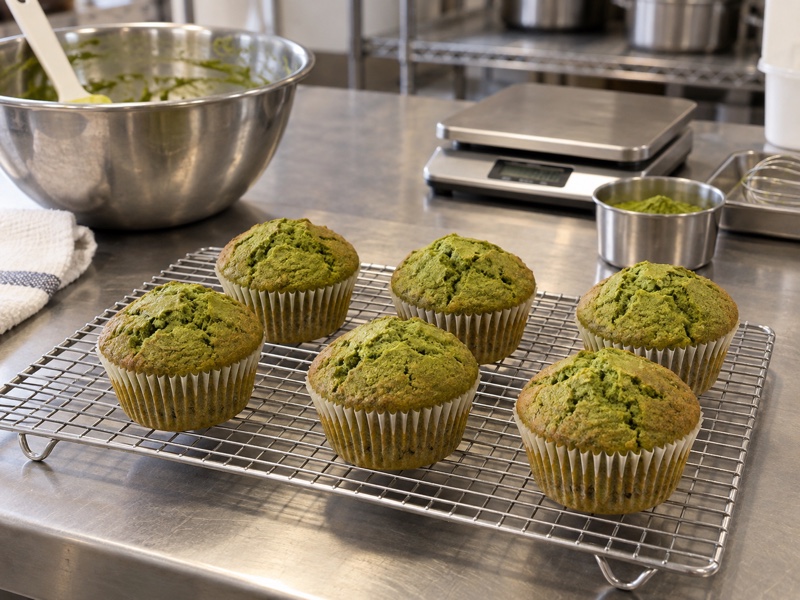
A matcha muffin recipe for production is a documented formula and process that yields a consistent portion, texture, flavor, and appearance across batches. A home batter can taste good from one oven while changing color, rising unevenly, or drying out on a bakery line. The path forward is to fix a target muffin, test tea and structure in small controlled batches, then check the result on the intended equipment. Ingredient and process records give a buyer a sounder basis than a single attractive sample.
For: bakery R&D, private-label buyers, and ingredient purchasers. Decision: which formula can meet the eating, production, and label brief.
Contents: 1 · 2 · 3 · 4 · 5 · 6 · 7 · 8 · 9 · 10
1. What defines a production-ready matcha muffin?
Set the target before the trial
Write the product brief around the eaten muffin. Define portion mass, shape, crust color, crumb color, softness, sweetness, and how clearly matcha should taste. Decide whether the product sells loose at a café, sealed for retail, frozen for distribution, or as a mix that another bakery will finish. Those routes create different moisture and handling requirements. Start with the selling format: a muffin that stays tender for a morning counter may not survive a long retail shelf life. The team should state the planned service or storage period before choosing a formula.
A recipe lists ingredients and method; a production specification also states tolerances and checks. Record flour source, matcha lot, batter temperature, deposit weight, oven settings, cooling time, and packaging. A consumer-style matcha muffin recipe may inspire flavor direction, but each plant needs trials on its own equipment. Separate sensory preferences from must-pass criteria. A buyer can accept a slightly different dome if flavor and shelf life work, while a manufacturer may require a precise height for a package cavity. Put those priorities on one sheet so teams do not optimize different products.
2. Which matcha works in a baked batter?
Evaluate the baked crumb
Tea that looks vivid in water may lose its green appearance in a hot, alkaline batter. Screen matcha in the finished muffin at a constant dose, not only as dry powder. Slice cooled muffins under consistent light and compare crumb color, aroma, bitterness, and any coarse mouthfeel. Retaste after the planned storage period because fresh baking aroma can hide tea notes. Look past the bag: supplier grade terms do not establish performance in a specific batter. Two powders with similar color in a jar can behave differently after baking.
Ask for lot-linked specifications, origin and ingredient identity, pack format, storage guidance, and applicable safety results. For private label or export, verify any claimed certification against its document and scope. Purchase price per kilogram matters less than cost at the dose needed for the intended flavor. If more powder makes the muffin bitter or dry before it becomes visibly green, a formulation change may work better than a higher dose. Test a second lot before writing a long-term color promise. Matcha is an agricultural ingredient; define the acceptable finished-product range with retained samples and objective observations where possible.
| Sample check | Method | Buying implication |
|---|---|---|
| Dry powder | Compare identity, aroma, color | Screens obvious lot differences |
| Baked crumb | Same formula and oven load | Shows real application performance |
| Stored muffin | Same pack and hold condition | Shows flavor and color drift |
3. How should the first formula be structured?
Use a controlled baker’s percentage sheet
A formula should make the denominator unambiguous. Baker’s percentages express each ingredient mass relative to flour mass, with flour set at 100%. That convention makes scale-up and flour substitutions easier to track. A separate finished-batter percentage sheet can help label work. Do not combine the two without a heading; “2% matcha” can mean very different doses. Keep the arithmetic visible: record grams as well as percentages for every trial, then calculate actual baked yield and portion weight.
For a hypothetical wheat-flour screening series, a team might compare matcha at 2%, 3%, and 4% of flour mass while keeping all other ingredients fixed. These are trial starting points, not recommended production levels. Sugar, fat, egg, liquid, leavener, and flavorings each affect whether tea tastes balanced and whether the crumb stays tender. Change tea first, then tune sweetness or fat against the chosen tea. If a pale base batter already dries out, matcha may make the problem more visible without being its sole cause. Bake a no-matcha control so the team can distinguish base-recipe faults from tea effects.
| Trial row | Denominator | Observation |
|---|---|---|
| Matcha level | Mass per 100 g flour | Flavor, color, bitterness |
| Liquid adjustment | Mass per 100 g flour | Batter flow and baked dryness |
| Leavener level | Mass per 100 g flour | Dome, tunneling, aftertaste |
4. How do alternative flours change the batter?
Reformulate structure, not only flavor
Almond flour, coconut flour, and gluten-free blends take up liquid differently from wheat flour and form different crumb structures. A simple flour swap can produce a dense center, oily surface, or fragile muffin. For each alternative, record batter viscosity after resting and the baked muffin’s cut surface. Treat claims separately: “paleo,” “low carb,” and “gluten-free” have different ingredient and market implications. A reference recipe carrying these labels does not make a new bakery product eligible for them.
If gluten-free positioning matters, check every ingredient and the facility’s cross-contact controls against the target market’s rules. Low-carb claims need a defined nutritional calculation and any required testing; they cannot be inferred from using nut flour. A plant-based version also changes egg binding and possible allergen statements. Build each variant as its own controlled formula with an approved ingredient list and process card. Compare variants against their own eating target rather than forcing a wheat muffin’s exact height. Buyers should decide which claims have commercial value before R&D spends weeks tuning ingredients around them.
5. What mixing and depositing controls matter?
Measure batter behavior at the depositor
Muffin batter changes during mixing and while it waits. Excess mixing can toughen a wheat crumb; too little mixing can leave streaks of matcha or uneven leavening. Preblend the dry ingredients or use a documented tea-dispersion step, then confirm that the step works at line scale. Sifting may help with compacted powder but adds dust and labor. Watch the hopper: a batter that looked uniform in the bowl may thicken, separate, or trap air before depositing. Record time from mix completion to the last deposit.
Weigh deposits from the start, middle, and end of a run. Variation affects oven exposure, fill appearance, and package count. Check that liners release cleanly and fit the cavity. Oven loading also changes browning; a tray baked alone is a weak proxy for a full rack. Document batter temperature, mixing speed, bowl size, deposit weight, and the point at which baking starts. These details let a second shift reproduce the result. If staff adjust with extra liquid mid-run, record the action and hold that batch out of the reference comparison.
| Control point | Record | Defect it can expose |
|---|---|---|
| Mix endpoint | Time, speed, batter appearance | Streaks or tough crumb |
| Hopper hold | Minutes and batter flow | Deposit drift |
| Deposit mass | Start, middle, end samples | Uneven bake and yield |
6. Why do color and flavor shift in the oven?
Test the actual heat history
Matcha’s visible color and aroma face heat, oxygen, moisture, and the batter’s acidity or alkalinity. A darker crust is normal for many muffins, so assess both crust and crumb against the product brief. High oven heat may set a dome quickly but leave an underdone center; a longer bake can dry the crumb and dull green color. Cut one open: surface photographs alone cannot show whether the middle meets the target. Record internal doneness by the bakery’s validated method, not a guessed time from a home recipe.
Changing leavening can shift batter pH and flavor as well as rise. Run a small controlled matrix rather than making several adjustments at once. After cooling, compare muffins packed in the intended material with those left exposed for a short controlled period. Light and air can affect appearance during display, while moisture movement changes softness. Do not promise a fixed shelf life from visual observation alone. Sensory, microbiological, and package work must support the actual route to market. The safest claim is the one shown by the finished product under its real storage conditions.
7. Which defects should pilot teams log?
Link the symptom to a testable cause
Write a defect sheet before trials. Log dry crumb, gummy center, collapse, tunneling, pale flavor, bitter finish, uneven green streaks, and liner sticking. Photograph the cut face and record deposit mass and oven position. Keep the failed sample: a rejected muffin can tell the team whether a fault appeared in all cavities or only one corner of the tray. A single cause is rarely certain from appearance alone, so pair the symptom with a controlled follow-up.
For dryness, compare the no-matcha control and check bake loss, portion weight, and storage exposure before blaming tea. For tunnels, inspect mixing and leavener distribution. A collapsed center may reflect structure, leavening, or underbaking. Green streaks may point to incomplete powder dispersion. Retest one change per run and keep the accepted comparator on the bench. Do not hide faults by adding toppings before the base product passes. A bakery buyer should receive a defect log alongside attractive samples; it shows where the formula is stable and where more work remains.
| Defect | Possible check | Next controlled trial |
|---|---|---|
| Dry crumb | Bake loss and control muffin | Adjust bake or liquid separately |
| Green streaks | Dry blend and mixing record | Change dispersion step |
| Uneven domes | Deposit weights and oven map | Fix dosing or load pattern |
8. How can the recipe move to a larger line?
Transfer the operating window
A larger mixer changes shear and the time needed to incorporate dry powder. A tunnel or rack oven changes heat distribution and loading. Run the approved small formula in a staged production trial, then compare batter viscosity, deposit variation, baked yield, color, and eating quality. Follow the last tray: batter held longest can behave differently from the first tray. The line trial should sample both, with lot and time recorded.
Cooling deserves its own control. Muffins packed warm can create condensation; muffins left uncovered too long can dry out. Define a cooling endpoint and use the intended package in the trial. If distribution involves freezing and thawing, test that route directly, including handling at the customer’s site. A recipe for fresh café service may need a different fat or moisture system for frozen distribution. Keep the supplier’s matcha pack and the bakery’s opening procedure in the scale plan; a large bag left open near an oven faces a different environment from a small sealed sample pouch. Transfer approval should be documented by quality, operations, and purchasing.
9. What should purchasing verify?
Buy the exact ingredients that passed
The approved muffin depends on more than matcha. Flour performance, fat type, leavener, and inclusions can alter the batter. Write ingredient specifications that capture the attributes shown to matter in trials. For matcha, request identity, lot traceability, packing material, shelf-life evidence, and relevant test documents. For any claim such as organic or gluten-free, check the exact certification or test evidence and scope. Match the trial lot: a supplier quotation for a different grade does not preserve the sensory result.
Assess minimum order, lead time, change notification, and continuity of supply. A low unit price can become expensive if minimum order exceeds usable shelf life or if a powder requires a higher dose. Keep an approved reference muffin and powder sample under documented storage. If an alternate supplier is needed, qualify it with the same bake protocol rather than only comparing certificates. Purchasing and R&D should agree which deviations trigger a re-trial: color drift, flavor change, particle behavior, or altered pack. This gives the buyer a clear acceptance path without pretending agricultural lots are identical.
| Purchase input | Check against pilot | Action if changed |
|---|---|---|
| Matcha lot | Baked color and flavor | Requalify if outside limit |
| Flour source | Batter flow and crumb | Run a line trial |
| Liner | Release and package fit | Check finished units |
10. What validates the finished muffin?
Approve the product in its selling route
Run a final trial with the chosen ingredients, line, package, and distribution conditions. Record portion weight, appearance, cut crumb, sensory notes, bake loss, and reject rate across several positions and time points. The food safety and shelf-life plan must fit the intended market and product; a same-day café muffin requires different evidence from a sealed retail product. Close the loop: compare actual muffins with the brief written at the start, not with a newly lowered target.
Check label ingredients, allergens, claims, and nutritional information with the responsible regulatory team. Ask a buyer panel to taste coded samples at the beginning and end of the proposed shelf period. If the result fails, identify whether formula, process, pack, or storage caused the change and run one corrective trial. A production-ready matcha muffin recipe has a version number, approved supplier list, process window, quality limits, and a change-control owner. Next, bake a controlled pilot on intended equipment with a no-matcha control and two tea candidates. For consumer inspiration only, see the linked reference; production approval rests on the bakery’s own validation.
Reference: “Matcha Muffin (Paleo/Low Carb/Gluten Free)” — FoodSocial. Its consumer concept is a topic reference, not a basis for production or label claims.
FAQ
Q1: What is a matcha muffin recipe for a bakery?
It is a weighed formula plus a repeatable mixing, depositing, baking, cooling, and packing method.
Q2: Can a bakery call matcha muffins gluten-free?
Only after verifying ingredients, cross-contact controls, and labeling rules for the sales market.
Q3: Why does baked matcha look brown?
Heat, batter chemistry, and browning can dull green color. Compare the cut crumb in controlled bakes.
Q4: How much matcha should a pilot use?
Use several clearly labeled trial doses relative to flour mass, then select by baked flavor and color.
Q5: What should be checked before retail launch?
Line consistency, package performance, shelf-life evidence, safety, labeling, and supplier continuity.