
A first-time matcha buyer can face a shelf of near-identical boxes: five-piece, seven-piece, traditional, modern, gift-ready. The printed count rarely explains which set they can use on Monday morning. A better choice comes from a few visible clues: who the set suits, whether powder is included, what kind of whisk it uses, and how much care its owner will accept. Muave’s beginner set guide connects the familiar tools with a clear first-cup method. This guide applies that thinking at a retail shelf. It helps a customer choose quickly and gives store teams concrete ways to make each product’s promise clear before a box is opened.
Contents
- 1. What does the box promise at a glance?
- 2. Who is the set meant to help?
- 3. Can you tell whether matcha powder is included?
- 4. Which whisk style fits a beginner’s routine?
- 5. Can you judge the bowl without opening every box?
- 6. Does the set’s style suit its future home?
- 7. Are care demands clear before purchase?
- 8. What makes one shelf price worth paying?
- 9. What should the opening experience teach?
- 10. How can retailers test the shelf decision?
1. What does the box promise at a glance?
Read the front as a customer would
A shopper should understand the product in a few seconds: is it a complete tea-making set, a tools-only set, or a gift assortment? A photograph of matcha powder beside a bowl can imply the powder is included even when the contents list says otherwise. Put the actual included pieces in a concise front-of-pack line and make exclusions visible nearby.
The product name should also match the use case. “Matcha latte starter set” promises a different first drink from “traditional whisk set.” For a retailer, compare package fronts side by side at normal shelf distance. If a person must pick up and rotate every box before finding the difference, the range is hard to shop. Try the five-second read: show a customer each unopened box briefly, then ask what they believe is inside and what they could make with it. Their answers reveal misleading cues faster than an internal copy review.
| Front-of-box cue | Customer question it answers | Shelf risk if unclear |
|---|---|---|
| “Tools only” or “tea included” | Can I make a cup today? | Disappointed opening |
| Main drink shown | Is this for lattes or straight tea? | Wrong set for routine |
| Whisk style named | Is it hand whisked or powered? | Unwanted learning curve |
| Contents count explained | What are the pieces? | False sense of completeness |
2. Who is the set meant to help?
Put the intended routine on the shelf card
“Beginner” covers several people. One wants a quiet hand-whisked cup; another wants an iced latte before work; a gift buyer may know nothing about the recipient’s kitchen. Those customers should not be pushed toward the same set because the box color is popular. A shelf card can name an ordinary situation: “For a home latte maker with a small counter” or “For someone who wants to try bamboo whisking.” State what the customer needs beyond the box, such as matcha powder, water-heating equipment, or a cup.
Avoid labeling a set “for everyone.” It usually hides a real tradeoff. Store staff can ask one question before recommending: “What drink will you make most often?” The answer narrows choices without turning a simple purchase into a lesson on every tea accessory ever made.
3. Can you tell whether matcha powder is included?
Make food contents impossible to miss
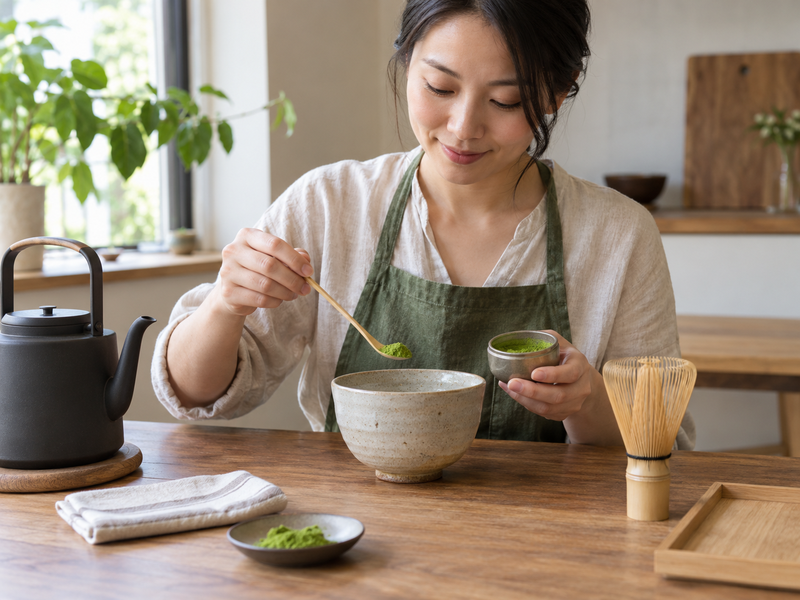
Many attractive sets contain tools but no tea. That is reasonable if the label says so clearly. It is a poor first purchase when the customer expects an immediate cup. Check the front, side panel, online listing, and shelf tag for the same answer. If powder is included, its net weight, storage advice, and relevant food labeling should be visible or easy to find. A store can place a compatible matcha refill next to tools-only sets, but the display must not blur the distinction between included and separate products.
For a beginner, a small included pack can reduce the number of decisions at checkout; it should still be a tea that works in the printed recipe. Retail buyers should test that exact pairing and confirm current product documents before approving any origin, certification, or flavor claim.
| Package statement | What the customer should see | Staff follow-up |
|---|---|---|
| Tea included | Pack weight and product details | Explain storage and refills |
| Tools only | Plain exclusion near product name | Offer compatible tea separately |
| Several tea samples | Clear sample identities | Explain intended comparison |
| Tea pictured for styling | Caption saying it is not included | Correct display photography |
4. Which whisk style fits a beginner’s routine?
Explain effort without ranking the customer
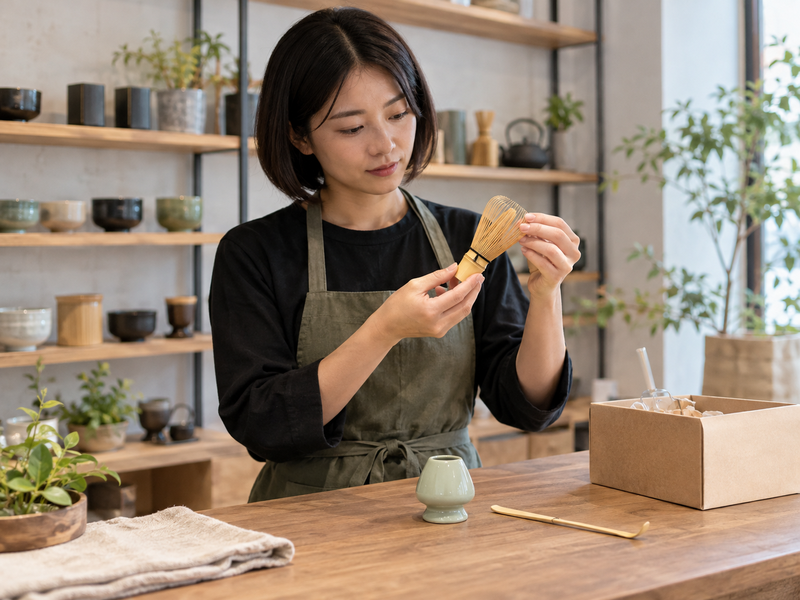
A bamboo chasen invites hands-on preparation and needs room to dry after rinsing. A small powered whisk may feel faster to a customer making frequent lattes, while bringing power and vessel-depth questions of its own. A beginner needs that distinction in ordinary language, not a claim that one choice makes a “real” matcha drinker. On a shelf, a simple icon can show “hand whisk” or “powered mixing.” An open display sample can help customers see the whisk’s size and fragility without touching a sale unit.
Ask how the recipient likes to make other drinks: slow and hands-on or quick and repeatable? Keep the answer tied to a routine. For powered sets, list charging or battery details accurately. For bamboo sets, put the care and replacement route within easy reach of the buyer.
5. Can you judge the bowl without opening every box?
Show what a photograph cannot
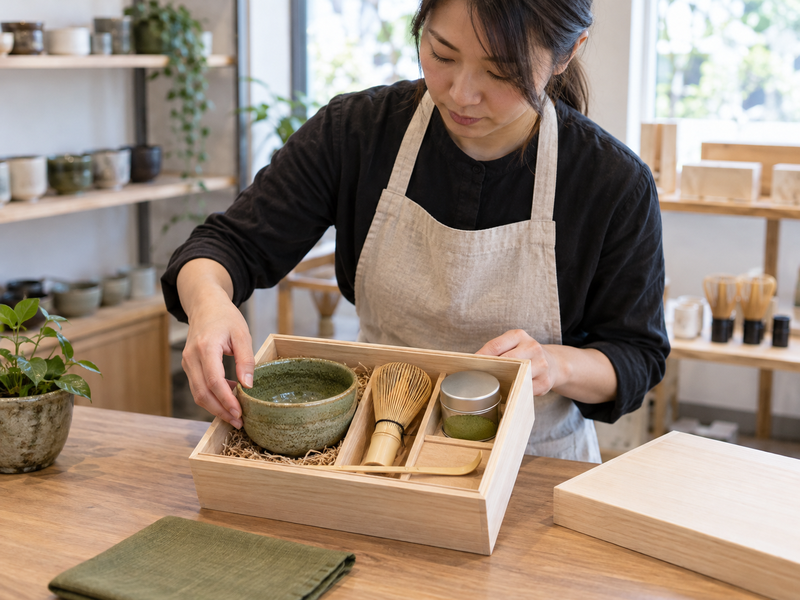
Outer diameter does not tell a customer whether a bowl is comfortable to whisk in or pour from. A store sample lets buyers hold it, look inside, and judge weight. If display samples are not possible, show a clear interior photo, the useful dimensions, and whether a pouring lip is present. Avoid staging an oversized drink in a bowl that the set cannot realistically prepare.
A home latte maker may favor a vessel that pours neatly into a glass; someone drinking straight matcha may care more about the rim and feel in the hand. A beginner also needs a stable base so the bowl does not rock during learning. Retail staff should know which bowl pairs with which included whisk, because a visually similar replacement may have a different interior curve. The shelf decision becomes easier when shape and use are visible together.
| Bowl cue | What a novice notices | Better display evidence |
|---|---|---|
| Interior room | Space for whisk movement | Open sample or top view |
| Weight | Comfort when lifting | Handling sample |
| Pouring lip | Less mess for lattes | Side photo or water demo |
| Stable foot | Confidence during use | Tabletop sample |
6. Does the set’s style suit its future home?
Treat appearance as a practical preference
People are more likely to use tools that feel at home in their kitchen. A quiet ceramic color, clear glass bowl, or bold patterned piece can each be right for a different customer. The question is whether styling conceals a functional compromise. Raised decoration may make a bowl harder to clean; a sculptural rim may pour poorly; a very large set may need storage space the buyer lacks. Show the set at a realistic counter scale rather than isolated on a huge studio surface.
If several colorways share the same functional components, tell shoppers so; they can then choose by taste without fearing a different recipe. If component materials or dimensions vary between styles, disclose the difference. Retailers should merchandise by use first and visual family second, since a beautiful package attracts attention but a usable set earns repeat tea purchases.
7. Are care demands clear before purchase?
Let the customer picture cleanup
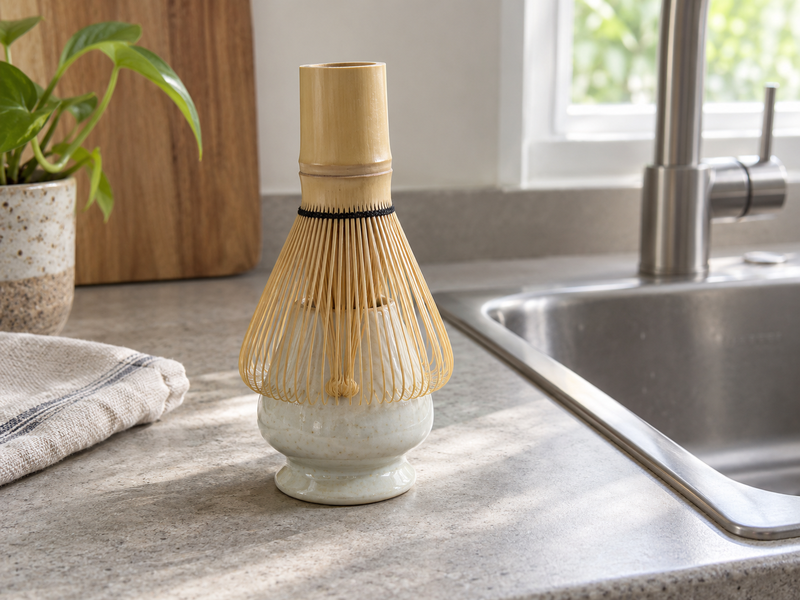
The first cup may take minutes; care happens every time. A bamboo whisk, ceramic bowl, mesh sifter, and powered whisk can require different cleaning and drying steps. Put a short, material-specific care summary on the package or shelf card, with full maker instructions inside. Do not infer dishwasher suitability from a smooth glaze or tell shoppers every bamboo piece tolerates the same wash method. A beginner should be able to answer where the whisk will dry and whether the bowl fits their preferred cleaning routine.
For a gift, the buyer may need to know if the recipient has counter room for a whisk holder. A product page that says “easy to clean” without describing the actual steps offers little help. Test the care directions with a novice and watch whether they can put the set away without trapping moisture against the tea pack.
| Component | Care decision visible before sale | Detail inside box |
|---|---|---|
| Bamboo whisk | Needs separate drying space | Maker’s rinse and storage method |
| Bowl | Approved wash method | Glaze and handling notes |
| Sifter | Mesh requires cleaning | Cleaning and drying method |
| Powered whisk | Power and head care | Manufacturer instructions |
8. What makes one shelf price worth paying?
Compare outcomes instead of piece counts
Two sets may both contain six pieces but differ in bowl stability, whisk construction, food pack quality, instruction clarity, and protective packaging. A higher price may be justified by better working parts or a thoughtful gift presentation; it is not justified merely by adding a scoop rest no one will use. For shoppers, compare what is included, what must be purchased separately, and what can be replaced later. Avoid treating a temporary promotion as proof of value.
A retailer can create a compact comparison card with a few observable points: tea included, whisk type, bowl handling, care, and refill route. Do not publish an invented quality score from subjective impressions. If a customer asks why one set costs more, staff should name a verified material or service difference and let the buyer decide whether it matters to their use.
9. What should the opening experience teach?
Make the next action obvious
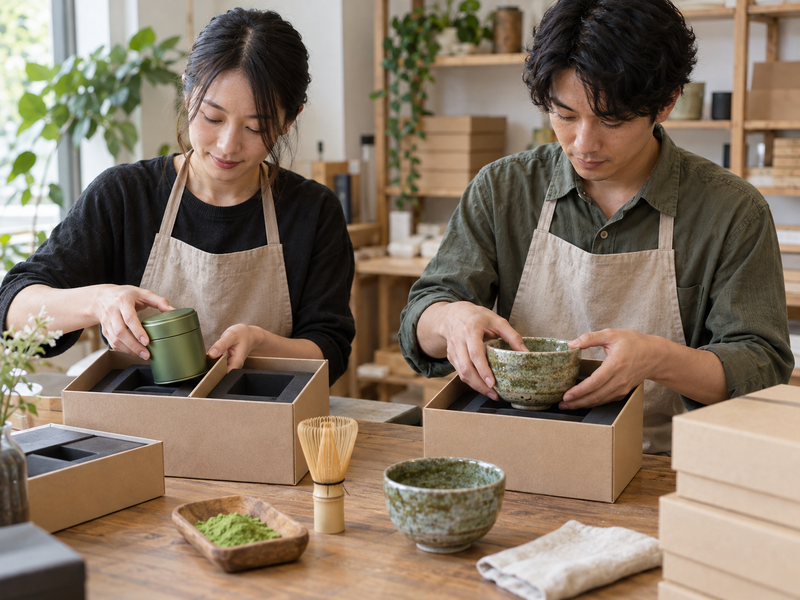
When a new customer opens the box, the contents card should appear before loose accessories. It should name each piece, say whether powder is present, and point to one tested drink recipe. A card can show the order of preparation and give material-specific care advice on its reverse. The customer should not need to scan a code before understanding what a whisk is; a code can add video or longer guidance later. If the set contains tea, the pack should remain protected and clearly identifiable.
If it is a gift, a short note explaining the first cup can help the recipient without pretending to teach a formal Japanese tea ceremony. Retail teams should conduct a quiet unboxing trial with someone who has never used matcha tools. Record every moment they pause. This is a test of the product’s communication, not of the person’s skill.
| Opening moment | What the customer needs | Failure to avoid |
|---|---|---|
| Lift lid | Contents visible and secure | Pieces shift or spill |
| Read card | One clear starting recipe | Long story before practical steps |
| Find tea | Included pack or clear exclusion | Confusing product photo |
| Finish cup | Care and storage guidance | Wet tools closed in box |
10. How can retailers test the shelf decision?
Watch choice, opening and follow-through
Run a small trial with shoppers or staff who did not develop the range. Present boxes as they would appear on the shelf, with ordinary prices and tags. Ask participants which set they would buy for a named use, what they believe is included, and what they expect to do after opening. Then give them the chosen sample and observe the first drink and cleanup without coaching. Record mismatches between the shelf promise and the real experience.
If several people assume tea is included when it is not, fix the front panel. If shoppers choose by color but later struggle with a bowl shape, improve display evidence. Track returns and questions after launch. Matcha Village can discuss suitable tea formats for retail kits, while each brand should approve the final set, product claims, and first-use materials using real samples.
Final thoughts
The best matcha set for beginners is the one whose shelf promise matches the cup a new owner can make. Read the contents plainly, match whisk and bowl to a daily routine, and judge care before a box reaches checkout. Retailers can make that choice easier with honest front panels, handling samples, and a first-use trial. If a customer understands the set before opening it and wants to make another cup afterward, the range has done its job.
FAQ
Q1. Does a beginner matcha set have to include powder? No, but a tools-only box must say so prominently. A ready-to-make claim should be supported by an included tea pack.
Q2. Should a beginner choose bamboo or a powered whisk? Choose by the drink and preparation routine. Both need a vessel and care instructions suited to the tool.
Q3. Is a larger piece count better? Not by itself. Compare the working pieces, recipe, tea inclusion, care and replacement path.
Q4. What should a store show beside a closed box? Display the actual contents, tea-inclusion status, whisk type, bowl view, basic care and any item customers must supply.
Q5. How can a brand judge whether its set is beginner friendly? Have someone unfamiliar with the set choose it from a shelf, open it, make the advertised drink and clean up without coaching.