
Matcha sensory panel training gives a buyer or factory a consistent way to describe color, aroma, taste, and mouthfeel across lots. A purchasing team cannot settle a disputed “more bitter than last time” judgment if each taster used a different dose, water temperature, cup, or vocabulary. Train a small group with controlled preparation, blind codes, shared references, and repeated exercises before using results in a lot decision. The matcha sensory evaluation paper is a topic reference; the operational plan below draws on ISO 8586 for assessor training and ISO 11132 for monitoring quantitative panel performance. Neither standard supplies a universal matcha recipe or automatic release limit.
Contents
- What should matcha sensory panel training achieve?
- Who should sit on the internal panel?
- How should every sample be prepared?
- Why use blind codes and balanced order?
- Which descriptors should assessors share?
- How do reference samples train the panel?
- What should an individual score sheet record?
- How do you detect assessor disagreement?
- When may sensory results affect lot release?
- How should the panel stay calibrated?
1. What should matcha sensory panel training achieve?
Define a business decision, then a method
The panel may compare incoming lots with an approved reference, check a café latte application, or investigate a customer complaint. Each purpose needs its own preparation and acceptance approach. Pure matcha in water may expose aroma and bitterness that milk masks; a bakery application adds heat and other ingredients. Train assessors on the exact task they will perform. Record whether the exercise is descriptive, comparative, or pass/fail against a signed specification. Do not call a preference vote an analytical result.
| Panel task | Sample format | Output |
|---|---|---|
| Incoming comparison | Standard water preparation | Attribute profile |
| Latte application | Fixed milk and dose | Application profile |
| Complaint review | Complaint and retained controls | Difference notes |
| Reference update | Approved old and proposed new | Documented decision |
Keep the target narrow. A panel trained on plain matcha cannot automatically judge a sweetened blend with the same scale. ISO 13299 gives guidance for establishing a sensory profile across sensory attributes. Translate that framework into a concise matcha vocabulary and a method that matches the buyer’s actual use.
2. Who should sit on the internal panel?
Select for availability and repeatability
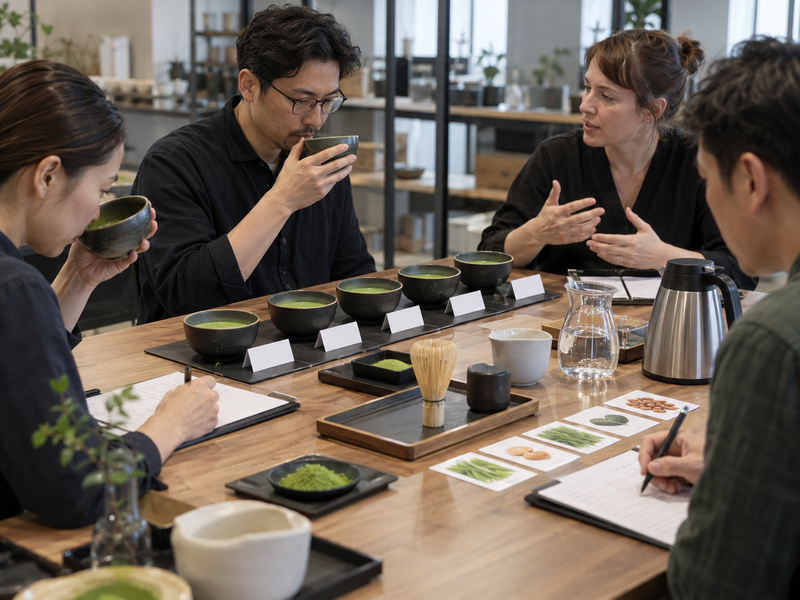
Choose reliable assessors. Choose people who can attend regular sessions, follow the preparation method, record independent observations, and discuss terms without simply copying a senior taster. Include quality or product staff who understand the intended application. A tiny panel may be practical for routine screening but should not be described as a validated consumer study. Screen for ability to distinguish relevant differences during training and document any limitation, such as temporary illness or strong fragrance exposure. Let assessors withdraw from a session if their senses are impaired.
| Selection check | Practical exercise | Record |
|---|---|---|
| Attendance | Training schedule | Availability |
| Description | Compare two known samples | Written terms |
| Repeatability | Hidden duplicate | Score difference |
| Independence | Blind individual scoring | Completed sheets |
The ISO 8586:2023 summary covers selection and training procedures for trained sensory assessors in food and beverages. It does not say every buyer needs a particular number of matcha assessors. A proposed internal pilot might start with six to eight candidates and retain those who can complete repeat exercises; the number is a staffing trial, not a standard requirement. Record each assessor’s training history.
3. How should every sample be prepared?
Write a preparation card
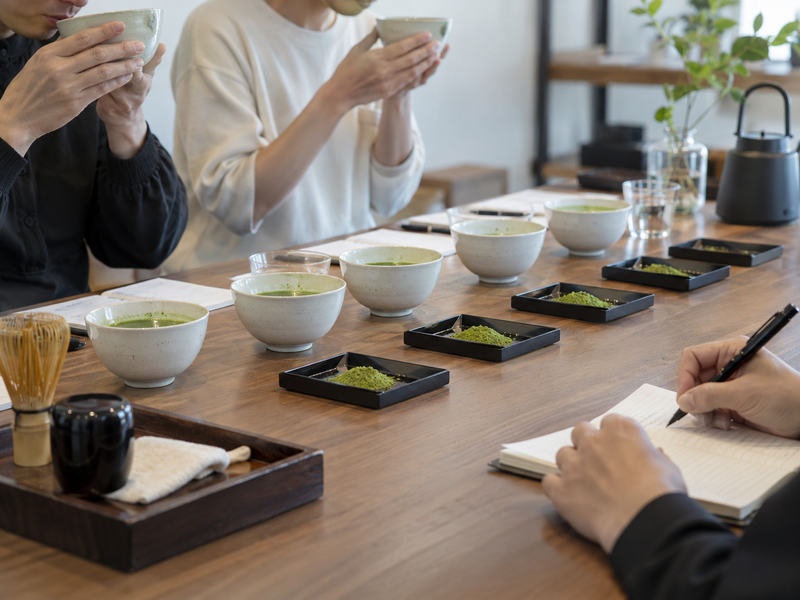
Fix powder mass, water mass, water temperature, mixing tool, mixing time, vessel shape, sample serving temperature, and elapsed time before tasting. Use the same calibrated scale and water source within a session. State whether powder is sifted, whisked, or shaken; each choice changes foam and perceived mouthfeel. If the product’s target is a latte, also fix milk type, milk temperature, sweetness, and mixing order. Prepare all codes as close together as possible and note any timing difference. A clean blank control can help detect vessel or water odors.
| Variable | Suggested trial entry | Record in session |
|---|---|---|
| Powder | 2.0 g per cup | Actual weighed mass |
| Water | 60 g at selected temperature | Actual temperature |
| Vessel | Same ceramic cup | Cup code |
| Timing | Fixed minutes after mixing | Serving time |
These amounts are an example for method development, not a published matcha standard. The panel should test whether the chosen dose reveals the differences relevant to its product and then lock the method. Consistency beats intuition. Even skilled tasters cannot separate a lot difference from a preparation difference if the record is incomplete.
4. Why use blind codes and balanced order?
Reduce expectation and position effects
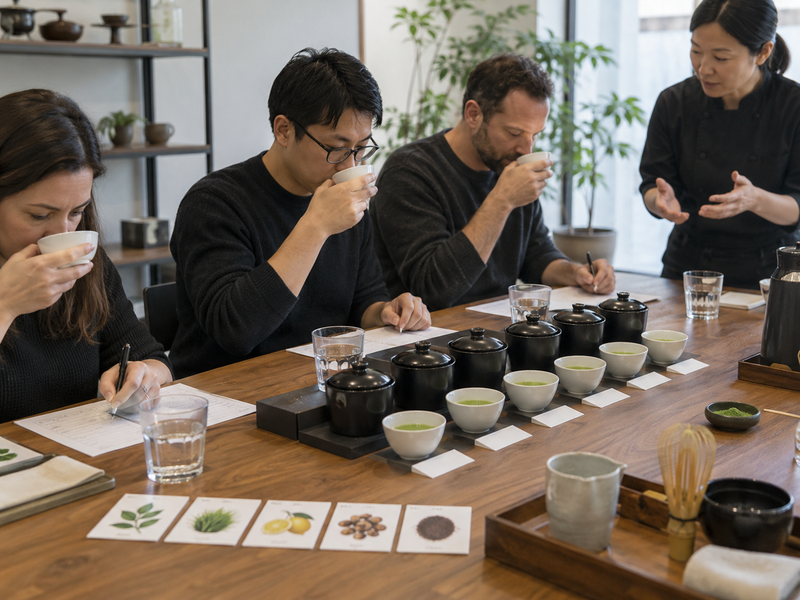
Hide the identities. Give each sample a random three-digit code that does not reveal supplier, grade, price, or approval status. Have a coordinator hold the code key until individual sheets are submitted. Serve samples in balanced orders so one lot does not always appear before another. For three samples, rotate sequences across assessors; for a small team, use a written allocation table. Provide a palate-cleansing routine and a pause between samples, especially when strong bitterness lingers. Record every code, order, and assessor.
| Assessor group | First cup | Second cup | Third cup |
|---|---|---|---|
| A | 418 | 792 | 563 |
| B | 792 | 563 | 418 |
| C | 563 | 418 | 792 |
The codes and sequences above illustrate a balanced training exercise. If one sample is known to be especially intense, a trained panel leader may choose another controlled design and document why. Do not reveal a “premium” label before scoring: that label can influence description even when the powder is identical. Keep the key with the coordinator and compare independent results before discussion. A group conversation before scoring can produce artificial agreement.
5. Which descriptors should assessors share?
Define words with observable examples
Build a short lexicon for color, dry aroma, prepared aroma, umami, sweetness, bitterness, astringency, and mouthfeel. Add application-specific terms only when assessors can define and detect them. Distinguish bitterness, a taste, from astringency, a drying tactile sensation. Define “grassy” with a reference or concrete description rather than assuming everyone means the same thing. Use a consistent intensity scale and anchors, such as zero for absent and a defined high reference for strong. Ask assessors to record unusual notes in free text without forcing them into a predetermined term.
| Attribute | Operational description | Reference idea |
|---|---|---|
| Green color | Visual intensity in fixed cup | Approved color cards |
| Umami | Savory taste impression | Approved matcha reference |
| Bitterness | Bitter taste intensity | Controlled practice sample |
| Astringency | Drying mouthfeel | Controlled practice sample |
Agree on the word before the score. ISO 13299 frames sensory profile development as a process, not a list of mandated tea adjectives. Test whether assessors use each term consistently. Remove redundant or confusing descriptors, then keep the lexicon version with every session sheet.
6. How do reference samples train the panel?
Revisit a stable comparison set
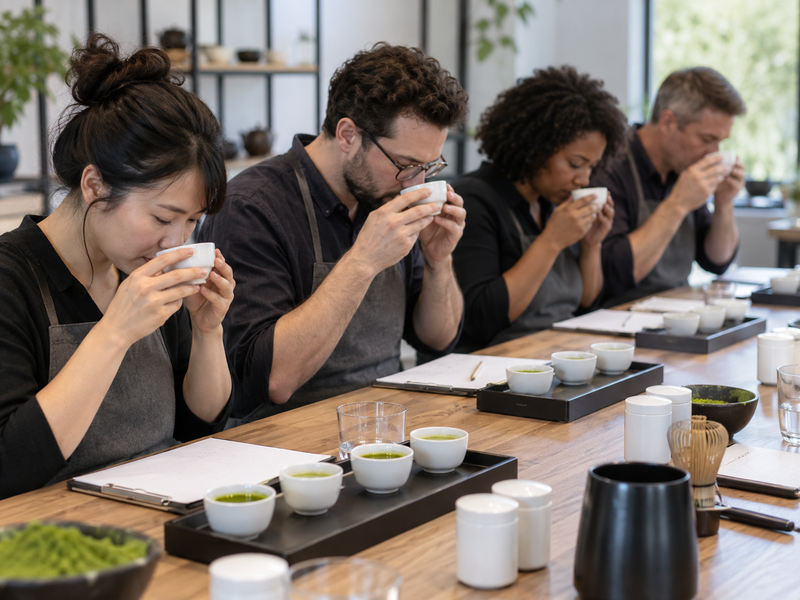
Repeat the reference. Select an approved reference lot that represents the intended product, plus controlled examples of common differences such as darker color, more bitterness, or coarser mouthfeel. Store and replace references under a documented plan because matcha itself can change in storage. Give blind repeats during training so assessors can learn the scale without relying on a visible label. Record the preparation date and reference lot. A new reference should be approved against the old one while both are still suitable for comparison, with any change documented.
| Reference type | Training purpose | Control |
|---|---|---|
| Approved target | Anchor expected profile | Lot and storage log |
| High-bitterness example | Scale practice | Blind code |
| Color variant | Visual calibration | Fixed lighting |
| Hidden duplicate | Repeatability check | Independent score |
Do not make a reference sample an automatic product specification. It is a physical teaching aid unless the buyer’s agreement explicitly defines an approved reference and comparison method. For a suggested training session, repeat the same reference after other samples and compare each assessor’s two scores. A large difference points to fatigue, unclear anchors, or unstable preparation; investigate before using that assessor’s scores to judge a commercial lot.
7. What should an individual score sheet record?
Capture observations before discussion
A useful sheet records date, assessor ID, sample code, order served, preparation method version, attribute scores, free-text notes, and any reason a judgment was difficult. Include a field for sample temperature or serving delay if those can vary. Use the same scale direction for every attribute so a high number always means more intensity, not sometimes better quality. Quality acceptance should be a separate decision derived from defined limits. Retain original individual sheets even when the panel later agrees on a group description.
| Sheet field | Why it matters | Common error |
|---|---|---|
| Code and order | Reveals position effects | Supplier name shown |
| Method version | Reproduces preparation | Verbal instructions only |
| Intensity score | Supports comparison | Undefined scale |
| Observation note | Captures unusual defects | Group wording copied |
Protect the raw record. After everyone submits, a panel leader can show score spread and discuss descriptor use. Document any corrected entry with its original value and reason. If assessors disagree about a term, revise the training example for the next session rather than editing scores to look aligned. The record should show what people sensed independently.
8. How do you detect assessor disagreement?
Use hidden repeats and score spread
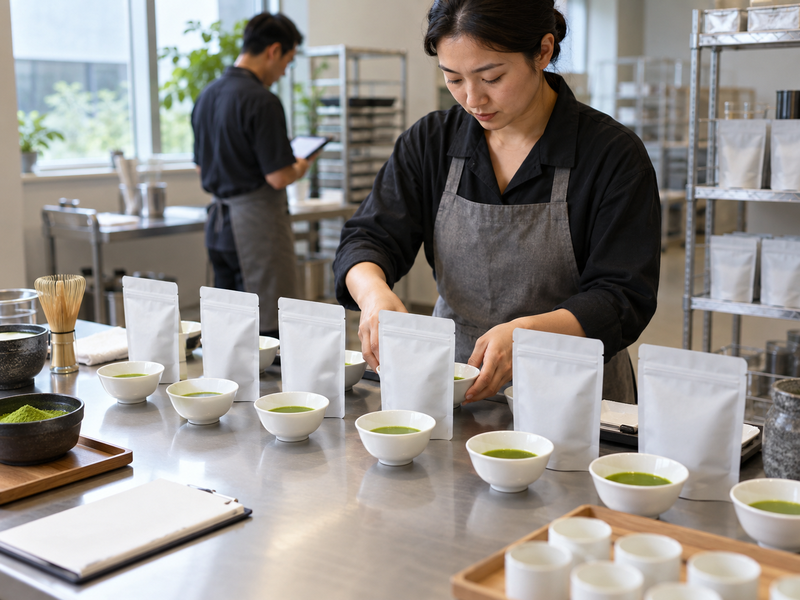
Inspect the spread. Insert an identical sample under two different blind codes. Compare each assessor’s scores for repeatability and compare assessors’ scores on the same code for agreement. A simple pilot rule might flag a difference greater than two points on a ten-point intensity scale for investigation; choose that threshold after observing training data, not as an ISO limit. Review whether the disagreement comes from preparation, order, term definition, fatigue, or a genuine sample difference. Plot individual scores rather than only the average, since opposing judgments can cancel in a mean.
| Check | Question answered | Follow-up |
|---|---|---|
| Hidden duplicate | Is one assessor repeatable? | Retrain or rest |
| Panel spread | Do assessors align? | Clarify anchor |
| Session control | Did preparation drift? | Repeat under control |
| Trend over time | Is calibration stable? | Refresh references |
ISO 11132:2021 addresses performance measurement for quantitative descriptive panels and individual assessors. Its summary makes clear that individual scores and a shared attribute list are prerequisites for its approach. For a small internal screen, use the principle of monitoring performance without claiming formal validation unless the full method and analysis support it.
9. When may sensory results affect lot release?
Put the panel inside a broader specification
Before using sensory results for release or rejection, write acceptance criteria, reference limits, required panel performance, handling of disagreement, and authorized decision maker. A trained panel can identify a sensory mismatch, but it does not replace a COA, laboratory safety testing, or other required quality controls. Hold a questionable lot under the site’s quality procedure while the team investigates. Compare the blind sample with a retained approved reference and, when appropriate, a repeat preparation. Document any re-test decision before revealing identities.
| Finding | Immediate action | Final authority |
|---|---|---|
| Within agreed range | Record and continue review | Quality lead |
| Borderline score | Repeat controlled session | Quality lead |
| Strong off-note | Hold and investigate | Quality lead |
| Panel disagreement | Diagnose method | Panel leader and quality |
Do not vote away a defect. A five-to-one majority does not prove a minority assessor was wrong. Examine whether that assessor detected a real off-note or had a compromised session. Keep the independent data with the lot record. If a buyer and supplier use different sensory methods, agree on one comparison protocol before disputing a shipment.
10. How should the panel stay calibrated?
Make performance checks routine
Keep checking performance. Begin sessions with a reference exercise, include periodic blind duplicates, and track each assessor’s repeatability and the panel’s score spread. Refresh references before they age beyond the intended comparison use. Record changes in assessor membership, preparation equipment, lighting, water, and formula, then assess whether a new baseline is needed. If a person has missed several sessions, give a short refresher before their scores enter a release decision. Review descriptor definitions whenever the same word produces recurring disagreement.
For a suggested three-month pilot, run weekly practice comparisons and a monthly performance review, then adjust cadence from the observed workload and stability. Matcha Village can discuss samples for a buyer’s application, but no supplier should be asked to accept an undocumented taste judgment as a lot rejection. Send the agreed preparation card, blind comparison plan, and signed sensory limits with the specification. A dependable panel gives procurement and quality teams a shared description of a real product difference, with enough records to repeat the result.
The matcha sensory evaluation guide outlines scoring topics; this training plan keeps different assessors using them consistently.
FAQ
Q1: What is matcha sensory panel training? It teaches assessors a shared preparation, vocabulary, scale, and repeatable blind comparison method.
Q2: How many assessors are needed? Set panel size from purpose and method; a small internal team is not automatically a formal consumer study.
Q3: Why include hidden duplicates? They reveal whether the same assessor gives similar scores to the same material under blind codes.
Q4: Can a sensory panel replace laboratory tests? No. Sensory results address defined perceptual attributes and sit beside other quality controls.
Q5: When should a reference sample change? Replace it under a documented plan and compare old and proposed references before approval.