
Matcha sauce can turn plain ice cream, waffles, or a cold latte into a menu item worth photographing. It can also leave green streaks, clog a squeeze bottle, or taste mainly of sugar. The difference lies in the base, how the tea is dispersed, and how the finished sauce is handled. A café buyer needs a repeatable specification before ordering powder or promising a new topping. These ten questions turn a kitchen experiment into a product that staff can make and serve consistently.
1. What job should matcha sauce do on the menu?
Start with the serving, not the recipe
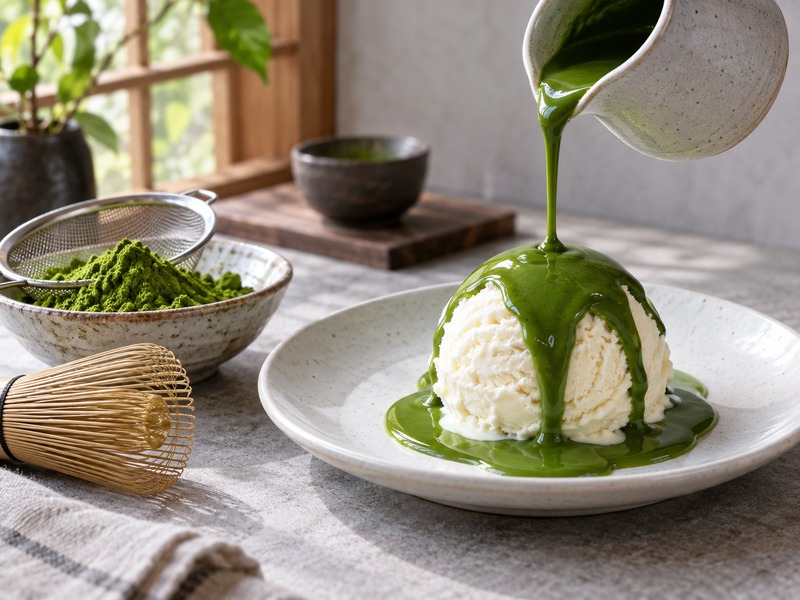
A drizzle over ice cream needs enough body to remain visible on a cold surface. A sauce folded into a latte must blend without floating in green ribbons. A filling needs to hold its position inside pastry. Write down the intended serving temperature, target dose, container, and whether the sauce should remain glossy after standing. Those requirements determine which base and viscosity make sense. One recipe may serve two applications, but assuming it will serve all three can lead to waste and complaints.
The ranked matcha condensed milk sauce recipe shows one appealing home approach. Its sweet dairy base is a useful starting point for a dessert topping. A commercial operation should test it against the actual menu, service speed, and allergen policy. Build a small trial before committing to a large batch. Photograph the portion immediately and after a short hold; the second image often reveals spreading or separation that the fresh pour hides.
| Menu use | Desired behavior | First practical test |
|---|---|---|
| Ice cream drizzle | Visible line on cold surface | Pour over frozen scoop |
| Latte swirl | Blends with milk | Stir into cold milk |
| Pastry filling | Holds inside the item | Fill and cut after standing |
| Plated dessert | Gloss and controlled spread | Plate and wait ten minutes |
2. Which base fits the intended customer?
Compare dairy, syrup, and plant-based options
Sweetened condensed milk makes a thick, sweet sauce with a familiar dessert character. A simple syrup gives a lighter pour and makes dairy-free development easier, but may need careful formulation to avoid a watery plate. White chocolate adds fat and a firmer set; it can mute the tea and introduce milk and soy depending on the ingredients. A plant-based base can work, though its flavor and stability vary widely. Pick the base by sensory result and label requirements, not by green color alone.
Taste each candidate at the intended dose. A tablespoon of sauce tastes different on its own than it does against ice cream or coffee. Record sweetness, tea aroma, bitter edge, texture, and how the finish changes after five minutes. Ask the supplier for the full ingredient statement of any compound base. In the United States, milk is a major food allergen, and a dairy-free marketing claim needs careful review of all components and handling. Do not call a sauce vegan merely because the tea powder is plant-based.
3. How much matcha is enough to taste?
Calculate dose in the finished serving
A sauce can look intensely green yet contribute little recognizable tea flavor once mixed with sweet ingredients. Measure grams of matcha per 100 grams of sauce and then grams of sauce per finished serving. The second number tells a café what the customer actually receives. Start with several small trials rather than one large bowl. Keep the base fixed while changing only the tea dose, and taste the candidates blind with the intended dessert or drink.
More powder is not always better. Higher levels can create a dry, bitter edge or a grainy mouthfeel, especially when the powder is not fully dispersed. A vivid sauce may also discolor as it sits in light. Compare color under the café’s actual display lighting, not only under a bright kitchen lamp. If an inexpensive green powder tastes harsh, adding more sugar may hide the flaw but weaken the matcha proposition. Ask for a sample that works at the intended use rate.
| Trial | Matcha level | What to judge |
|---|---|---|
| Low | Baseline dose | Is tea identifiable? |
| Medium | Modest increase | Flavor balance and cost |
| High | Upper test | Bitterness and grit |
| Retest | Chosen dose | Performance in finished menu item |
4. How can the powder be mixed without lumps?
Make a smooth paste first
Dry powder dropped directly into a thick sweet base can form small green pockets. Sift the matcha, then work it with a small measured amount of compatible liquid until it becomes a smooth paste. Add the remaining base gradually. The exact liquid and temperature depend on the sauce: water may suit syrup, while a little warm dairy may suit a condensed milk version. Avoid boiling water solely to force mixing; heat changes the taste and can make handling harder.
Scale the method by mixing time and equipment, not just ingredient weight. A whisk, immersion blender, and production mixer each disperse differently. Record order of addition, temperature, batch size, and rest time. Check the bottom and corners of the vessel for dry deposits. Then strain one trial and compare it with an unstrained trial; straining can remove lumps, but it may also discard part of the tea and mask a poor mixing method. A clean standard process is more useful than heroic last-minute rescue.
5. What thickness works at service temperature?
Test in the bottle and on the plate
Viscosity changes when a sauce is chilled. A sauce that pours beautifully warm may barely leave a squeeze bottle after refrigeration. Another may run down the side of a cold glass before it reaches the customer. Use the actual bottle tip, pump, spoon, or dosing line. Measure how much comes out with a normal squeeze and whether staff need to shake or warm the container. A practical test should be easy to repeat during a busy shift.
Do a short hold test at room temperature only as part of a controlled product evaluation, then apply the correct food safety plan for service. Watch for separation, skin formation, crystallization, and changes in color. If the sauce is intended for a cold foam or latte, test it in the beverage rather than assuming a plate result transfers. A thin syrup may be ideal for mixing yet disappointing as a photo-ready drizzle. It is reasonable to keep separate versions if the applications truly require different properties.
| Check | Dessert topping | Beverage addition |
|---|---|---|
| Flow | Controlled ribbon | Easy dispersion |
| Cold test | Holds shape | Mixes without clumps |
| Serving tool | Squeeze bottle | Pump or measured spoon |
| Failure sign | Runs off plate | Settles or streaks |
6. How should a café handle storage and shelf life?
Let the formula determine the food safety plan
Do not assign a universal shelf life to homemade matcha sauce. Water activity, pH, dairy content, preparation conditions, and packaging change the answer. A sweet sauce is not automatically shelf-stable. A café making a refrigerated dairy sauce should use its applicable food safety procedures, date the batch, and avoid topping up old product with fresh sauce. A manufacturer planning retail distribution needs its own validated process and shelf-life work.
For general kitchen context, the FDA advises keeping refrigerated food at 40°F or below and refrigerating perishables promptly. Those general rules do not validate a particular sauce for a particular duration. Separate a bench sample from a saleable batch, and never use a taste check as the only safety test. If a supplier sells a ready-made sauce, request its storage directions, unopened and opened-life guidance, lot coding, and evidence supporting the claimed life.
7. Which allergens and labels need attention?
Review the whole recipe and shared equipment
Condensed milk and white chocolate frequently bring milk into the recipe. Some chocolate and plant-based creamers may bring soy, nuts, or other allergens. FDA allergen guidance explains the importance of declaring major allergens and controlling cross-contact in packaged foods. For a café, train staff to answer ingredient questions accurately and keep the menu description aligned with the real formula. For a retail pack, have the complete label reviewed for the intended market.
Ask for statements covering the tea powder, base, flavorings, and any stabilizers. A supplier’s “matcha sauce” name does not reveal everything in the bottle. If you replace a base during a cost-saving exercise, recheck the allergen information before switching production. Maintain version control so the menu, recipe card, purchasing list, and label describe the same formula. A flavorful sauce loses value quickly if staff have to guess what it contains.
| Ingredient choice | Possible concern | Documentation to request |
|---|---|---|
| Condensed milk | Milk allergen | Ingredient and allergen statement |
| White chocolate | Milk or soy | Full component declaration |
| Plant cream | Soy, nuts, or additives | Supplier specification |
| Matcha powder | Identity and quality | Lot and origin records |
8. How should a buyer compare suppliers?
Quote by finished serving
An inexpensive powder may require a higher dose to create a recognizable tea flavor. A premium powder may waste money if the sauce base masks its differences. Ask each supplier for samples from a current lot, specifications, pack size, lead time, and a price that includes realistic shipping. Make the same sauce with each powder at a fixed dose, then repeat at a matched sensory target. This gives both a controlled comparison and a commercial comparison.
Calculate cost per serving using the full recipe, not only the tea. Include base ingredients, labor, packaging, waste, and the normal amount dispensed by staff. Run a small service trial because a sauce that needs constant remixing costs time. The Matcha Village product site can serve as a starting point for requesting tea specifications, but the final decision should rest on lot-specific samples and the finished menu test. Write down the chosen standard so a later replacement can be evaluated against it.
9. What should a service recipe card include?
Remove decisions from the rush hour
A useful recipe card specifies ingredient weights, mixing order, tool, target temperature, batch yield, bottle fill level, storage condition, date label, serving dose, and discard rule. Include a photo of the acceptable pour. If the sauce separates during a shift, state whether it may be shaken, remixed, or must be discarded according to the validated procedure. Avoid instructions like “add matcha until green”; the apparent shade changes with lighting and the base.
Train with a measured spoon or pump before moving to free pouring. Weigh a few real portions to learn how staff interpret “one drizzle.” If the intended serving is small, a wide-tip bottle can double the cost without anyone noticing. Keep the recipe card at the station and update it when ingredients or equipment change. A documented method makes a seasonal special repeatable across locations and gives purchasing a clear specification for reorders.
10. When is the sauce ready for a menu launch?
Pass a short, realistic pilot
Run at least one pilot with the intended batch size, staff, equipment, and menu item. Check first and last portions for flavor and appearance. Record customer feedback on sweetness and tea flavor separately; a customer can like the dessert but still fail to notice the matcha. Photograph the finished serving after normal handoff time. Confirm that the bottle cleans easily and that the storage and allergen information is available to staff.
Approve the formula only when its sensory result, handling, label, and cost all work together. A dramatic green color is a poor substitute for a clear matcha flavor and manageable process. A modest sauce with a reliable pour may earn repeat orders more effectively than a complicated version that only looks good in a development kitchen. Save the approved recipe and supplier lot details, then review them after the first weeks of service.
| Launch gate | Evidence to keep | Reason |
|---|---|---|
| Taste | Blind sample notes | Tea flavor survives serving |
| Service | Portion weights and photos | Staff can repeat it |
| Safety | Approved handling procedure | Batch is controlled |
| Cost | Full recipe calculation | Price supports margin |
FAQ
Can matcha sauce be made without condensed milk?
Yes. Syrup or a suitable plant-based base can work, but the texture, flavor, and storage plan need their own testing. Substitution is not a direct guarantee of the same result.
Why does matcha sauce clump?
Fine powder can form dry pockets when added to a thick base. Sifting and making a small smooth paste before adding the remaining liquid usually gives a more even result.
Can I use matcha sauce in iced drinks?
Only after testing it in the actual drink. A dessert-thick sauce may leave streaks or settle in cold milk, while a thinner version may disperse more cleanly.
How long does homemade matcha sauce last?
There is no safe universal answer. Ingredients and process determine storage needs and validated shelf life. Follow an appropriate food safety plan and supplier or regulatory guidance for the exact product.
What should I ask a sauce supplier for?
Request the full ingredient and allergen statements, tea content or specification, storage instructions, shelf-life basis, lot coding, price, and a current-lot sample for your menu test.