
Instant matcha sounds like one product, but the shelf holds several. A single-ingredient tea powder may disperse quickly while leaving fine leaf in the cup. A dried tea extract may dissolve more completely but taste different. A latte sachet can mix fast because it includes sugar, milk powder, or other ingredients.
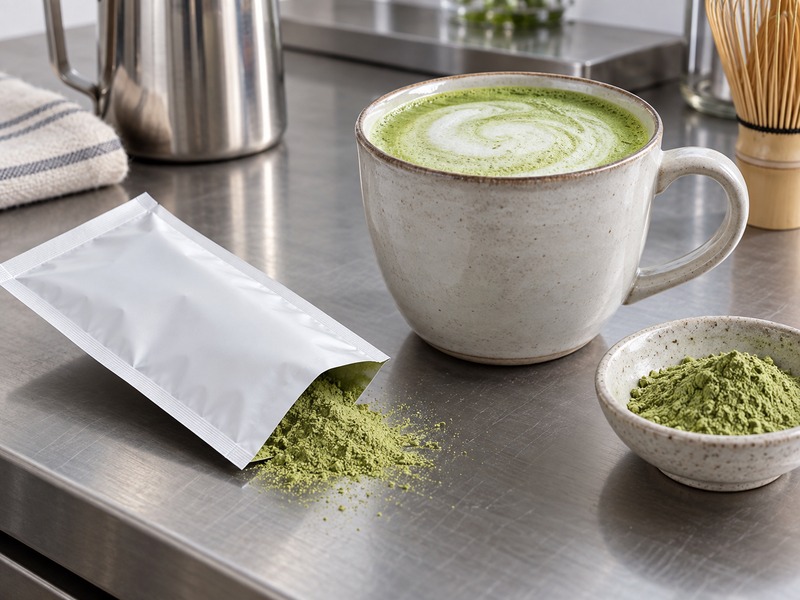
Before choosing a product, decide which experience you want to sell. These ten questions help a buyer compare convenience, flavor, and label facts without treating every green packet as the same thing.
1. What does “instant matcha” promise the customer?
Define the expected preparation
Some customers hear “instant” and expect a powder to disappear in cold water with a spoon. Others accept a shaker bottle and a little sediment. Those expectations lead to different ingredients and packaging. Write the intended preparation on one card: water or milk, hot or cold, tool, time, and final serving size. Then test the product exactly that way. A packet that performs well in a laboratory blender may fail in a hotel cup stirred with a spoon.
The ranked homemade instant matcha latte article shows how the word “instant” can appear in a home drink context. A brand needs a tighter definition. Is the powder pure ground tea, a soluble tea extract, or a premixed latte? State that in supplier requests and on the product page. A clear name helps customers judge the tradeoff between authentic whole-leaf texture, fast mixing, and a sweet ready-made cup.
| Format | Main ingredient idea | Customer experience |
|---|---|---|
| Ground matcha | Fine tea leaf | Suspended particles |
| Instant tea extract | Dried soluble tea solids | More soluble cup |
| Latte mix | Tea plus milk/sweetener | One-step sweet drink |
| Portion sachet | Any of the above | Measured convenience |
2. Is pure matcha supposed to dissolve?
Distinguish suspension from solution
Pure matcha is ground tea leaf. It can disperse smoothly when particles are fine and mixing is adequate, but it remains a suspension. Some settling after rest is expected. A claim that a single-ingredient whole-leaf powder “fully dissolves” should prompt a closer look at its ingredients and what the seller means by dissolving. A clear-looking cup may be an extract rather than whole ground leaf; neither format is inherently wrong, but the distinction matters to buyers.
Test the powder in the consumer’s stated method. Measure the amount of residue after a fixed wait and whether a normal stir or shake restores the drink. Taste the first and last sip. If the product is sold for cold water, check clumps in cold water rather than presenting only a hot demo. If it is designed for a frother, say so. Honest preparation instructions can prevent more disappointment than a vague “instant” badge on the front of the pack.
3. How does tea extract differ from ground leaf?
Compare composition and taste
A soluble instant tea can be made by extracting tea into water and drying the extract. That process may use carriers or other ingredients depending on the formulation. Research on spray-dried green tea extracts discusses maltodextrin as a wall material in a studied powder. This does not mean every instant product contains maltodextrin; the supplier’s ingredient declaration answers that for the exact SKU. Ask whether the product is whole leaf, extract, or a blend of both.
Taste equal finished servings, not equal grams of different powders, because their tea-solid content and recommended dose may differ. Compare aroma, bitterness, color, body, sediment, and cost per cup. An extract can offer convenience for vending or bottled-drink systems. Whole-leaf matcha may offer a different mouthfeel and label story. The right format depends on the drink, production equipment, and customer expectation. Do not quietly replace one with the other under an unchanged “100% matcha” claim.
| Question | Ground leaf | Tea extract |
|---|---|---|
| What remains? | Leaf particles | Soluble solids plus any formulation components |
| Mixing | Dispersion needed | Often easier dissolution |
| Label review | Tea identity | Full process and ingredients |
| Sensory | Whole-leaf body | Different body and aroma |
4. What else can an instant matcha latte mix contain?
Read the full ingredient list
Latte sachets may include sugar, milk powder, plant creamer, flavors, thickeners, or carriers. Their convenience can be valuable, especially for offices, travel, and quick-service locations. But “instant matcha” on the front should not stop a buyer from checking how much tea and sweetener are actually present. The FDA explains that food ingredients generally appear in descending order by weight. Read the current pack and ask the supplier to identify the tea component clearly.
Prepare the sachet with exactly the recommended water amount. Then try the amount a typical consumer might use. A mix can become thin, cloying, or lumpy when the instructions are imprecise. If the product is marketed as unsweetened, verify every component, including the creamer. If it contains dairy, soy, or another major allergen, the finished label must be reviewed appropriately. Convenience is not a substitute for an accurate ingredient and nutrition statement.
5. Which instant matcha mixing test predicts customer success?
Use ordinary tools and timed observations
Build a test matrix with hot and cold water, a spoon, a shaker, and perhaps a frother if the product suggests it. Keep powder and liquid amounts fixed. Record time to an acceptable cup, clumps after mixing, foam, sediment after rest, and last-sip texture. Use clear vessels for visual checks and blind cups for taste. A green swirl at the top can hide a dry lump on the bottom.
For vending or commercial dispensers, test the actual machine. Powder flow, humidity, dosing, water temperature, and cleaning can change the result. A product that works with a hand whisk may bridge in a hopper. Ask the supplier for equipment compatibility information, then run a pilot with the intended unit. If the mix requires a high-speed blender, it may still be a good café ingredient, but the packaging should not imply it can be stirred into water anywhere. Name the method the customer can really use.
| Test | Pass question | Record |
|---|---|---|
| Cold spoon | Does it mix within stated time? | Clumps and residue |
| Hot spoon | Does flavor stay balanced? | Temperature |
| Shaker | Does foam settle acceptably? | Shake count |
| Dispenser | Does powder flow reliably? | Dosing and cleaning |
6. How much tea flavor survives convenience?
Judge the prepared serving
A one-step mix often competes with sweeteners and creamy ingredients for flavor space. Taste it alongside a freshly prepared tea reference and a competitor, but do not assume the products must taste identical. Decide the target: tea-forward, dessert-like, or mild and accessible. Record bitterness, aroma, sweetness, body, and finish. If tasters cannot identify tea, a stronger matcha image on the pack will not solve the sensory problem.
Test the product at the end of its intended shelf life, not just a fresh development sachet. Tea aroma and color can change with storage; powdered creamers can also alter texture. Use the actual portion pack and storage conditions. If a supplier changes the tea lot, ask whether the flavor profile is held within a specification. Matcha Village can discuss bulk tea and custom blends in the project materials; request current samples and lot documents for the exact format the brand plans to sell.
7. What should an instant matcha portion pack say?
Give the buyer a complete recipe
A sachet should state net contents, ingredients, allergens, nutrition information where required, and preparation directions that match the tested product. Specify liquid volume and whether the drink is intended for water or milk. If both work, say how the taste and nutrition change when milk is added. A one-sentence instruction such as “add hot water” may leave the customer with a thick paste or a weak drink. The most useful directions are short, measured, and tested with non-experts.
The word “instant” should not conceal a need for a special tool. If a shaker is necessary for a cold version, print that. If sediment is natural to whole-leaf matcha, set that expectation without apologizing for it. If the formula includes added sugar, show it accurately. The FDA’s added-sugars guide explains how U.S. packaged foods present that information. A clear pack makes the convenience claim credible.
| Pack element | Question | Owner |
|---|---|---|
| Identity | Tea, extract, or latte mix? | Product team |
| Directions | Can a novice make it? | Sensory team |
| Ingredients | Are all components current? | Regulatory review |
| Nutrition | Is serving basis correct? | Label review |
8. How should instant matcha powder be packaged and stored?
Protect a small serving from moisture and light
Tea powder can absorb moisture and odors. Some formulated instant powders may cake or bridge if their packaging fails. Compare single-serve sachets with a larger tub based on expected use rate. A tub can reduce packaging per serving but gets opened repeatedly. Sachets protect individual portions but add cost and waste. Test the chosen material for seal integrity, powder flow, aroma retention, and color over the intended shelf life.
Ask suppliers for storage guidance and packaging specifications. In a café, keep working stock away from steam and use dry tools. For a dispenser, inspect the hopper during humid service and establish a cleaning schedule. Record opening dates. Do not assign a shelf life from the unopened pouch to an open tub or machine hopper. If a batch becomes clumpy, investigate moisture exposure and pack integrity before increasing mixing time or adding more water to the consumer instructions.
9. When does a ready-to-drink version need different work?
Treat powder performance as only one input
An instant powder that mixes easily is not automatically suitable for a sealed bottle. A ready-to-drink product has its own formula, process, package, microbiological plan, color stability, sediment behavior, and shelf-life evidence. Milk or plant bases complicate those questions further. Work with a qualified beverage process partner. Test final-pack samples through the intended distribution conditions rather than assuming the dry-mix shelf life carries over.
Check whether “shake well” restores an acceptable drink at the end of life. Compare processing effects on tea flavor and color. A fully soluble extract may reduce sediment but produce a different sensory profile from ground matcha; a mixed system might be worth testing. Whichever is chosen, the ingredient statement and marketing copy should match the final formulation. Do not call a tea-extract drink whole-leaf matcha without a supportable basis. A clear technical brief prevents an attractive label from getting ahead of the product.
10. How should a buyer choose an instant matcha offer?
Compare cost per acceptable cup
Request the same information from each supplier: ingredient list, recommended dose, sample, specification, lot certificate, pack options, minimum order, and lead time. Make each sample using the same target serving. Record mixing time, taste, sediment, sweetness, and cost per cup. Price per kilogram alone can mislead when one blend contains more creamer or needs a larger dose to reach the tea target. A cheap sachet that disappoints customers is expensive in a different way.
Run a small pilot with real users and equipment. Watch where they make mistakes: wrong water volume, poor mixing, confusion over milk, or surprise at sweetness. Revise the directions or choose a different format before committing to a large print run. An instant matcha product succeeds when the preparation promise, ingredient list, and actual cup all agree.
| Decision factor | Evidence | Reject or revise if |
|---|---|---|
| Mixability | Consumer-like trial | Persistent clumps |
| Flavor | Blind tasting | Tea disappears |
| Label | Current ingredients | Claims are unclear |
| Supply | Lot and lead-time records | No representative stock |
FAQ
Q1: Is instant matcha always pure tea? No. It may be ground tea, dried tea extract, or a latte mix with other ingredients. Read the declaration.
Q2: Does pure matcha fully dissolve? Ground leaf remains suspended even when it disperses smoothly. Some settling is normal.
Q3: Can an instant mix contain sugar? Yes. Check the ingredient list and the finished product’s nutrition panel.
Q4: Is tea extract the same as ground matcha? No. It is made through a different process and can have different sensory and mixing behavior.
Q5: Can a café use a sachet in a cold drink? Only if the specific product has been tested in the intended cold method; some require warm liquid or stronger mixing.
Choose the format from the cup backward. The best “instant” product is the one a customer can prepare as promised and recognize as the drink on the pack.