
Matcha sandwich cookies are easiest to develop when the two shells and the filling are treated as one bite. A crisp shell may taste excellent alone yet squeeze a soft filling out at the first bite. A thick ganache layer may look generous but overwhelm the tea in the biscuit. For a bakery or confectionery business, the useful target is a sandwich that assembles neatly, travels in its intended pack and eats comfortably at the planned serving condition.
Contents: Format · Tea · Shells · Cutting · Filling · Deposit · Assembly · Texture · Packing · Approval
1. Which matcha sandwich cookies should you develop first?
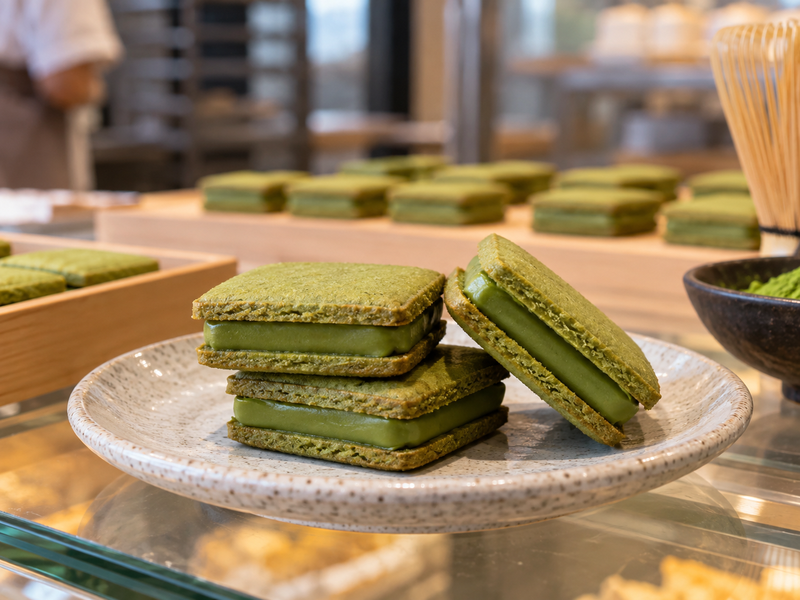
Choose between a chilled dessert cookie and a biscuit intended for another validated storage system. The choice affects the filling, packaging and customer instructions. A cream-based nama chocolate sandwich should not inherit the handling assumptions of a dry commercial sandwich biscuit just because both have two outer cookies.
Define the complete product
| Decision | Option to consider | Question for the trial |
|---|---|---|
| Shape | Round or square | How much trimming is needed? |
| Shell | Tender short cookie | Does it break cleanly when bitten? |
| Filling | Slab or piped deposit | Can staff control its weight? |
| Service | Defined chilled condition | Are shell and center compatible? |
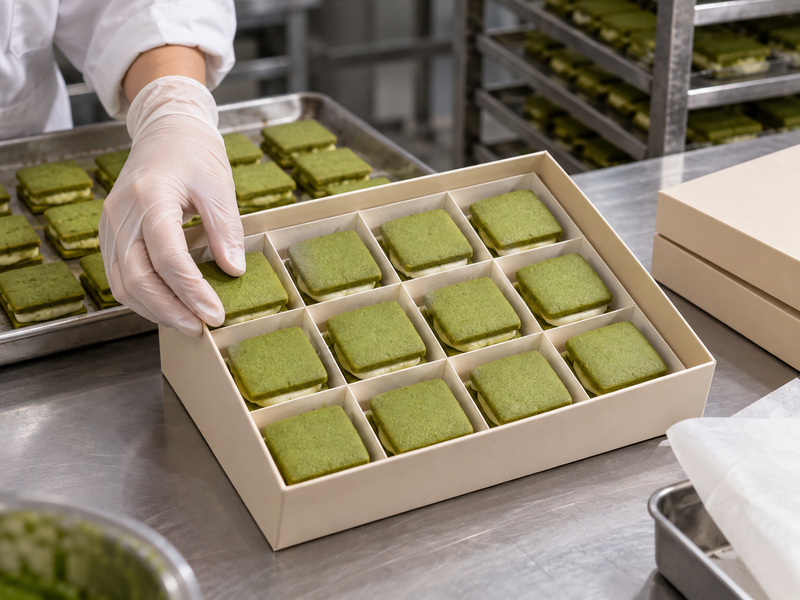
Okonomi Kitchen’s reference combines matcha sable shells with a cut matcha nama chocolate center. It is a useful example of a chilled, layered format. A bakery can use the concept while developing dimensions and handling around its own equipment.
Begin with one shape and one filling. Decorative embossing, contrasting edges and multiple centers can follow once the sandwich works. Make a simple cross-section sample for approval so the intended relationship between shell and filling is visible to both production and purchasing staff.
2. Should the tea go in the shells or the filling?
Tea in the shell is exposed to baking, while tea in the filling enters a different mixture and may be tasted at a different concentration. Using it in both can create a strong matcha identity, but it also makes troubleshooting harder. Establish a workable plain shell and filling first, then decide where tea contributes most.
Compare one component at a time
For an initial adaptation, use the bakery’s established plain short-cookie formula and a filling already suitable for the intended service. Add tea to only one component during the first comparison. Once that version is selected, evaluate whether a second tea addition improves the complete bite enough to justify another ingredient specification.
Ask the supplier for unsweetened powder and record its code. Matcha Village’s culinary matcha guide provides a starting point for food application discussions. The purchasing question should include whether the tea will be baked, mixed into fat-rich filling or used in both places.
Taste a whole sandwich and each component separately. A filling that seems bitter on its own may balance a sweet shell, while two strongly flavored components can leave a dry finish. Keep the portion relationship constant so the tea comparison does not quietly become a test of filling quantity.
3. How can shell thickness be compared fairly?
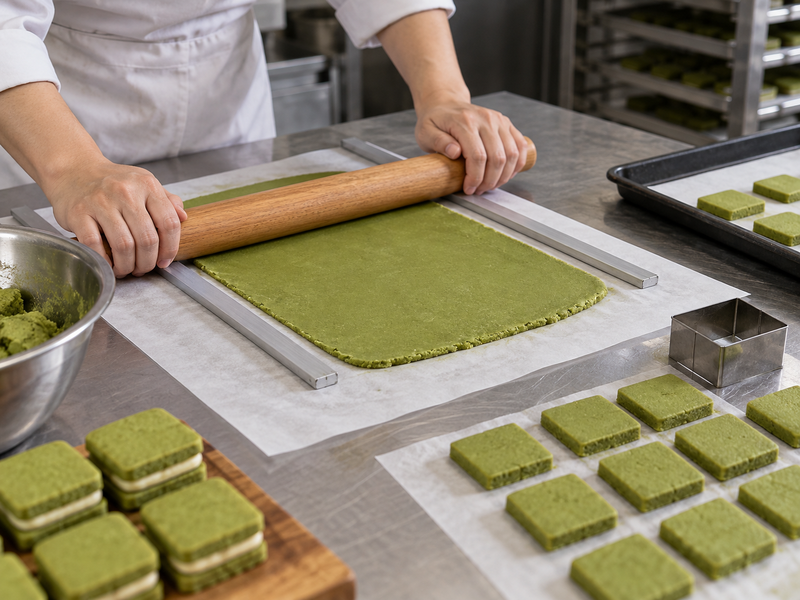
Thickness changes the bite, bake endpoint and amount of dough needed per finished sandwich. Use rolling guides or a calibrated sheeting process rather than judging the sheet by eye. Record both raw and cooled dimensions. A thin raw shell that spreads differently can create a larger finished cookie than its thicker counterpart.
Run a small thickness trial
The following comparison is a proposed production trial, not a validated formula. Use the same dough batch and cutter, then establish an appropriate bake endpoint for each thickness instead of forcing both to share one time.
| Sample | Proposed raw thickness | Evaluate after assembly |
|---|---|---|
| Thin | 3 mm | Breakage and filling squeeze |
| Medium | 4 mm | Bite balance and strength |
| Thicker | 5 mm | Hardness and total height |
Pair like with like during the comparison. A thin top and thick bottom introduce another variable. Inspect the cross section and take a normal bite at the intended serving condition. Cutting with a knife alone does not reveal whether the filling escapes when a customer eats the cookie.
Keep several unfilled shells from each trial. They show whether later softening comes from the shell itself or from contact with the filling, and they provide a reference when reviewing the same product after packing.
4. How do you keep the shells easy to pair?
Match size and flatness before filling begins. Lay the cooled shells in pairs with their flat sides facing upward. If one tray spreads more than another, sorting by size may recover some usable pairs, but it also adds labor. Record the variation so the next batch can address its cause.
Control cutting and scrap handling
Square shells can be cut from a sheet with little geometric waste, while round cutters leave spaces between pieces. Both methods need a defined treatment for scraps. Reworking dough repeatedly can alter handling, so keep the number of rerolls visible and compare those shells with the first cut during development.
Lift raw pieces without stretching them. A distorted corner may not be obvious until the filling slab is placed against it. Use the tray surface and spacing selected for the trial, and allow shells to cool before assessing their dimensions. Warm cookies can be damaged by sorting too early.
Track broken corners, bowed bases and severe size differences separately. A shell can be acceptable as a single biscuit yet unsuitable for a neat sandwich. Set that distinction before yield is calculated; otherwise, the bakery may promise more finished units than the usable pairs can actually produce.
5. What kind of filling fits the service plan?
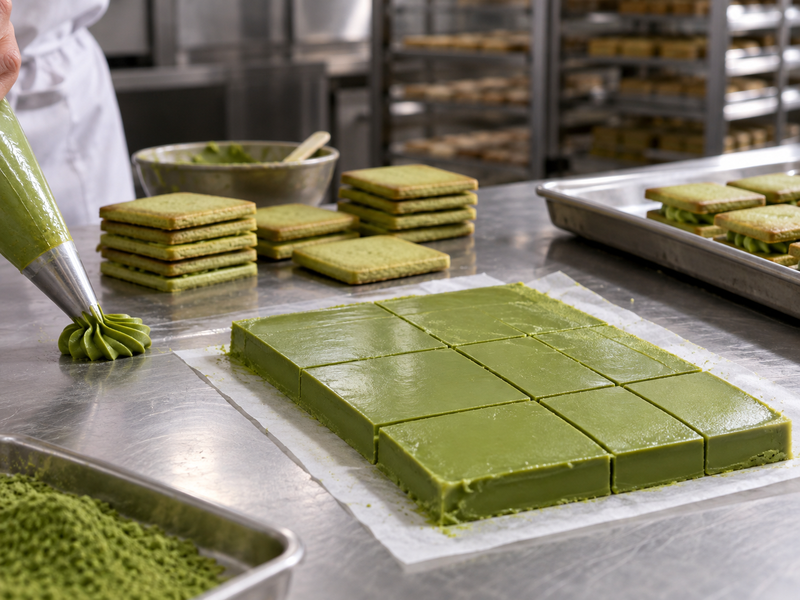
A cut ganache slab gives a defined edge and thickness. A piped filling allows flexible deposits and can suit round shells. A dense icing-style center creates a different product again. King Arthur Baking’s sandwich filling illustrates a sugar-and-fat center designed to be firm yet spreadable; it is not interchangeable with a cream-based ganache.
Compare handling before flavor variations
| Filling format | Production benefit | Check before approval |
|---|---|---|
| Cut ganache slab | Consistent geometry | Release and edge smearing |
| Piped ganache | Flexible portioning | Flow during assembly |
| Dense icing center | Easily portioned texture | Bite and sweetness |
| Fruit-containing center | Distinct flavor | Moisture and ingredient controls |
Use a filling formula already appropriate to the planned handling system, then test matcha additions separately. Do not add water casually to loosen a stiff center; that changes the formula and may affect more than depositing. Record the exact cream or fat product and the chocolate used.
Judge the center at the intended eating condition. A filling that cuts neatly when very cold may feel waxy or overly firm to the customer. Conversely, a pleasant soft center may need better support during packing. The useful compromise depends on the actual product route.
6. How much filling belongs in each sandwich?
Weigh a few complete trial sandwiches rather than relying on a nozzle’s appearance. A broad, shallow deposit and a narrow, tall deposit can contain the same weight but behave differently when the top shell is placed. Set the deposit footprint as well as the quantity.
Find the portion through a bite test
For a proposed comparison, choose three filling weights around the team’s first acceptable sample while keeping the same paired shells. Record each weight and the resulting total height. These are development points, not a universal ratio: a small crisp biscuit and a large tender square require different amounts.
Watch where the filling moves when gentle pressure is applied. It should reach the intended edge without spilling beyond it. If a modest deposit still escapes during biting, inspect shell hardness and filling condition before reducing the center until the sandwich tastes dry. Quantity alone may not be the cause.
Calculate filling demand from the number of usable pairs. Allow a documented amount for the bowl, piping bag or slab trim based on a real trial, rather than an unexplained percentage. Save that measurement with the equipment used, because changing to a depositor can change the retained material and the labor required.
7. What makes assembly neat and repeatable?
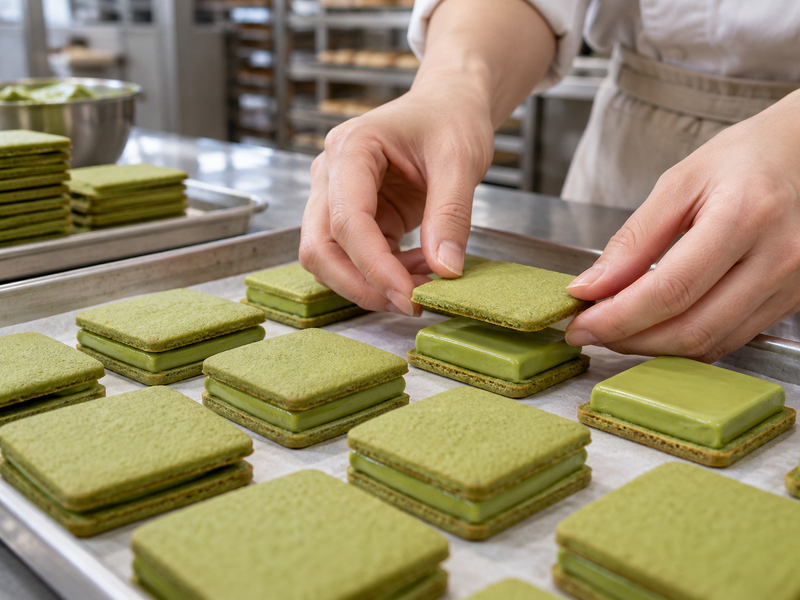
Set up a sequence that lets staff pair shells, add the center and close the sandwich without repeatedly moving trays around. Keep crumbs away from the filling station. They can mark a smooth ganache edge and make a clean product look rough even when the shell shape is consistent.
Use the same closing pressure
| Assembly check | Acceptable observation | Investigate when |
|---|---|---|
| Alignment | Edges line up | Shell sizes differ |
| Center placement | Filling sits centrally | Deposit drifts to one side |
| Final height | Similar across a sample run | Pressure or filling varies |
| Edge finish | Clean without major squeeze | Center is too soft or excessive |
For a slab center, cut with a method that leaves clean edges and keep the blade clean and dry. For a piped center, establish the nozzle position and stopping point. The reference recipe’s slab format is useful context, but your handling routine should fit the chosen filling and kitchen controls.
Inspect the first completed row before assembling the rest. Small alignment errors are easier to correct before a whole tray is filled. Keep the finished product under the conditions required by its formula; a long assembly session should not become an unrecorded holding step.
8. How should texture be checked after assembly?
Compare freshly assembled sandwiches with samples held through the planned quality evaluation. Note changes in shell crispness, center firmness and the contact layer. A shell may become pleasantly tender or undesirably soft, depending on the intended product. Define the target instead of calling every texture change a defect.
Test any barrier as a separate component
Okonomi Kitchen describes a thin tempered chocolate layer on the inner shell as an option for retaining crispness. If you test that approach, record the chocolate and pickup weight. A thick barrier can create another hard layer in the bite, and it adds cost and assembly time. It does not establish shelf life by itself.
Keep one barrier-free control alongside the trial. Inspect both at the same times and serving condition. Compare the whole bite, not only whether the shell still snaps. Customers may prefer a slightly softer shell if it lets the filling stay neatly between the two sides.
Storage instructions and shelf life require validation for the actual combined product. Do not borrow a period from a filling recipe or an unfilled biscuit specification. For a chilled ganache version, assess packaging and condensation through the intended handling route as part of that work.
9. How do you cost and pack the finished cookie?
Two shells are needed for every saleable sandwich. King Arthur’s cookie guidance makes that basic yield calculation explicit. In production, go further and count usable pairs after sorting. An odd shell, a chipped corner and an unmatched oversize piece cannot automatically become complete sale units.
Include assembly losses in the cost
| Item | Record from the trial | Cost implication |
|---|---|---|
| Usable shell pairs | Count after sorting | True finished yield |
| Filling used | Finished deposits plus retained material | Center cost |
| Barrier chocolate | Weighed pickup if used | Extra ingredient and labor |
| Packing rejects | Count after handling | Pack suitability |
| Assembly time | Staff time per completed tray | Production capacity |
Choose packaging that limits sliding and pressure on the exposed center. Individual compartments can help protect the edges, but their dimensions should match the finished sandwich. Excess space allows collisions; a tight fit can scrape off filling when staff insert the cookie.
Run a normal transport simulation with the real sales pack. Check alignment, grease marks and filling transfer afterward. A photograph taken immediately after assembly cannot reveal how the product will look when a buyer opens the box.
10. What should a supplier and production handover include?
Give purchasing the approved matcha code, the component in which it is used and the finished tasting reference. Include chocolate and cream specifications where relevant. A supplier offering a substitute needs enough information to understand why a powder that works in a drink may not match the approved baked shell.
Make changes traceable to one component
Keep separate shell and filling formulas under the same finished-product specification. Record raw thickness, cutter dimensions, baked size, deposit weight and complete sandwich height. Attach photographs of an acceptable edge and cross section. These details let staff investigate a problem without changing both components at once.
For a new tea lot, compare it against retained approved material in the same component. For a new filling product, repeat the depositing and assembled texture checks. Confirm ingredient declarations and handling requirements whenever a substitution is made, especially when moving between dairy and plant-based materials.
Finish approval with a short run performed by the normal production team. Have them sort the shells, assemble the sandwiches and pack them using only the written instructions. Record the saleable count and inspect one opened pack before confirming the next wholesale order.
Frequently asked questions
Q1: Can the same matcha be used in shells and filling?
It can, if trials support both uses. Evaluate baked flavor and filling texture separately, then taste the assembled sandwich at its intended serving condition.
Q2: Why does the filling squeeze out during a bite?
Check shell hardness, center condition, deposit size and total height. Reducing the filling is only one possible correction and may weaken the flavor balance.
Q3: Is a chocolate barrier necessary?
No. Test it only when retaining shell crispness suits the product. Compare barrier and control samples, including the extra layer’s effect on bite and cost.
Q4: Can these cookies be sold without refrigeration?
That depends on the validated formula and handling system. A cream-based nama filling should not be treated like a dry icing center simply because the outer shells are biscuits.
Q5: How should a bakery estimate its first order yield?
Count usable shell pairs, then account for filling and packing rejects observed in a trial. The number of shells baked is not the number of complete sandwiches available for sale.