
Matcha rice pudding has a visible grain texture that a smooth matcha pudding cannot provide. That texture can become a liability when one batch is tender and another turns pasty, dry or unevenly green by the time it reaches the customer. This guide helps dessert manufacturers, cafés and foodservice buyers test rice, milk base, matcha and portioning as one finished product. Matcha Village can offer matcha candidates for the application; the food operator approves the recipe, food safety controls and market claims for its own product.
Table of contents
- What rice pudding should the customer receive?
- Which rice belongs in the first trial?
- How should the cooking method be documented?
- How can dairy and plant bases be compared?
- When should matcha enter the pudding?
- How can a team compare matcha samples fairly?
- What changes when the recipe moves into batch production?
- How do you calculate cost per saleable cup?
- What should chilled holding and distribution trials observe?
- What belongs in the final recipe and supplier brief?
1. What rice pudding should the customer receive?
Define grain and creaminess together
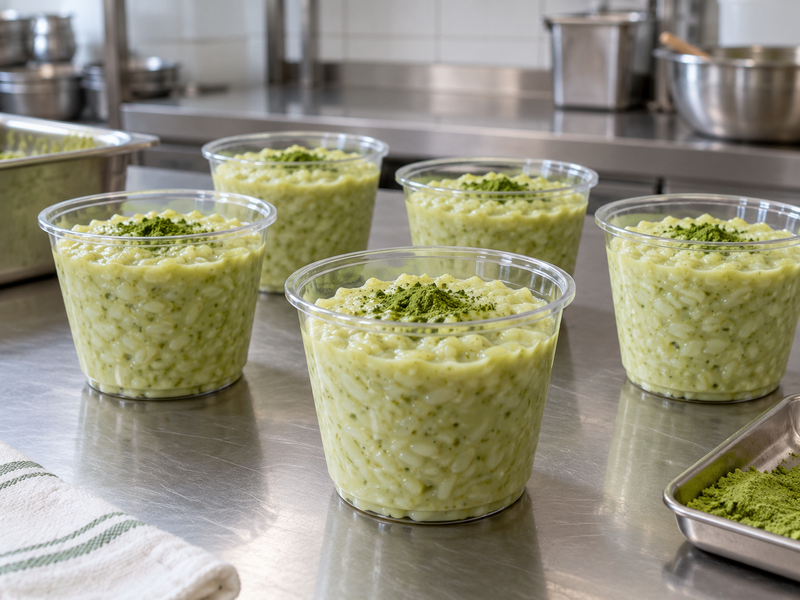
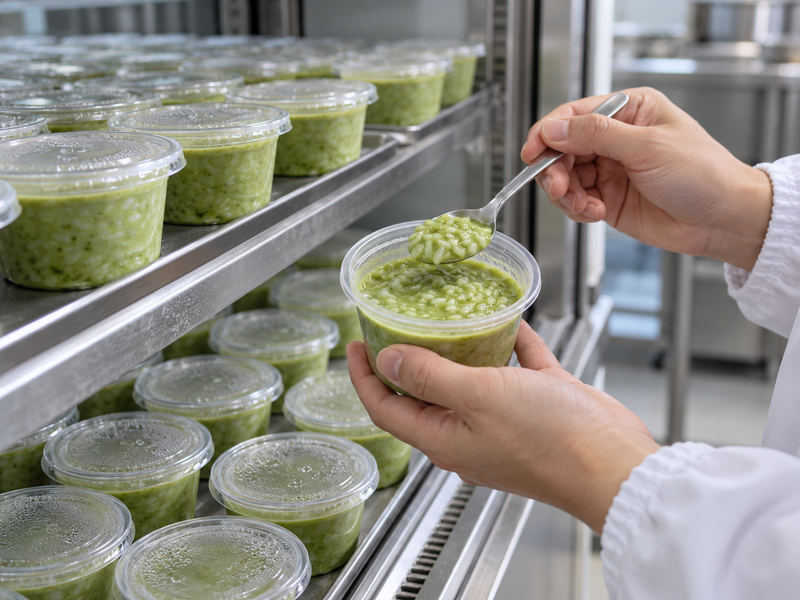
Decide whether the item will be a warm café bowl, a chilled dessert cup or a component beneath fruit in a layered pot. Write down the target grain tenderness, amount of visible free liquid, spoon resistance, green color, tea flavor and portion weight. A good description distinguishes grains that remain separate from a paste that happens to contain rice. Photograph a spoonful and the cup surface at the planned sale point. That reference helps developers and shift teams discuss the same texture.
Taste the plain pudding before adding a topping. Toasted coconut, berries or syrup can make a sample seem more balanced but may conceal a weak tea note or excessive sweetness. Then test the complete sale format at its service temperature. If a customer eats the pudding from a sealed retail cup, use that cup in evaluation. A warm saucepan sample may look creamy while a cold packed portion grows firm. The business should approve the version customers actually receive, including the time and route between production and sale.
2. Which rice belongs in the first trial?
Select grain behavior for the desired texture
Rice type and pre-cooking condition affect how much liquid the grains take up and how clearly they remain visible. Choose an identified rice product, supplier and lot for the initial trial. Record whether it arrives dry or pre-cooked and how it is handled before the milk base is added. A change from one rice type to another can alter cooking time, starch release and final cup texture. That change deserves a new application trial rather than an unrecorded kitchen substitution.
Use the same dry or pre-cooked rice mass when comparing candidates, and define a tasting point after the pudding has reached its intended service condition. Look for hard centers, broken grains, excessive paste and liquid pooling. If the operation hopes to use a pre-cooked rice component to shorten production, include its ingredient and food safety records in the review. Choose rice for the finished cup and dependable supply. A label such as “short grain” helps organize a trial but cannot decide it by itself.
| Rice route | Operating question | Finished-product check |
|---|---|---|
| Dry rice cooked in base | Can the line control hydration? | Tender grains and even body |
| Pre-cooked rice | Does it shorten work reliably? | Grain integrity after reheating |
| Starch-releasing variety | Does it support creaminess? | Paste versus visible grains |
| Firm-grain variety | Does it hold during packing? | Chew at sale point |
3. How should the cooking method be documented?
Record the sequence that develops the grains
Set a measured relationship between rice and liquid for the first bench run, then record vessel, batch mass, heat source, mixing frequency and the point when ingredients enter. Grains near the bottom of a saucepan can behave differently from those at the top; a jacketed kettle introduces another mixing pattern. Observe the center of the grain and the surrounding liquid during the run. A kitchen timer alone cannot describe whether the rice has cooked evenly.
Compare the first and last portions scooped from the pot. If one has more grains and the other mostly cream, the mixing or filling method needs work. Record cooling and holding steps under the business’s validated food safety procedure, especially when milk or another perishable base is used. Do not transfer a domestic recipe’s cooking time to a commercial kettle as a guaranteed setting. A repeatable method describes measured inputs, equipment, observable endpoints and what an operator should do when the batch falls outside them.
4. How can dairy and plant bases be compared?
Keep rice and tea fixed while changing the liquid
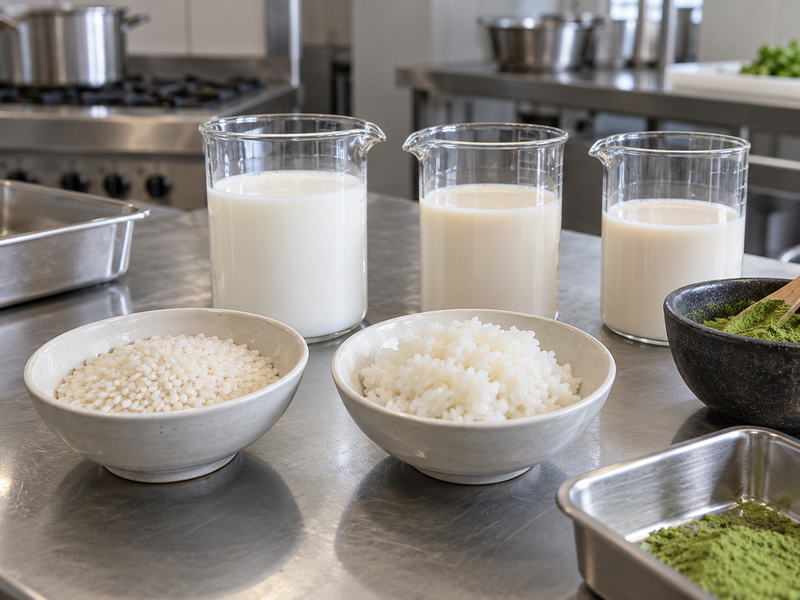
Dairy milk, coconut-based drinks and other plant beverages contribute different sweetness, fat and body. Some contain stabilizers or added flavors. Test each base as an identified product with its own specification rather than treating all white liquids as interchangeable. Keep rice, matcha dose, vessel and service point fixed for an initial comparison. Observe grain tenderness, free liquid, coating around grains and whether the base obscures or supports the tea note.
If the brand wants both dairy and plant-based menu versions, develop them as separate formulas. One base may need a different rice-to-liquid relationship or sweetener level to reach the same eating quality. Review ingredient and allergen information for each route before drafting a menu or pack label. The chosen base also affects purchasing and distribution: a shelf-stable ingredient before opening can become part of a perishable finished dessert. These decisions belong in product-specific trials, not in a general matcha powder specification.
| Base option | Formula issue to test | Documentation check |
|---|---|---|
| Dairy milk | Richness and tea balance | Milk ingredient and allergen record |
| Coconut base | Distinct aroma and fat | Added sugar and stabilizers |
| Oat or other plant base | Body after cooling | Ingredient and allergen statement |
| Mixed base | Consistency of each input | Both supplier specifications |
5. When should matcha enter the pudding?
Make tea dispersion a controlled step
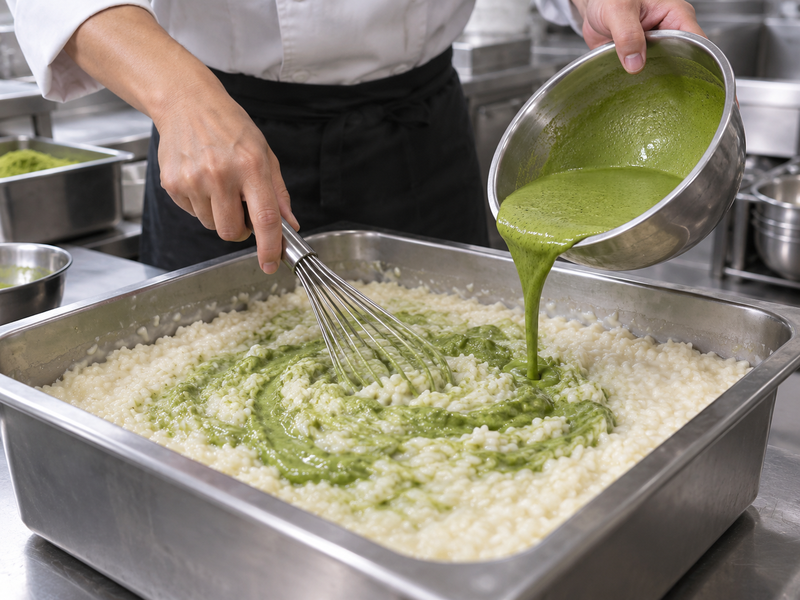
Dry matcha stirred into thick rice pudding can leave dark pockets between grains. Trial a weighed tea dose dispersed into a small, measured compatible liquid phase, then combine it with the pudding at a documented point. Record the liquid temperature and mixing tool used. Adding matcha before rice cooks, during cooking or after grains are tender may produce different color and flavor in the finished cup. Test those routes with the same rice and base rather than assuming one sequence works everywhere.
Check green color throughout the vessel, especially near the bottom and after a holding interval. If a slurry changes the formula’s total liquid, include it in the recipe calculation. Avoid adding unmeasured water just to make the powder look smooth. Taste the completed product at service temperature; heat and a creamy base can change the tea impression. Matcha Village can propose candidate powders for this trial, while the buyer decides which identified SKU and addition step meet the accepted pudding target.
6. How can a team compare matcha samples fairly?
Hold the rice pudding constant
Prepare coded batches from one rice lot, one base lot and the same cooking method. Use an equal starting matcha dose and identical cups for the initial comparison. Evaluate color, tea aroma, bitterness and how matcha sits with the sweetness of cooked rice. A bright powder may look less vivid after chilling; another might taste more balanced despite a quieter color. Ask tasters to record specific observations before sample identities are revealed.
Then trial any candidate that needs a revised dose to reach the chosen sensory target. Compare cost at the accepted dose and review finished cups from different points in the fill run. A powder that disperses well in a small bowl could still leave streaks in a larger kettle. Keep sample code, lot, formula revision and a photo of the approved spoonful. Grade names can help with a supplier conversation, but the finished cup, process fit and purchasing terms should decide the choice.
| Trial check | Keep constant | Record |
|---|---|---|
| Grain texture | Rice and cooking route | Tenderness and separation |
| Tea dose | Equal starting level | Color and flavor notes |
| Pack | Cup, fill weight, closure | Appearance after holding |
| Commercial result | Same saleable-yield basis | Cost at accepted dose |
7. What changes when the recipe moves into batch production?
Watch mixing, transfer and fill order
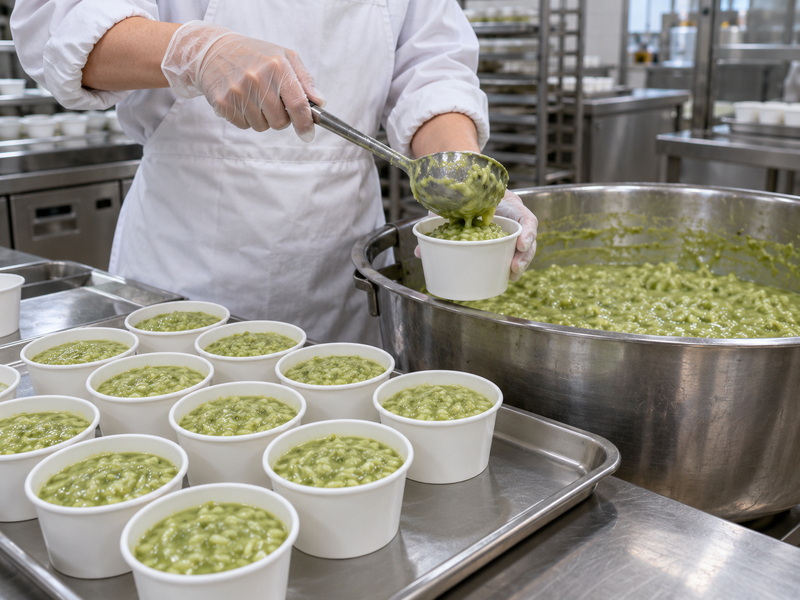
Scale a candidate in stages using the intended cooker, agitator, transfer method and filling equipment. Record batch mass, time in the vessel and when each cup is filled. Rice can settle or continue absorbing liquid while the run proceeds. Compare early, middle and late cups for grain distribution, fill weight, color and free liquid. If toppings are added on the same line, include that delay and handling in the trial. A bench bowl cannot establish what the final cup from a production batch will contain.
Define checkpoints where staff can stop the line before more cups and labels are used. Examples include visible matcha clumps, excessive paste at the vessel base or inconsistent grain mass during filling. Write the approved method so a second trained operator can repeat it. The operator’s food safety team must validate cooking, cooling, filling and hygiene controls for the actual product and equipment. Keep rejected cups and reasons in the batch record; they affect both process improvement and the cost of a saleable portion.
8. How do you calculate cost per saleable cup?
Use released cups from an approved run
Measure the cost of rice, milk or plant base, matcha, sweetener and toppings. Add the cup, lid, label, direct labor and process loss under the business’s normal costing method. Divide by cups that meet the approved fill weight and quality target, not by the number that could theoretically be filled from a recipe spreadsheet. Pudding left on a kettle wall, underfilled cups and toppings discarded after preparation belong in the yield record.
Compare matcha candidates at the dose that achieves an acceptable finished cup. A lower powder price can lose its advantage if the recipe needs more tea or more cups are rejected for uneven color. Consider the sales channel. A café bowl and a chilled retail cup carry different packaging, labor and distribution costs. Menu price and margin remain the buyer’s decisions using its own cost data. The supplier can quote an ingredient and pack; it cannot guarantee the finished dessert’s financial result.
| Cost line | Record from production | Missed by a simple recipe sum |
|---|---|---|
| Matcha | Accepted dose and quoted SKU | Dose adjustment |
| Rice and base | Actual weights and lots | Kettle hold-up |
| Topping and packaging | Complete sale format | Damaged or excess materials |
| Labor | Cooking, fill and cleaning work | Rework time |
| Yield | Released saleable cups | Rejects and underfills |
9. What should chilled holding and distribution trials observe?
Follow the grains through the real sale route
Pack the approved pudding in its intended cup and closure. Observe it at defined points under the business’s planned chilled handling and transport route. Look for liquid separation, grain swelling, a hard rice center, surface drying, color change, topping bleed and a cup that becomes too stiff to spoon. Compare a cup from the beginning and end of the filling run. Photograph spoonfuls under similar light, and record actual handling conditions so a quality change can be interpreted.
These checks describe eating quality; they do not establish safe shelf life. The food operator must validate the final dairy or plant-based product under its food safety plan and market requirements, including microbiological controls, storage and date marking. A dry matcha specification cannot set a safe window for a moist cooked-rice dessert. If the pudding is offered warm and chilled, assess both routes separately. Do not borrow a home recipe’s storage note for a factory cup. Staff need clear disposition rules for a product outside approved conditions.
10. What belongs in the final recipe and supplier brief?
Link the approved cup to repeat purchasing
Send the matcha supplier the cooked-rice application, liquid base, intended use rate, target tea flavor and color, market, order pattern and preferred ingredient pack. Request the exact offered SKU’s specification and relevant lot documents. Discuss sample identity, change notification, packing, lead time and quotation terms. Any certification or destination testing request should identify the product and required scope. Matcha Village can help shortlist an ingredient candidate, but the buyer must approve it in the finished pudding.
Internally, keep the rice specification, liquid base, formula revision, cooking and cooling method, matcha addition step, fill weight, cup and closure, sensory reference and release checks together. Assign owners for retesting if rice, milk, matcha or packaging changes. The next practical step is a coded line trial with samples from across the fill run and a documented saleable yield. Use that evidence in a product-specific purchasing discussion rather than selecting powder from a price list alone.
| Brief element | Owner | Evidence before approval |
|---|---|---|
| Grain and base formula | Product team | Controlled recipe and sample cups |
| Process | Production and food safety | Validated line method |
| Matcha SKU | Purchasing and supplier | Sample code, specification, lot records |
| Pack and storage | Packaging and food safety | Product-specific trial and validation |
| Repeat economics | Commercial and purchasing | Saleable-yield sheet and quote |
FAQ
Q1: Is matcha rice pudding the same as smooth matcha pudding? No. Cooked rice grains are a defining part of its texture and need their own preparation and holding checks.
Q2: Can a plant-based milk replace dairy at the same amount? Test it as a separate formula; sweetness, body and grain behavior may change.
Q3: Should matcha be added dry to cooked rice? A measured dispersed phase can make visible lumps easier to control. Validate the chosen sequence in the actual process.
Q4: Does a good chilled taste test establish shelf life? No. The operator needs product-specific safety validation across the planned route.
Q5: What belongs in a matcha sample request? Share rice and liquid base, target flavor, use-rate range, cup format, market and expected buying pattern.