
A matcha mocha can mean a cocoa-and-matcha milk drink or a café version that also contains espresso. Both can be appealing, but they are different menu promises. A guest expecting coffee will notice its absence; a guest choosing a tea drink may not want an unannounced espresso shot. For an operator, the practical problem is keeping matcha visible and tastable against chocolate while producing a smooth cup at normal service speed. This guide treats the two versions as separate trials, from ingredient choice and mixing order through training, cost and purchasing. It does not assume that the word mocha alone tells every customer the same thing.
Table of contents
- What should matcha mocha mean on the menu?
- Which matcha and cocoa belong in the same cup?
- How should a café set its first recipe trial?
- What mixing order produces a smooth hot drink?
- How should an iced matcha mocha be assembled?
- How do milk and sweetener choices change the result?
- What should a service-ready cup look and taste like?
- How should café teams prep and hold components?
- What do cup cost and service time reveal?
- What should the supplier enquiry specify?
1. What should matcha mocha mean on the menu?
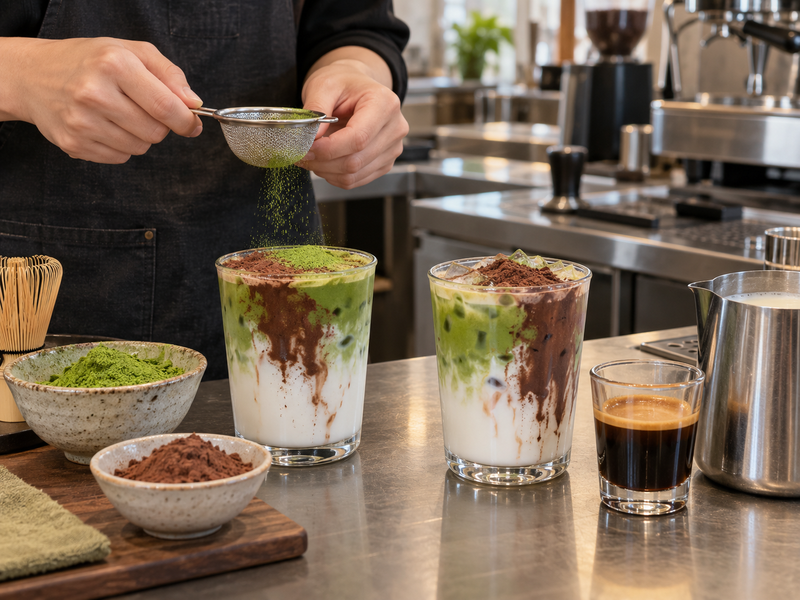
Name the cocoa base and the coffee option clearly
Start with two deliberate concepts. The base version combines matcha, cocoa or chocolate, and milk. The second adds a measured espresso shot. A café could sell either, but it should write a menu description that makes the difference obvious. Calling a coffee-free drink a matcha mocha may be accepted by some guests and questioned by others. Test the wording with staff and a small group of customers before printing a menu board. If espresso is an add-on, list it as such and train the till and bar to pass that choice through consistently.
This definition prevents overlap with other drinks. Matcha hot chocolate emphasizes warm chocolate and tea, while a matcha coffee or dirty matcha may contain espresso without any cocoa. A matcha mocha earns its own place when the cocoa-and-matcha balance is distinct, and the optional coffee version has its own recipe and price. Set the serving size, hot or iced format, target sweetness and preferred color for both routes.
| Menu route | Core ingredients | What the customer should understand |
|---|---|---|
| Cocoa–matcha | Matcha, cocoa or chocolate, milk | Tea and chocolate, no coffee by default |
| Espresso matcha mocha | Cocoa–matcha base plus espresso | Contains coffee and has a stronger roasted note |
| Existing hot chocolate | Chocolate-led hot drink, with its own tea spec | Distinct recipe and menu position |
2. Which matcha and cocoa belong in the same cup?
Test the pair in the intended milk system
Matcha selected in water can behave differently in sweet chocolate milk. Cocoa can absorb attention with bitterness and a deep brown color; a sweet chocolate sauce can hide both tea flavor and green tone. Compare named matcha samples at the same weighed dose in the same cocoa base. Taste hot and iced if both will be sold. Record each result separately rather than assuming the stronger drink needs the same tea dose.
Matcha Village’s provided company information lists culinary, premium and other matcha options, plus application-selection support. Request identified samples and current specifications, then run side-by-side cups. Do not select solely by the grade word or the dry powder photograph. For cocoa, document whether the recipe uses unsweetened powder, a pre-sweetened syrup or melted chocolate. Those are not interchangeable on the line: their sugar, viscosity and temperature needs differ. A prepared sauce can be quick to dispense but may make the no-coffee version taste like a standard hot chocolate with a trace of matcha.
3. How should a café set its first recipe trial?
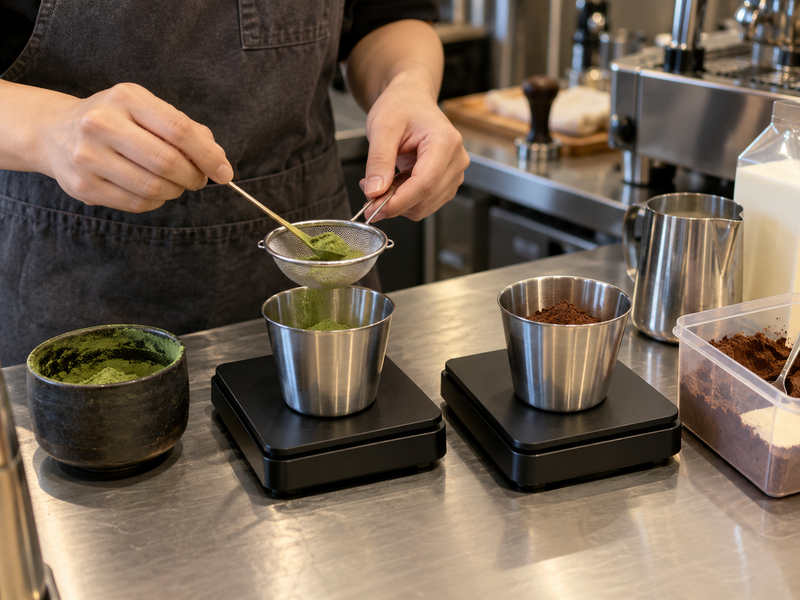
Fix the cup size and change one dose at a time
Begin with a defined serving vessel and milk volume. Weigh matcha and cocoa in grams; spoons differ in shape and powder packing. For a pilot, a café might compare 1.5, 2.0 and 2.5 g matcha within the same 250 mL milk drink, using one cocoa source and a fixed sweetness level. Those amounts are test points, not a recommended production formula. If the base version works, add a measured espresso shot to a separate branch and retest matcha, cocoa and sweetness. Espresso changes both liquid volume and the balance of roasted notes.
Taste a freshly made cup and a cup after the normal walk from counter to table. Note whether cocoa hides matcha, whether the finish is dusty or sweet, and whether the coffee variation has become too bitter. A test that only asks “Do you like it?” gives little guidance for a revision. Keep the winning and losing trials in a simple log with ingredient identities, dose, temperature and build order.
| Trial variable | Hold constant | Question to answer |
|---|---|---|
| Matcha dose | Cup, milk and cocoa source | Can the guest taste tea? |
| Cocoa dose | Matcha and milk | Is chocolate balanced or dominant? |
| Sweetener | Matcha and cocoa | Is the finish too sweet? |
| Espresso option | Approved cocoa–matcha base | Does coffee improve or obscure the drink? |
4. What mixing order produces a smooth hot drink?
Disperse powders before filling the cup
Matcha and cocoa both clump when dropped into a full cup of milk. Prepare each as a small smooth concentrate using measured liquid, or validate a combined mixing method that leaves no dry pockets. Keep the water used for dispersion in the recipe record. Then combine the concentrates with warmed milk in the approved vessel. If using chocolate pieces instead of powder, melt them fully in a controlled warm phase before mixing with matcha. Large unmelted fragments make the cup inconsistent and slow the line.
For the espresso route, decide whether the shot enters before or after milk and test both. Aim for a drink that looks intentional after handoff and tastes balanced without relying on the customer to stir hard. Set a sensible milk heating procedure under the venue’s existing food-safety and equipment rules. The café should document a repeatable temperature range from its own trial rather than take a universal number from an unrelated recipe.
5. How should an iced matcha mocha be assembled?
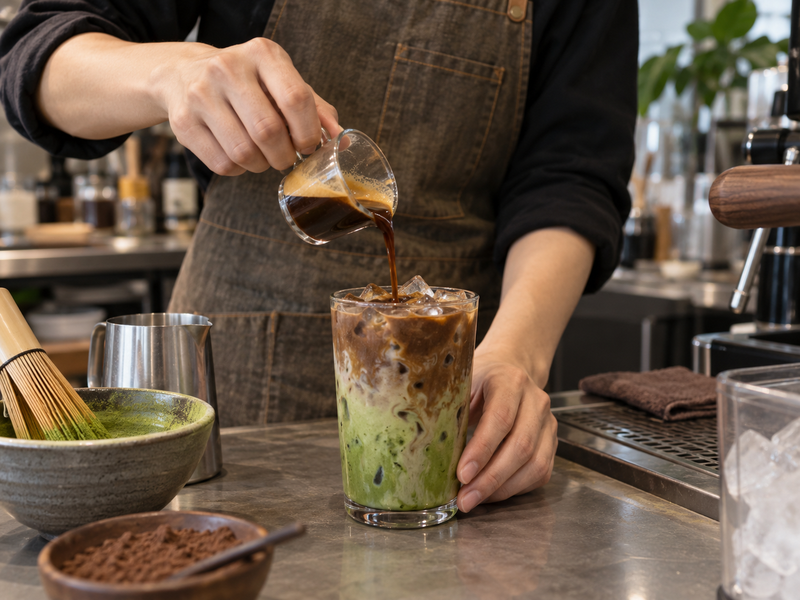
Test mixing after the ice begins to melt
Iced service needs its own recipe. A hot cocoa mixture poured onto ice can melt much of the ice before the customer receives it; cold powder tipped into milk can clump or stick to the cup wall. Pre-disperse matcha and cocoa in small measured portions, chill components as the venue requires, and build over sound ice. If a visual layer is part of the menu photo, test what happens when the drink is carried and sipped. A beautiful two-tone cup that tastes like plain milk on top and heavy cocoa at the bottom is a weak service standard.
Make the espresso branch as a separate trial. A fresh hot shot can change dilution and melt ice rapidly, so compare the drink at handoff and a few minutes later. Measure the actual finished volume; an added shot can push the cup above the fill line or reduce room for milk. Avoid calling a cocoa-free espresso-and-matcha drink the same recipe: it belongs to another menu category.
| Iced failure | Likely process point | Trial adjustment |
|---|---|---|
| Powder specks | Cold powder added directly | Make a smooth measured concentrate |
| Watery first sip | Hot components melt ice | Cool components or revise build |
| Heavy bottom layer | Concentrate left unmixed | Standardize brief mixing |
| Overflow with espresso | Add-on not included in fill calculation | Set separate coffee-branch volume |
6. How do milk and sweetener choices change the result?
Change the base deliberately, with labels in view
Whole milk, oat, soy and other café milks can alter sweetness, foam, color and the way cocoa and matcha are perceived. A plant-based version is not automatically a simple substitution at the same dose. Make a full cup using the specific milk the menu will sell. Some products have added sugar or flavor that shifts the balance. If the café offers several milk choices, identify which have actually been tested and whether the same visual and taste standard is realistic for each.
Chocolate ingredients may bring milk, soy or other allergens, while milk alternatives can bring their own label issues. The brand’s quality team should review ingredients, cross-contact and the destination market’s customer-information requirements. Sweetness should also be specified in a measurable way. Cocoa powder may need a separate sweetener; a chocolate syrup may already carry most of the sugar. If espresso is added, retest sweetness rather than automatically increasing syrup to cover coffee bitterness.
7. What should a service-ready cup look and taste like?
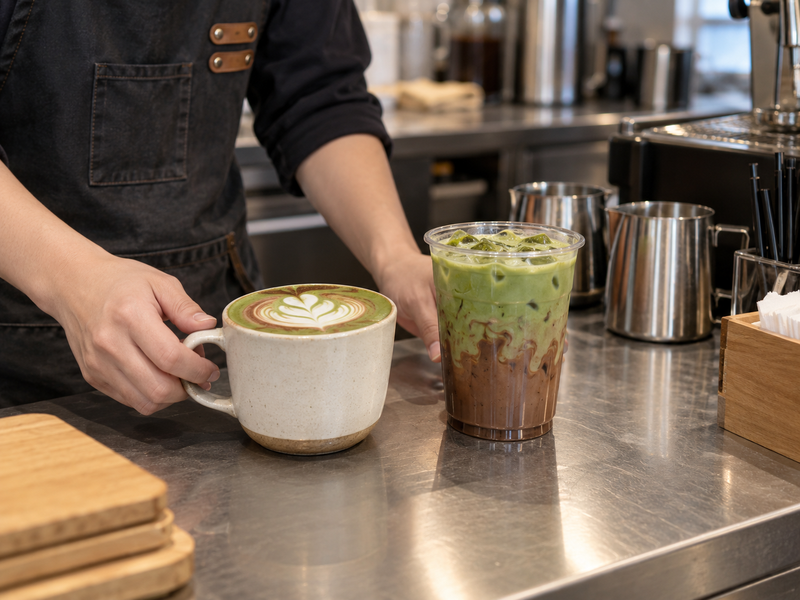
Judge a normal barista build, not a studio cup
Set acceptance checks for the route being sold. A cocoa-and-matcha cup should show even color or an intentional swirl, no dry specks, a recognizable tea note and a chocolate finish that does not dominate. The espresso version should have coffee presence without burying both other flavors. For iced service, inspect the cup from the side and bottom after a short wait. For hot service, taste at the temperature a guest can actually drink, rather than while it is still too hot to assess.
Have several staff members build the approved recipe during a simulated busy period. Compare their cups for weight of matcha, chocolate dose, finished volume and time to handoff. If the drink needs one unusually skilled barista, simplify the process before launch. A short rejection list helps: dry clumps, cocoa sludge, unplanned coffee omission, a cup filled past the lid line or a noticeably different color from the standard. Retain an approved sample recipe and ingredient identities, then revisit the standard when either the matcha lot or chocolate source changes.
| Checkpoint | Cocoa–matcha base | Optional espresso route |
|---|---|---|
| Flavor | Tea and chocolate both present | Coffee joins without masking both |
| Texture | Smooth, no powder pockets | Smooth after shot is added |
| Appearance | Consistent color or deliberate swirl | Deliberate color after normal handling |
| Handoff | Correct cup and menu name | Coffee choice clearly passed to bar |
8. How should café teams prep and hold components?
Prepare for speed without assuming shelf life
A measured dry portion of matcha and cocoa may shorten service time, but keep the powders identified and protected from moisture. If the café prepares a liquid concentrate, it needs its own documented batch size, container, mixing instruction, holding condition and discard rule under the venue’s food-safety system. A concentrate can settle even when the first cup looks good, sending different ratios to early and late orders. Stirring or shaking may help, but test it and define the method. This article cannot establish a safe holding time or make a shelf-life claim.
Espresso should remain a clearly controlled option in the ticket and bar workflow. Do not silently add it to a prebatched cocoa-and-matcha base, because some customers may expect the coffee-free version. Keep sauce pumps, scoops and pitchers clean and tied to the ingredient they hold. Check stock at opening against forecast sales, especially milk and chocolate products with their own storage rules.
9. What do cup cost and service time reveal?
Cost each menu route separately
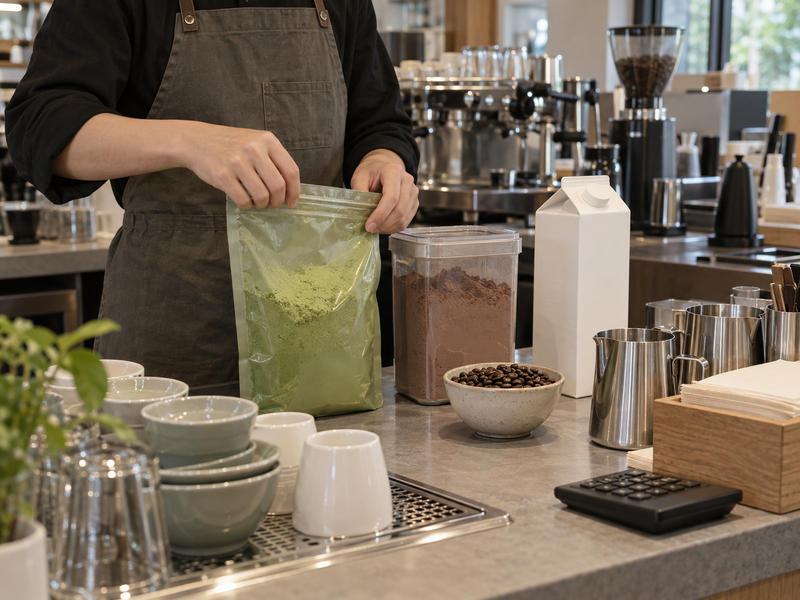
Calculate the matcha dose from the approved sample and delivered pack price. Add cocoa or chocolate, milk, sweetener, cup, lid and normal waste. The espresso version needs its own coffee dose, shot time and price; charging only for the beans may miss the effect of a slower queue. Note the difference between ingredients dispensed and product sold. A pump of syrup left in the line, concentrate discarded at closing and remake of a clumped cup all affect real yield. Do not assume a cheap powder wins if a higher dose is required to be tasted beside chocolate.
Time several ordinary baristas making both routes during a realistic sequence of orders. A labor-intensive drink may work as a limited special but not a high-volume everyday item. Use the approved recipe to forecast weekly matcha demand, then discuss pack format and replenishment with suppliers. Margin targets and menu price belong to the venue’s own market and cost structure.
| Cost line | Base version | Espresso version |
|---|---|---|
| Matcha and cocoa | Weighed doses × landed unit cost | Retest doses after shot addition |
| Milk and sweetener | Actual poured quantity | Adjust if shot displaces milk |
| Coffee | None | Measured shot and preparation time |
| Waste | Concentrate, syrup and remakes | Include extra branch errors |
10. What should the supplier enquiry specify?
Request samples for the actual drink system
Tell a matcha supplier whether the first target is a cocoa-and-matcha milk drink, an espresso variant or both. Share hot and iced formats, approximate matcha dose, cocoa source, milk type, target color, expected weekly cups and destination market. Ask for identified matcha samples and current specifications. Matcha Village’s supplied information describes application-selection support, several matcha grades and bulk or customized supply options; the café should confirm which current product and commercial terms apply to its own trial. Do not treat a general company profile as proof of a specific lot certificate or price.
Test each sample using the final cup size, actual chocolate ingredient and the chosen build order. Keep a record of the approved lot, recipe and staff reference photographs. If the supplier proposes a blend or a replacement, run the same comparison again rather than altering the dose without documentation. The purchase decision should combine flavor, process speed, per-cup economics and pack practicality.
FAQ
Q1: Does a matcha mocha always contain coffee?
No. Some recipes use matcha, cocoa and milk without espresso. A café should describe its base clearly and identify any optional coffee version on the menu.
Q2: How is it different from matcha hot chocolate?
The distinction depends on the café’s recipe and naming. This development plan tests a balanced matcha-and-cocoa base plus an optional espresso branch, each with its own specification.
Q3: Can the same matcha be used for both routes?
Possibly, but test it. Espresso may mask tea notes or change the amount needed per cup, so approve each route in a finished drink.
Q4: Can cocoa and matcha be put straight into cold milk?
That often produces specks or sludge. Trial small measured concentrates and inspect the full iced cup after normal handling.
Q5: What should a café ask a matcha supplier for?
Ask for named samples, current specifications, pack options and terms tied to the tested drink. Share the cocoa, milk, optional coffee and forecast volume.