
Matcha rice crispy treats are fast to assemble but unforgiving at the cutting bench. A pan pressed too hard becomes dense; a warm marshmallow mixture can leave green streaks; a soft topping may mark every wrapper. A café should define its desired chew, use measured pan depth and test the product in its display package. Love and Olive Oil’s matcha version provides a recipe reference. Matcha Village’s sample service can support a tea trial for this sweet, cereal-heavy format.
Contents
- 1. What should the finished square feel like?
- 2. Which cereal and binder should be tested?
- 3. When should matcha join the mixture?
- 4. How can heating be kept repeatable?
- 5. How should the slab be pressed?
- 6. What produces clean, even cuts?
- 7. Which decoration survives display?
- 8. How should the treats be packed and labeled?
- 9. What is the true yield per pan?
- 10. What makes the batch ready for sale?
1. What should the finished square feel like?
Set a bite standard
The best texture for a café square is a deliberate choice, not a universal rule. Some customers want a soft, stretchy marshmallow bite; others expect a light cereal snap. Set the target portion weight, thickness and degree of chew. Taste a square soon after cutting and again after the planned display interval. If it hardens before the lunch rush, the formula or pack may be wrong for that service plan.
The matcha should be noticeable despite sweet binder and rice cereal. A vivid green block that tastes only of sugar misses the product promise. Taste the center and edge of the same slab; uneven mixing often shows up there first. Decide whether the square is eaten unwrapped by hand or on a plate, since sticky fingers and loose cereal matter more in takeaway. Photograph an approved cut face and top so the next shift can see the intended density.
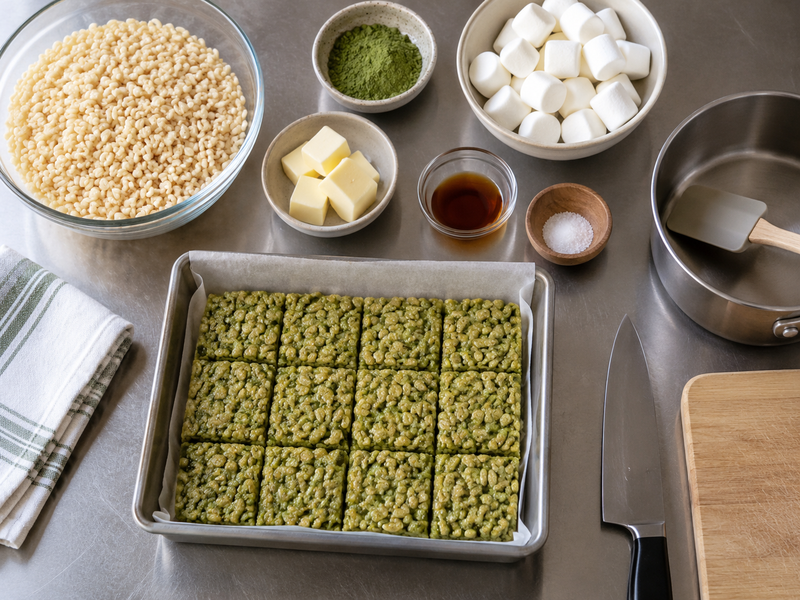
2. Which cereal and binder should be tested?
Know what each ingredient changes
The Love and Olive Oil recipe combines rice cereal with marshmallows, butter and condensed milk. Those ingredients create a different chew from a simple marshmallow-and-cereal bar. A café can use that as a starting route, then trial its own available brands. Rice cereals differ in size and crispness; marshmallows differ in moisture and melting behavior. Obtain current ingredient statements for all components.
Make a small control batch without matcha and one tea batch with the same binder ratio. This separates a cereal or binder fault from a matcha issue. Weigh the cereal rather than measuring a volume that shifts with packing. If a vegetarian or other dietary claim is planned, review the marshmallow and all other ingredients; do not infer suitability from the cereal’s appearance. The target is a coherent square that cuts without crushing and keeps enough cereal texture after packing.
| Component | What it contributes | Trial concern |
|---|---|---|
| Rice cereal | Light crunch | Softening and breakage |
| Marshmallow | Binding and chew | Heat sensitivity |
| Butter or fat | Richness and handling | Grease in wrapper |
| Condensed milk, if used | Softer texture | Sweetness and milk allergen |
3. When should matcha join the mixture?
Test even color without overworking
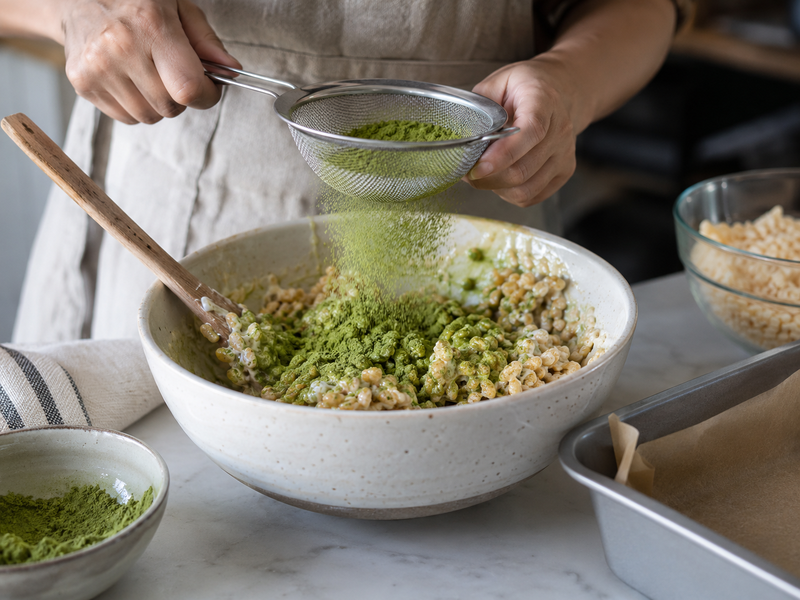
Sift matcha before it meets the sticky binder. Mixing it into the warm marshmallow phase can distribute color more evenly than folding dry powder through cereal, but the tea will see more heat. A second trial can pre-mix matcha with another compatible ingredient and add it later. Keep total tea weight and the cereal-binder formula fixed between tests. Taste after the square sets; the hot mixture may seem more aromatic than the finished product.
Scrape the pot and folding tool carefully so pockets of green binder do not stay on the sides. A dark clump in one square will taste bitter. Do not keep stirring long after the cereal is coated merely to chase perfect color; broken cereal and a compressed finished slab are also defects. Choose matcha from a current, documented lot and record the amount per pan. A higher dose changes color, bitterness and cost, so increase it only when tasting supports the change.
4. How can heating be kept repeatable?
Watch the binder, not just the clock
Heat marshmallow binder gently enough to melt and combine without scorching. Record the pan, batch size, heat setting and visual endpoint. A wider pan or larger batch can melt at a different pace from the reference’s home setup. Keep the cereal ready before the binder is finished so the mixture does not sit hot while staff fetch another container. A thermometer can add information, but the kitchen should validate any temperature target against the actual texture.
Make two consecutive batches during a trial. The second is often where staff rush, equipment remains hot and the binder becomes less forgiving. Observe whether the mixture coats cereal evenly or forms strings and lumps. If one pan turns hard or brittle, investigate heating and ingredient condition before changing matcha. Store ingredient bags as directed; a stale or damp cereal can weaken crunch even when the binder process is correct.
| Heating checkpoint | Record | Quality clue |
|---|---|---|
| Start | Ingredient weights and condition | Repeatability |
| Melt | Pan and heat setting | Risk of scorching |
| Cereal addition | Time and mix appearance | Even coating |
| Pressing | Mixture condition | Workable or stiff |
5. How should the slab be pressed?
Set depth without crushing cereal
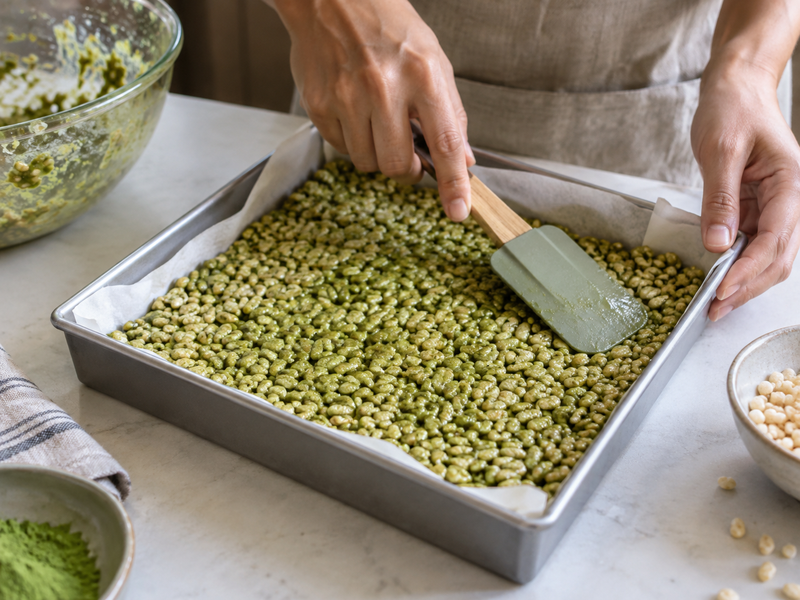
Line or prepare a pan consistently and weigh the warm mixture into it. Spread it to the corners with a tool that does not pull cereal back out of the binder. Use a flat guide or measured spacer to set thickness. Pressing too lightly can leave voids and weak edges; pressing too hard can turn the square dense. Trial two pressure methods with the same formula and cut size, then compare bite and breakage.
Record the pan dimensions and mass per pan. A thicker slab may look generous but be harder to bite and cut. A thin slab might show less matcha flavor per piece and break during wrapping. Check corners and center, not only the attractive middle square. If the edges are consistently shallow, the spreading process needs a guide. The approved slab should release from the pan without tearing so the planned grid can be cut cleanly.
6. What produces clean, even cuts?
Choose a cut point and a grid
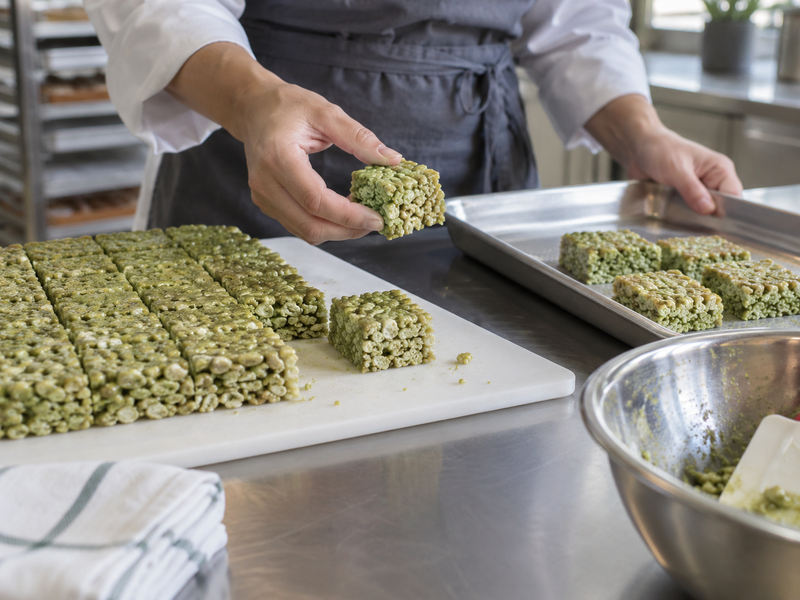
Cut after the slab has set enough to hold its shape but before it becomes difficult to portion. The exact timing depends on the formula and room conditions, so establish it through a batch trial rather than copying a home recipe’s minutes. Mark a grid for the intended serving count. Weigh squares from the center and perimeter; equal widths do not guarantee equal weights if pan depth varies.
Use the knife or cutter intended for production and document any cleaning needed between cuts. A sticky blade can drag cereal and leave ragged faces. Count intact squares, trim and broken pieces. If the final pack requires a clean rectangular shape, a small amount of trim may be acceptable, but it must appear in the cost. Compare a larger café square with a smaller packaged snack under the same slab recipe before choosing a permanent portion.
| Cut check | Pass condition | If it fails |
|---|---|---|
| Grid | Even count and size | Re-mark pan guide |
| Face | No major tearing | Change cut point or tool |
| Weight | Within approved range | Review slab depth |
| Handling | Holds during lift | Review binder or pressing |
7. Which decoration survives display?
Make the finish serve the flavor
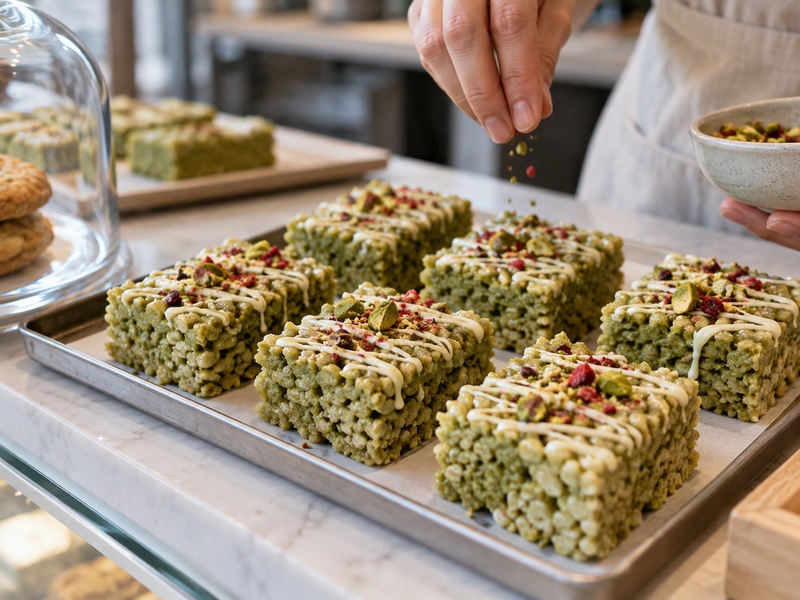
The reference suggests optional white chocolate or decorative coating. A fine drizzle can cue matcha visually, but a thick sweet layer may cover the tea. Compare plain squares with one decorated version at equal portion weight. Taste after the finish sets. If matcha is dusted on top, check whether moisture darkens it or powder rubs off in a wrapper. A brittle chocolate stripe may crack when the square is handled.
Run a display and transport test with the actual case and pack. Decoration that looks neat on a cooling rack may smear under film or stick to the neighboring square. Decide whether finishing happens before cutting or after individual pieces are separated; each affects labor and appearance. The accepted version should still look intentional when a customer opens it, not just in the bakery’s first photograph.
8. How should the treats be packed and labeled?
Test the package with a real square
Choose a wrapper or container that protects the shape and keeps the surface clean. Pack samples at the point staff would pack them in production, then check for condensation, oil marks, sticking and crushed corners. If the product is sold unwrapped from a case, test how staff will lift and bag it at handoff. A square that requires repeated touching may need a liner or better portion tool.
Build ingredient and allergen information from the current marshmallow, cereal, butter, condensed milk and decoration labels. Milk may be present; other allergens or dietary issues depend on the chosen products. The FDA’s major allergen guidance is a primary U.S. reference, while destination rules govern final declarations. A home recipe does not validate a shelf-life date. If the business wants sealed retail packs, plan suitable testing for the final formula and wrapper.
Test the package after the treat has fully reached its packing condition. Film applied around a still-warm square can trap moisture against cereal, while a loose wrap may let it move and chip at the corners. Put one packed piece upright and another flat in a sample display, then compare the surfaces after a normal handling interval. Ask staff whether they can close the pack without touching the cut face. If a separator sheet is needed, include it in the bill of materials and the opening test. The buyer should be able to remove the square without pulling half the topping away.
| Pack option | Benefit | Test |
|---|---|---|
| Clear film | Shows green color | Sticking and seal |
| Rigid box | Protects corners | Movement and cost |
| Case service | No individual wrap | Hygiene and handoff |
9. What is the true yield per pan?
Count what can be sold
Cost the pan using ingredient weights and actual saleable squares. Include matcha, cereal, binder, decoration, packaging and labor. A small increase in matcha may be cheap per piece or material at scale; calculate it instead of assuming. Track pieces rejected because of irregular cut, dark binder spots, crushed corners or smeared finish. A neat grid on paper does not reflect those losses.
Observe two full runs made by different workers. If one yields more intact squares, find out whether pan fill, pressure or cut timing differed. Log the portion weight range, because a customer should not receive a much smaller piece at the same price. Compare the square with other counter snacks in the case: does it hold its appearance, and do customers buy it with a drink? Use a limited sale to answer that question before committing to printed wrappers.
10. What makes the batch ready for sale?
Make the process teachable
The final sheet should state supplier items, ingredient weights, melt method, matcha addition, cereal-fold endpoint, pan, mass per pan, pressing guide, cut point, grid, decoration and pack. Include a photograph of an approved cut square. Have another worker make the recipe without coaching, then compare its bite, color and saleable yield with the reference batch. If the new batch is harder or more uneven, revisit the process before launching.
During a limited sale, record whether customers call the treat too sweet, too dense, weak in matcha or messy to unwrap. Each points to a different adjustment. The product is ready when ordinary staff can make a slab that cuts cleanly, survives its display window and has reviewed ingredient information. If the desired light chew disappears in the package, solve the pack or sale format before changing every ingredient.
| Decision | Evidence | Next action |
|---|---|---|
| Launch | Consistent bite and yield | Train all shifts |
| Revise | One repeatable defect | Controlled test |
| Hold | Pack or label uncertainty | Resolve before sale |
FAQ
Q1. Why are the treats hard? Review binder heating and how firmly the slab was pressed before increasing cereal.
Q2. Where should matcha be mixed in? Compare a sifted addition to the binder with a later addition, then judge finished flavor and color.
Q3. Can the squares be cut warm? Test the cut point; too warm may smear, while too firm may fracture.
Q4. Are all rice cereals gluten-free? Do not assume so. Check the chosen product and cross-contact information.
Q5. What should the first pilot measure? Pan mass, thickness, cut weights, broken pieces and wrapper condition.
Make two pans with identical ingredients and different pressing methods. The better batch will show itself in the cut faces, bite and number of squares that reach the case intact.