
Matcha retention samples are sealed, traceable portions of received lots kept for later comparison or investigation. A buyer facing a color complaint months after receipt needs more than a COA and a photograph. The team needs an identifiable sample, a record of how it was taken, and evidence that storage did not create the defect under investigation. Set a written sampling and retrieval procedure before the next delivery. The recall readiness article frames the wider traceability problem. This guide turns one part of that problem into a repeatable receiving task. The FDA’s food record guidance supports legible, preserved links between food lots and records where its rule applies; it does not prescribe this sample scheme for every matcha business.
Contents
- Why keep matcha retention samples for each lot?
- What makes a retained sample representative?
- When and where should receiving staff collect it?
- How much material should each sample contain?
- How should staff seal and label the sample?
- What storage conditions should the archive record?
- How do you index a sample for retrieval?
- How does the retained sample connect to a COA?
- What happens when a complaint requires retrieval?
- How do you audit and retire the sample archive?
1. Why keep matcha retention samples for each lot?
Define the decision the sample supports
A retained sample lets a quality team compare a complaint unit with material received under the same lot identity. It can support color, aroma, appearance, or appropriately planned laboratory comparisons. It cannot prove how every unit in a lot behaved, and storage changes may limit what a later test means. Keep the purpose narrow: preserve a documented physical reference for the incoming lot. It belongs beside receipt, COA, specification, release, and customer shipment records. A sample without those links is a jar of powder with little evidentiary value.
| Investigation question | Record or object needed | Caution |
|---|---|---|
| Was this the received lot? | Lot IDs and seal label | Confirm supplier and buyer IDs |
| Did condition change? | Archive and complaint samples | Compare storage histories |
| Was a test reported? | Original COA and method | Check lot and units |
| Who opened material? | Access log | Preserve remaining portion |
Make the link visible. Set one retention record per received lot even when several cartons share a purchase order. If cartons bear different supplier lots, sample and index them separately. The archive should answer which physical sample belongs to a particular complaint without relying on someone’s memory.
2. What makes a retained sample representative?
Document the sampling frame
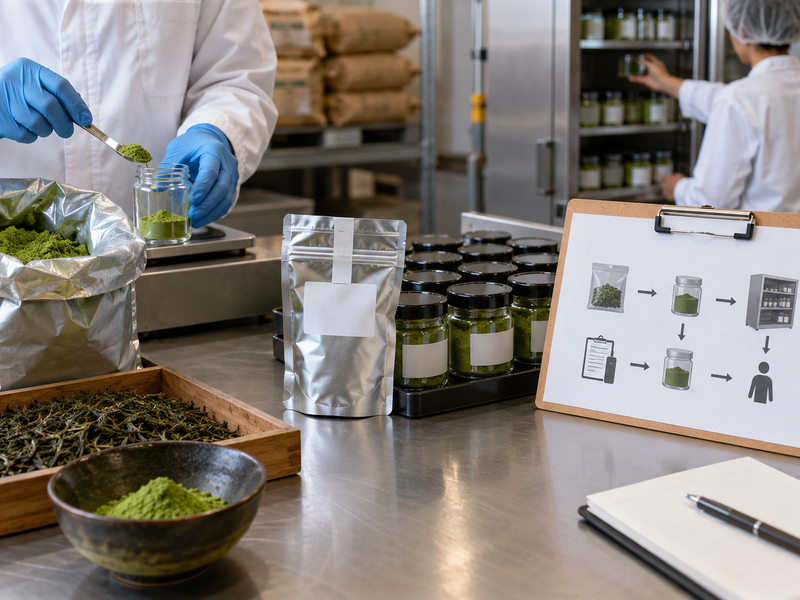
Define the lot. “Representative” has a specific meaning only after the team defines the lot and sampling method. Record the number of containers received, container IDs selected, where powder was taken, tool used, and whether portions were combined. A supplier’s production sample may answer a different question from a buyer’s receiving sample because transport and handling occur between them. If the concern is transit damage, retain an unopened delivered retail or bulk unit where practical. If the concern is powder consistency across a large bulk lot, plan a documented multi-container approach.
The Codex Alimentarius general sampling guideline provides a framework for designing sampling plans around the objective and lot; it does not supply a universal number of matcha scoops. Discuss the method with quality staff before testing begins. Avoid opening every container merely to build an archive, since extra openings add handling and contamination opportunities. If one selected container looks abnormal, isolate the observation rather than blending it into a composite that hides the variation. The sampling record should make later interpretation possible.
3. When and where should receiving staff collect it?
Sample before uncontrolled handling
Collect the sample after confirming shipping identity and package condition, but before a received lot is widely distributed or repacked. Use an area and tools covered by the buyer’s hygiene procedure. Record whether the source package arrived intact, wet, punctured, or warm. A moisture complaint can become impossible to interpret if powder was scooped beside a steamy sink. Take the sample under the same documented method on every delivery, then close the source package according to its packaging instructions.
| Receiving step | Sample record entry | Reason |
|---|---|---|
| Check labels | Supplier lot and buyer lot | Prevent identity errors |
| Inspect package | Seal and damage status | Separates transit issues |
| Select container | Container ID and location | Reconstructs selection |
| Transfer portion | Tool, operator, time | Reconstructs handling |
Pause on an exception. If the package seal has failed, photograph and quarantine it under the buyer’s receiving procedure before normal sampling. A damaged unit can be retained separately with its own status. The FDA guidance on human food preventive controls describes written controls and records for covered facilities; apply the site’s own validated hygiene and hold procedures rather than assuming this article specifies a regulatory sampling method.
4. How much material should each sample contain?
Work backward from planned uses
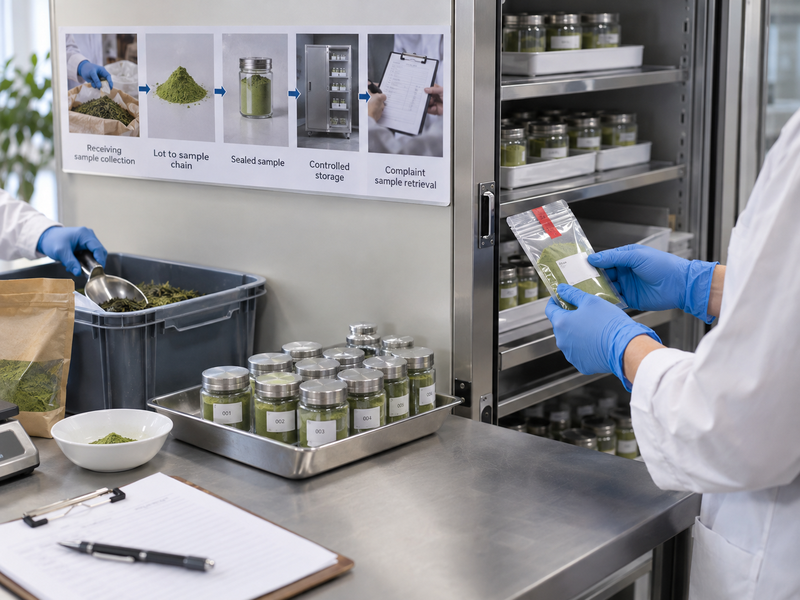
Decide which examinations a future investigation may require: visual comparison, sensory assessment, moisture testing, color measurement, or an outside laboratory panel. Ask each laboratory how much material its method requires, then allow for repeats and an unopened reserve. A suggested trial design uses two independently sealed portions per lot, one working portion and one untouched reserve. The actual mass should be set by planned tests and container size, not copied from a generic recipe. Too little powder forces the team to consume all evidence in the first test; too much creates waste and storage demand.
Record tare weight, net sample mass, and any splitting operation. If a composite is prepared, keep the contributing container IDs and proportions. Avoid reusing a scoop without the site’s required cleaning and verification. For tiny retail units, retaining a complete unopened pack may be simpler and gives stronger evidence about seal and headspace condition than decanting powder. Plan the second question. The first test may create a disagreement; a separate sealed reserve permits an agreed retest while preserving an untouched portion for review.
5. How should staff seal and label the sample?
Make substitution and exposure apparent
Use a clean, compatible container or pouch that closes reliably and protects against the archive’s expected conditions. Label the outside without obscuring the seal. Include sample ID, product, supplier lot, buyer receipt lot, collection date, collector, portion type, and storage location. A tamper-evident seal or numbered closure can make later access obvious. The identifier should remain legible after handling. Do not place the only identifying slip inside a pouch that must be opened to read it.
| Label field | Example format | Check |
|---|---|---|
| Sample ID | RS-2026-0042-A | Unique in register |
| Lot linkage | Supplier / buyer code | Matches receipt |
| Portion | Working / reserve | Prevents mix-up |
| Collection | Date and initials | Matches event log |
| Location | Cabinet / shelf / box | Supports retrieval |
One lot, one identity. If a lot is repacked into customer-facing SKUs, record the source-to-finished-lot relation elsewhere and reference it in the register. The FDA traceability rule page describes traceability lot codes for covered listed foods. Use its lot-linking principle as context without implying that matcha automatically appears on that list.
6. What storage conditions should the archive record?
Control and observe the environment
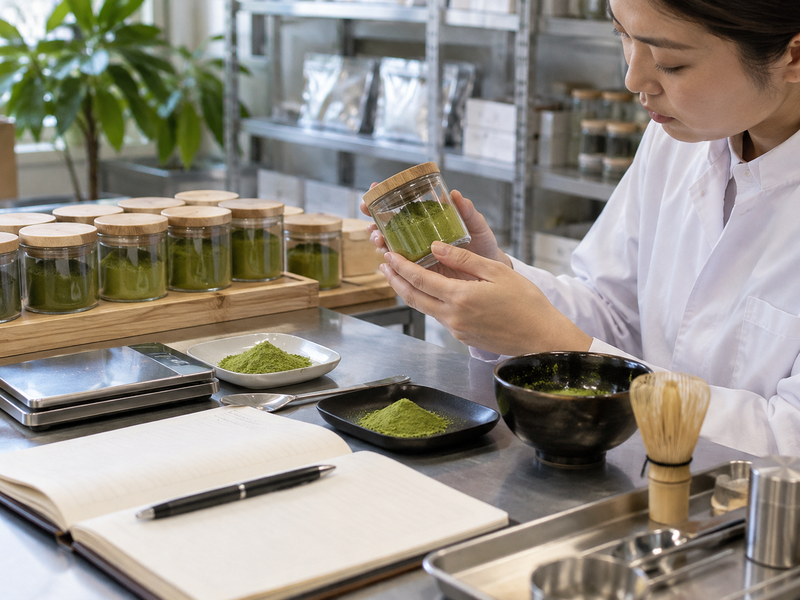
Record the conditions. Store sealed samples away from direct light, heat, odor sources, and routine traffic. Matcha’s color and aroma can change during storage; the archive should document conditions rather than promise that a sample remains identical forever. Write down the selected temperature range, monitoring method, location, and action when an excursion occurs. Use packaging appropriate for the sample and compare it with the commercial pack when interpreting results. A sample in a thin clear bag may age differently from product in an opaque sealed pouch.
| Archive control | Record to retain | Review trigger |
|---|---|---|
| Temperature | Dated log or logger export | Excursion from set range |
| Light exposure | Cabinet description | Door left open or move |
| Seal condition | Periodic visual check | Leak or damaged label |
| Access | Checkout and return log | Unexplained missing portion |
Storage periods should follow the buyer’s product life, investigation needs, contracts, and applicable law after local review. This is not a universal shelf-life rule. A trial might retain samples beyond the last expected sale or use date by a defined review margin; document the rationale. Distinguish evidence preservation from product suitability for consumption.
7. How do you index a sample for retrieval?
Search by the identifiers people receive
The index should accept supplier lot, buyer lot, product code, purchase order, receipt date, and any finished-product lot derived from the incoming material. One row per physical portion is easiest to audit. Record cabinet, shelf, bin, seal number, quantity, status, and destruction date. Scan or attach the receipt and COA where your system permits, but preserve a stable file reference if documents live elsewhere. Test the index by giving a colleague an old customer lot and asking for the retained incoming sample without coaching.
| Search key | Source document | Result expected |
|---|---|---|
| Supplier lot | Bag label / COA | Physical sample ID |
| Buyer receipt lot | Receiving log | Shelf location |
| Finished SKU lot | Batch record | All input lot samples |
| Complaint ID | Case file | Checked-out portion |
Time the retrieval. A suggested practice drill asks an uninvolved quality colleague to locate one selected sample and its COA, recording elapsed minutes and any dead end. Set a target from business need, then revise the index if the drill fails. The test should cover an older lot, because recent receipts are easier to remember.
8. How does the retained sample connect to a COA?
Reconcile identity before comparing results
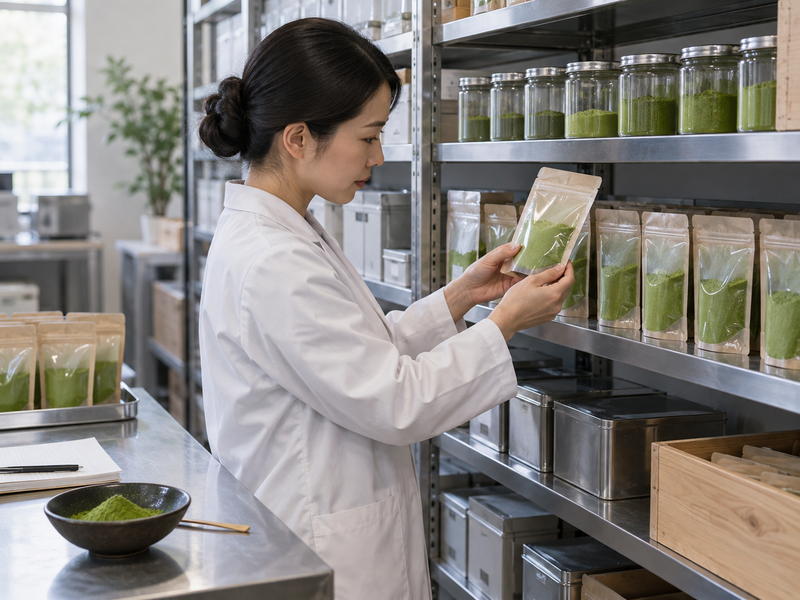
Match the identifiers. At receipt, compare the lot printed on every source package, the supplier COA, shipping document, and sample label. Record any difference rather than correcting it from memory. The COA should identify the tested lot, methods or laboratory, results, units, and specifications agreed for that purchase. A retained buyer sample can help investigate a mismatch, but it is not automatically equivalent to the supplier’s tested production sample. Sampling place, timing, and package history may differ.
If a later laboratory report conflicts with the original COA, ask whether both tests used the same method, sample preparation, detection limits, and units. Confirm the chain of custody and compare unopened reserve material if justified. Do not infer fraud from one discrepancy. The FDA supplier verification guidance notes risk-based verification obligations for some importers and receiving facilities. The buyer’s quality team must decide what testing or other verification its own program requires.
9. What happens when a complaint requires retrieval?
Preserve the original state
Open a case with complaint date, customer or site, finished-product lot, observed defect, photographs, affected stock, and storage history. Trace backward to each incoming matcha lot used. Locate the matching retained sample and inspect its seal before opening. Record who removed it, date, time, reason, amount taken, and remaining amount. Photograph the seal and label. If an outside laboratory receives a portion, record transfer and requested tests. Do not open the reserve simply because it is available.
| Investigation stage | Evidence captured | Decision owner |
|---|---|---|
| Identify lot | Complaint and production records | Quality |
| Retrieve sample | Seal and checkout record | Archive custodian |
| Compare | Agreed method and observations | Qualified reviewer |
| Decide stock status | Disposition record | Authorized quality lead |
Compare like conditions. A retained sample stored in a controlled cabinet and a consumer pouch kept in a hot car are different histories. Their difference may help explain a complaint, but it does not alone identify a manufacturing cause. Keep the recall readiness reference as broader context and use the company’s own incident procedure for containment and notifications.
10. How do you audit and retire the sample archive?
Close the chain deliberately
Check the archive. Audit a selection of physical samples against the index each quarter or at a cadence based on volume. Check label legibility, seal condition, location, logged access, and the ability to retrieve linked COA and receipt records. Look for orphan samples with no entry and register entries with no physical sample. Review storage excursions and determine whether affected portions remain useful for the intended comparison. Correct the register promptly and retain the correction history. An archive can appear full while its evidence chain has broken.
Set a documented retention period after legal, contract, quality, and product-life review. At the approved date, record who authorized disposal, sample IDs, date, and method. Preserve relevant complaint or investigation samples longer when the case procedure requires it. For the next incoming lot, ask the receiving team to run the label, seal, index, and COA reconciliation checklist once while a supervisor observes. Matcha Village can provide batch and quality documents for a buyer’s discussion, but the buyer should agree on its own sample custody and retention rules before relying on any archive in a release or complaint decision.
Use the matcha traceability guide to align retained units with receiving lot IDs and later complaint records.
FAQ
Q1: Are matcha retention samples required for every buyer? Requirements vary by market, contract, and quality system; define the business purpose with qualified advisers.
Q2: Can a supplier’s sample replace a receiving sample? It may answer a different question because shipping and handling occur after supplier sampling.
Q3: Should samples be opened for routine checks? Keep an untouched reserve and log every opening of the working portion.
Q4: How long should samples be kept? Base the period on product life, investigation needs, contracts, and applicable rules.
Q5: What is the quickest archive check? Retrieve one older lot from its finished-product code and verify its seal, receipt, and COA.