
A matcha red bean cake may slice neatly at the bench yet slide after two hours in a chilled case. Sponge height, anko weight, cream temperature, and pack clearance determine whether its green and red layers survive sale. Weigh each layer and release the packed slice after the intended case hold.
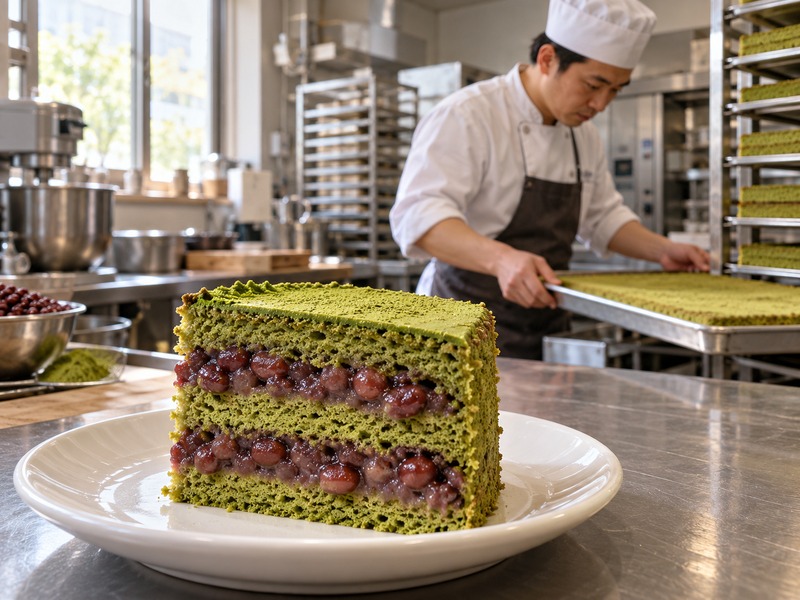
Search-intent reference: Matcha Red Bean Cake.
1. What is matcha red bean cake in a bakery range?
A layered cake can fail commercially even when its flavor is good. Slices may slide in transit, bean filling may smear, and cream may soak into sponge. Define whether the cake will be sold whole, sliced in a chilled case, or packed for delivery. Set height, slice weight, filling visibility, and cutting pattern. These targets help the bakery choose a sponge and assembly method that survive the actual route.
Whole cake versus slice brief
Slice geometry: Matcha red bean cake usually combines a green sponge or chiffon with sweet azuki bean paste, often joined by cream. For a bakery, the product can be a whole celebration cake, a sliced display cake, or a single portion in a rigid pack. Decide which unit drives the project before picking sponge height or filling thickness. A cake designed for immediate plate service can tolerate a softer assembly than a slice shipped across a city. The tea note should remain clear beside the bean filling, while the bean should taste like a filling rather than a layer of plain sugar.
2. Which matcha and red bean filling should a buyer select?
The main ingredients have different jobs. Matcha gives the sponge its tea note and color, while anko supplies sweetness, moisture, and a recognizable bean texture. Cream can soften both flavors and help layers adhere. Compare anko samples for spreadability, grain size, and taste. A filling that works in a spoon tasting may push out when a cake is cut under its own weight.
Anko texture and sponge grade
Anko grain size: Choose matcha in the baked sponge by testing finished crumb color and flavor after cooling. A brighter dry powder does not necessarily survive oven heat. For filling, compare smooth anko with bean pieces; smooth paste spreads evenly, while pieces give a distinct bite but complicate cutting. Request the filling supplier’s composition, sugar profile, water activity or relevant moisture specification, and microbiological paperwork. A ready made paste can save labor, yet its sweetness may require less sugar in cream. Keep one approved matcha lot and one approved bean filling in the trial record.
| Format | Design consequence | Trial measure |
|---|---|---|
| Whole cake | Board and decoration | Layer stability |
| Display slice | Visible cut face | Case hold |
| Packed portion | Lid clearance | Delivery damage |
3. How should the sponge and filling formula be balanced?
A layer formula should specify grams per unit, not vague spoonfuls. Record baked sponge mass, anko per layer, cream per layer, and any syrup added. Syrup may keep sponge tender but can worsen sliding or moisture migration. Run a sweetness comparison using complete chilled slices. If the bean paste is very sweet, a less sweet cream may work better than simply increasing matcha until the cake tastes bitter.
Weighed layer formula
Filling grams: Express sponge flour as 100% on the bench sheet, with matcha around 3–5% of flour as a reasonable trial range. The exact sponge ratio depends on whether the bakery uses a chiffon, genoise, or other base. Record egg, sugar, oil, and liquid weights in the chosen house formula rather than copying ratios across cake styles. Measure anko and cream in grams per layer. Too much bean paste can compress a light sponge; too little disappears in a large slice. Taste chilled portions because cold cream softens tea aroma.
4. What assembly sequence protects cake structure?
Layer assembly rewards clean temperatures and even geometry. A completely cooled sponge cuts with less tearing, while chilled cream can hold a defined edge. Use a guide for slice or layer thickness, then weigh filling across the surface rather than piling it in the middle. Leave room at the perimeter for spreading under pressure. A short chill before final cutting can reduce smears and make defect rates easier to measure.
Cool-cut-assemble sequence
Perimeter support: Bake and cool the sponge completely before cutting; a warm crumb tears and can melt cream. Sift matcha with dry ingredients and mix only as far as the chosen sponge method permits. Trim layers evenly, weigh filling, and spread it within a consistent edge margin. Where cream surrounds anko, use a stable ring or controlled layer so bean paste does not squeeze toward the sides. Chill the assembly until it can be cut cleanly. A neat exterior cannot rescue a layer that slides after two hours in a display case.
| Component | Trial reference | Check |
|---|---|---|
| Matcha in sponge | 3–5% of flour | Baked crumb |
| Anko | Weighed per layer | Sweetness and cut |
| Cream | Weighed per layer | Hold and weeping |
5. How can a bakery scale a layered matcha red bean cake?
Scaling a cake usually exposes cutting and handling losses. A sheet pan may bake unevenly near its edges; a tall round cake may lean after stacking. Measure usable cake area and portion size from the real pan. Run the slicer or knife method intended for sale, including cleaning frequency. Track cream warming during a long assembly shift. A beautifully finished whole cake is only one data point when most volume will be sliced.
Sheet yield and line speed
Sheet-edge yield: Large sheet cakes and round layer cakes need separate yield sheets. Measure sponge thickness at several points, since an uneven sheet gives inconsistent slice weight. Use a depositor or weighed piping bags for cream and bean paste rather than eyeing each layer. Test line speed against cream temperature; warm cream loses definition during a long assembly run. For sliced retail packs, measure damage during cutting and lidding. Carry the same accepted slice height, filling line, and visible green crumb through all operator training photographs.
6. Which quality checks protect flavor and appearance?
The green crumb, red bean line, and cream should look deliberate from one portion to another. Check slice height and filling thickness at several positions in a cake. Taste edge and center portions after chilling because flavors can vary when filling was spread unevenly. Look for weeping at the bean interface and cream smears against the lid. Use written reject examples so a packer does not release damaged slices for lack of guidance.
Visible layer release
Bean-line visibility: Cut a sample from the edge and center of each trial batch. Check that matcha appears evenly green, anko has a clean layer, and cream has no weeping or air gaps. Taste the full bite, not components alone; a sweet bean layer can hide weak tea flavor. Observe the pack after a normal delivery hold for sliding, smearing, and lid contact. Record slice weight and height along with visual checks. If green fades during display, inspect light, oxidation exposure, and powder age before increasing matcha indiscriminately.
| Assembly check | Record | Defect |
|---|---|---|
| Sponge | Thickness at several points | Uneven slice |
| Filling | Grams per layer | Bulging |
| Packed slice | Height and lid clearance | Smear |
7. How should portion cost and yield be measured?
Whole cakes and slices consume the same ingredients but have different selling yields. Slicing creates trim, end pieces, and occasional damaged portions. Include those losses before setting a slice price. A carton, board, lid, and cold carrier also change cost by channel. Weigh residual cream and anko left in equipment after a batch. That simple check can explain why recipe math and purchasing invoices disagree.
Cost per accepted slice
Clean slices per sheet: Cost one whole cake and one sellable slice separately. Include sponge trim, end slices, rejected layers, cream left in bags, bean paste scraped from containers, and rigid packs. A premium powder matters less financially than a cutting pattern that discards too much cake. Use the actual batch yield and target serving weight to calculate cost per slice. Whole cakes may need decoration labor and a sturdy board; individual portions need more packaging. Quote both formats only after measured yield and labor are available.
8. How should matcha red bean cake be stored?
Storage tests should focus on the interfaces between ingredients. Bean paste can move moisture toward sponge; cream can weep; a lid can press on decoration. Check the cake after normal transport and during chilled display. Record whether the cut face dries, whether matcha loses color, and whether layers stay aligned. Plain sponge shelf life does not transfer to a filled cake, so validate the assembled unit.
Bean and cream moisture movement
Cream and bean migration: Cream filled cake belongs in a controlled chilled route with a shelf life supported by the finished formulation and local rules. Bean paste can move moisture into sponge, changing crumb and cut quality before microbial limits are reached. Run a hold study in the display case and delivery pack, observing layer slip, weeping, surface drying, and color. Freezing can be considered only after a thaw trial; cream structure and bean texture may change. Mark the start of the holding window consistently at finishing or packing.
| Cost source | Basis | Common loss |
|---|---|---|
| Sponge | Good slices per sheet | Trim |
| Cream and anko | Actual deposited mass | Bag or tub residue |
| Packaging | Each sale unit | Damaged lids |
9. Which records support food safety and labeling?
Bakery paperwork should make a slice traceable back to its inputs and chilling history. Capture matcha and bean paste lots, sponge bake record, cream batch, assembly time, cut time, and pack code. Review every ingredient for allergens and any claim used on a menu or label. A change in purchased anko can alter both declaration and texture. Require the technical team to approve substitutions before the next production run.
Filling and cake traceability
Paste substitution: Review wheat, egg, milk, and any other ingredients in filling or decorations for the final allergen declaration. Request traceable lots for matcha, anko, cream, and flour. Batch sheets should show bake, cooling, assembly, chilling, cutting, and release checks. If a filling supplier substitutes ingredients, the label and texture may both change. Verify any organic or origin claim against records for the complete cake. Temperature logs matter at handoff between kitchen, carrier, and store, especially for sliced packs handled repeatedly.
10. What must a production pilot settle before launch?
The pilot should take a cake all the way through its intended commercial path. Assemble with routine staff, chill, cut, pack, move it, and hold it in the real case. Count accepted slices rather than judging the uncut cake. Give the buyer a portion from the end of the proposed selling window. Sign off only when flavor, clean cuts, layer stability, food safety controls, and cost align.
Display-case pilot
Case-hold signoff: Make a pilot with the intended pan, oven, cream mixer, assembly station, cutter, and sale pack. Compare at least two filling weights against one fixed sponge formula so the team can see the effect on sweetness and slice stability. Test a full cake and a slice at the end of the proposed holding window. Approve the formula when purchasing can source repeatable powder and paste, production can cut clean portions, and quality can release the packed cake against written criteria.
| Document | Lot or step | Why |
|---|---|---|
| Ingredient records | Tea, paste, dairy, flour | Trace |
| Chill log | Assembly and transfer | Control |
| Label proof | Recipe and allergens | Sale |
Give Matcha Village the sponge method, flour-based tea range, baked crumb photo, and chilled slice result when asking for matcha grades. Keep the anko supplier and layer weights fixed during powder comparison. The buying specification should name the grade that leaves a clear tea note beside bean paste and yields clean, stable slices through the planned case and delivery period.
FAQ
Q1: What is anko? Anko is sweetened azuki bean paste. Its sweetness and texture vary by supplier.
Q2: Can bean paste replace cream? It can form a layer, but the cake needs a separate structure and sweetness trial.
Q3: Which matcha grade belongs in sponge? Select a grade by baked crumb color, tea flavor, supply documents, and unit cost.
Q4: Can the cake be frozen? Only after a thaw trial confirms cream texture, bean layer, cake crumb, and safety controls.
Q5: How should slices be priced? Use actual good slice yield plus filling, packing, labor, and expected trim loss.