
A damp strawberry can shed its matcha coating before a catering tray reaches its customer. Fruit size, dry-down, coating flow, and chilled transport decide whether the shell looks clean at delivery. Approve fruit and powder against intact, dry shells after actual chilled delivery.
Search-intent reference: Matcha-Covered Strawberries.
1. What are matcha covered strawberries for foodservice sale?
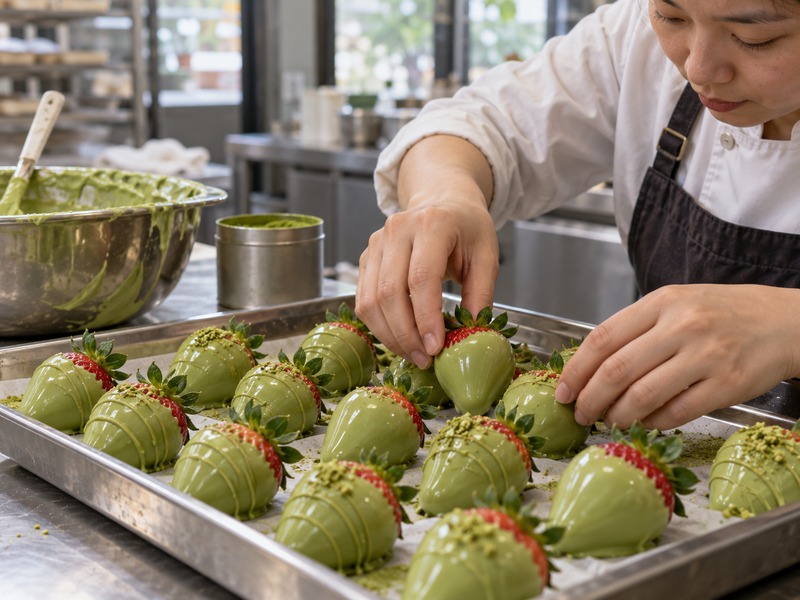
A strawberry coated with matcha looks simple but combines fresh produce with a temperature sensitive shell. The buyer should decide whether berries will be eaten within hours or transported and held. Specify berry count, target size band, shell thickness, and whether leaves remain attached. A tray of individually selected fruit will not represent daily output. The product brief should state how much variation in shape a pack may contain.
Berry count and sales route
Berry size band: This product pairs ripe whole strawberries with a matcha colored fat based coating, commonly white chocolate or a suitable confectionery coating. Its value lies in clean fruit flavor and a thin, even shell. The route may be a same day café dessert, a catering platter, or a short chilled delivery. Each route needs a different pack and handling plan. Fruit size changes dipping labor and unit count, while surface moisture changes coating adhesion. Define the selling unit by berry count and minimum usable fruit weight rather than relying on a photograph of unusually large berries.
2. Which fruit and matcha belong in the coating?
Fruit quality is the main input variable. Inspect cartons for leaks, bruising, uneven ripeness, and caps that detach during handling. A fruit lot with attractive top layers can hide soft berries below. Matcha belongs in the coating rather than on damp fruit, where powder can clump and stain. Compare powder candidates in a full coating mix after setting; sweetness and cold service can suppress the tea note.
Fruit intake and matcha trial
Set-shell flavor: Buy firm fruit with intact caps, limited bruising, and a size band that gives predictable coverage. Ask the produce supplier how fruit is cooled and delivered; warm cartons often collect condensation after moving into a cold room. Matcha should disperse smoothly in the coating without coarse green specks. A gentle culinary grade can work because sweet white chocolate carries much of the flavor. Compare samples in the melted coating and after it sets. A bitter powder may need a lower percentage, while a dull powder may never produce a saleable green shell.
| Sales route | Unit definition | Main risk |
|---|---|---|
| Café case | Fixed berry count | Condensation |
| Catering | Tray count and size band | Transport damage |
| Delivery pack | Accepted fruit weight | Temperature cycling |
3. How should a coating formula be set for strawberries?
Coating formula work should separate color, flavor, and flow. More matcha can darken green but also thicken chocolate and increase bitterness. Record the weight of powder in a known mass of coating, then dip fruit from the same delivery lot. Check whether chocolate still drains from the berry and whether a heavy base forms on the tray. A small fat adjustment may improve flow, but the coating manufacturer’s rules govern compatibility.
Coating ratios by weight
Coating viscosity: An illustrative bench mix uses white chocolate at 100 parts, matcha at roughly 1–2 parts, with a small optional amount of compatible cocoa butter if flow needs adjustment. This is a trial ratio, not a universal tempering instruction. Sift powder into a portion of melted fat before combining with the main coating. Never add water to correct thickness; water can seize chocolate. Weigh coating before and after a sample tray to measure real pickup per berry. The target is complete cover without a heavy foot at the base.
4. What dipping sequence gives a clean finish?
Fruit preparation needs a dry surface and orderly movement from washing through dipping. Set a clean zone for dried fruit so it cannot meet wash water again. Keep tray liners ready before melting coating; delays change viscosity and invite rushed handling. A single dip should cover the berry without pulling off the cap. Record the time fruit spends outside controlled storage while staff work through a full carton.
Dry fruit and single-dip workflow
Fruit dry-down: Wash or sanitize berries under the kitchen’s produce procedure, then dry them thoroughly with food safe handling. Water droplets make coating slide, bead, or set unevenly. Bring coating into the working range specified by its manufacturer; real chocolate also needs correct temper. Hold a berry by its cap or a food safe pick, dip once, let excess drain, and place it on a clean lined tray. Avoid repeated reworking of warm fruit. Chill only as the coating and food safety plan require, then move packed berries without large temperature swings.
| Ingredient | Bench starting point | Adjustment trigger |
|---|---|---|
| White chocolate | 100 parts | Manufacturer temper range |
| Matcha | 1–2 parts | Flavor and color |
| Cocoa butter | Only if needed | Flow after trial |
5. How can production manage fruit and coating variation?
Scaling a berry line means managing biological variation rather than forcing every berry into one motion. Grade fruit before workers start dipping and use a separate reject bin with reasons. Train operators to identify coating that has become too thick or has collected fruit debris. Weigh coating additions and leftovers so daily pickup can be explained. A high daily output count is not useful if leaking berries are discovered after packing.
Sorting and bowl control
Bowl debris threshold: Sort fruit into size bands before dipping so operators can use a steady motion and a repeatable coating allowance. Monitor bowl temperature and viscosity as matcha powder accumulates or the line pauses. Replace coating when fruit water, pulp, or debris enters the bowl; do not treat contaminated remnants as a new batch. Log fruit input, trimmed rejects, coated output, and coating left in the vessel. A high coating yield on paper can hide thin coverage on some berries and thick shells on others, so inspect both.
6. Which checks show that each berry is ready for sale?
Finished berry inspection should happen before and after packing. A glossy shell can hide a soft fruit core, so cut samples from several positions in the batch. Look for drips near the cap and pooled coating where fruit touched the tray. Watch packages through the planned delivery route for droplets and cracks. A temperature change may make a perfect dispatch tray look poor at arrival.
Shell and fruit release
Weeping under shell: A saleable berry has a clean cap, firm fruit, intact shell, and no visible liquid trapped under coating. Check contact points where a berry rested on the tray; a wide puddle signals excessive coating pickup or poor drainage. Cut a sample to judge shell thickness and fruit condition. Observe packed samples for weeping, cracks, dulling, and package condensation. Reject bruised or leaking fruit even if the green coating hides the defect. Taste a berry at serving temperature because cold can mute both tea aroma and sweetness.
| Process check | Evidence | Action |
|---|---|---|
| Fruit surface | Dry before dipping | Hold wet fruit |
| Coating bowl | Temperature and flow | Correct or replace |
| Cut sample | Shell thickness | Adjust drainage |
7. How should a buyer calculate cost and waste?
Berry costing needs a realistic acceptance rate. Delivered fruit mass includes caps and fruit that cannot be coated; only sound berries enter saleable packs. Add the measured grams of coating per berry, then labor for washing, drying, dipping, and packing. Quote catering trays separately if they need display setup or tight delivery windows. A discount on fruit cartons is worthless when rejection rises faster than the purchase saving.
Accepted-berry cost
Accepted-fruit yield: Fruit yield drives cost because only sound berries should enter production. Divide delivered fruit spend by accepted berries, then add coating pickup, matcha, labor, tray liners, and chilled packaging. Count rework carefully: a damaged berry cannot become a premium whole fruit unit. Build price around actual pack yield and realistic trimming, not a perfect tray. Catering may add transport and setup labor; a café may have more unsold units at close. The two channels can require separate price sheets even with the same coating formula.
8. How should matcha covered strawberries be held?
Fresh berries continue to change after coating. Check firmness, moisture release, shell adhesion, and package condensation during the planned holding window. A covered tray may shield handling while trapping humid air; the exact design needs a trial. Keep chilled transport practices consistent so fruit does not repeatedly warm and cool. The food safety team should set the discard rule from local requirements and product evidence.
Chilled pack evaluation
Condensation route: Keep berries under the temperature control required for fresh cut or handled fruit in the market of sale. A sealed pack can trap condensation, while an open tray exposes fruit to drying and handling; test the exact package. Do not assume chocolate creates a protective shelf stable barrier around fresh fruit. Set a short, validated selling window from observed fruit condition and food safety review. During delivery, keep cartons level and avoid temperature cycling that leaves droplets on the shell. Lot codes should follow fruit and coating into finished packs.
| Cost component | Measure | Why |
|---|---|---|
| Fruit | Accepted berries per carton | Sort loss |
| Coating | Actual pickup per berry | Coverage cost |
| Chilled pack | Materials and transport | Route cost |
9. What food safety and labeling records are needed?
Traceability begins when fruit enters the room. Log supplier, delivery lot, condition, and accepted count before it meets chocolate. The dipping log should identify coating and matcha lots and the operator period used for each tray. Check allergens in chocolate or compound coating, including milk or soy. Staff need clear sanitation and temperature instructions, while the package needs wording that matches the recipe actually used.
Produce trace and allergen record
Cold-chain code: Review milk and soy allergens in the chosen coating, along with any cross contact from the facility. Foodservice teams need handling instructions that cover produce washing, dry down, utensil sanitation, cold holding, and discard time. Matcha and chocolate supplier records should connect to the finished tray or pack code. A menu description can name matcha and white chocolate if those are the actual ingredients. Do not print a long shelf life or a claim about freshness without validation for the finished berry.
10. What should a catering or café pilot prove?
A pilot should include imperfect but acceptable fruit sizes from a normal delivery, not only handpicked berries. Record throughput, coating pickup, rejected fruit, and the number of sound packs at the end of the route. Have receiving staff inspect a delivered pack without knowing which tray supplied it. Those findings tell the buyer whether to change fruit specification, coating formula, package, or selling window before ordering at volume.
Delivery-route pilot
Delivery-pack inspection: Trial berries from more than one delivery lot because fruit water content, size, and firmness change the dipping result. Run the pilot with the intended workers, tray spacing, coating vessel, packing station, and delivery route. Measure accepted fruit percentage and coating pickup rather than judging only a display tray. Have a quality reviewer inspect the product at dispatch and after a representative hold. Place an order for coating powder only when the chosen grade remains attractive and flavorful throughout that route.
| Record | Links to | Release use |
|---|---|---|
| Fruit intake | Supplier and carton lot | Condition |
| Coating log | Matcha and chocolate lots | Traceability |
| Holding check | Time and temperature | Sale window |
Before ordering tea powder for this application, give Matcha Village the exact white chocolate or coating base and the planned matcha percentage. Request a production-grade sample, then dip berries from a normal fruit delivery. Share photographs at packing and arrival, coating pickup per accepted berry, and any condensation or bitter finish. Approve the grade only after the fruit specification and chilled route also pass.
FAQ
Q1: Can fresh berries be dipped while damp? Dry them thoroughly under a safe handling procedure; moisture interferes with coating adhesion.
Q2: Can matcha be mixed with water before coating? No. Water can seize a fat based chocolate coating; pre disperse matcha in compatible fat.
Q3: Which coating is suitable? Test white chocolate or a suitable confectionery coating for flow, flavor, allergens, and labeling.
Q4: Are coated strawberries shelf stable? Fresh fruit remains perishable. Use a validated chilled handling and selling plan.
Q5: How is coating cost measured? Weigh coating before and after a production tray and divide actual use by accepted berries.