
Matcha deviled eggs are easy to make in a small kitchen and awkward to serve across a catered event. Egg halves slide, yolk filling varies from one bite to the next, and an exposed green surface can dry before guests arrive. A controlled canapé trial should weigh the filling, choose a piping pattern and rehearse refrigerated transport. KitchenAid’s recipe takes a different route, steeping whole boiled eggs in matcha before piping a yolk mixture. The method here measures matcha directly in the yolk filling so a catering team can control dose and appearance.
Contents
- 1. What makes a matcha deviled egg fit for catering?
- 2. How should eggs be cooked and selected?
- 3. How much matcha belongs in the yolk filling?
- 4. What keeps the filling pipeable?
- 5. How can each half receive the same portion?
- 6. Which garnish survives event handling?
- 7. How should chilled transport be rehearsed?
- 8. What does a realistic service test reveal?
- 9. How should cost and food controls be recorded?
- 10. What belongs in the event production brief?
1. What makes a matcha deviled egg fit for catering?
Define the bite at the end of the route
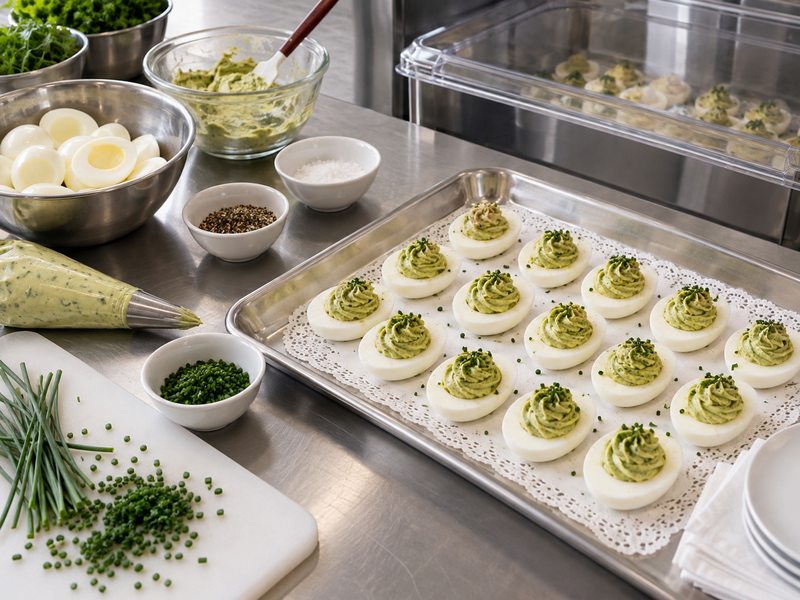
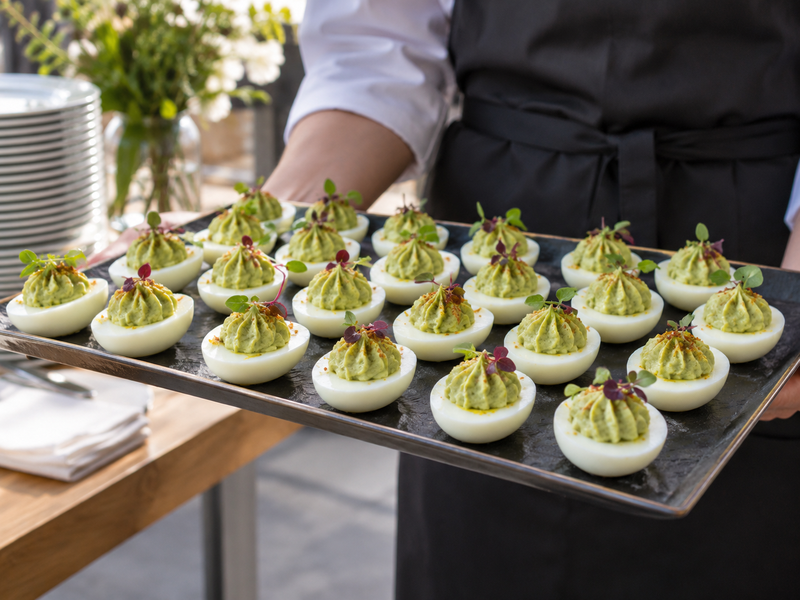
A canapé has to pass more than a kitchen tasting. Specify the egg size, half weight, filling height, garnish and tray footprint for the event’s service style. A stationary buffet can accept a different presentation from passed trays carried across a room. Ask whether a guest can lift one half cleanly without the filling falling sideways. Photograph a passing sample from above and from the side, then compare the same bite after transport and near the planned service interval.
KitchenAid’s matcha deviled eggs use matcha for an egg infusion and finish with piped yolk, Parmesan, mustard, caviar and basil blooms. That recipe offers a flavor and presentation reference, not a tested catering specification for another kitchen. A caterer may use a simpler garnish that travels better. Score egg tenderness, tea flavor, filling smoothness, visible green color and ease of pickup. Choose the version that remains recognizable and appetizing when the guest receives it, not merely when the chef finishes piping.
| Canapé check | Trial record | Reject signal |
|---|---|---|
| Egg half | Size and cut stability | White tears or rocks |
| Filling | Grams and height | Empty pocket or slump |
| Garnish | Count or grams | Falls during transport |
| Pickup | Staff test | Filling touches fingers |
2. How should eggs be cooked and selected?
Treat peeling yield as a production number
Choose one egg size and supplier lot for the pilot. Cook a full tray by the method the kitchen can repeat, then cool it according to the site’s approved procedure. KitchenAid’s recipe steams its eggs and cools them before peeling, but a different steamer load may behave differently. Record egg count, cracked shells, peeling damage, whole cooked mass and usable halves. A cracked white can still be edible in another preparation yet fail the canapé’s appearance standard, so separate kitchen waste from pieces diverted to another use.
Slice on a consistent plane and check whether both halves rest flat on the chosen tray. If whites rock, try a different egg size or a restrained base trim, counting any trim in yield. Keep yolks from a single batch together so filling consistency reflects one cook. Photograph the cut face of several eggs: a dry, crumbly yolk can need a different amount of dressing than a moist one. A test based on four perfect eggs will understate labor and rejects at a 200-piece event. Run at least one realistic batch before quoting the item.
| Egg batch line | Count or mass | Why record it |
|---|---|---|
| Eggs received and cooked | Count | Sets theoretical halves |
| Cracked or peeling rejects | Count | Shows true usable yield |
| Usable white halves | Count | Determines order capacity |
| Recovered yolks | Grams | Sets filling ratio |
3. How much matcha belongs in the yolk filling?
Dose against recovered yolk mass
For this direct-fill variation, weigh cooked yolks after separation, then test matcha as a percentage of yolk mass. An initial kitchen trial might compare 1%, 2% and 3% matcha relative to yolks, keeping mustard, dressing and salt steady. Those percentages are experimental settings, not published recipe standards. Sift the powder to avoid dark flecks, then mix it into a small portion of dressing before combining with yolks. Record the addition sequence because a lumpy paste can look like uneven tea dose.
Taste a filled half rather than the yolk mixture alone. The white changes flavor balance and can make a bitter filling feel more assertive. Photograph each dose immediately after piping and after the intended chilled holding test. If a stronger dose looks better but tastes harsh, try a different matcha sample at the same dose before adding sweetener. Ask suppliers for lot identity, ingredient statement and quoted pack cost, then calculate powder cost per usable half. A small dose may be economical; rejected canapés often cost more than the difference between powder grades.
4. What keeps the filling pipeable?
Use a texture test the crew can repeat
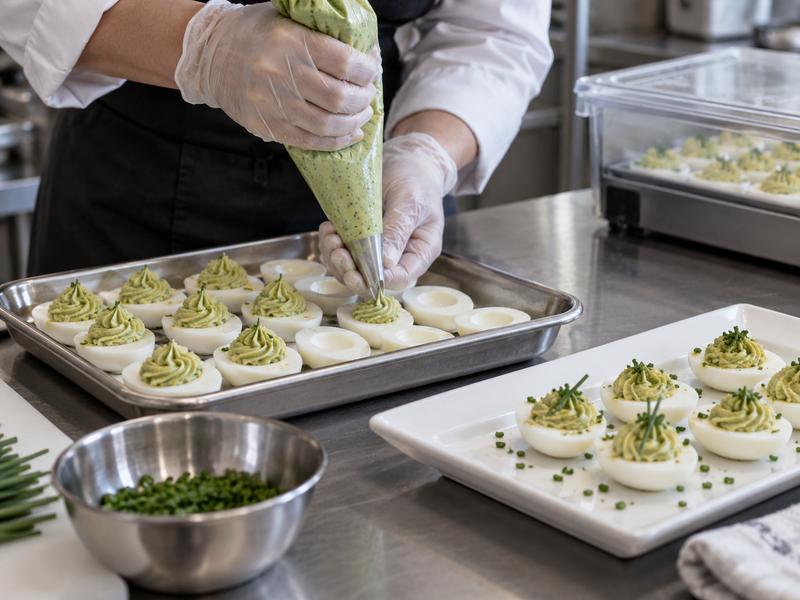
Cooked yolk moisture varies, and cheese or mustard can change how a mixture moves through a piping tip. Start with measured yolk, dressing and matcha masses. Mix until smooth enough for the chosen nozzle without turning the filling runny. Test a small bag first: pipe ten equal rosettes onto a spare tray, pause, then pipe ten more. If the second group changes shape as the bag warms, record bag temperature and time at the station. A thick filling may split a disposable bag or leave empty channels in the egg; a thin filling may flatten before service.
KitchenAid processes its yolks with mustard, Parmesan and reserved matcha tea. That liquid addition belongs to its own formula. For this direct-dose trial, add liquid in weighed increments and record every change. Wipe the tip between samples so a clogged opening is not mistaken for poor formulation. Photograph a cross-section to see whether the fill reaches the cavity base. The right mixture holds a clean edge while still feeling smooth in a single bite. Let a second operator repeat the texture test before fixing the formula.
| Texture observation | Possible process question | Next controlled test |
|---|---|---|
| Grainy pipe | Were yolks fully mixed? | Compare mixing time |
| Slumped rosette | Was liquid over-added? | Reduce measured increment |
| Broken bag | Is tip too small? | Compare nozzle size |
| Empty cavity | Was deposit too shallow? | Check fill weight |
5. How can each half receive the same portion?
Calibrate the piping bag by weight
Choose a target filling mass only after weighing the total recovered yolks and planned number of usable white halves. Divide available filling by that count, allowing for a measured bag loss. For a first pilot, pipe five halves, weigh each before and after and calculate the spread. A piping mark on the bag or a fixed rosette count can help staff, but the scale establishes whether that visual cue works. Recheck at the end of the bag, when squeezing pressure changes.
Arrange white halves in the same orientation so the nozzle enters the cavity at the same angle. A deep deposit can look tidy from above yet leave uneven height across a passed tray. Photograph a full tray and reject pieces that lean, overflow or show bare yolk pocket. Count reworked halves separately; scraping filling back into a communal bag may conflict with the site’s handling plan. The aim is a bite that looks intentional across 20 trays, not only in the chef’s sample row. Include the measured deposit in the event quote and ingredient order.
6. Which garnish survives event handling?
Compare flavor with movement and moisture
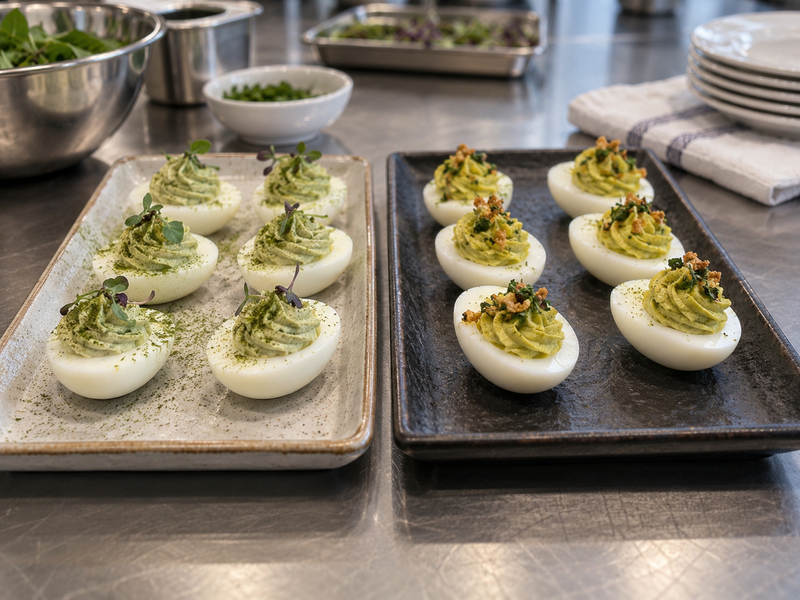
KitchenAid finishes its version with caviar and basil blooms. A caterer should test whether a garnish stays on the chosen rosette during boxing, travel and tray circulation. Make three small sets, such as chive, sesame and a plain version, keeping filling and egg identical. Add garnish by count or grams. Ask tasters whether the topping sharpens the tea note or hides it. A salty garnish can make the same matcha dose seem less bitter; a wet topping can soften the filling surface.
Run a transport simulation with the full tray, not one egg on a plate. Inspect fallen garnish in the box and smears on the lid. If a topping has its own allergen or supplier documentation, include it in the event brief. For a custom order, photograph the approved garnish so a last-minute substitute does not quietly change ingredients or appearance. A simple garnish that survives the route may serve guests better than a fragile one that looks impressive at the kitchen pass.
| Garnish choice | Deposit measure | Transport check |
|---|---|---|
| Chive | Pieces per half | Remains on rosette |
| Sesame | Pinch weight | Loose seeds in box |
| Roe or other wet topping | Grams per half | Surface staining |
7. How should chilled transport be rehearsed?
Map the whole route from kitchen to venue
Deviled eggs are a prepared egg food, so the route needs an approved cold handling plan. Build a rehearsal with the actual tray, lid, carrier, vehicle conditions and venue handoff. Record time and product temperature at packing, departure, arrival and transfer into the venue’s refrigeration or approved service setup. The FDA Food Code gives a US retail model for time and temperature control; local rules and the caterer’s plan govern this job. A visual inspection cannot verify safe handling.
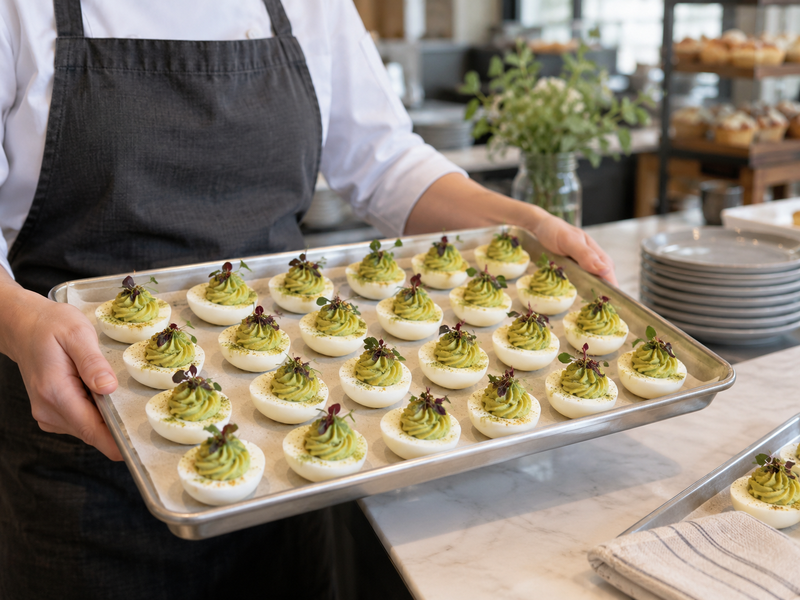
Pack eggs in a tray that stops sliding without crushing the piped tops. Put a sample tray at the carrier’s most vulnerable location, then check its appearance after the planned drive and load-in. Record condensation, lid contact and any whites that tip. If the cold equipment cannot hold the planned batch, reduce tray count per trip or revise the order rather than assuming close-packed boxes will cool themselves. Keep quality observations separate from the temperature log. Both matter, but they answer different questions.
8. What does a realistic service test reveal?
Watch the last tray, not only the first
Place a trial tray under the event’s intended service conditions for the planned interval allowed by the site’s food-safety procedure. Note opening and closing times, who controls replenishment and what happens to a tray that returns from the floor. Photograph a marked egg at intervals for surface drying, darker edge color and loss of rosette definition. Taste only samples handled within the approved procedure. A filling that passes 15 minutes in a kitchen refrigerator may look different after repeated lid openings and venue lighting.
Ask servers to lift and offer a canapé while wearing the equipment or gloves they will use at the event. Watch for cracked whites, filling transfer and unstable garnish. Count the intact pieces left at the end of the test and note where failures cluster on the tray. If the exterior rows dry first, a different container or a more frequent replenishment schedule may solve a quality issue. Do not turn a quality test into a claimed safe time limit. The food-safety lead must approve exposure and disposal rules separately.
| Service observation | Time or count | Decision |
|---|---|---|
| Tray out and return | Logged time | Follow approved plan |
| Dry-looking tops | Count by position | Change covering or rotation |
| Broken whites | Count | Adjust tray or pickup |
| Unsold pieces | Count | Revise production forecast |
9. How should cost and food controls be recorded?
Price the usable canapé
Calculate ingredient and labor cost against usable halves after cooking, peeling, cutting, piping and transport. Record the number of eggs purchased, filling left in the bag, damaged halves and garnish discarded during travel. Time peeling and piping during a full order; those steps can dominate cost even when matcha powder is inexpensive per canapé. Compare powder candidates at the approved dose and convert their quoted pack cost into cost per saleable piece. Add trays, lids, refrigeration logistics and staff time to the event quote.
Egg is a major allergen under the FDA’s US list; Parmesan adds milk, and some garnishes add others. Check all ingredient statements and local labeling or menu disclosure obligations. Keep egg and matcha lot identifiers on the production sheet. Set a clear hold, transport and service process under the business’s food-safety plan. A recipe article cannot validate a shelf life or override a site’s cooking and cold-chain requirements. Train the crew to isolate a batch when a temperature or labeling record is missing.
10. What belongs in the event production brief?
Give every shift the same decision points
The brief should list egg supplier and size, cooked and usable yield, yolk mass, matcha lot and dose, dressing formula, mixing sequence, nozzle, target fill grams, garnish deposit, tray layout and transport equipment. Add a photo of a passing half and a full passing tray. State which person can approve substitutions and which records accompany the delivery. Keep the kitchen’s food-safety plan attached or referenced, with approved time and temperature checks, corrective actions and local requirements.
Have a second operator prepare at least one full tray from the written method. Compare fill weights, piping shape and damaged count with the first operator’s tray. Repeat the route rehearsal if the tray or vehicle changes. Matcha Village can discuss powder options for bulk buyers, but a caterer should approve a lot-coded sample in the actual yolk filling before ordering. The best formulation is the one staff can make, pack and hand off consistently at the intended event scale.
Shortlist powder grades with the culinary grade matcha guide, then test each candidate in the yolk filling.
FAQ
Q1: Can matcha deviled eggs be made with culinary matcha? Yes. Test candidates at an equal weighed dose in the completed bite and review cost per usable half.
Q2: Why does the filling look grainy? Check yolk mixing, matcha dispersion and nozzle size before adding more liquid.
Q3: How can a caterer keep portions even? Calibrate the piping pattern with a scale at the start and end of each bag.
Q4: Can the eggs travel on an open platter? Choose packaging and a cold transport method under the caterer’s approved food-safety plan, then rehearse the route.
Q5: Does good appearance prove the eggs are safe? No. Appearance is a quality check; cooking, cooling, holding and service require separate controls.