
Matcha protein powder can mean a ready-to-mix blend of tea and protein, or separate powders combined in a drink. The difference matters to a buyer. A successful product must deliver a clear tea taste, a measurable protein amount and a mixable texture without making claims the final formula cannot support. Verywell Health’s dietitian-authored matcha latte article offers a consumer drink example. It does not replace a commercial formulation, nutrition analysis or market-specific label review.
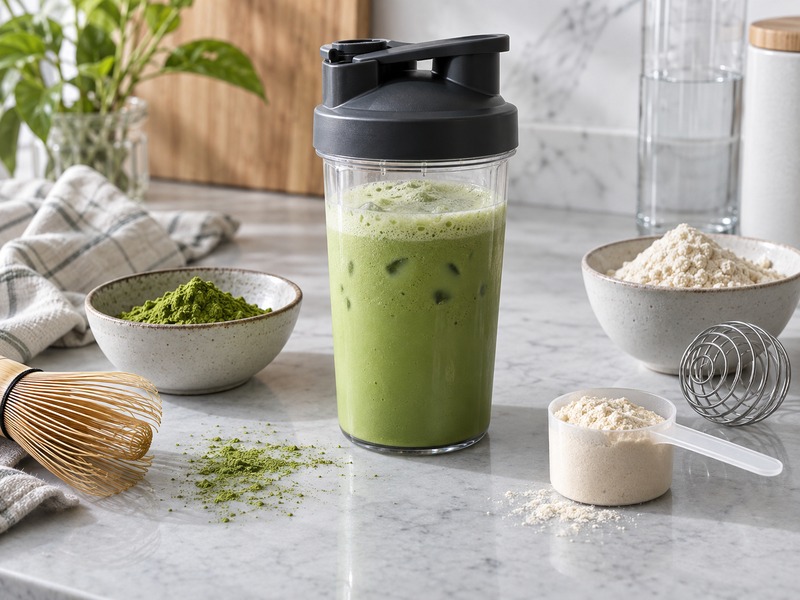
This guide is for beverage brands, café chains and ingredient buyers deciding whether to purchase a finished blend or formulate one. It addresses product performance and evidence, not medical outcomes.
1. What is the product supposed to be?
Decide between a blend and a made-to-order drink
A packaged matcha protein powder is judged when a customer adds water or milk at home. A café drink can rely on a shaker, blender and trained staff. These formats have different demands for dispersion, portion accuracy, packaging and claims. Write a product brief stating protein grams per serving, matcha grams, serving liquid, cup size and intended taste. Do not begin with the protein claim alone. A high-protein blend that tastes like sweetened chalk will not earn repeat use.
Define the tea role. Some products use matcha mainly for color. Others promise a tea-forward latte. Ask tasters to describe the finished drink without seeing the packet. If they cannot recognize matcha, either the formula or product name needs work. For a café, decide whether matcha and protein are mixed at order time or preblended. For a retail powder, decide whether one scoop is a full serving and how the consumer can measure it. That choice drives the pack, nutrition panel and consistency controls.
| Format | Mixing environment | Main approval test |
|---|---|---|
| Retail powder blend | Home shaker or spoon | Dispersion without equipment |
| Café add-in | Staff and blender | Service time and dosing |
| Ready-to-drink beverage | Processing line | Stability and safety validation |
2. Which protein source fits matcha?
Test flavor and texture before marketing language
Whey, milk proteins and plant proteins differ in solubility, flavor, mouthfeel, allergens and regulatory treatment. A vanilla-flavored protein can soften matcha bitterness but may make the drink taste more like dessert than tea. Some plant proteins add grainy or earthy notes that compete with matcha. Test candidates at the intended protein amount in the final liquid. A powder that dissolves in warm milk may not disperse in the cold water a consumer actually uses.
Review the full ingredient statement. Protein ingredients may arrive with flavors, sweeteners, thickeners or carriers already included. Ask suppliers for specifications, allergen information and relevant analysis. Compare protein grams in the finished serving, not a supplier’s scoop size. If the brand plans a plant-based or dairy-free claim, have a qualified reviewer assess the complete formula and production environment. Buying a plant protein alone does not prove the packaged product meets a particular claim.
| Protein source | Likely formulation concern | Buyer evidence |
|---|---|---|
| Whey | Dairy allergen and cold mixing | Specification and sensory sample |
| Milk protein | Body and solubility | Functional data in target liquid |
| Pea or other plant protein | Earthy flavor and grit | Finished-drink trial |
3. How much matcha belongs in the blend?
Set dose through taste and cost per serving
Protein can mute tea aroma, so the matcha dose for a plain latte may not work in a protein blend. Start with measured candidate doses and compare them in the complete formula at the proposed protein level. Assess green color, tea flavor, bitterness and sediment. Do not use an arbitrary “ceremonial” label as the acceptance standard. Request lot-linked matcha specifications and samples from realistic production supply.
Taste a diluted serving too. Consumers vary the amount of water or milk they add. Test at the printed serving liquid and a reasonable wider range. The tea should remain identifiable without turning a concentrated drink bitter. Calculate matcha cost per acceptable scoop, including losses during dry blending. If a higher-grade powder adds little sensory benefit under the protein and vanilla, spend the difference where the customer can perceive it. Keep a retained sensory reference and repeat the test after a matcha lot change.
4. What mixing test reflects actual use?
Test with a spoon, shaker and cold liquid
A product developer can make almost any powder look smooth using a high-power blender. That is misleading if the pack tells consumers to stir it into water. Build a mixing protocol that matches the proposed directions: liquid volume and temperature, vessel, order of addition and mixing time. Inspect floating matcha, protein clumps, foam, sediment and the last sip. Run the same protocol after the powder has spent time in its intended package, because moisture pickup can change flow and dispersion.
Separate ingredient failures. Green lumps may come from matcha; pale clumps may come from protein. Sifting, agglomeration or a different mixing order can help, but each adds cost or changes the product. In a café, a short matcha slurry might work before protein is added. For a retail blend, the consumer cannot be expected to use two bowls unless the pack is designed for that routine. Write instructions that ordinary testers can follow without being coached by the development team.
| Defect | Possible cause | Practical trial |
|---|---|---|
| Green specks | Matcha dispersion | Change addition order |
| Pale clumps | Protein hydration | Compare liquid and shear |
| Heavy foam | Mixing intensity | Test shaker method |
| Sediment | Powder suspension | Observe timed servings |
5. How should sweetness and flavor be managed?
Keep the tea from disappearing
Protein powders often contain vanilla or sweeteners. Added matcha can make a familiar vanilla shake more interesting, but extra sweetener can flatten the tea. Develop the formula in steps: protein and liquid, then matcha, then sweetener or flavor adjustment. This reveals which component causes a harsh or artificial note. Avoid adding a strong coconut or dessert flavor simply to cover protein grit; that may create a different product than the tea-forward matcha blend the name promises.
Taste at the label directions. A powder may seem balanced in milk but too sweet in water. If the pack offers both, test both. Check after a few minutes, when foam settles and lingering bitterness becomes clearer. If a café uses syrup, include that sugar in the final drink evaluation. Use consumer-facing descriptions grounded in the actual cup. “Smooth vanilla matcha with protein” is more useful than a string of unsupported performance claims.
6. What nutrition and health claims need evidence?
Verify the final product, not the ingredients alone
The amount of protein on a package must come from the finished formula and its validated serving size. Matcha contains compounds often discussed in wellness media, but a blend’s market claims need their own evidence and regulatory review. Do not infer that adding matcha makes a protein drink anti-inflammatory, improves memory or treats a condition. The Verywell Health article contains health discussion; a commercial label must be evaluated separately under the rules where it is sold.
Build a claim file. Record the formulation version, protein analysis or justified calculation, serving amount, ingredient statements and the exact wording proposed for pack and web. Have a qualified specialist review nutrient-content, vegan, organic, caffeine or other claims for the destination market. Caffeine may matter to shoppers even when it is not the headline claim. A tea-derived caffeine statement should be grounded in the finished serving and allowed labeling approach, not a guess from powder weight alone.
| Proposed statement | Evidence to assemble | Owner |
|---|---|---|
| Protein grams | Finished-formula calculation or test | Nutrition and quality |
| Dairy-free or vegan | Full ingredient and process review | Regulatory |
| Caffeine information | Valid product-specific basis | Regulatory |
| Organic | Valid chain and certification records | Sourcing and regulatory |
7. How will the powder behave in its package?
Test flow, moisture and scoop consistency
Matcha and protein powders can differ in particle size and density. A dry blend may separate during transport, causing the first scoop to taste different from the last. Test blending uniformity at the proposed batch size and sample from several pack positions. Check moisture pickup, clumping, color and aroma over the intended storage period. Select packaging materials and closures through an actual stability program. A neat studio pouch does not establish shelf life.
Think about the scoop. A scoop measure is convenient but can vary with packing and how full the consumer makes it. Weigh several ordinary scoops from the finished powder and compare with the claimed serving mass. If the variance is too large, revise the measure or instructions. For single-serve sachets, check fill accuracy and seals. Printed preparation guidance should reflect the mixing method that worked in tests, including liquid volume and whether water, milk or both are acceptable.
8. What should an ingredient buyer ask suppliers?
Link documents to approval decisions
Ask matcha and protein suppliers for specifications, lot-linked analysis, ingredient and allergen information, traceability and change-notice procedures as required by the buying program. For flavors and sweeteners, collect composition and permitted-use information. A finished-blend co-manufacturer should provide process controls, batch uniformity evidence and records for each lot. These documents are a starting point for evaluation; the buyer still needs a finished-drink test and packaging trial.
Plan for substitution. Protein raw materials can change taste or solubility while matching a numerical protein specification. Matcha lots can shift color. If either changes, re-run the defined cup test and check the claims file. Keep retained samples of the accepted ingredients and finished blend. Give the quality team a clear escalation route when a batch separates or tastes different. A buyer who approves ingredients only by price has little basis to resolve a consumer complaint later.
| Supplier item | Record | Finished-product decision |
|---|---|---|
| Matcha | Lot and sensory data | Tea impact and color |
| Protein | Composition and allergen data | Nutrition and texture |
| Co-manufacturer | Blend and fill records | Uniformity and pack release |
| Packaging | Barrier and seal data | Stability and shipping |
9. What should the cost model include?
Price per accepted serving
Use the approved formula’s matcha and protein grams, not an early sample scoop. Add flavor, sweetener, packaging, testing, fill loss and freight. A more soluble protein may cost more per kilogram yet reduce complaints and improve repeat purchase. A cheaper matcha may require a heavier dose to survive the protein, raising actual cost. For cafés, include staff mixing time and rejected cups. For retail powder, include consumer-facing scoop, sachet or pouch costs and the financial effect of product returned for poor mixing.
Model both liquids. If the brand tells shoppers to prepare the blend with water or milk, the experience may differ enough to affect value perception. Price assumptions should match the intended use and portion. Avoid assuming a premium market position from the word “matcha.” A controlled small launch can show whether the tea-forward flavor and protein amount are compelling at the planned price without committing to a large first production run.
10. What should a launch pilot prove?
Validate the cup, claim and pack together
Shortlist protein source and matcha powder, then fix the target serving. Conduct blind sensory and mixing tests with the printed preparation method. Run a pilot blend and sample from different points in the batch and different packs. Check nutrient calculations or tests, pack integrity, color, flavor and stability under the intended distribution conditions. Have ordinary users make the drink without coaching. Their clumps and measuring mistakes are part of the design evidence.
Release a documented formula. The final brief should identify ingredient lots, accepted sensory standard, mixing directions, serving mass, packaging, approved claims and supplier change triggers. If the product fails, change one variable and repeat the relevant test. A first order should be sized to learn from real preparation and repeat-use feedback. Neither a high protein number nor a green photograph can substitute for a drink customers can make and finish.
Reference
Verywell Health, “I’m a Dietitian and This Is My Favorite Way to Add Protein to a Matcha Latte” is a consumer drink reference. The commercial formulation and claim checks above are separate proposed steps.
FAQ
Q1: Is matcha protein powder the same as plain matcha?
No. A blend contains protein and may include flavors, sweeteners or other ingredients.
Q2: Can a café add protein to any matcha latte?
Test the exact protein with the latte for texture, flavor, allergens and any nutrition claims.
Q3: Why does a matcha protein drink taste chalky?
Check the protein source, matcha dose, liquid and mixing method before adding more flavor.
Q4: Can the pack claim a specific protein amount?
Only after the finished serving and claim wording receive appropriate analysis and market review.
Q5: What should be rechecked when a powder lot changes?
Mixing, taste, color, uniformity and any claim evidence affected by the change.