
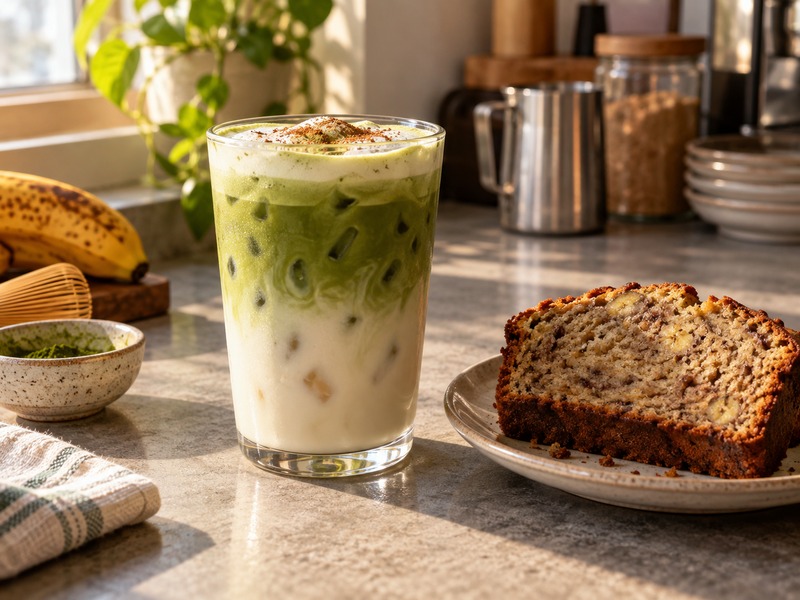
Banana bread matcha is a latte built around the flavors of ripe banana, warm spice and green tea. It should remind a customer of banana bread without turning the cup into a thick, unstable banana shake. Jade Leaf’s home recipe blends banana with milk, vanilla, cinnamon, nutmeg and a sweetener, then adds matcha. A café needs to decide which of those cues it can deliver consistently, how to handle real banana safely and whether the drink works during a rush.
This guide is for menu developers, café operators and ingredient buyers. Any ratios belong to a controlled trial; the selected formula needs its own storage and labeling review.
1. What should “banana bread” mean in a drink?
Choose a flavor brief customers can recognize
Banana bread suggests ripe banana, a baked or toasted note, vanilla and gentle spice. Not every cue needs a separate syrup. Too many flavorings can make a drink taste like candy, while actual banana alone may read as smoothie rather than bakery. Write a short sensory target before buying ingredients: for example, clear ripe banana at the nose, mild cinnamon and vanilla in the middle, and matcha present at the finish. Test without a food photograph nearby, because visual context can make tasters imagine flavors the cup does not deliver.
Check the name honestly. If the final product has no banana, or uses only an aroma, the menu and ingredient statement must describe it accurately under local rules. If it includes real fruit, the team gains a recognizable taste but also variable ripeness, pulp and perishable handling. Decide what “banana bread” promises for this brand. The result should still be a beverage with a clean sip, not a disguised dessert purée that blocks the straw after five minutes.
| Flavor cue | Possible ingredient | Main tradeoff |
|---|---|---|
| Ripe banana | Fresh fruit or purée | Texture and cold handling |
| Bakery warmth | Cinnamon and nutmeg | Easy to over-dose |
| Sweet roundness | Vanilla and sweetener | Can hide matcha |
| Toasted note | Controlled flavor input | Needs sensory and label review |
2. Should the café use fresh banana or a prepared input?
Compare usable yield, not purchase price alone
Fresh bananas are familiar and may support the drink’s story, but their sweetness and texture change as they ripen. Staff must peel, portion and manage leftovers. Frozen pieces reduce some variation but need storage and a blender that can handle them. A specified purée can speed service; it may also contain added ingredients and taste less fresh. Evaluate each option at the same finished-cup target. Weigh actual usable fruit and measure preparation time, discarded stock and consistency across several deliveries.
Watch the pulp. Banana thickens milk and can leave fibers in a narrow straw. It may also brown during holding, making a layered drink less attractive. Test the proposed banana input with the intended milk and mix method at handoff and after the expected customer wait. If the café will blend fruit centrally, set a validated safe-use procedure for that base. A prepared banana flavor syrup is a different product decision and should be judged on both taste and ingredient declaration.
| Banana input | Service strength | Validation need |
|---|---|---|
| Fresh ripe fruit | Distinct real-fruit taste | Ripeness, labor, hold |
| Frozen portion | Measured cold inventory | Blender load and thawing |
| Purée | Fast portioning | Formula, browning, open-pack use |
| Flavor syrup | Simple station work | Authenticity and label language |
3. How much spice belongs in the formula?
Measure cinnamon and nutmeg independently
Small amounts of cinnamon and nutmeg can suggest banana bread; heavy doses can leave a gritty, bitter finish. Ground spices may float on foam or collect at the bottom, especially in iced drinks. Trial a standardized spice blend, an extract or a prepared syrup, and compare both flavor and dispersion. If the team uses a powder mix, define its particle size and mixing step. A “dash” in a home recipe is not a repeatable direction for a chain.
Taste after ice melt. Sweetness and cold temperature can mute spice when the drink is first made. As it warms, nutmeg may become stronger and dry the finish. Ask tasters to drink the whole cup, including the last third. Keep the matcha and banana constant while adjusting spice. If a garnish of cinnamon is proposed, weigh the visible dusting or drop it; uneven garnish can make two otherwise identical drinks taste different. Supplier changes in spice strength should trigger a finished-cup check.
4. Which matcha keeps its identity beside banana?
Choose a powder in the complete latte
Banana and milk can flatten delicate tea notes. A more assertive matcha may remain clear, but extra bitterness can clash with nutmeg. Compare candidate powders at measured doses in the final fruit-and-spice formula. Taste them in water first to understand their profile, then in the complete cup. Dry powder color alone is inadequate; a banana-milk base may give the tea a different shade. Ask for lot-linked supplier documents and samples that reflect repeat supply.
Calculate dose economics. Cost per kilogram says little if one powder requires a heavier dose to taste like tea. Record grams per accepted cup and inspect the bottom for sediment. A high powder load can add a chalky texture to an already thick banana base. Retain a reference cup description and photo. When a new lot arrives, staff should not add another scoop by instinct; the buyer or developer should run a controlled comparison and update the formula only after approval.
| Powder check | Method | Rejection signal |
|---|---|---|
| Tea strength | Blind full-cup tasting | Banana hides matcha |
| Mouthfeel | Last-third sip | Dry or gritty finish |
| Color | Same-light photos | Dull or muddy green |
| Lot change | Reference comparison | Noticeable flavor drift |
5. What milk and sweetness should be used?
Keep the banana, milk and sugar linked
Ripe banana brings its own sweetness, and different milks add more or less perceived sweetness and body. Start with one milk and a fixed banana portion, then adjust added sweetener. A plant milk with vanilla flavor can exaggerate the bakery note but also make the cup taste artificial. Dairy may give a cleaner tea backdrop. Test each planned substitution as its own formula if it meaningfully changes taste. The correct drink should not need syrup to cover a weak matcha powder.
Evaluate serving temperature. A warm version may make spice aroma stronger and banana texture less pleasant; an iced version can conceal flavor until it warms. Decide on one service format for the first launch. For iced drinks, specify ice mass and cup volume; otherwise baristas may create a thin large cup that loses the banana bread character. Ingredient and allergen statements must reflect the chosen milk and any alternative on offer. Have the quality team review safe handling of a milk-fruit blend.
6. How should the components be prepared at the station?
Remove slow, subjective steps
The home recipe blends banana bread milk and prepares matcha separately. A café can adapt that architecture with pre-portioned fruit, a fixed spice blend and a measured matcha base. Test whether the station needs a blender or can use a prepared banana component. If blending is required, include washing time and cross-contact controls in the service test. If a central kitchen makes the base, validate its distribution and store handling. A glossy menu photo should not conceal a five-minute assembly method.
Train on a complete recipe card. State fruit mass, milk volume, spice dose, matcha dose, water amount, mixing order and cup fill. Have several baristas make the drink without developer coaching. Record time and variance in appearance. A thick banana base can trap matcha on the surface if poured too gently or hide it if over-blended. Choose whether the final product is layered or integrated, then specify the method. A reliable cup made in ordinary conditions is more valuable than a spectacular one-off sample.
| Station step | Measure | Failure prevented |
|---|---|---|
| Banana portion | Gram or calibrated pack | Variable thickness |
| Spice | Pre-measured dose | Harsh finish |
| Matcha base | Powder and water mass | Weak or clumpy tea |
| Final pour | Cup fill and order | Unstable layers |
7. What defects matter during holding and takeaway?
Watch browning, settling and cup access
Fruit-containing milk can change appearance after preparation. Banana pulp may settle or darken; spice can collect at the bottom; matcha may form green streaks. Test the assembled drink through the actual pickup or delivery interval in the proposed cup and lid. Check whether the straw draws the base easily. If the customer must stir, make sure the pack allows it without spilling. A drink that looks acceptable in an open glass may arrive brownish and uneven in a sealed cup.
Set boundaries with evidence. The quality team should validate any prepared-base and finished-drink holding limits for the exact formula and market. Do not infer shelf life from the fruit alone or from a home recipe. Keep a timed series of photos and tasting notes. Separate visual changes from unsafe-handling concerns; both require attention, but they are not the same test. A store should have a clear reject example rather than deciding case by case whether a separated drink is “still fine.”
8. What should ingredient buyers ask suppliers?
Tie specifications to the chosen application
Request matcha specifications, lot-linked analysis and traceability records required by the buyer’s program. For banana purée or frozen portions, obtain ingredient statements, relevant consistency measures, storage and open-pack directions. Spice and flavor suppliers should provide formulation and allergen information. If a plant milk is used, review its exact ingredient list rather than assuming every brand behaves alike. Those documents support a finished-cup trial; they do not replace it.
Define a substitution rule. A new banana lot may be sweeter, a spice lot stronger and a matcha lot more bitter while each remains commercially acceptable on its own. The combined drink can still drift. Require a small comparison against an approved reference when one of these inputs changes materially. Keep the ingredient lot numbers from the accepted pilot. This permits a meaningful diagnosis if stores later report a chalky or overly spicy cup.
| Input | Buyer evidence | Finished-drink check |
|---|---|---|
| Matcha | Specification and lot records | Tea flavor and dispersion |
| Banana | Formula, solids or texture data | Body and browning |
| Spice | Ingredient and strength data | Balance and grit |
| Milk | Allergen and ingredient statement | Body and label |
9. What does a sellable serving cost?
Include fruit waste and blender time
The cost model should start with the approved grams of matcha, fruit, milk, spice and sweetener. Add cup, lid, straw and any garnish. Fresh banana cost must use peeled, usable yield, not the price per whole fruit. Include fruit discarded because it is underripe or too soft for the service standard. If the recipe uses a blender, add washing time and product left in the jar. A premade component may cost more per kilogram but save labor and reduce waste.
Run two store scenarios. High-volume stores may use fresh fruit efficiently; low-volume stores may lose open packs or spend disproportionate time on prep. Price the drink using actual pilot yield and remake rate. If it is intended as a seasonal special, limit the first order so inventory does not outlast demand. A premium price can be justified only if customers recognize a distinct flavor and stores can produce it consistently. That is a commercial test, not something a recipe sheet proves.
10. What would a responsible launch trial look like?
Test the full service, not one cup
Select one banana input and one or two matcha candidates. Fix the milk and cup size, then trial measured spice and sweetness levels. Blind-taste the result and check full-cup texture. Ask several staff members to prepare repeated orders from the draft card, including cleanup. Measure preparation time, reject rate, cup appearance and quality after the expected customer wait. If a delivery channel matters, test the actual route with the proposed pack.
Approve a written standard. Record ingredient lots, formula, handling limits, station sequence, accepted sensory description and reject examples. Have the appropriate team review labeling and any claims. If a batch fails, change one variable and repeat. Place the first purchasing order for a limited menu test that can expose routine store variation. Wider rollout should follow a stable cup produced by ordinary staff, not the developer’s best bench sample.
Reference
Jade Leaf, “Banana Bread Matcha Latte” gives a home example with banana, milk, vanilla, warm spices and matcha. The commercial checks above are proposed development steps.
FAQ
Q1: Does banana bread matcha need actual banana?
That is a product and labeling choice; test the flavor promise and describe ingredients accurately.
Q2: Why does the drink become too thick?
Check banana ripeness, portion, milk volume and holding time before changing matcha.
Q3: Can the banana base be prepared ahead?
Only after validating quality and safe handling for the exact formula and distribution route.
Q4: How can matcha remain noticeable?
Select powder and dose in the finished banana-spice latte, then taste the entire cup.
Q5: What supplier change needs a fresh trial?
Any material change to banana, spice, milk or matcha can alter the balance and should be reviewed.