
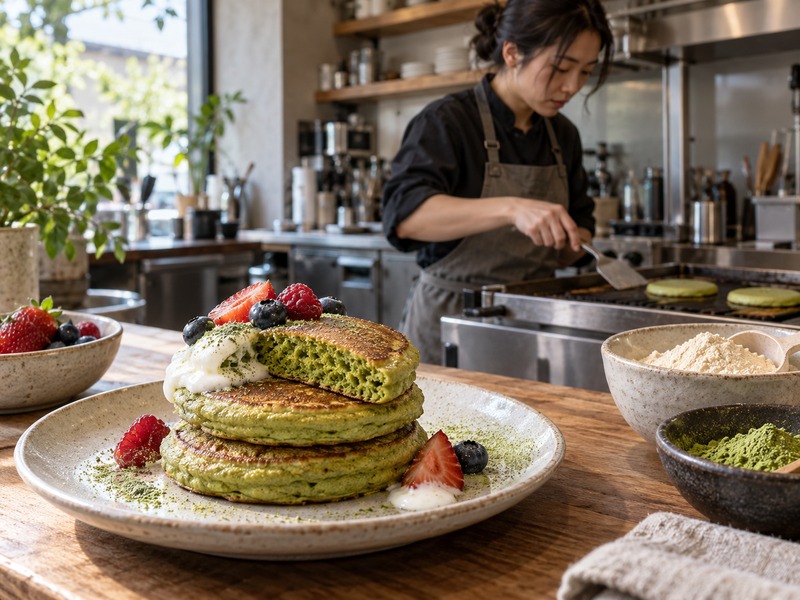
Matcha protein pancakes combine a green tea powder with a higher-protein batter for cafés, meal brands, or frozen breakfast lines. The formulation challenge is keeping a tender crumb and recognizable tea flavor while protein ingredients absorb water and darken during cooking. This guide covers a bench formula, ingredient selection, processing, and commercial checks. Search-intent reference: Matcha Protein Pancakes (Vegan Gluten-Free); the B2B formulation below is independent.
1. What should matcha protein pancakes deliver?
Define a credible product, not a label alone
The pancakes should have a clear tea note, a soft center, a manageable brown edge, and enough structure to lift from the griddle. Protein content must be calculated from the full recipe and confirmed for any on-pack or menu claim under local rules. Adding a scoop of powder does not establish a legal “high protein” claim. Decide whether the product is served fresh, chilled, frozen, or sold as a dry mix. Each format faces a different moisture, texture, and shelf-life problem. Write the portion size and topping assumptions before setting nutrition or cost targets.
Customers may expect a green interior, but griddle surfaces will brown. Choose an achievable color standard rather than a photo that hides cooked edges. A sweet syrup topping can mask dry texture during a quick tasting, so evaluate a plain pancake as well. Set acceptance criteria for thickness, spread, tenderness, tea aroma, and reheating if relevant. A foodservice buyer needs a product that can be reproduced by shift staff, not a batter that works only when a developer adjusts it by feel.
2. What bench formula can start development?
Use baker’s percentages for scale
Use 100 g wheat flour as a reference and trial 25 g protein ingredient, 4 g matcha, 8 g sugar, 6 g baking powder, 2 g salt, 1 whole egg, about 170 g milk, and 12 g neutral oil. This is a formulation starting point, not a finished nutrition profile. Protein powders vary in absorption, so the liquid may need measured adjustment. Mix dry ingredients thoroughly before adding wet ones. Rest the batter for a defined short period, then cook weighed portions on a controlled griddle. Record actual batter yield and finished pancake weight.
Keep the same mixing time and rest time while comparing ingredient lots. If the batter is too thick, add milk in recorded increments rather than a splash. If the crumb is rubbery, examine protein level and mixing before adding more raising agent. If the green fades, review matcha grade and cooking temperature. For a vegan or gluten-free version, build a separate formulation with its own binding and protein system; removing egg and wheat from this trial is not a simple substitution. Every product claim should follow the finished recipe, not the starting idea.
| Ingredient | Trial amount | Function |
|---|---|---|
| Wheat flour | 100 g | Structure reference |
| Protein ingredient | 25 g | Protein and water binding |
| Matcha | 4 g | Tea flavor and color |
| Milk | About 170 g | Batter hydration |
| Egg and oil | 1 egg; 12 g oil | Binding and tenderness |
3. Which matcha grade survives a pancake griddle?
Screen in cooked batter
Tea color changes under heat, and the flavor competes with flour, protein, and toppings. Compare matcha candidates in identical batter and cook them at the same surface temperature and portion size. Evaluate the plain pancake’s aroma, bitterness, green interior, and brown edge. A delicate tea may be lost after cooking; a coarse or bitter grade may leave a rough finish. Do not choose by dry-powder color alone. Review whether the powder disperses evenly in the dry blend and whether green specks remain after mixing.
Ask suppliers for a lot-specific specification, storage directions, origin, pack sizes, and test documents relevant to your market. Matcha Village provides matcha ingredients and application support; request a baking-oriented sample through Matcha Village and cook it under your process. Keep an approved reference lot for later comparison. If a new tea lot changes the baked color, check griddle temperature and batter holding time before blaming the powder. The practical question is how the tea performs in the finished pancake at a cost the product can bear.
4. How does protein source change texture?
Compare functionality, flavor, and claims
Whey, milk proteins, egg components, soy, pea, and blended plant proteins differ in water binding, taste, and heat behavior. Whey can bring a dairy note and browning. Pea protein may add an earthy flavor that competes with matcha. A high dose of any protein can make pancakes dense or dry. Test one source at a time at a defined percentage. Record batter viscosity after mixing and after rest. A protein powder’s label claim is only one factor; the pancake must still cook and eat well.
Allergen status and ingredient declarations can decide which protein system is viable. A vegan product cannot use egg or dairy proteins. A gluten-free claim requires suitable flour and cross-contact control and separate recipe development. Do not place multiple claims on artwork until the final recipe and production site are reviewed. If a supplier changes a protein powder’s flavoring or sweetener, recheck the entire batter. One sweetened powder can make added sugar unnecessary, while another can leave a bitter aftertaste after heat.
| Source | Formulation check | Label check |
|---|---|---|
| Whey | Browning and tenderness | Milk allergen |
| Milk protein | Water demand | Milk allergen |
| Pea protein | Earthy finish | Vegan claim fit |
| Soy protein | Texture and flavor | Soy allergen |
5. How should hydration and batter rest be controlled?
Let the protein system reveal its water demand
Protein ingredients and flour keep absorbing liquid after mixing. A batter that pours well immediately may stiffen while staff prepare the griddle. Set a measured rest time and evaluate viscosity at the moment of cooking. A simple flow test can help: place a fixed weight of batter on a marked surface and record spread after a defined interval. Keep the test temperature consistent. If staff use a ladle, specify its filled weight because viscosity changes how much it carries. Do not rely only on visual “thickness.”
Mix enough to wet dry ingredients without excessive development. Overmixing wheat batter can toughen the result, while undermixing leaves protein and matcha pockets. Use a defined mixer, speed, and duration for a central kitchen. For foodservice, give staff a compact visual standard and a clear allowed liquid adjustment, if any. Record the adjustment on the batch sheet. If batter is held during service, set a safe time and temperature under your food safety system and check that raising action and color remain acceptable. A good fresh batter may fail after a long queue.
6. What cooking settings keep the interior green and tender?
Control portion weight and surface heat
Use a weighed batter portion and a griddle with a measured, stable surface temperature. Begin at a moderate setting and record actual surface readings, cooking time per side, and final internal condition under your food safety procedure. High heat may darken the exterior before the center sets, especially when sugar and dairy proteins are present. Low heat can dry the pancake during a long cook. Flip based on a defined surface cue and a trialled time range. Clean griddle residue between batches because burnt crumbs darken later pieces.
Compare pancakes from the start, middle, and end of a service batter hold. If later pieces spread less or brown faster, the batter may be thickening or the griddle may be drifting. A consistent portion scoop helps both yield and cooking time. For frozen pancakes, test the final reheating method rather than judging only the fresh griddle product. Reheating can dry an already high-protein crumb. Build the thermal process and food safety limits with qualified staff for any central production line.
| Variable | Record | Why |
|---|---|---|
| Batter portion | Grams per pancake | Thickness and yield |
| Surface temperature | Measured setting | Browning control |
| Cook time | Each side | Repeatability |
| Finished condition | Color, texture, safety check | Release decision |
7. Can pancakes be held, chilled, or frozen?
Choose the channel before setting a hold
Fresh foodservice pancakes should have a defined service hold under the operator’s food safety plan. Test texture and color at the start and end of that period, including the effect of stacking or covered holding. Steam trapped in a stack can soften surfaces and blur the clean edge. A chilled product needs cooling, packaging, reheating, and microbiological controls. A frozen product needs a validated freeze and reheat process. The same batter may not give the best result across all three channels.
For frozen distribution, test packaging against freezer burn, breakage, and aroma transfer. Assess a serving after its actual reheating method, whether toaster, oven, or microwave. Record weight loss and texture change. Shelf-life claims require evidence from the final recipe, process, package, and storage conditions. A home freezer trial is useful for screening but cannot support a commercial shelf life. If syrup or toppings are packed with the pancakes, evaluate them as separate components and review their labeling and storage needs.
8. How should a buyer calculate cost and protein value?
Use finished yield and verified composition
Calculate ingredient cost from weighed recipe quantities and supplier prices, then divide by the number of saleable portions. Add labor, energy, packaging, toppings, freezing or chilled distribution, and normal rejects. Protein powder may be the most visible cost, but matcha dose, cooked yield, and packaging can move margin as well. Compare candidate proteins on cost per finished serving at an acceptable texture, not price per kilogram alone. If a lower-priced powder needs more liquid and longer cooking, the apparent saving may shrink.
For protein claims, calculate using verified ingredient nutrition and expected finished yield, then obtain testing or regulatory review as required by the destination market. Cooking changes water content, so protein per 100 g of finished product cannot be assumed from raw batter weight. Keep toppings separate if the claim covers only the pancake. A menu with syrup and fruit may have a different nutrition profile from the plain product. The finance and regulatory teams should use the same locked recipe revision, or pricing and claims will drift apart.
| Field | Source | Decision |
|---|---|---|
| Ingredient usage | Approved batch sheet | Raw cost |
| Saleable yield | Production trial | Cost per portion |
| Finished weight | Cooked sample | Nutrition basis |
| Protein declaration | Verified analysis and review | Claim approval |
9. Which quality and safety checks belong in the specification?
Link each check to a failure it prevents
At receiving, verify matcha and protein powder identity, intact packaging, lot codes, and required supplier documents. In mixing, record ingredient weights, batter temperature where relevant, mixer settings, and rest time. At cooking, record portion weight, griddle conditions, and approved finished condition. Inspect random pancakes for color, thickness, crumb, and tea flavor. Use retained reference material when comparing a new matcha lot. A green surface photo alone cannot show whether a pancake is undercooked or rubbery.
Review allergens from flour, milk, egg, protein powder, toppings, and shared equipment. A vegan or gluten-free variant needs a separate validated recipe and cross-contact plan. For chilled or frozen products, document cooling or freezing, package sealing, distribution temperature, and shelf-life evidence. Claims such as “high protein” must meet local rules using the final product. Assign a person to approve each recipe revision before purchasing substitutes. If a supplier changes an ingredient specification, repeat the relevant cooking and nutrition checks rather than assuming a paper equivalent will perform the same.
10. What pilot can establish commercial readiness?
Run the recipe on intended equipment
Make at least one bench comparison across matcha grade and protein source, then choose a narrow candidate set for a kitchen pilot. Give operators a weighed batch sheet and observe normal service pace. Record batter spread, griddle recovery, cooking time, finished yield, broken or rejected pancakes, and plate appearance. Taste plain pieces before adding syrup. Ask about tea clarity, dryness, and lingering protein flavor. Recheck the same product after its planned hold or reheat. This prevents a topping from hiding a flawed base.
Close the pilot with an approved recipe, material specifications, allergen file, nutrition review, cost sheet, and training card. Ask prospective suppliers for commercial lots and lead times after the formulation is locked. Matcha Village can discuss baking-suitable matcha supply and packaging options. Tell the supplier whether the product will be fresh, frozen, or a dry mix so samples match the application. Record a decision to launch, revise one variable, or stop. Any change in protein system, tea grade, or cooking equipment should trigger a targeted retest.
| Gate | Evidence | Owner |
|---|---|---|
| Crumb | Plain and reheated tasting | Product lead |
| Yield | Saleable portion count | Kitchen lead |
| Claims | Finished nutrition review | Compliance lead |
Matcha protein pancakes need an approved protein system, measured hydration, a controlled griddle, and a tea grade tested after cooking. Prove the plain pancake works before relying on toppings. Use finished yield and verified composition for cost and claims, then test the product in its actual service or distribution format.
FAQ
- Q1: Can any protein powder be added to pancake batter?
- No. Protein sources differ in water binding, flavor, browning, and allergen status. Test each in the full recipe.
- Q2: Why do these pancakes turn brown?
- Griddle heat, sugar, and proteins drive browning. Judge the interior and edge against an achievable standard.
- Q3: Can the recipe be made vegan and gluten-free?
- Yes, through a separate formulation and cross-contact plan. Removing egg and wheat requires new binding and cooking trials.
- Q4: Does adding protein powder support a “high protein” claim?
- Not automatically. Verify finished composition and the relevant market’s claim rules.
- Q5: Is a fresh recipe ready for frozen retail?
- No. Freeze, package, reheat, microbiological, and shelf-life work are needed for the final product.