
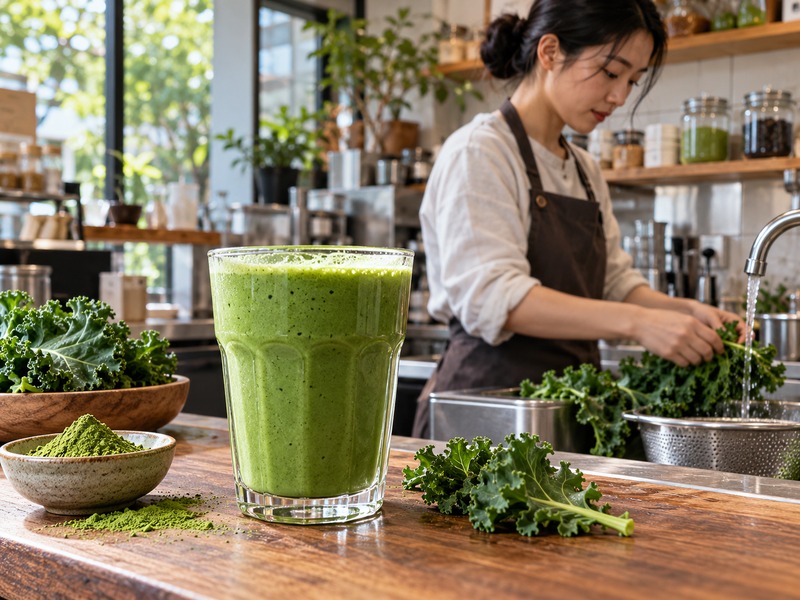
A kale matcha smoothie blends leafy greens, matcha, fruit or another flavor base, and liquid into a chilled drink. For cafés and foodservice distributors, the hard part is repeatable color, texture, and safe handling of fresh produce. This guide sets out a measured development formula and the checks needed for a multi-shift menu. Search-intent reference: Matcha Kale Smoothie Recipe; the operational formulation below is original.
1. What should a kale matcha smoothie taste and feel like?
Set a finish before choosing ingredients
A good commercial target has a clear tea note, fresh green character, and a texture that can pass through the planned cup lid or straw. Kale can bring a cabbage-like edge if its dose or condition is wrong. Fruit can cover that edge but may also bury matcha and make a drink too sweet. Write a sensory brief with acceptable leafy flavor, matcha intensity, sweetness, thickness, and visible flecks. Decide whether the product is made to order or sold prepacked. A smoothie mixed in front of a customer can tolerate natural variation that a sealed retail bottle cannot.
Service temperature matters. A cup tasted immediately after blending can seem smooth and bright; after ten minutes it may separate or develop a stronger green aftertaste. Set a realistic handoff and drinking window for evaluation. Avoid claiming the drink is a health treatment because it contains kale or matcha. Describe the ingredient and flavor experience. For a chain, specify cup size, ice or frozen-fruit amount, and blender program. Those choices shape final texture as much as the list of ingredients.
2. What formula gives a workable development baseline?
Measure the produce and liquid
For a roughly 350 ml made-to-order trial, begin with 2 g matcha, 35 g prepared kale leaves, 90 g frozen banana, 70 g frozen pineapple, 150 ml chilled unsweetened oat beverage or water, and a defined ice amount only if needed. This is a tasting baseline, not a finished safety or nutrition specification. Weigh edible kale after stems or damaged leaves are removed. Use the same frozen-fruit condition for every test. Change one variable at a time: tea dose, leafy load, fruit balance, or liquid level.
If the smoothie is too thick, add measured liquid rather than asking operators to “thin as needed.” If pineapple dominates, lower it before increasing matcha to compensate. A different oat beverage may change sweetness and thickness. For a dairy-free menu, confirm every component and cross-contact procedure, not just the main liquid. Record final yield after blending; air incorporation can make volume misleading. The recipe card should show ingredient weights, blender order, program, cup size, and acceptable final texture. A photographed spoon or pour test can help training when it uses the same equipment.
| Component | Trial amount | Control |
|---|---|---|
| Matcha | 2 g | Scale, not scoop |
| Prepared kale | 35 g | Edible leaf weight |
| Frozen banana | 90 g | Ripeness and frozen state |
| Frozen pineapple | 70 g | Cut size and sweetness |
| Liquid | 150 ml | Specified brand or water |
3. How should a buyer specify kale for a smoothie?
Buy for usable yield and flavor
Choose a kale type and prep standard rather than treating all green leaves as equivalent. Curly kale and other varieties differ in fiber, leaf thickness, and flavor. Inspect deliveries for freshness, damage, and signs of decay under your produce acceptance procedure. Record usable yield after washing and trimming. Whole bunches may cost less per kilogram but need labor and create trim waste. Prewashed prepared leaves may reduce prep time but bring a different cost and shelf-life pattern. Compare them per usable serving.
Raw leafy greens demand careful hygiene. Follow supplier handling instructions and your local food safety program for washing, chilled storage, and separation from raw animal foods. A blender does not make produce safe. Avoid leaving prepared kale at room temperature during a rush. If you use frozen kale or a puree, test its color, texture, and flavor against fresh leaves and check the supplier’s process records. A change in leaf source can alter bitterness enough to require fruit adjustment. Keep lot or delivery references so complaints can be traced.
4. Which matcha works alongside kale and fruit?
Screen tea in the whole formula
Fruit sweetness and kale flavor can hide a delicate matcha, while a rough tea may reinforce a bitter green finish. Ask for beverage-suitable samples and compare them at one fixed dose in the complete smoothie. Blend with identical fruit lots and equipment. Judge color, tea aroma, aftertaste, and any powder grit immediately and after the expected hold. A bright dry-powder color does not guarantee a bright smoothie once banana, kale, and liquid are mixed. Test in the actual serving cup under normal light.
Procurement should request grade, origin, lot identification, ingredient and allergen information, storage instructions, and available test documents for the sales market. Make sure the proposed commercial lot resembles the development sample. Matcha Village offers matcha ingredients for beverage applications; ask for samples matched to a fruit-and-greens smoothie. Keep a retained reference of the approved tea where feasible. If a new lot changes flavor, compare it in both water and the smoothie before deciding whether the difference comes from tea, kale, or fruit.
| Ingredient | Question | Record |
|---|---|---|
| Matcha | Does tea remain clear in fruit? | Lot and tasting note |
| Kale | What is usable leaf yield? | Trim weight |
| Banana | Is ripeness consistent? | Supplier and batch |
| Liquid base | Does it change sweetness? | Brand and formulation |
5. How do fruit and liquid choices change the finished cup?
Use fruit for balance, not camouflage
Banana brings body and sweetness but can turn the smoothie brownish as it warms. Pineapple adds acidity and a brighter top note, though a high dose can dominate tea. Mango gives a different color and thicker mouthfeel. Choose fruit based on the flavor brief and supply consistency. Frozen fruit helps control temperature and thickness, but cut size affects blender time. Measure the fruit by weight and specify whether it enters frozen. Fresh fruit substituted during a shortage will change temperature, yield, and texture.
Water lets tea and produce lead. Oat beverage adds body and often sweetness; coconut beverage adds a distinct aroma and may change fat separation. Dairy milk can create a creamy cup but changes allergen communication. Run each liquid in a separate sensory trial and check the ingredient declaration. If a sweetened plant beverage is used, do not add the same syrup level as an unsweetened one without tasting. Keep a target final yield so staff can distinguish a legitimate liquid adjustment from an oversized cup with weak flavor.
6. What blending procedure gives repeatable texture?
Control loading order and blend time
Place measured liquid in the jug, then add matcha so it can wet before frozen solids restrict movement. Add prepared kale, followed by fruit. Use a defined blender program and check for large leaf fragments before pouring. If the jug stalls, stop and review the formula or loading method rather than extending time unpredictably. Different blender models create different shear and air. Train sites on the equipment they actually use. A longer blend may smooth leaves but warm the drink and increase foam.
Clean and sanitize the blender under the site’s food safety plan, including lid seals and blades where residue gathers. Use separate procedures when allergens or restricted diets are involved. During a pilot, measure blend time and remaining product stuck in the jug. That residue affects cost and consistency. If the drink separates during normal service, check water level, ingredient condition, and hold time before adding gums. Any stabilizer in a packaged version needs formulation and labeling review; it cannot rescue a poorly controlled café build on its own.
| Fault | Likely check | Trial response |
|---|---|---|
| Large kale pieces | Load order or leaf prep | Trim and standardize program |
| Watery finish | Liquid or thawed fruit | Weigh inputs, verify temperature |
| Heavy foam | Excess blend time | Shorten program |
| Tea specks | Poor powder wetting | Add matcha after liquid |
7. Can this smoothie be prepared ahead or bottled?
Treat a packaged drink as a separate product
A made-to-order smoothie uses fresh or frozen produce and is best evaluated around immediate service. If a café wants a prepped component, it may portion frozen fruit and trimmed kale according to an approved plan, but the blended drink needs its own safe hold limit. Set time and temperature through your food safety system, not a visual guess. Matcha and fruit particles settle, color can change, and flavor shifts with time. Label prepared components with source lots and dates so a problem can be traced.
A bottled smoothie involves raw-produce hazards, packaging, process selection, microbial validation, and shelf-life testing. The café recipe does not become a safe retail formula simply by filling bottles. Choose whether the product will be refrigerated or another format before equipment and ingredient decisions. Processing can change kale color and fruit aroma, so sensory tests must use product made by the intended method. Work with qualified food technologists and accredited labs. Set a realistic distribution temperature and test the final pack under it.
8. What does the smoothie really cost per cup?
Count trim, labor, and blender loss
Ingredient invoices alone understate cost. Weigh kale before and after trimming, fruit portions before blending, and residual smoothie left in the jug. Add matcha, liquid, cup, lid, straw, prep labor, cleaning time, and normal remakes. A prepared kale bag may carry a higher unit price but lower labor and waste. Compare cost per served cup using observed usable yield. Review the margin at the planned selling price and with a plausible fruit-price increase based on actual quotes.
Separate controllable waste from unavoidable trim. An operator who pours a heavy fruit scoop changes both margin and texture, so the fix is a measured portion, not an accounting allowance. A larger blender batch may lower labor per cup but create waste if demand is unpredictable. Pilot both peak and quiet periods. For distributor or franchise use, include cold-chain freight and spoilage terms. The purchase specification should reflect an achievable menu cost while protecting the flavor target; a cheap tea that disappears under fruit is not necessarily economical.
| Input | Measure | Why it matters |
|---|---|---|
| Kale | Usable grams per purchased kg | Trim changes real price |
| Fruit | Frozen grams per cup | Portion and price swing |
| Matcha | Grams per cup | Flavor and material cost |
| Jug residue | Grams per batch | Unserved product |
9. Which food safety and claim checks belong on the launch list?
Make produce handling visible
Review produce supplier approval, receiving condition, washing or ready-to-use status, chilled holding, blender sanitation, and allergen controls. Document the source and lot of matcha and other dry ingredients. A smoothie with raw greens needs a handling plan that staff can follow during a rush. Assign a person to reject damaged produce and log temperature exceptions. Do not imply that matcha or kale makes the finished drink a treatment for any condition. Nutrition and health claims need substantiation and local regulatory review.
If the menu says vegan, dairy-free, or gluten-free, check each ingredient and cross-contact route, including shared blender equipment. If a supplier changes a plant beverage formula, review the label and taste. For a packaged drink, a detailed hazard analysis, validated process, microbiological checks, and shelf-life evidence belong before sale. Keep a clear boundary between a café service hold and a retail shelf life. The team should be able to show what was approved, who approved it, and which version of the recipe sites are using.
10. How can a foodservice buyer run a decisive pilot?
Observe production, not only tasting
Start with one cup size, one blender model, and approved ingredient lots. Have several staff members prepare the drink from the written card. Record blend time, fill level, visible leaf pieces, temperature at handoff, and waste in the jug. Ask tasters to rate leafy flavor, tea clarity, sweetness, thickness, and aftertaste separately. Repeat the test after a realistic wait. If the formula fails, alter one variable and run a fresh comparison rather than making unrecorded adjustments during service.
Close the pilot with an approved formula, receiving standards, pack sizes, food safety procedure, cost sheet, and staff training image. Request matcha samples and documentation matched to the smoothie application through Matcha Village if the tea source is still open. For a multi-site program, send a reference cup description and ask each site to log ingredient substitutions. A buyer can then distinguish an ingredient problem from a blender or training problem. Approve rollout only after the cup can be repeated by normal staff at normal pace.
| Gate | Evidence | Owner |
|---|---|---|
| Texture | Normal-service cup | Store lead |
| Handling | Produce and sanitation log | Quality lead |
| Cost | Usable yield and waste | Buyer |
A kale matcha smoothie needs measured produce, a matcha that remains visible in the full recipe, and a blender procedure that survives busy service. Use a short operational pilot to confirm flavor, yield, cost, and handling. Develop bottled versions under separate process and shelf-life validation.
FAQ
- Q1: Can frozen kale replace fresh kale?
- It may, but test flavor, color, texture, yield, and supplier process documents in the complete drink.
- Q2: Why does the smoothie separate?
- Plant and tea particles can settle. Check liquid level, blend method, ingredient condition, and intended hold time.
- Q3: Can a café make the full smoothie in advance?
- Only within a hold period set by its food safety system. Assess flavor and texture across that period.
- Q4: Which liquid base is best?
- Choose through sensory trials and label review. Water, oat beverage, coconut beverage, and dairy change flavor and body.
- Q5: How should a chain compare matcha samples?
- Use identical smoothie recipes and coded cups, then review taste, color, texture, supply files, and cost per serving.