
A matcha protein latte has a tougher job than a standard green drink. It must taste like matcha, carry a clear and accurate protein description, mix without grit, and arrive at the handoff counter before the next ticket piles up. The protein powder that works in a blender at home may clump in a café’s iced cup or thicken unexpectedly in hot milk.
This guide helps café operators test a protein option using their existing wholesale matcha. It focuses on ingredients, mixing, labels, allergens, service time, and cost. A consumer recipe such as High Protein Iced Matcha Latte Recipe (10g Protein) shows the basic idea. A café needs a repeatable recipe and an ingredient record before making a menu claim.
1. Why put protein in a matcha latte?
Start with customer demand, not a trend report. Some guests already ask whether the café can add protein to a latte. Others want the taste of matcha and do not want a thicker drink. Count actual requests for a few weeks, ask what customers expect, and decide whether a separate drink or an optional add-on is easier to understand. A separate item can have a tested recipe; an add-on requires staff to know which existing drinks it works in.
Write a simple menu promise: “Iced matcha latte with a measured protein blend,” for example. If you use a named protein amount, calculate it from the ingredient specification and all other recipe components, then verify the final serving. Do not infer a number from the powder scoop label. A scoop may vary by staff member, and a recipe can change when you switch milks.
The drink should not replace the regular matcha latte. Keep the standard option for customers who prefer a lighter texture or have ingredient restrictions. During a trial, compare repeat orders and margin with the original drink so the new item earns its place.
| Menu approach | Advantage | Operational question |
|---|---|---|
| Separate protein latte | One fixed recipe and clear price | Will demand support a full menu item? |
| Protein add-on | Flexible for regulars | Which drinks have been tested? |
| Limited trial | Tests demand with less commitment | Can stock be used elsewhere? |
2. Which protein ingredient fits the menu?
Protein ingredients vary in flavor, solubility, texture, sweetener, and allergen profile. A whey powder may bring a dairy note; a pea-based product may bring a stronger plant flavor; a ready-to-drink protein milk can simplify portioning but limit recipe control. Sample the product in a finished matcha latte, not only in water. Make the drink with your default milk and with the milk alternative customers order most.
Ask suppliers for a full ingredient list, nutrition information, allergen declaration, lot traceability, shelf life, storage instructions, and consistent pack availability. For a café serving many drinks per day, the container opening and scoop design matter too. A powder that produces a dust cloud at the bar can slow service and complicate cleaning. Check whether a pre-portioned sachet is worth its extra packaging cost.
Do not assume “plant protein” means allergen-free. Products may contain soy, nuts, or other ingredients, and cross-contact information can change by manufacturer. Keep current supplier documents where staff can find them. If you switch brands, retest taste and update menu and allergen information before using the new stock.
| Ingredient format | Useful feature | Test before buying |
|---|---|---|
| Whey powder | Often familiar dairy flavor | Milk allergen and hot-drink behavior |
| Plant powder | May suit some dairy-free recipes | Flavor, grit, and full allergen list |
| Protein milk | Simple liquid portion | Matcha taste and carton waste |
| Single-serve sachet | Consistent dose | Cost, packaging, and supply lead time |
3. How much protein ingredient belongs in one cup?
Choose the dose through a full-cup taste test and a verified nutrition calculation. Begin with the supplier’s suggested serving size, then test a lower and higher amount in the same cup. Record the ingredient weight, final volume, sweetness, and texture. More powder can make the menu sound impressive while making the drink too chalky for repeat orders.
Use a scale during development and a reliable portioning method during service. Check the weight of ten portions dispensed by the final method. If you use a scoop, level it consistently and recheck after the powder settles in the container. For a liquid protein milk, measure the volume that actually enters the cup. Do not count the theoretical content of a whole carton if staff use only part of it.
Any numerical protein statement on the menu needs current recipe and supplier data, plus compliance with the rules that apply where you sell. “High protein” may have a defined meaning in a jurisdiction. A café can describe the ingredients accurately without making an unverified nutrient content claim.
4. How do you prevent grit and clumps?
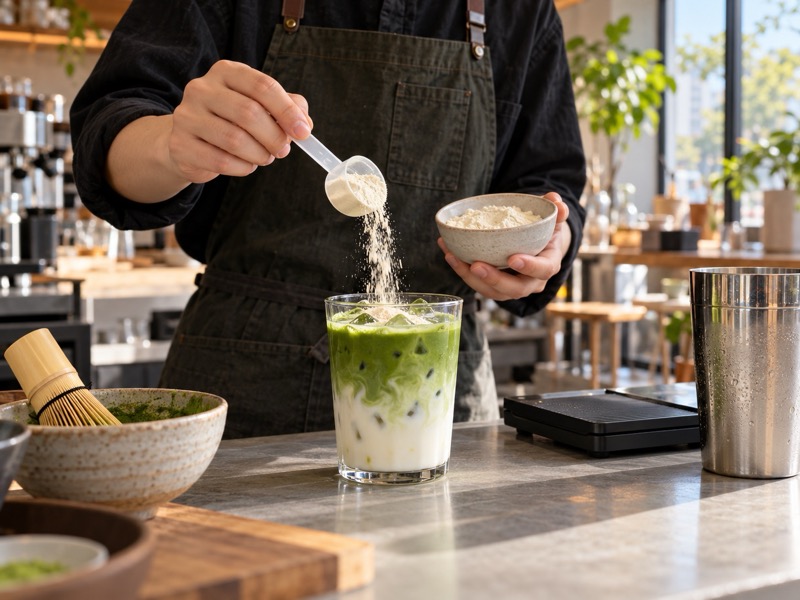
Mix matcha and protein separately before combining them. Whisk matcha into measured water to make a smooth slurry. Disperse the protein ingredient in the liquid and temperature its supplier recommends, using a shaker or approved mixer. Then combine the two with milk. Putting both dry powders into a full cup of cold milk creates pockets that a quick stir may not reach.
Test the order of operations with your chosen product. Some powders blend well in cold milk but foam excessively when shaken. Others look smooth at first and settle after ten minutes. Judge the drink from the first sip to the bottom of the cup. A clear glass makes clumps easy to spot; a cup with a lid can hide them until the customer is halfway through.
Clean the mixing vessel immediately after each use according to your food-service procedure. Protein residue can be harder to rinse than matcha alone. A separate shaker or clearly identified utensils may help manage ingredient cross-contact, but equipment and cleaning methods must suit your operation and local requirements.
| Defect | Likely cause to check | Trial adjustment |
|---|---|---|
| Dry green flecks | Matcha was not fully wetted | Make a separate smooth slurry |
| Chalky finish | Protein dose or powder texture | Compare lower dose or new format |
| Foam overflow | Shaking or powder formulation | Change mixing order or vessel |
| Bottom sediment | Settling during hold | Test another ingredient or mix method |
5. What works in an iced matcha protein latte?
An iced version often gives staff more control because they can mix the protein in cold liquid, build the milk base, then add matcha. Use a measured ice level. Too much ice leaves little room to disperse the powder; too little changes the final concentration and the guest’s expectation. Decide whether the drink should be layered for presentation or stirred for an even flavor.
Prepare one cup by the normal bar sequence and another by a carefully controlled development sequence. If the development cup is noticeably better, simplify the process until ordinary staff can repeat it. A recipe that needs a blender, two pitchers, and a sieve might be feasible at low demand but difficult during morning coffee service.
Test the drink after ten minutes with ice. Taste through a straw and from the cup rim. If the protein base separates from the matcha layer, give staff a deliberate final mix or a clear stir instruction. The goal is a drink that tastes like the same product at the counter and at the customer’s table.
6. Can you serve a hot matcha protein latte?
That depends on the ingredient. Some protein powders change texture when heated, becoming grainy or thick. Follow the manufacturer’s directions and test the finished cup across the temperatures your café uses. Do not put powder directly into a steam wand or an espresso machine hopper. Mix it in an appropriate vessel and clean equipment according to its instructions.
Try a hot version only after the iced recipe works. Heat a small test portion and evaluate it immediately and after five minutes. If texture deteriorates, keep the menu item iced instead of selling a hot cup that staff cannot make consistently. A menu does not need every drink in both temperatures.
Hot milk has a different aroma and perceived sweetness, so the iced recipe’s matcha and sweetener amounts may not translate. Keep a separate recipe card if the hot version passes. Label the point-of-sale options clearly so a barista does not improvise when a customer asks for it warm.
7. How do you handle allergens and menu claims?
Read the complete protein ingredient label. The US FDA food allergy guide identifies milk and soy among major allergens and gives whey as an example of a milk-derived ingredient. This matters when a guest orders a plant milk but the protein powder still contains dairy. Train staff to check the powder as well as the milk.
Keep current ingredient and allergen information at the ordering point. Set a procedure for cleaning shared shakers, blenders, pitchers, and counters. Do not promise that a drink is free from an allergen unless your ingredients and process support that claim. For a customer with a severe allergy, follow your café’s policy and local rules rather than guessing from the front label.
Descriptions such as “high protein” or a specific grams-per-cup claim require careful review against the recipe and applicable labeling rules. Start with a truthful ingredient description while you validate the numbers. When you change the serving size, milk, or powder, recalculate before reprinting menu boards or online listings.
| Menu or service question | Record to keep | Owner |
|---|---|---|
| Does the powder contain milk or soy? | Current supplier ingredient label | Purchasing lead |
| Can staff answer allergen questions? | Recipe and training sheet | Shift lead |
| Is a protein amount advertised? | Calculation tied to exact recipe | Menu owner |
| Did the supplier change formula? | Lot and document review | Receiving staff |
8. Can the bar make it quickly enough?
Time the complete sequence with regular staff: retrieving powder, weighing, mixing, building the cup, cleaning the vessel, and returning tools. Compare it with the standard matcha latte at your busy hour. A protein drink may take only a few extra seconds to assemble but add a longer wash between orders. Measure both active time and time until the station is ready for the next drink.
Set up the bar so matcha, protein portions, milk, and the mixer are within a sensible reach. If you use pre-portioned powder, label it and protect it from moisture and spills. Avoid leaving open tubs beside a steaming espresso station. Test a run of five orders, including one plant-milk request, and note where staff hesitate.
Give staff one approved substitution policy. If the protein ingredient runs out, do not silently serve a standard matcha latte under the protein name. Mark the item unavailable or offer the original drink at its normal price. That is simpler and more honest than a rushed workaround.
9. What does the drink really cost?
Cost each measured ingredient: matcha, protein powder or milk, base milk, sweetener, ice, toppings, cup, and lid. Include ingredient waste from failed mixing and unsold opened stock. Add labor for portioning and cleaning. Price from your actual cost and target margin rather than assuming a supplement label justifies a large premium.
For a trial calculation, suppose the protein ingredient adds $0.80 per cup and the process adds twenty seconds of active work. Those figures are only an example; replace them with supplier invoices and a timed shift. Compare margin per drink and hourly bar capacity with your standard latte. A more expensive drink can still underperform if it slows the line enough to reduce other sales.
Ask whether the protein stock can serve another product. If it exists only for a short matcha special, minimum order quantities and expiry become part of the business case. Buy a small trial quantity before committing to a case.
| Cost line | Measurement | Risk if ignored |
|---|---|---|
| Protein ingredient | Actual weighed portion | Over-pouring |
| Matcha | Powder grams per cup | Inconsistent flavor and margin |
| Milk and packaging | Final cup fill and pack count | Undercosted alternatives |
| Labor and cleaning | Timed full service sequence | Slow bar during rush |
| Waste | Remakes and unused stock | False trial margin |
10. When should the drink stay on the menu?
Run a limited trial across weekdays and a weekend. Count orders, repeat orders where possible, remakes, comments about texture, ingredient questions, and preparation time. Ask customers who buy it whether the matcha flavor is clear and whether they would order it again at the posted price. A drink chosen once for curiosity needs a different response from one people reorder.
Compare the protein latte with the standard matcha latte. If it attracts customers who wanted a substantial drink and the café can make it reliably, keep it. If it mostly replaces existing matcha sales while increasing work and complaints, revise the recipe or retire it. Make only one recipe change at a time so the next week of data means something.
Keep the final recipe, supplier documentation, nutrition calculation if used, allergen information, and training sheet together. When a supplier changes formulation, repeat the taste and documentation checks. A successful launch depends on the cup customers receive months later, not only the first photo.
Frequently Asked Questions
Q1: Can a café add protein powder to any matcha latte?
Only after testing the exact powder and recipe. Solubility, sweetness, allergens, and texture can change the drink. Document the combinations staff are allowed to make.
Q2: Is a matcha protein latte the same as a protein shake?
No. A café latte should still taste like matcha and fit the cup and service method on the menu. A blended shake can have a different texture, ingredient dose, and preparation time.
Q3: Does plant milk make the drink dairy-free?
Not necessarily. Whey and some other protein ingredients contain milk. Check the full ingredient label and your preparation process before making any dairy-free statement.
Q4: Can I serve it hot?
Test the chosen protein ingredient according to its manufacturer instructions. If heating creates grit or thickening, keep the approved recipe iced rather than improvising a hot version.
Q5: How should I state the protein amount?
Calculate it from current supplier information and the exact serving recipe, then check the rules that apply to your menu claims. Update the number whenever ingredients or portions change.