
A jasmine matcha latte can taste delicate and complete, or like two teas competing inside a glass. Jasmine’s aroma is easy to lose under sweet milk. Too much concentrated tea makes the drink astringent; too little leaves customers wondering why it is on the menu. The useful starting point is to treat jasmine tea as a measured ingredient, not a decorative name.
This guide is for café operators testing a tea-forward special with their existing wholesale matcha. It covers tea selection, brewing, ratios, iced and hot service, batching, staff training, and a short menu trial. Jade Leaf Matcha’s Jasmine Matcha Latte is a recipe that appears in the US search results; the café method below adds the controls needed for repeat orders.
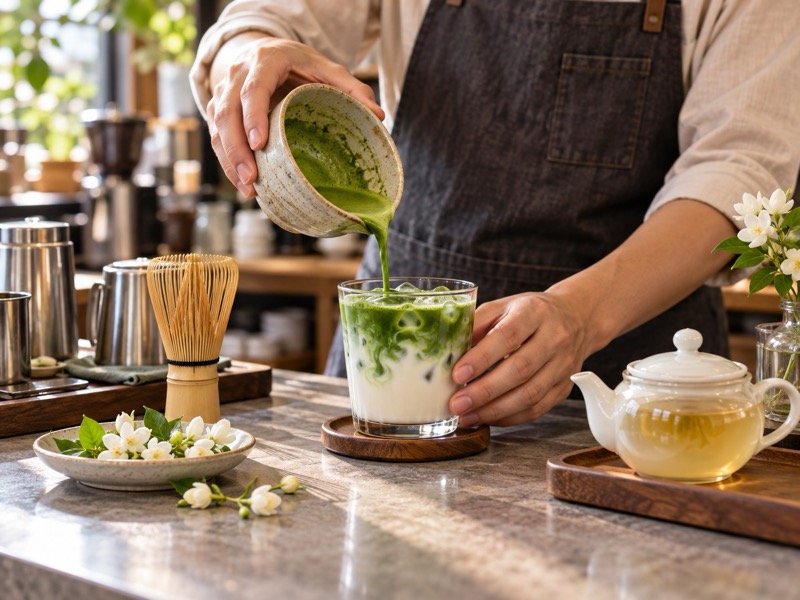
1. What should the jasmine matcha latte taste like?
Decide which tea leads. In a matcha latte, the powdered green tea should remain clear enough for the customer to identify it. Jasmine can lift the aroma and soften the finish. If the drink tastes like jasmine milk with a little green color, the matcha dose or the tea concentration needs work. If jasmine is impossible to notice, the addition only raises ingredient and labor costs.
Write a short sensory target before testing: green tea first, floral aroma on the nose, moderate sweetness, no perfume-like aftertaste. Taste the cup immediately and again after several minutes. A floral top note can fade as ice melts or as a hot drink cools. The last sip matters because that is where an unevenly mixed matcha slurry can collect.
Keep this drink distinct from a plain matcha latte by explaining the jasmine ingredient on the menu. Guests may assume it is a flavored syrup; tell them if you brew jasmine tea. Avoid claims that the addition makes the drink healthier. It is a flavor decision. If you sell several floral drinks, name the difference in one sentence so staff can guide a customer without reciting the entire recipe.
| Version | Tea priority | Best guest description |
|---|---|---|
| Tea-forward | Matcha leads, jasmine finishes | Matcha latte with a light jasmine aroma |
| Floral | Jasmine is more noticeable | Jasmine tea and matcha with milk |
| Dessert | Sweetness and foam lead | Sweet floral matcha special |
2. Which jasmine tea belongs in the recipe?
Ask the tea supplier whether the jasmine character comes from scented green tea, added flavoring, or a blend. Each can make a usable drink, but the dose and customer description will differ. Buy a small sample before committing to a case. Smell the dry leaf, brew it at the supplier’s suggested parameters, then taste it without milk and in the full latte. A pleasant dry aroma alone does not predict how it will perform after dilution.
Choose a tea your café can restock reliably. For a seasonal special, ask about minimum order, batch consistency, lead time, and shelf life in the original packaging. If the tea is meant to be brewed multiple times at home, that does not automatically make repeated café infusions economical or consistent. A controlled single infusion may be easier for a service team.
Fresh jasmine flowers can be a garnish where food handling rules and sourcing allow it, but they should not be your only flavor source. Decorative flowers vary in aroma and can complicate handling. Use only flowers supplied for food use, never florist stems. A measured brewed tea is more dependable than asking a barista to count petals.
3. How do you brew a jasmine tea concentrate for café service?
Make a small test concentrate by recording tea weight, water weight, temperature, and steep time. Start with the tea supplier’s directions, then adjust one variable at a time for the final milk drink. A stronger brew is useful because only a modest volume should enter the latte, but strength achieved by oversteeping can bring bitterness. If the concentrate tastes harsh alone, milk may soften it while leaving an unpleasant dry finish.
Strain leaves promptly when the planned steep is complete. Do not leave tea sitting in a pot on the counter and call every later cup the same recipe. Cool the concentrate according to your food-service procedures if it will be used for iced drinks. Record the actual preparation and hold time during the test. Your local food authority and operating procedure should govern storage and discard decisions.
Try three tea amounts in an otherwise identical 12- or 16-ounce latte. Weigh the concentrate rather than estimating a splash. The middle dose often reveals whether the jasmine note can survive milk without dominating matcha. If none of the samples works, change the tea before adding syrup or toppings to cover the problem.
| Trial | Only variable changed | What to assess |
|---|---|---|
| A | Low tea volume | Can guests notice jasmine? |
| B | Medium tea volume | Do both teas remain clear? |
| C | High tea volume | Is the finish dry or perfumed? |
4. How much matcha should you use?
Use your standard matcha latte dose as the control. For many café recipes, testing around 2–3 g per cup is a workable starting range, but the cup size, milk, and powder decide the final amount. Do not silently increase the powder because jasmine makes the first sample feel light. First check whether extra tea concentrate has diluted the milk and matcha balance.
Whisk matcha separately in a measured amount of water. A smooth slurry prevents the dry green flecks that become obvious in a pale jasmine milk layer. Matcha from one lot may wet more readily than another, so repeat the test when you change bulk supplier or blend. Keep the powder sealed and away from steam at the bar.
Jasmine tea may already contribute caffeine. Avoid precise caffeine claims unless you have the recipe and ingredient data to support them. If a guest asks, explain that the drink contains both matcha and jasmine tea and offer your café’s available ingredient information. Do not promise an exact number based on a generic online chart.
5. Which milk and sweetener keep both teas balanced?
Test the milk you use most. Dairy milk can make the cup rounder; an oat beverage may add sweetness that masks the floral aroma; other plant milks can contribute their own flavor. Taste each version with identical tea and matcha doses. Pick the default that serves your customers and keep an approved alternative recipe if you offer plant milk. Do not assume the same sweetener amount suits both.
Jasmine tea can smell sweet without containing sugar. Start with the sweetness of your standard latte, then reduce or raise it after a blind tasting. A plain syrup may make the flavor easier to read than vanilla or honey, which bring their own aromas. If you choose honey, disclose it clearly: some guests expect a vegan drink when ordering plant milk.
Measure sweetener with a pump or scale. “One small squirt” is not a recipe and can change the balance more than a few milliliters of tea. Train staff to taste the fully mixed drink, including the bottom of the cup, before approving a new formulation.
| Ingredient change | Likely effect to test | Adjustment to consider |
|---|---|---|
| Sweet oat beverage | Jasmine seems quieter | Reduce added sweetener first |
| Honey | New floral note competes | Keep dose modest and disclose |
| Vanilla syrup | Floral profile feels dessert-like | Name the flavor on the menu |
| Unsweetened milk | Tea bitterness is clearer | Check brew before adding sugar |
6. How should you build an iced jasmine matcha latte?
For an iced cup, use chilled jasmine concentrate, milk, ice, and a freshly whisked matcha slurry. Decide whether you want a layered appearance or an evenly flavored drink at handoff. If you layer, train staff to tell guests to stir. Test the drink through a straw as well as from the rim: the first sip can be mostly milk or mostly matcha depending on where the straw sits.
Pour the tea concentrate into the milk base and taste it before adding the matcha layer. This catches a weak or overly strong tea batch early. Then add ice and the matcha slurry. Weigh the ice during recipe development, because a half-filled cup dilutes and warms differently from a full one. Check color and taste after ten minutes of ice melt, not only at the moment it leaves the bar.
If floral aroma disappears in the cold cup, do not reflexively add more syrup. Try a different jasmine tea or a slightly different concentrate. More sugar can make the first sip pleasant while obscuring the tea you intended to showcase.
7. What changes for a hot jasmine matcha latte?
Warmth releases aroma quickly, so the jasmine concentrate that seems faint in an iced cup may be strong in a hot one. Start with a lower tea dose. Mix matcha with water separately, combine it with the tea, then add textured milk. Follow your espresso machine’s milk-steaming and cleaning instructions. Do not put tea leaves or matcha into a steam wand.
Serve a tasting cup at the temperature customers actually receive. A very hot sample can suppress detail and encourage staff to over-flavor. Taste again as it cools. If bitterness grows, consider a shorter jasmine brew rather than more milk. If matcha disappears, check dilution from the tea portion.
Keep the hot recipe card separate from the iced one. The same ingredients can need different doses, cup sizes, and sequences. A single “jasmine matcha” button on the point-of-sale screen should still tell the barista which version was ordered.
8. Can you batch jasmine tea for a busy shift?
Batch the brewed jasmine tea only after your small-cup test has identified a stable recipe. Make an amount that fits your expected demand and safe holding procedure. Label preparation time, recipe version, and discard time. Keep dry matcha separate until service; a premixed matcha-and-milk container raises settling and quality questions that a fresh slurry avoids.
Check a tea batch at opening, mid-shift, and near the discard point. Note aroma, bitterness, clarity, and whether the milk drink still tastes the same. A tea that looks normal may have lost the jasmine note you are charging for. The FDA Food Code is a reference for food-service controls; use the requirements that apply to your location and process for storage and handling.
Plan a backup if the tea concentrate runs out during a rush. A shorter emergency brew may taste different. It may be better to mark the special unavailable until a proper batch is ready than serve an inconsistent cup under the same name.
| Batch control | Record on label or log | Reason |
|---|---|---|
| Tea and water weight | Recipe version | Repeatable concentration |
| Steep time | Start and strain times | Avoid bitterness drift |
| Holding | Preparation and discard times | Safe, predictable service |
| Mid-shift taste | Pass or remake decision | Protect the menu promise |
9. How do you price the drink and train staff?
Cost the jasmine matcha latte from actual measured inputs: matcha, jasmine tea, milk, sweetener, ice, packaging, and garnish if any. Include the time required to brew and strain tea, not only the seconds spent assembling a cup. If you buy a tea solely for this special, include likely unsold stock and sampling in the trial budget.
Use a one-page recipe card for each cup size and temperature. List exact weights or volumes, brewing parameters, assembly order, and a simple taste target. Train at least three staff members and compare their cups blind. If the floral note varies between shifts, review the concentrate and dosing before changing the wholesale matcha.
Staff should be able to explain the drink in plain language: “We brew jasmine tea, add a measured amount to milk, and finish with matcha.” That tells the customer what they are buying. It also helps a barista answer ingredient questions without guessing about a mysterious floral syrup.
10. What makes a menu test worthwhile?
Run the special long enough to include a busy weekend and ordinary weekdays. Put a concise description on the menu and let staff offer a sample where practical. Track sales, repeat orders, remakes, customer comments, preparation time, and tea concentrate discarded at closing. A drink can have enthusiastic first-day interest yet fail on repeat purchase or cost.
Compare it with the standard matcha latte. Does it bring new tea drinkers, or mainly move existing matcha orders to a more expensive workflow? If it draws new demand and earns its margin, keep it. If customers enjoy the idea but find the floral note too strong, test one lower tea dose before dropping the product. Make one change, then measure again.
Save the chosen recipe, supplier details, menu copy, and photos at the end of the trial. If you pause the drink, those records let you relaunch it without starting from memory. If you keep it, schedule a taste check whenever a tea or matcha lot changes.
| Trial result | What it may mean | Next step |
|---|---|---|
| Good first orders, few repeats | Expectation and flavor may differ | Review menu description and dose |
| Strong taste, slow service | Brew or bar layout is a bottleneck | Improve prep and station setup |
| High concentrate waste | Batch too large | Make smaller batches |
| Consistent repeat demand | Drink may fit the menu | Keep recipe and audit supplies |
Frequently Asked Questions
Q1: Is jasmine matcha latte made with jasmine tea or jasmine syrup?
Either can be used, but they make different drinks. This café method uses brewed jasmine tea so the floral note comes from a measured tea concentrate. Describe the actual ingredient on the menu.
Q2: Can I use fresh jasmine flowers?
Only use flowers sourced and handled for food use. They are better treated as a garnish than as the sole flavor source because aroma varies from cup to cup.
Q3: Why does jasmine disappear after I add milk?
The tea may be too weak, the milk too strongly flavored, or the drink too sweet. Test a measured concentrate in the full cup before adding more syrup.
Q4: Should the hot and iced versions have the same tea dose?
Test them separately. Heat changes how strongly jasmine smells, and ice changes dilution. Keep separate recipe cards once you choose each version.
Q5: Can I batch the whole latte in advance?
Freshly mixing matcha at service often gives better color and less settling. If you batch a component, start with the jasmine tea and follow your local food-service and quality controls.