
Comparing matcha production by country is useful only if the comparison reaches the powders your business could actually buy. A national production estimate will not tell a café how a candidate disperses in milk or tell a brand whether its origin statement is supportable. Build a short list of coded products, define one application test and ask each supplier for the same basic evidence. Japan’s agriculture ministry documents established tencha production, while Tongren’s local government describes a Chinese production chain. Neither source approves a particular supplier lot. The matcha supply chain guide helps compare actual routes across origins.
Contents
- 1. Why compare countries in the first place?
- 2. What country claim belongs on the product?
- 3. Are the proposed powders made through comparable routes?
- 4. Which sample test makes the comparison fair?
- 5. What product records should every candidate supply?
- 6. How should import requirements enter the shortlist?
- 7. What does a country tell buyers about capacity?
- 8. How should landed cost be compared?
- 9. Can a second country serve as a backup source?
- 10. What should the country comparison conclude?
1. Why compare countries in the first place?
Name the purchasing decision
Country comparisons can support several different decisions. A retail brand may need a documented origin for a printed claim. A beverage manufacturer may seek a powder that holds color in a formulated drink. A distributor may need a second source when a current grade becomes scarce. State which problem the exercise must solve. Otherwise, an attractive map or list of national outputs will pull attention away from the ingredient your team needs to approve.
Keep the decision narrow. Write the required application, pack format, expected purchasing pattern and nonnegotiable claims before collecting offers. Decide whether each country is a label requirement, a sourcing preference or simply a way to widen supplier search. Ask quality and operations to agree on the same sample protocol. If the business needs a second source, compare candidates with the current approved powder. If it needs a new brand story, review origin evidence before drafting copy. Country names organize a search; they cannot substitute for product evaluation.
2. What country claim belongs on the product?
Define grown, processed and packed
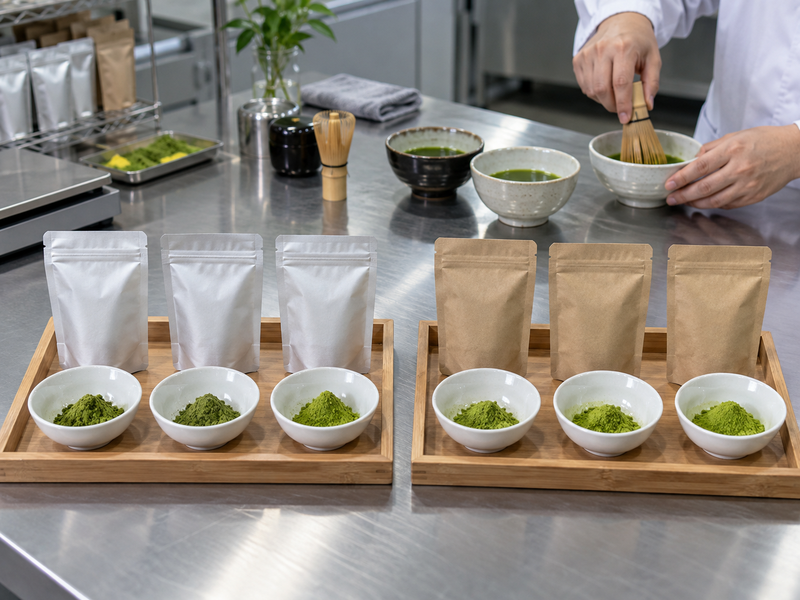
“Product of Japan,” “milled in China” and “packed in another country” describe different stages. Ask each candidate to state where the tea was cultivated, where tencha was prepared, where powder was milled and where packs were sealed. A trading company may be registered in one country while sourcing material from another. Do not turn a supplier address into an origin claim. Record the exact wording your brand proposes, then have the relevant market specialist review whether the records and local rules support it.
Trace one lot per offer. A country statement should connect to the coded sample you test and the commercial grade you quote. Ask whether the supplier blends sources across borders and what happens if its normal material becomes unavailable. Keep a version of the origin statement in the approved specification, with a change-notice requirement. This process may reveal that a product is still commercially useful even if its initial marketing description needs correction. Better to find that out during sourcing than after labels are printed.
| Stage | Country answer to capture | Evidence |
|---|---|---|
| Cultivation | Leaf source | Controlled source record |
| Tencha | Processing location | Transfer record |
| Milling | Powder site | Batch record |
| Packing | Pack site | Finished code |
3. Are the proposed powders made through comparable routes?
Ask what the ingredient actually is
Powdered green tea can reach market through different raw materials and processing methods. Ask each supplier whether the offered powder comes from tencha, what stages it performs and what material arrives at its mill. The Japanese agriculture ministry describes tencha as shaded tea leaves steamed and dried without rolling before grinding. Use that explanation as a process reference, then ask each supplier to describe its own route. Avoid assuming every product using the word matcha has identical inputs.
Compare declared routes, not mystique. A buyer can evaluate a different process if the ingredient identity, claims and application fit are clear. Request a process diagram tied to the SKU and a finished-lot trace. Ask where blending occurs and whether non-tea ingredients are present. A matcha latte premix, for example, cannot be compared with pure powder on price per kilogram or ingredient label. Once products are genuinely comparable, sensory and commercial differences become meaningful. Until then, a country table may be mixing entirely different goods.
4. Which sample test makes the comparison fair?
Hold the application constant
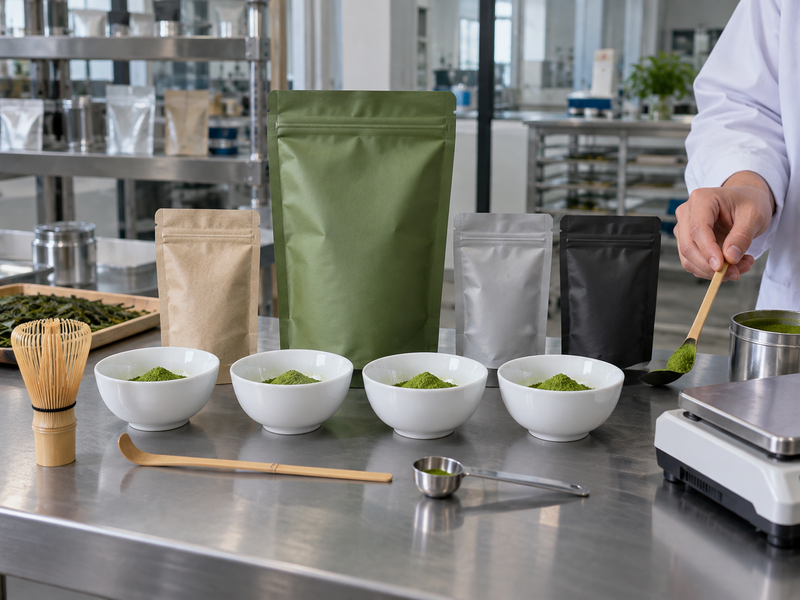
Give every candidate the same recipe brief and ask for a sample of the grade it would actually sell. Code samples before evaluation. Use identical powder dose, liquid, mixing time and hold period. Record appearance, aroma, texture, flavor and operational behavior. A powder that looks vivid in dry form may behave differently in dairy, plant milk, a dry blend or heat-treated food. Country stereotypes are a poor substitute for these observations.
Repeat the useful test. Have more than one evaluator take notes independently, then test a later production lot where feasible. Keep the first trial and later trial connected to sample codes and specification revisions. If one supplier suggests a different use rate, test that as a separate recipe and calculate the effect on finished-product cost. Do not change several variables at once and then credit or blame the country. The goal is a decision another product developer could reproduce, not a tasting story built around familiar flags.
| Trial field | Keep constant | Record |
|---|---|---|
| Dose | Weight per serving | Actual measured amount |
| Preparation | Equipment and time | Operator method |
| Base | Same liquid or formula | Ingredient version |
| Result | Same evaluation points | Coded notes |
5. What product records should every candidate supply?
Compare documents at the SKU level
Ask for a specification, ingredient declaration, pack description, storage guidance, lot coding method and example lot report for each proposed product. Where a supplier claims certification, verify current entity, facility, activity and product scope. A certificate issued to a different site cannot be treated as proof for the one making your powder. Product reports should identify methods, units and the lot tested. Your quality team should choose required tests for the application and destination.
Use the same review sheet. Mark each field present, unclear or missing, then give the supplier a focused question. Avoid rewarding a thick document package merely for length. A precise one-page specification and traceable lot report can be more useful than a generic corporate brochure. Keep laboratory results separate from approval of the source, process and packaging. If a candidate cannot supply a required record, document the condition it prevents; another country does not automatically cure that gap. Supplier quality is specific to the proposed product and facility.
6. How should import requirements enter the shortlist?
Bring the destination into the exercise
The country of production is only one side of an import route. Your destination, product form, intended use and selling claims determine which questions your importer must answer. Ask a qualified logistics or compliance specialist for the current requirements before assuming an existing shipment from one country proves your route is clear. A supplier’s claim of “export experience” is useful background, but request the documents and entity names for your proposed product and shipment.
Run a document rehearsal. Compare the product name on the sample, specification, proposed invoice and packing list. Ask who would prepare each document and when it would be available. Review label language before printing. Include any testing or declarations your destination specialist identifies in the quality approval plan, not as an afterthought at dispatch. This step can change the economic comparison: a cheaper ingredient may require extra handling or a different pack. Record the conclusion for each route rather than treating import feasibility as a country-wide yes or no.
| Question | Supplier input | Buyer reviewer |
|---|---|---|
| Exporter | Named legal entity | Purchasing |
| Product identity | SKU and ingredient | Quality |
| Shipment documents | Draft list | Logistics |
| Market label | Proposed wording | Compliance |
7. What does a country tell buyers about capacity?
Very little about your grade
National output figures may indicate a broad industry trend. They do not tell you whether one supplier can provide your accepted grade, pack and cadence. Ask for availability of the named product and whether the offer covers stock on hand or planned production. Request a supply plan at your estimated volume and ask how the seller would notify you about a shortfall. A factory’s total milling capacity may include grades or customers unrelated to your order.
Test the narrow claim. Can the supplier make or reserve the powder you approved while maintaining its origin statement and specification? Ask what sources can be used and which changes require buyer reapproval. A country with many producers does not guarantee interchangeability; a smaller market does not automatically mean an individual supplier is unreliable. Compare written commitments and past lot records where available. For a new supplier, start with a staged purchase and monitor consistency. Build the purchasing forecast as your own estimate, not as a promise extracted from a market article.

8. How should landed cost be compared?
Price the usable ingredient
Request current offers for the same pack concept, delivery point and order quantity where possible. Record currency, validity and exclusions. Then add the business’s freight, clearance, storage and test assumptions. Compare powders at the use rate your recipe requires. A stronger flavor may need less powder; a powder with poor handling may add production time or waste. Avoid declaring one country cheaper from a published average or an old quote.
Separate facts from estimates. Put supplier prices, quoted freight and internal planning assumptions in different columns. Do not calculate a false precision from uncertain exchange rates or a route that has not been booked. Ask how a supplier prices repeat orders and what happens if the product source changes. Finance can calculate scenarios while quality decides whether the powders are technically substitutable. The least expensive kilogram may be the wrong purchase if the product fails the label claim or needs a costly reformulation.
| Cost element | Source of figure | Check |
|---|---|---|
| Powder | Current supplier offer | Same SKU and pack |
| Freight | Logistics quote | Same handoff |
| Testing | Quality plan | Same scope |
| Use rate | Recipe trial | Same finished product |
9. Can a second country serve as a backup source?
Approve a second product deliberately
A backup source is valuable only when it can support the product you sell. If your label says Japanese origin, a Chinese-origin powder cannot quietly replace it. You might need alternate artwork, a separate SKU or a different product line. For an unlabeled café ingredient, a second source may be easier to use, but operations still needs a recipe comparison and quality still needs documents. Define the switching condition before a shortage forces a rushed decision.
Keep two approved files. Each supplier should have its own sample code, specification, source statement, packing description and order terms. Run a side-by-side trial in the actual application and decide what difference customers or staff can tolerate. Ask both suppliers how they handle change notices and short shipments. If the second powder requires a different dose or mixing method, write a staff instruction before switching. Country diversification reduces one type of risk only when the alternate product has been qualified for real use.
10. What should the country comparison conclude?
Record a buying decision, not a ranking
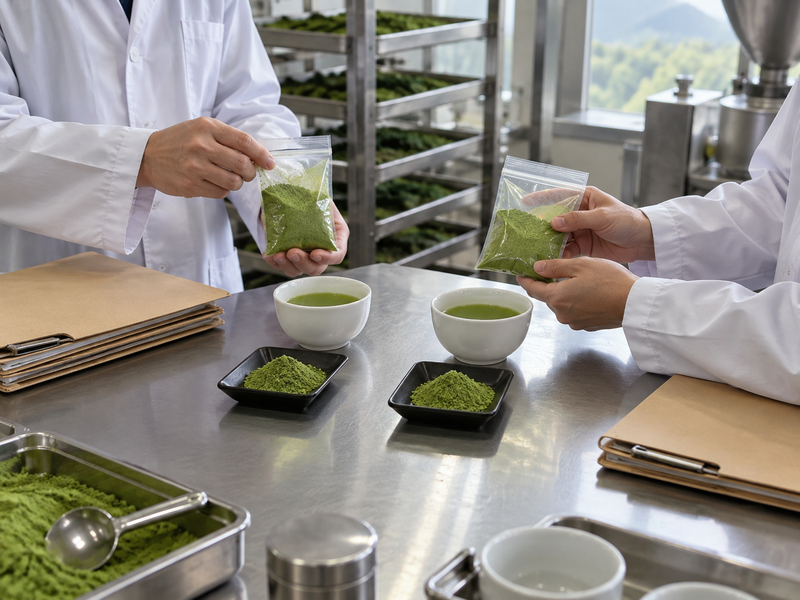
Build a comparison table with the same rows for every candidate: origin evidence, route, sample result, product documents, supply plan and landed-cost assumptions. Give each row an owner and a pass, open or reject status. If one country is mandatory for a particular claim, state that at the top. If your goal is resilient sourcing, document which alternatives can meet the same customer need. A global map cannot make that choice for you.
Finish with the next action. Ask for a production-linked sample when the current pouch is unidentified. Seek a clarified source statement when origin remains vague. Obtain a revised quote when pack format differs. Matcha Village’s supplied company information describes Chinese-origin tea sourcing, several matcha product formats and B2B document support; those claims should be checked against any specific proposed item. Every other supplier deserves the same product-level review. The final comparison should be short enough for a colleague to use and detailed enough to defend.
Keep rejected candidates in a dated shortlist rather than deleting them. A powder that fails a straight-tea trial may suit a later bakery project, while an expired quote may become relevant after a new offer. Record the reason for each decision so the team does not repeat the same sampling exercise without a changed requirement.
| Criterion | Status to record | Next owner |
|---|---|---|
| Origin route | Supported or open | Brand/compliance |
| Application | Passed or retest | Operations |
| Documents | Approved or missing | Quality |
| Offer | Current or expired | Purchasing |
FAQ
Q1: Which country makes the best matcha? No country-wide answer can select your lot. Test products against a defined application and claim.
Q2: Can country of packing be used as leaf origin? No. Record cultivation, processing and packing separately.
Q3: Are national output figures useful? They can guide market research, but they do not establish availability of your approved grade.
Q4: Should backup powder match every sensory note? It must meet the tolerances your customer product and operations require; document any recipe change.
Q5: What is the fairest price comparison? Compare current offers and landed cost at tested use rates for products with acceptable documents and claims.
Final thought
Use country information to widen the search and sharpen origin questions. Let coded samples, supplier records and a current offer decide which powder belongs in your product. A country comparison is complete when it produces an approved choice and a clear reason for it.