
The matcha powder production process begins, for many buyers, where prepared tencha enters a finishing site and ends when a tested powder is sealed and released. This narrower view helps a manufacturer assess the steps most likely to affect texture, lot identity and pack performance. Ask for records tied to the proposed SKU, then run the powder through your actual formulation. Our matcha incoming inspection guide helps connect supplier release with the checks your warehouse and quality team will make at receipt.
Contents
- 1. What material enters powder finishing?
- 2. How is tencha accepted before milling?
- 3. Which preparation steps happen before grinding?
- 4. What should milling records show?
- 5. When does sifting help or change the product?
- 6. How are blends built without losing traceability?
- 7. What protects open powder from mix-ups?
- 8. How are samples and tests linked to release?
- 9. What must packing preserve?
- 10. Which evidence completes buyer approval?
1. What material enters powder finishing?
Define the starting point
Ask whether the site receives tencha, partially refined leaf or powder from another mill. A production diagram may begin at cultivation, but the facility being reviewed might control only finishing and packing. The buyer needs its true input and supplier acceptance rules. For a pure matcha SKU, verify the ingredient statement and the codes assigned to incoming material. If the site also handles hojicha, latte mixes or other powders, identify how staff distinguish them during storage and production.
Match input to output. Request the lot reference for the tencha or powder used in the sample you tested. Ask who processed it before arrival and which records can be retrieved if a problem appears later. Do not infer source or processing method from a photo of a tea field in the seller’s brochure. A finishing plant can be a strong supplier if it knows and controls its inputs. It becomes difficult to approve when an attractive finished pouch cannot be linked to anything that entered the building.
2. How is tencha accepted before milling?
Review the receiving decision
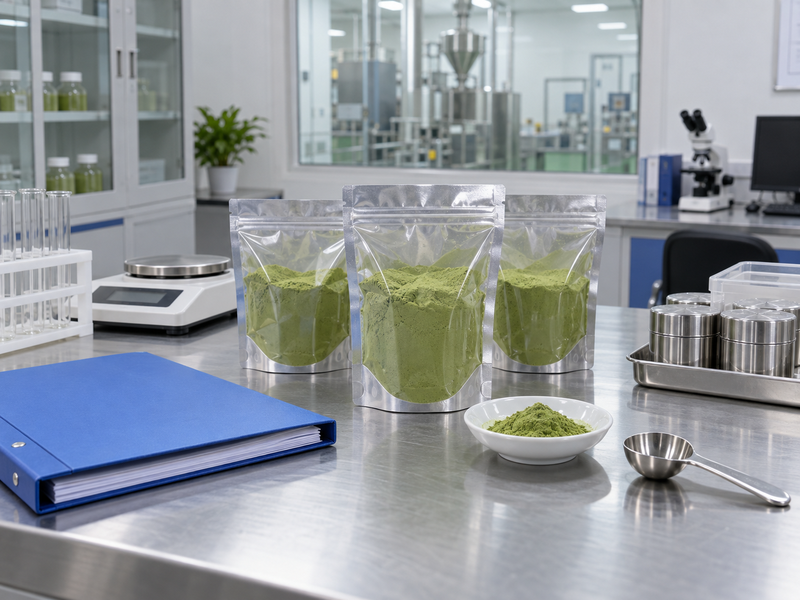
Ask the finishing site which characteristics it checks before tencha enters an approved grade. That may include product identity, supplier code, condition of containers and sensory or analytical attributes chosen by its quality team. A receiving log should show what was accepted, held or rejected. If a supplier sends several grades, staff need a practical way to stop one from entering the wrong milling order. A label on an incoming carton should remain traceable after the material is opened and moved.
Follow a recent lot. Ask where it was stored, when it was released and who made that decision. If material arrives with a document from the tencha processor, compare its code with the receiver’s internal code. A controlled cross-reference is fine; an unexplained change is not. Ask how partial containers are resealed and identified. Your buyer quality team should decide which records are necessary for its origin or ingredient claim. Receiving is the point where an outside supplier’s material becomes this factory’s responsibility.
| Intake field | Evidence | Buyer purpose |
|---|---|---|
| Source code | Supplier record | Origin trace |
| Condition | Receipt check | Material protection |
| Grade | Acceptance status | SKU control |
| Internal code | Cross-reference | Finished trace |
3. Which preparation steps happen before grinding?
Ask about refining and sorting
Tencha may be cut, sorted and refined before milling. Takezawa’s description of its matcha processing presents a specific route from tencha preparation to grinding; another supplier’s equipment and sequence may differ. Ask what your proposed grade requires and how removed stems, veins or unsuitable leaf are kept separate from material approved for milling. The buyer does not need every machine setting, but it should know where product identity and grade decisions occur.
Check the work order. Does it name the input lots, target SKU and resulting material code? If the supplier changes a sorting step or uses a different input grade, will it notify you when the cup or origin claim may change? Ask how staff handle fines and retained material from prior runs. A visual inspection of a clean line is useful, but the production record shows what happened to a real batch. Tie the route back to the sample and product specification instead of accepting “traditional” or “modern” as complete process descriptions.

4. What should milling records show?
Connect settings to a finished lot
Ask which equipment made the sample and which will make routine orders. A batch record should identify material inputs, equipment or line, run date, output quantity and deviations. If the seller claims a specific milling method, the record should support it for the proposed SKU. Ask what operators monitor during the run and how they handle temperature or mill condition if those factors are part of their control plan. Avoid assuming that a named machine type guarantees a particular flavor or fineness.
Request a usable measurement. If particle size is included in a specification, check the method, units and lot tested. Then prepare the powder in your product and observe mouthfeel, dispersion or sediment. A laboratory number cannot replace an application result. Ask what happens to powder produced during a stoppage, adjustment or maintenance event. The supplier should identify affected material before it reaches a finished pack. A buyer can accept different milling technologies when performance and claims are supported; it should not accept an untracked process change.
| Mill record | Buyer question | Review action |
|---|---|---|
| Equipment | Same as sample? | Claim check |
| Inputs | Which tencha lots? | Trace check |
| Output | Which finished code? | Shipment link |
| Deviation | What was held? | Quality review |
5. When does sifting help or change the product?
Determine its purpose in this route
Ask whether the supplier sifts powder after milling, which screen or method it uses and what the step is intended to remove or separate. Sifting may address agglomerates or other product-control needs, but a fine-sounding screen value is not a universal quality grade. Request the site procedure and a record for the proposed SKU. Ask how retained material is handled and whether it can return to production. The answer affects yield, traceability and possibly powder behavior in your formulation.
Test the outcome rather than the tool. A beverage line may care about clumps and mixing time, while a dry blend may care about consistent flow through a feeder. Run the actual application with coded samples and record what staff see. If the supplier changes a sieve or removes the step, compare the new lot with the approved reference. A buyer need not specify a screen simply because another factory uses one. It should define the finished performance and any process claim that depends on the step.
6. How are blends built without losing traceability?
Show every input and final code
Some grades combine tencha or powder lots to reach a flavor or color target. Ask whether blending happens before milling, after milling or both. A batch sheet should identify each input lot and the resulting output. If a product claims single origin or a narrow source area, confirm that every allowed input fits it. If the supplier uses a target blend, ask what sensory or measurable limits guide release. Confidential ratios can remain protected while the source boundaries and batch trail stay clear.
Probe the substitute case. When a usual input is short, does quality approve another source, create a different SKU or hold production? Sales should not decide that a close-looking powder can replace the approved grade without buyer review. Ask how partially used containers are coded and weighed. A strong blend program manages normal agricultural variation; a weak one hides changing inputs behind a stable product name. Compare more than one lot in the same recipe to see whether the declared target is meaningful for your application.
| Blend question | Evidence | Decision |
|---|---|---|
| Allowed inputs | Source list | Claim review |
| Actual inputs | Batch sheet | Trace review |
| Target | Sensory or spec range | Product fit |
| Change | Notice record | Requalification |
7. What protects open powder from mix-ups?
Watch containers, people and labels
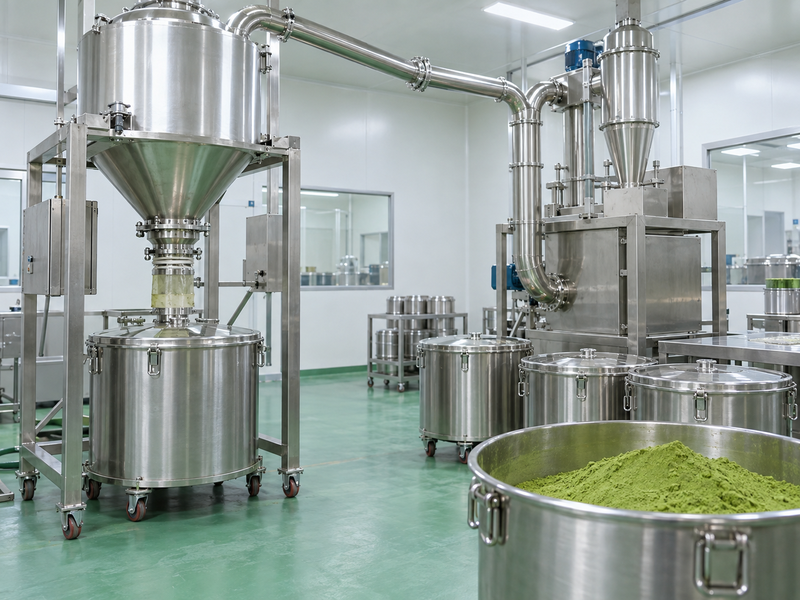
Fine powder moves through bins, hoppers, sampling points and packing equipment. Ask how each container is labeled with SKU, lot and status. Review cleaning and line-clearance steps when production changes between pure matcha and flavored blends. A photograph of a clean room is reassuring but cannot show whether staff follow the right procedure during a busy shift. Ask to see an ordinary changeover record and who signed release of the line.
Use an incident question. If a wrong label is found midway through packing or a tool breaks over open product, how does the site identify and hold affected output? Ask where rejected material is stored and who decides its disposition. The goal is not a claim that incidents never happen. The goal is a system that notices, contains and documents them before shipment. A buyer can request masked examples when customer confidentiality limits direct record access. Keep observations separate from supplier explanations in the visit note.

8. How are samples and tests linked to release?
Follow the reported value to a decision
Ask who samples a finished run, at what point and under which lot code. The specification should identify the characteristics your buyer quality team requires, with methods and units for measurable fields. A report from an outside laboratory should still connect to the actual lot offered. Ask who reviews the result and who may release a held batch. A certificate of analysis is most useful when it names the exact product and shipment lot, not merely a related grade.
Ask about a failure. A result outside an agreed limit should prompt a documented hold and investigation. Retesting or rework needs a defined procedure. The supplier might propose a different grade for the material, but your buyer should assess that as a separate SKU. Keep testing distinct from application approval: a powder can meet lab limits while failing a drink or food trial. Likewise, a good tasting does not authorize shipment when required reports are still pending. Make the release gate clear before the first commercial order.
| Release item | Check | Owner |
|---|---|---|
| Sample | Lot representation | Supplier quality |
| Report | Method and unit | Buyer quality |
| Status | Hold or release | Supplier quality |
| Trial | Recipe performance | Buyer operations |
9. What must packing preserve?
Carry the accepted powder into a usable unit
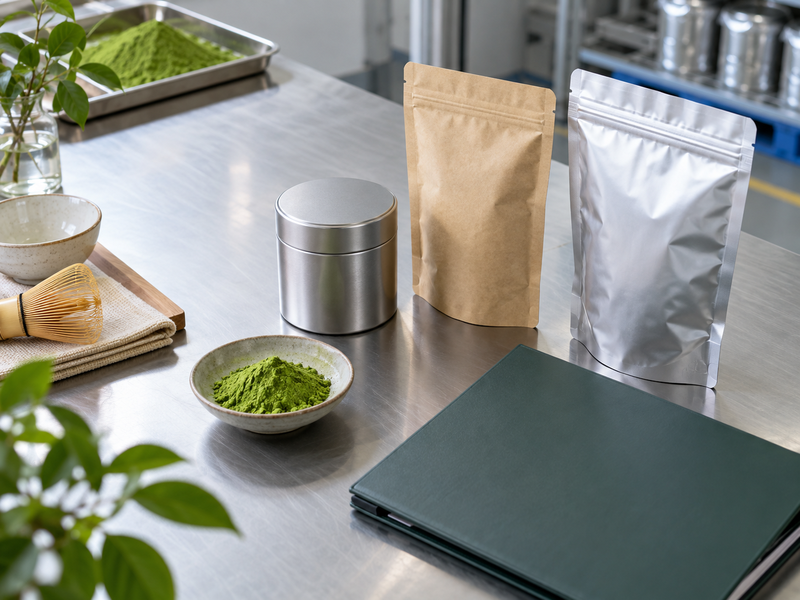
Ask how finished powder moves to packing, whether a third-party packer is involved and how its input code becomes a carton code. Check the proposed bag or pouch, closure, label, net-weight instruction and storage guidance. A sample packed in a small foil pouch cannot establish performance of a bulk bag opened repeatedly in a food plant. Request a pack sample in the intended order format and ask your receiving team whether the lot code will be legible.
Run a paperwork match. The packing record, lot report, invoice description and carton labels should all refer to the same SKU. If artwork changes, who confirms that the line uses the approved version? If a seal fails, how far does the inspection extend? Do not infer shelf life from a bright sample; use documented guidance for the specific pack and product. Packing is the final production step the customer experiences through storage, opening and dosing. Treat it as part of approval, not a decoration decision.
10. Which evidence completes buyer approval?
Build a short finishing file
Keep the tencha or input definition, production-site map, milling and sifting route, blend rule, specification, coded sample, lot report and pack sample together. Assign operations to the recipe result, quality to product records and purchasing to the written offer. Ask for change notice before a new mill, source, sifting method or packer changes the approved configuration. An open point can allow a development test without permitting routine shipment; record that status clearly.
Check the first delivery. Reconcile the received lot and pack against the file, then repeat the key application test before scaling use. Matcha Village’s company materials describe fine grinding and a range of raw and formulated tea powders, but each proposed SKU needs its own route and release evidence. A good powder process is one the factory can repeat and the buyer can recognize at receipt. That gives both parties a precise basis for handling later variation instead of relying on sales adjectives.
Ask whether a supplier change in sifting or packing would require a new application sample. That answer may differ between a straight-tea product and a dry blend, so let the product team set the trigger before the first routine order.
| Approval element | Evidence | Buyer owner |
|---|---|---|
| Input | Source and intake | Quality |
| Process | Run and blend records | Quality |
| Performance | Coded recipe trial | Operations |
| Supply | Pack and quote | Purchasing |
FAQ
Q1: Does every powder finishing site grow tea? No. Ask what it receives and how it controls the upstream supplier.
Q2: Is a finer particle always better? Judge defined measurements alongside texture and behavior in your actual recipe.
Q3: Why record sifting? It can affect output, traceability and handling, so the approved route should be clear.
Q4: Can a blended grade be consistent? It can if allowed inputs, target and lot records are controlled and later lots pass the same trial.
Q5: What releases a batch? The supplier’s authorized quality decision against the agreed product requirements, with buyer checks applied at receipt.
Final thought
Follow the powder from accepted tencha to a sealed, coded pack. Ask for the records at each change of status and test the result in the customer’s product. That narrow focus turns a complex finishing line into a practical purchasing decision.