
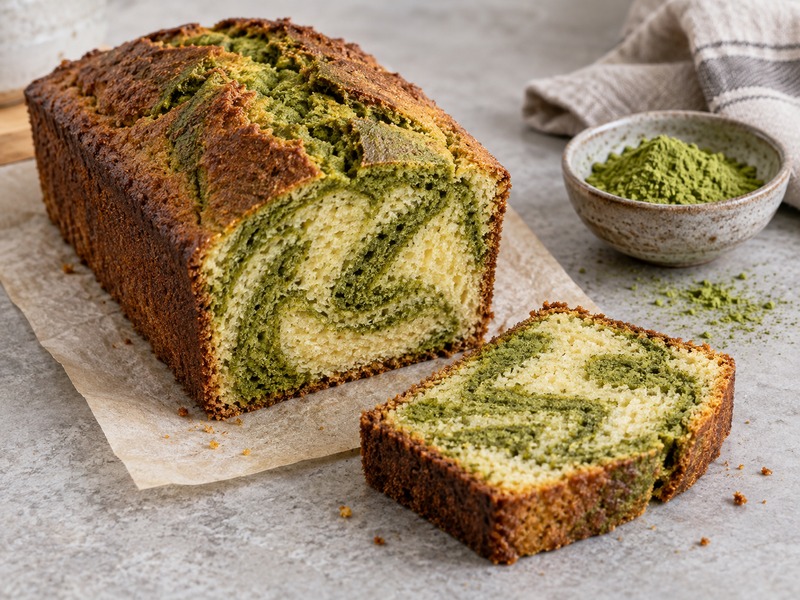
Matcha pound cake adds finely ground green tea to a rich loaf. The challenge is not making a batter turn green; it is keeping a clear tea flavor, even crumb and saleable color after baking and display. A café slice may be served the same day, while a packaged loaf must still look and taste right later. The Kitchn’s matcha-vanilla swirled pound cake is a useful consumer example of the format. A bakery needs its own tested formula, equipment settings and release checks before selling it at scale.
For: bakery operators, product developers, ingredient buyers and foodservice distributors. Decision: whether a matcha loaf can be produced with repeatable flavor, appearance, slice yield and margin.
1. What kind of pound cake is the bakery trying to sell?
Choose the eating experience first
“Pound cake” can mean a dense, buttery loaf, a lighter café cake or a swirled two-color slice. Those products need different batter handling and price points. Define the target using a finished slice: thickness, crumb tenderness, tea intensity, sweetness, color and expected serving temperature. A swirled loaf gives visual contrast but may deliver inconsistent matcha in each slice; a fully green loaf is easier to portion but puts all the pressure on color stability. Decide whether the cake will be sold whole, sliced at a counter or individually wrapped.
Test the sale format. Cut a trial loaf after cooling and count clean, saleable slices. Evaluate the center and ends separately. A loaf that looks attractive whole can lose margin if its middle is gummy or the end slices are dry. Ask tasters to evaluate an unglazed slice before adding icing; a sweet topping should complement, not conceal, weak tea flavor. Record the product description in plain language so the test team knows what it is approving.
| Format | Main benefit | Main risk to test |
|---|---|---|
| Fully green loaf | Even tea dose per slice | Dull baked color |
| Matcha-vanilla swirl | Strong visual contrast | Uneven flavor and slice appearance |
| Individually wrapped slice | Convenient distribution | Condensation and staling |
2. Which matcha works after oven heat?
Judge the baked slice, not the dry powder
Matcha grades are commercial labels, not a promise of baking performance. A powder that looks vivid in a pouch may brown in the oven or taste faint against butter and sugar. Compare candidates in the same controlled batter at the same grams per loaf. Taste the cooled cake, not just the green batter. Check whether the tea note survives the bake, whether bitterness grows at the crust, and whether the color remains acceptable under the display lights used in the store. If a stronger powder costs more, compare cost per acceptable slice.
Use an approved reference. Keep a retained sample or documented color and sensory standard for the chosen lot. Ask the supplier for the purchasing documents your business requires, pack size, storage conditions and lead time. Test the next lot beside the reference in the bakery’s own recipe. A buyer who approves only the raw powder may discover the difference after thousands of loaves are baked. The matcha specification should describe how it performs in cake, not merely its shade before mixing.
3. How should matcha enter the batter without clumps?
Disperse it before the final mix
Fine tea powder can form green pockets if added late to a thick, fatty batter. Sifting helps remove lumps, but it does not guarantee even distribution. A small, measured portion of batter or liquid can be used to make a smooth matcha paste before it is folded into the main batch. The right route depends on the formula: adding too much liquid may change the loaf’s structure, while overmixing after flour addition can tighten the crumb. Trial the mixing sequence at bench scale and on the actual mixer.
Inspect a cut loaf. Look for green specks, streaks that taste bitter, and pale zones where tea did not reach. Record mixer speed, bowl size, scraping points and mixing time. For a swirl, make separate batters with controlled weights and layer them consistently; random spoonfuls may create a different pattern in every pan. A repeatable pattern does not need to be perfectly geometric. It needs to yield a recognizable matcha portion in every saleable slice.
| Mixing defect | Likely cause | Next check |
|---|---|---|
| Dark specks | Undispersed powder | Pre-sift and make a smooth paste |
| Tough crumb | Too much late mixing | Shorten final mix and check flour stage |
| Patchy swirl | Unmeasured batter portions | Weigh each layer per pan |
4. What formula changes protect the crumb?
Keep tea additions within a controlled trial
Matcha brings dry solids and flavor to a cake formula. Increasing it without adjusting the rest of the batter can make a loaf feel dry or bitter. Work from an accepted control cake. Change one variable at a time: matcha dose, sweetener, liquid or fat. Compare cake mass before and after baking, dome shape, crumb and next-day texture. A swirled loaf may need the green and plain batters to have similar thickness so neither sinks or spreads unpredictably.
Avoid recipe arithmetic by color alone. Adding powder until batter looks bright is not a valid production method. Raw batter color often changes under heat. Establish a measured dose per pan and track ingredient percentages against the total batter mass. If a sweet glaze is part of the sale product, test the cake both with and without it. The glaze can affect moisture migration and perceived tea intensity as well as appearance. Record the selected formula as a complete batch, not a list of suggested add-ins.
5. Which bake profile keeps the center done and the crust saleable?
Compare pan, load and oven position
A loaf bakes from the outside inward. Matcha at the crust sees more heat than matcha in the center, so browning and bitterness can differ across a slice. Start with the bakery’s proven pound-cake process, then test the tea version in the planned pan size and oven load. Track oven setting, actual bake time, internal doneness check, weight loss and cooling time. A trial baked as one pan in an empty oven may not represent a full rack. Do not decide readiness from a photograph of a green center.
Use a failure map. Slice loaves from different rack positions. Note a wet center, a hard dark edge, a collapsed dome or a large tunnel. Adjust one process variable at a time. If color is the only problem, changing matcha or packaging may help more than lowering the oven until the cake is underbaked. The release standard should cover both food safety and eating quality, using the bakery’s validated process and local requirements.
| Bake result | First variable to inspect | Why it matters |
|---|---|---|
| Wet center | Pan fill and doneness | Slices may collapse after packing |
| Dark bitter edge | Heat exposure and pan | Crust can dominate tea flavor |
| Uneven dome | Load and batter consistency | Slice yield changes |
6. How can a swirl stay attractive across many loaves?
Make the pattern teachable
A good swirl shows both cake colors without turning the whole loaf gray-green. Weigh the plain and matcha portions for each pan, then select a layering route that a new baker can repeat. Too much dragging blends the colors; too little leaves a heavy green slab. The pattern should also survive slicing. A dramatic top surface is less useful if the interior exposes only a small tea line on several slices. Photograph a cross-section from the center and from an end during each trial.
Set a range, not a stencil. Hand-swirled cakes will vary. Define acceptable contrast and minimum tea area in practical terms, then reject loaves that miss the intended eating experience. If an automated depositing line is planned, test the deposit sequence and batter viscosities at production speed. Keep the best-looking prototype from becoming an unrealistic benchmark that the actual line cannot reproduce.
7. What happens to color and flavor after cooling?
Check the product at sale time
Matcha cake may look different when hot, fully cool, wrapped and displayed. Heat, light and oxygen can change the green appearance. Photograph matched slices under the same lighting at planned checkpoints, and taste them blind if possible. A color shift is only one part of the decision; the slice must still smell and taste fresh. Record crust and crumb separately, because a browned crust can make a sound green interior seem dull in a whole-loaf photograph.
Choose the display condition deliberately. An open counter, covered case and opaque wrap expose the product differently. A thick icing layer may shade the cake but can trap surface moisture. Test the actual pack and display route rather than assuming that a room-temperature slice and refrigerated wrapped slice will behave alike. Claims about shelf life require a validated plan; a single overnight sample is useful for screening, not a shelf-life determination.
| Checkpoint | What to record | Decision it informs |
|---|---|---|
| Fully cooled | Crumb, color and aroma | Formula approval |
| After wrapping | Condensation and surface | Pack choice |
| At planned sale time | Flavor and slice texture | Display and holding limit |
8. How should the bakery slice and pack the loaf?
Count the good slices
Matcha pound cake must cool enough to cut cleanly without tearing the crumb. The cooling route also affects moisture and packing. Trial the bakery’s actual slicer, knife or portion guide. Count breakage, thickness variation and crumbs. For wrapped slices, check seal quality and whether the cake smears against the film. For whole loaves, examine how the top survives transport. A recipe that yields twelve ideal slices in a home kitchen may yield fewer accepted portions on a production line.
Work from the chosen channel. A café may slice at service; a distributor needs packs that survive movement and temperature changes. Confirm any allergen or ingredient declaration with a qualified reviewer. If the cake contains dairy or egg, a “matcha” label does not tell the customer enough. Use the final formula and market-specific rules for labels, not a borrowed recipe’s ingredient list.
9. What should buyers include in the cost model?
Cost accepted product, not raw batter
Tea cost is visible, but yield can dominate margin. Include matcha dose, batter ingredients, pan or liner, glaze, labor, oven time, slicing loss, packaging and expected remakes. Compare a full green loaf with a swirl using actual slice yield and service price. A swirl may save matcha per loaf but cost more in mixing and assembly. A stronger powder may allow a lower dose, but only if the baked slice remains acceptable. Use the pilot’s measured weights and minutes rather than a generic bakery margin target.
Check supply continuity. The buyer should know the matcha lot approval process, minimum order and lead time before a menu photo or packaging print run commits the bakery to one shade. Ask whether a backup powder has passed the same bake test. Keep the approved product description specific enough to be useful, yet honest about natural variation. If the color or flavor shifts outside the signed range, pause and compare ingredients before changing the label.
| Cost driver | Measure in pilot | Common blind spot |
|---|---|---|
| Matcha | Grams per accepted slice | Extra dose for weak powder |
| Yield | Saleable slices per loaf | Broken ends and wet centers |
| Labor | Mixing, swirl and slicing | Second batter handling |
| Pack | Materials and rejects | Condensation or seal failures |
10. What would a launch-ready pound-cake pilot show?
Bake, cool and sell through the real route
Run the final formula with production ingredients, planned pan fill, oven load and staffing. Bake multiple loaves, not a single hero sample. Evaluate center and edge slices, wrapped and unwrapped conditions, and the time the product will actually wait before sale. Record powder lot, batter weights, bake settings, cooling time, slice yield, defects and blind sensory notes. If the matcha changes, repeat a side-by-side bake against the retained reference.
Release a clear standard. The pilot passes when the loaf meets agreed tea flavor, crumb, color, safety, portion and margin targets through the intended sale period. If the center is wet, solve the bake; if the tea is faint, compare dose and powder; if the wrap sweats, change cooling or pack timing. Keep the next correction tied to a measured defect. A controlled sample run gives the buyer a useful decision, while an attractive slice alone does not.
Reference
Ahrefs listed The Kitchn, “Recipe: Matcha-Vanilla Swirled Pound Cake” as an Article at rank 3 in the US Google SERP for “matcha pound cake” on 2026-09-28. Its title frames the product format; the production checks here are original.
FAQ
Q1: Should a matcha pound cake be fully green or swirled?
Choose the version that meets your tea flavor, slice appearance, process and margin targets in a real production trial.
Q2: Can a buyer approve matcha from powder color alone?
No. Bake it in the intended formula and compare cooled slices under consistent light.
Q3: Why do green streaks become bitter pockets?
Undispersed powder can concentrate in the batter; test pre-sifting and a measured smooth paste.
Q4: What is the most useful yield measure?
Count accepted saleable slices per loaf after normal cooling and cutting.
Q5: When should the bakery repeat approval?
Repeat a side-by-side bake when matcha lots, major ingredients, oven conditions or packaging change.