
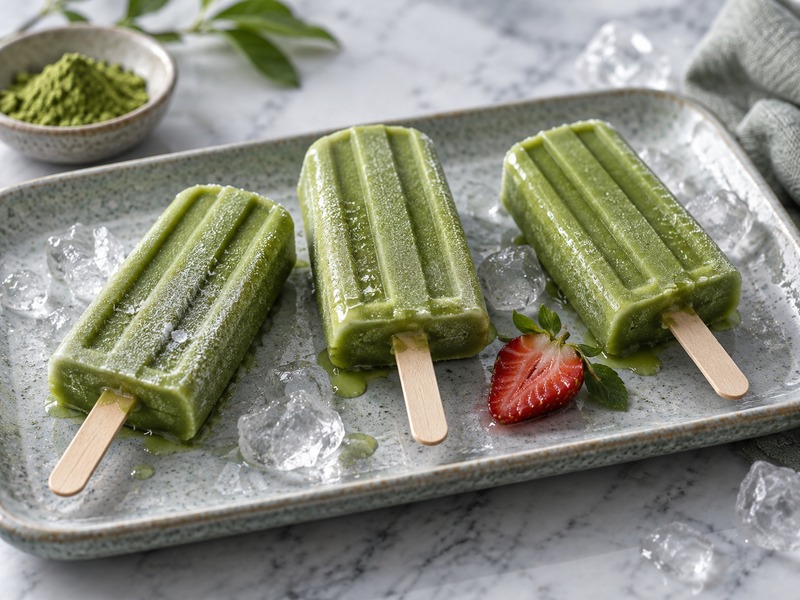
Matcha popsicles are frozen portions flavored with powdered green tea. Their appeal is a clear tea color and a simple cold snack, but freezing can mute flavor and turn a smooth mix into an icy block. A café batch has different risks from a packaged retail bar: unmolding, drip behavior and freezer storage all affect the customer experience. With Food + Love’s blueberry-and-cream matcha popsicles show one consumer direction. A commercial developer should use that title as inspiration and test its own formula, portion and cold chain.
For: cafés, frozen-dessert makers, private-label buyers and distributors. Decision: whether a matcha frozen bar can hold its tea flavor, structure and appearance through production and sale.
1. What eating experience should the frozen bar deliver?
Decide between ice pop and creamy bar
An ice pop based mostly on water will feel light and cool quickly; a milk or plant-based bar can feel richer and carry matcha differently. Neither format is automatically better. Define the target before choosing sweetener or mold: portion weight, first-bite hardness, melt rate, sweetness, tea note and whether fruit is included. A layered blueberry-and-cream bar has more assembly steps and a less uniform tea dose than a single-color matcha bar. For a café, immediate visual appeal may matter most. For retail, a customer must still enjoy the product after transport and storage.
Taste after freezing. Bench mix often tastes stronger and sweeter than the frozen bar. Make trial portions in the intended mold and evaluate them at the planned serving temperature. Ask tasters to describe tea flavor after the first few bites and near the stick. A beautiful green exterior does not prove that the center tastes of matcha. Write an approved sensory target in words a production team can use, then compare each new batch to it.
| Format | Useful benefit | Main trial risk |
|---|---|---|
| Water-based pop | Light, sharp refreshment | Large ice crystals and weak tea |
| Creamy bar | Softer bite and body | Heavy sweetness or muted matcha |
| Layered fruit bar | Distinct visual portions | Separation and uneven yield |
2. Which matcha performs in a frozen formula?
Judge tea after the cold has muted it
Matcha sold for lattes may not give the same result in a frozen bar. Cold temperature reduces aroma perception, and a dairy or fruit base can mask the tea. Compare powders at equal grams per finished portion, using the same base and freeze cycle. Evaluate bitterness, color and sediment after thawing a small sample as well as in the fully frozen product. A powder that looks vivid dry may become dull in a creamy mix, while a stronger but less photogenic sample may taste better after freezing.
Buy for the application. Request lot identification, pack and storage details, and the documents your purchasing program needs. Keep a reference bar made with the approved powder, or at least a recorded sensory and color standard under consistent lighting. When a new lot arrives, run a small side-by-side freeze test. Do not assume a price-per-kilogram saving is useful until you calculate the accepted tea dose per bar and any rejected portions caused by color or flavor drift.
3. How should matcha be mixed before filling molds?
Remove dry pockets without adding excess air
Matcha is a suspended powder. Adding it to a cold, thick base in one heap can leave green lumps and create bitter pockets in a finished pop. Make a smooth slurry with a measured portion of the recipe liquid, then blend it into the full batch. If heat is used for mixing, account for cooling before filling. Over-blending can whip in air, changing fill weights and producing visible holes after freezing. Select a mixing method that scales from bench to production without changing the texture.
Check the first and last mold. Hold a trial mix for the length of a real filling run. Fill samples at the beginning, middle and end, then compare color, weight and taste. A powder that settles during filling can make the last tray much stronger than the first. Specify whether the batch should be gently agitated and how staff should verify a uniform fill. A simple fill-weight check can reveal separation before customers do.
| Mixing observation | Likely issue | Practical check |
|---|---|---|
| Dark green dots | Undispersed powder | Pre-mix a smooth slurry |
| Air pockets | Excess shear | Compare blend speed and fill density |
| Last molds darker | Settling during fill | Sample start and end of run |
4. What controls ice crystals and bite?
Balance water, solids and freezing route
Frozen texture depends on the whole formula. Water content, sugars, fruit solids, milk components and stabilizing ingredients all change how a pop freezes and melts. A water-heavy prototype may make a hard, crunchy bar; adding sweetness alone can soften it but may hide tea. Trial small, measured adjustments and record the denominator of each formulation. Use the planned freezer and mold, because a shallow test cup does not freeze like a commercial bar.
Observe the real bite. Evaluate a bar straight from storage and after the short temperature change expected between freezer and customer. Note whether it is painfully hard, pleasantly firm, grainy or slushy. If a dairy or plant-based version is offered, treat it as a separate formula with its own allergen and stability review. A creamy appearance is not evidence of a safe or stable product. Make texture decisions from repeated frozen trials, not from an unfrozen mix that happens to taste smooth.
5. How do fruit and cream layers change production?
Design the layer sequence around fill control
Fruit can give contrast, but it also adds water, acidity and variation between lots. A blueberry layer may freeze at a different rate from a matcha cream layer and pull apart during unmolding. Start with a single-color control bar. Then add one layer at a time, weighing each portion and recording how long it needs to set before the next fill. Test the approved fruit ingredient, not a fresh berry selected for a photograph. If pieces of fruit are added, check whether they make the bar crack or fall off the stick.
Keep the tea recognizable. A large sweet fruit section can turn the bar into a fruit pop with a decorative green stripe. Taste both layers together and separately. Record the target portion ratio and the acceptable variation between bars. A buyer should ask whether the added visual appeal earns enough value to cover extra filling steps, freezer time and rejects. If it does not, a simple matcha bar with a small fruit accent may serve customers better.
| Layer decision | Benefit | Production cost to measure |
|---|---|---|
| Single matcha fill | Fast, even dose | Less visual contrast |
| Two filled layers | Clear color story | Setting time and alignment |
| Fruit pieces | Visible ingredient | Breakage and uneven portions |
6. Which mold and stick make a saleable portion?
Test release, handling and drip
Mold shape affects freezing speed, bar strength and packaging fit. A very thin bar may chip during unmolding; a thick one may be hard to bite and slow to freeze. Weigh every trial portion, including any layer variation. Test stick placement with production staff, not just a careful developer. A bar that twists or slides off the stick is a failure even if flavor is excellent. Use the intended mold material and release method during the pilot.
Count accepted bars. Track cracks, bent sticks, torn surfaces and bars that melt during handling. Test the time between unmolding and wrapping. A warm-release method may help removal but can soften the surface enough to damage a coating. Photograph acceptable and rejected bars at the same stage so staff can sort consistently. Yield matters to the buyer: the cost of ingredients divided by filled molds is not the cost per bar that reaches the customer.
7. What happens under coating or toppings?
Keep decoration from hiding the tea
A chocolate shell, nut coating or fruit drizzle can make a frozen product look finished. Each also changes the first bite and the temperature contrast. A thick coating may mask matcha; a brittle shell may shatter in the wrapper. If a topping contains allergens, it creates label and cross-contact work. Trial one decoration at a time and evaluate flavor as the bar warms slightly. Matcha should still be identifiable after the topping is added.
Test the handling route. Dip or drizzle bars under the conditions staff will use, then return them to the freezer in the planned tray and wrapper. Look for condensation, bloom, cracking and loose pieces after transport. Do not add a fragile garnish that survives only a studio setup. If the simpler bar wins on taste and production yield, make that the core product and reserve decoration for a limited café special.
| Decoration | What it can add | What to verify |
|---|---|---|
| Thin chocolate shell | Bite contrast | Cracking and flavor balance |
| Fruit drizzle | Color and acidity | Stickiness and frozen handling |
| Dry topping | Texture | Loose pieces in package |
8. How should the bar be wrapped and held?
Treat cold-chain changes as product changes
The wrapper must protect the bar from handling, freezer odor and moisture loss while allowing an easy opening. Trial the actual film or carton with the intended bar shape. Check seal integrity, print placement and whether the stick tears the pack. Temperature swings can cause surface ice, color changes and texture loss; a single stable freezer test will miss that risk. Plan a controlled distribution trial across the actual storage and delivery steps.
Set evidence-based dates. A shelf-life claim needs repeated sensory, physical and safety checks under defined conditions. Use local food-safety and labeling requirements with qualified review. A café made-to-order pop and a wrapped wholesale bar may need different controls. Record lot, production date, freezer temperature and any observed thaw-refreeze events. The buyer should be able to trace a quality complaint to a batch and storage route, not only to an attractive product photograph.
9. What does one accepted matcha pop cost?
Include freezing and rejects
Costing starts with matcha, base ingredients, fruit, stick and wrapper, but it does not end there. Include mold capacity, freezer time, labor for mixing and layered filling, unmolding loss, coating loss and distribution. A lower-cost powder can require more grams to make the tea noticeable after freezing. A dramatic two-layer bar may carry extra production labor and rejected pieces. Model the actual accepted yield from the pilot rather than assuming every filled mold becomes a sale.
Protect the buying plan. Ask suppliers for matcha lead time and lot consistency, and keep a qualified backup under test. If the fruit component is seasonal, decide whether its specification allows substitution. Do not approve a cheaper ingredient without tasting a finished frozen bar beside the original. Price decisions should follow a product that can be made reliably, not a raw-ingredient spreadsheet alone.
| Cost line | Measure from trial | Common omission |
|---|---|---|
| Tea | Grams per accepted bar | Higher dose after freezing |
| Fill | Net weight by mold | Overfill and settled mix |
| Labor | Minutes per accepted bar | Layer setting and unmolding |
| Cold chain | Storage and delivery | Melt damage and replacements |
10. What would a launch pilot need to prove?
Follow one batch to the customer
Make a pilot using the final powder lot, base, mold, stick, freezer, wrapper and staff. Sample bars from the beginning and end of filling. Check bite, tea flavor, color, stick hold, drip, pack opening and temperature response. Count saleable yield and record every reject. If the bars will ship, run them through the intended distribution route before agreeing to a commercial order. A freezer-safe bench sample is only the first gate.
Release the accepted version. Compare all results to the sensory, physical, safety and cost targets set before the run. Fix defects one variable at a time: poor dispersion calls for mixing work, icy bite calls for formula and freezing review, and torn wrappers call for pack changes. Retain a reference bar or a controlled record of its properties. That gives the next production lot a useful standard and gives the buyer a reason to trust the product beyond its green color.
Reference
Ahrefs listed With Food + Love, “Matcha Popsicles with Blueberries and Cream” as an Article at rank 3 in the US Google SERP for “matcha popsicles” on 2026-09-28. This article does not copy the consumer recipe.
FAQ
Q1: Do matcha popsicles need dairy to taste smooth?
No. Water-based and creamy formulas need separate texture and flavor trials; neither is automatically better.
Q2: Why does a frozen bar taste weaker than its mix?
Cold temperature can mute aroma, so evaluate the finished frozen portion before choosing a matcha dose.
Q3: What is the first sign of an uneven fill?
Compare the color and weight of bars filled at the start and end of a normal run.
Q4: Can a café recipe establish retail shelf life?
No. A packaged bar needs its own defined storage, sensory and safety validation.
Q5: Which yield matters for pricing?
Use accepted wrapped bars after normal unmolding and handling loss.