
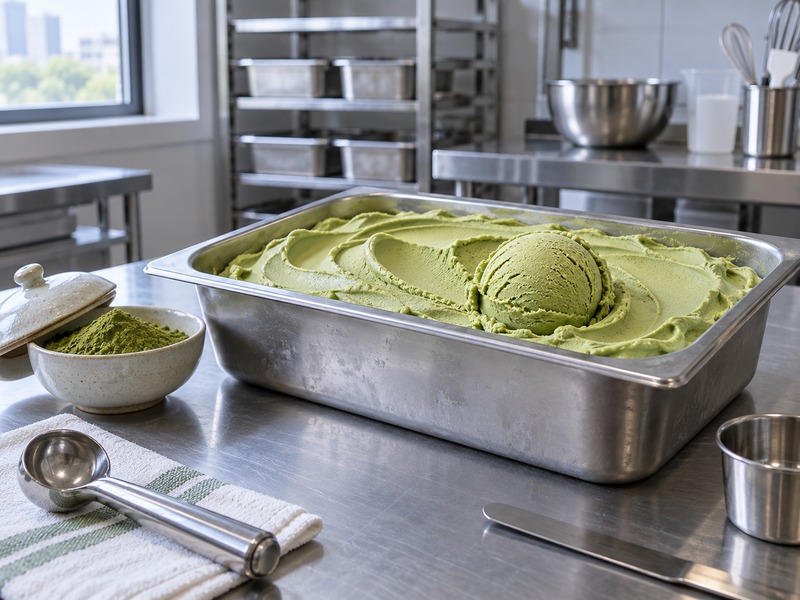
Matcha gelato is a gelato-style frozen dessert flavored with powdered green tea. The name suggests a dense, smooth scoop and clear tea character, but those qualities depend on the actual formula and equipment. Cold serving can mute aroma, display can change texture, and tea particles may gather if the mix is poorly dispersed. Sorate’s matcha gelato article shows the consumer concept. A gelato shop or dessert brand needs to validate its own mix, freezing route and serving temperature before calling the product ready.
For: gelato makers, café operators, frozen-dessert developers and tea buyers. Decision: whether the powder and process deliver a repeatable tea-flavored scoop through the intended display or distribution period.
1. What should the finished gelato taste and feel like?
Define the scoop at service
“Creamy” is too vague for a production target. Specify the serving temperature, resistance to scooping, body in the mouth, rate of melting and tea finish. Decide whether the matcha should be assertive or gentle against the dairy or plant base. Taste at the temperature customers receive, not only while the mix is liquid. A cold scoop can seem less sweet and less aromatic than its unfrozen base, so the development team should judge the whole served portion.
Use a reference pan. Record color, surface appearance, scoop shape and texture after a standard display interval. Compare first and last servings from a pan. If later scoops are icy or overly dense, the product may need a process or display change rather than more matcha. A distinct gelato-style product should have an agreed texture; the term alone does not establish it.
| Service point | Quality question | Evidence |
|---|---|---|
| Fresh batch | Is tea clear? | Blind tasting |
| Display hold | Does texture stay smooth? | Scoop test |
| Final servings | Is dose even? | Top-to-bottom comparison |
2. Which matcha belongs in a frozen dairy base?
Taste after freezing
Milk fat, sugar and cold temperature can mask a delicate tea. Request identified matcha samples and make equal-dose mix trials with the same base and freezer route. Compare the finished scoops for tea presence, bitterness, color and powdery mouthfeel. A powder that is excellent as whisked tea may not justify its price in a sweet frozen base. A stronger sample may survive the cold but become harsh as the gelato melts; taste the first bite and the softened last spoonful.
Keep supplier records. Ask for specification, lot traceability, pack size, storage guidance and the documents required by the buying program. Retain an approved powder sample and a reference batch description. When a new tea lot arrives, run a small standardized mix before switching all production. Dry powder color is an inspection clue, not proof of frozen-product performance.
3. How should matcha enter the mix?
Disperse before the freezer
Matcha is suspended powder and can form clumps in a cold dairy or plant base. Prepare a measured pre-dispersion with a compatible portion of liquid, then mix it into the full batch using a documented route. If the base is heated for its process, compare tea addition points while keeping the product safety requirements intact. Early addition may simplify production but expose tea to more heat; later addition may preserve aroma but demand stronger mixing. Use the actual equipment to decide.
Sample the vessel. Check top, middle and bottom before freezing, then compare early and late draws. Green specks or an uneven tea bite suggest mixing or holding problems. A smooth mix in a small blender does not guarantee a large batch will remain uniform while waiting for the batch freezer. Record agitation and maximum mix hold from pilot results.
| Mix defect | First check | Trial action |
|---|---|---|
| Dark tea flecks | Pre-dispersion | Sift or adjust mixing |
| Weak first draw | Settling | Agitate before freezing |
| Powdery bite | Tea load or particle behavior | Compare sample and dose |
4. How much matcha is enough in the scoop?
Use a measured dose ladder
Define tea grams per kilogram of finished mix and make several levels with the same base, freeze program and serving temperature. Taste blind. Identify the lowest dose that makes tea recognizable and the point where bitterness or dry mouthfeel starts to dominate. Do not choose a dose from the liquid mix alone. The frozen product may need a different balance because cold reduces aroma perception, but adding tea without limit can make the melted finish unpleasant.
Cost the accepted serving. Calculate tea grams per scoop from actual portion weight and batch yield. A less expensive powder requiring more tea may not be the cheaper option. If a topping or swirl is part of the sold product, taste the complete portion; chocolate or sweet sauce can bury a carefully tuned tea dose.
5. How do sweetness and fat affect the tea?
Compare bases with the same powder
Sugar and fat influence freezing behavior as well as flavor. A richer base can make the scoop feel smooth but hide tea. A lower-sugar base may expose bitterness and freeze harder. Trial plausible bases while holding matcha constant, then choose the one that gives the desired eating quality and service performance. A dairy-free formula needs its own work; a plant drink cannot be swapped in at equal volume with an assumption of identical freezing behavior.
Taste through melting. As the scoop warms, sweetness, fat coating and tea may become more obvious. Ask tasters to score first bite, midpoint and softened finish. If the first bite is flat and the last is bitter, a simple dose increase will not solve both. Adjust base, service temperature or powder selection with controlled trials.
| Base change | Likely effect to test | Decision |
|---|---|---|
| More sweetness | Softer perception | Tea masking |
| More fat | Creamier mouthfeel | Flavor release |
| Plant base | Different body | Separate formula |
6. Which freezing route makes the right texture?
Record the equipment settings
Batch freezer, mix temperature, draw point and hardening all affect the finished scoop. A small test freezer may not reproduce the texture of production equipment. Record mix condition, draw temperature or other relevant equipment cues, time and yield. Assess ice crystals, airiness and scoop resistance after hardening. Matcha powder can influence perception of smoothness even when the ice structure is sound, so compare against a plain-base control.
Do not infer a universal gelato formula. Gelato styles vary. Set the texture standard for the business and validate the actual equipment. A recipe that looks dense when drawn may become icy after an extended display. Conversely, a very soft scoop may be hard to portion consistently. The serving result should guide the final process setting.
7. What happens in the display case?
Observe normal service cycles
A pan may be exposed to warm air each time the case opens, then refreeze near the surface. Track appearance, scoopability, melting and tea flavor through the expected service interval. Sample from top and deeper in the pan. If the surface dries or changes shade, assess pan cover, case settings and the amount made per day. A product that passes fresh production but degrades in the case needs a different display plan.
Test toppings at service. Fruit, white chocolate or a sweet sauce can add appeal but change the tea balance and allergen picture. Trial the complete sale cup. If the menu promises matcha gelato, the tea should still be identifiable after the topping is added. A garnish can improve a serving; it should not mask a weak base.
| Display defect | First check | Evidence |
|---|---|---|
| Icy surface | Case cycling | Timed scoop texture |
| Dull color | Exposure and tea lot | Fixed-light photos |
| Hard scoop | Serving temperature | Portion time |
| Weak tea | Base or topping | Blind finished-cup taste |
8. How should packaged gelato be tested?
Include the journey
A retail tub faces freezing, storage, transport and customer handling that a shop pan does not. Fill the actual tub, seal it and run the intended cold-chain and distribution tests. Inspect ice crystals, lid frost, color, aroma, texture and scoopability after realistic temperature variation. The package should protect the product while communicating its true color and ingredients. A clear lid may be attractive but exposes appearance defects.
Use product-specific safety and shelf work. Dairy or plant ingredients, process and pack determine the applicable requirements. A home recipe or a plain vanilla base’s date code does not validate this matcha formulation. Set a sale period through quality and food-safety review. If the product is made only for same-day café service, document that route separately rather than borrowing retail assumptions.
9. How should buyers compare tea and base costs?
Use sellable servings
Cost matcha, base ingredients, toppings, tub or cup, labor, process loss and unsold product per serving. Record actual scoop weight rather than relying on a nominal number of scoops per pan. Compare teas at their accepted frozen-product dose. A large tea bag may be cheaper per kilogram but lose aroma during slow use. A smaller sealed pack can suit a shop with lower weekly volume.
Plan for continuity. Ask tea and dairy or plant-base suppliers for specifications, lead time, pack sizes and change notice. Trial a backup tea in the frozen product before approving it. A new base can change sweetness and texture even if the tea remains the same. Keep origin, organic or other claims tied to evidence for the specific ingredients and selling market.
| Cost line | Pilot measurement | Commercial decision |
|---|---|---|
| Tea | Grams per accepted scoop | Compare powders fairly |
| Base | Finished yield per batch | Recipe economics |
| Display loss | Unsold pan weight | Daily production size |
| Packaging | Tub or cup cost | Channel margin |
Build a cost model for a quiet day as well as a busy one. A large pan may be efficient to make but costly when the last portion loses texture in the case. A small tub may protect a retail product while raising packaging cost per serving. Count rejected or unsold product rather than dividing batch cost by theoretical yield. Ask the operations team to measure a normal scoop several times; staff variation in portion mass can change margin more than a modest difference between two tea quotes. This makes the buying comparison useful to the shop, not just to procurement.
10. What pilot proves the gelato is ready?
Serve from the intended freezer
Make a pilot at a size that exposes mixing, freezing, hardening and display constraints. Sample early and late draws, then serve at opening and later in the display period. Measure portion weight, scoop time, texture, tea flavor, color, melting and waste. Let regular staff prepare and serve it from written instructions. A gelato that needs constant developer adjustment has not reached a stable operating method.
Approve the complete route. Record tea SKU and dose, base formula, mixing order, freezer cues, hardening, display or pack, holding conditions and retest triggers. The useful next step is a short shop or retail pilot with the actual serving route. It will show whether the intended matcha gelato experience survives beyond the first freshly drawn scoop. Keep one signed-off reference pan in the quality file, with photographs and tasting notes from the actual service temperature. Future changes in base, freezer settings or tea lot can then be judged against a real product, not the memory of a busy launch day.
Reference: Matcha Gelato is a consumer concept reference. The production checks above are independent.
FAQ
Q1: Is matcha gelato the same as matcha ice cream? Both are frozen tea desserts, but a gelato-style product should be defined and tested by its own formula, texture and service method.
Q2: Why does the frozen scoop taste weaker than the liquid mix? Cold serving can reduce aroma perception; judge the product at its actual serving temperature.
Q3: Can a drinking matcha be used? It can be trialed, but approval depends on flavor and cost in the finished gelato.
Q4: What causes an icy surface in the case? Check display conditions, service cycles and the product formula with timed samples.
Q5: Can a shop batch be sold in retail tubs? A retail route needs separate package, cold-chain, safety and shelf validation.