
A matcha pop up shop is a temporary service operation, so the attractive counter is only one part of the plan. The team must confirm the venue’s food-service rules, water and power access, a menu that staff can produce quickly and stock for likely demand. Oatly and Goodhood’s reported collaboration shows how a short-run event can draw attention. Your own concept needs a queue, recipe and closing checklist that work on site. Matcha Village’s sample service is one place to start a powder trial.
Contents
- 1. What is the pop-up meant to prove?
- 2. Which venue facts must be confirmed early?
- 3. How small should the opening menu be?
- 4. Where will staff prepare, hand off and clean?
- 5. How much product should be staged per service block?
- 6. How should the team rehearse throughput?
- 7. Which food and allergen controls need review?
- 8. What should the customer see while waiting?
- 9. How will stock and waste be measured?
- 10. What makes the event worth repeating?
1. What is the pop-up meant to prove?
Choose one commercial question
A temporary counter might test a new drink, introduce a retail tin or collect orders for a future café. Those goals require different offers and metrics. Write the main question before committing to a venue: will customers pay for a standard iced matcha latte, will they choose a plain tea, or will they take home a packaged product? Keep the outcome measurable in orders, product feedback or qualified leads. A queue alone does not show whether the business can repeat the operation profitably.
Define the intended guest and service period. A weekday office lobby may need a fast handoff, while a weekend market allows longer tasting conversations. Decide whether the event sells drinks, gives samples or does both. Free sampling has its own portion and stock plan; it should not be counted as a sale. Assign someone to record observations during service rather than relying on memories after breakdown. A narrow decision helps the team spend limited time on the menu and data that matter.
2. Which venue facts must be confirmed early?
Walk the site with an operations checklist
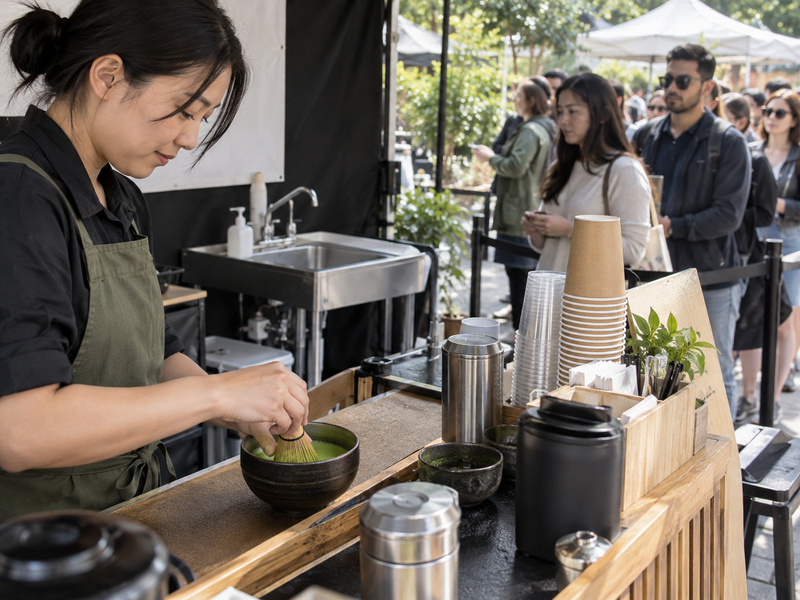
Ask the venue manager where food preparation is permitted, where clean water comes from, how waste water leaves and what power circuits are available. Record the usable floor area, load-in route, storage space, handwashing arrangement and permitted service hours. Confirm which party handles local permits, insurance, fire requirements and food-service approval with the venue and relevant authority. Requirements vary by place, so do not lift a rule from another city’s event checklist.
Inspect the actual service position, not just a floor plan. A counter that looks large on paper may leave no safe place for a refrigerator, cartons or a line of waiting guests. Note weather exposure for outdoor sites and who can secure equipment after closing. Ask whether the venue allows signs, samples and retail sales in the same space. Put every answer into a site brief with a named owner. A pop-up can survive a modest menu but rarely a missing water source or an unresolved permission on opening morning.
| Venue item | Verify on site | Owner |
|---|---|---|
| Water and handwash | Location and access | Operations |
| Power | Outlet and circuit | Venue |
| Storage | Chilled and dry space | Event lead |
| Permission | Approved activities | Venue/local authority |
3. How small should the opening menu be?
Design for repeated service
Begin with one reliable matcha base and a short set of variations that use the same station. A plain iced matcha, one milk drink and a packaged tea item can answer several customer questions without multiplying ingredients. Every added syrup, milk or garnish creates another pick, allergen and stock decision. Taste candidates with the cups, ice and equipment that will be on site. A recipe that works in a quiet test kitchen may slow dramatically when a barista must make it while taking payment.
Write gram-based recipes and cup sizes before pricing. If a seasonal drink needs extra preparation, time it during a rehearsal and decide whether the flavor advantage justifies the work. Keep a non-dairy option only when staff can manage its separate handling and explanation accurately. Display prices and ingredients clearly enough that guests can choose before reaching the counter. An attractive menu is useful when the service team can make every listed item at the same standard through the event’s busiest period.
4. Where will staff prepare, hand off and clean?
Draw the counter as a movement path
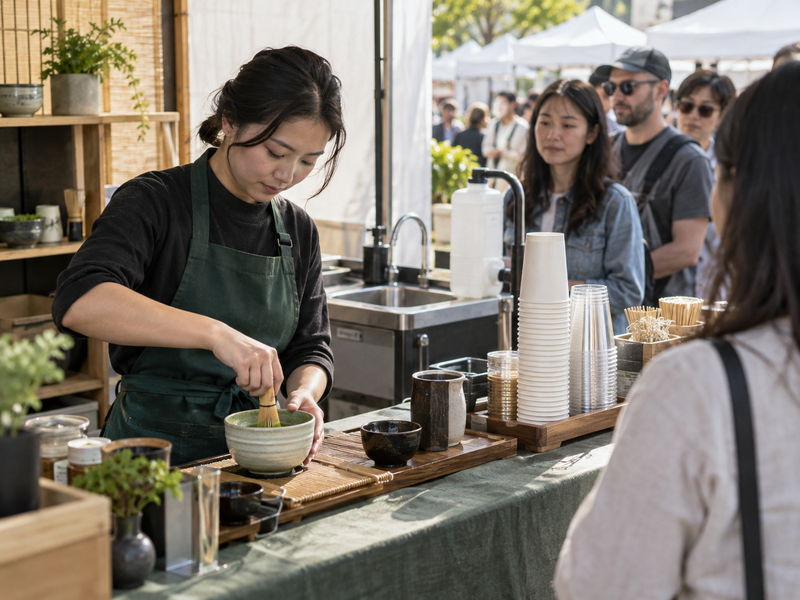
Mark where orders are taken, powder is weighed, drinks are mixed, cups are finished and customers collect them. Keep the collection point out of the payment queue where space permits. Place dry matcha away from splash zones and keep cleaning materials separate from open ingredients. Staff should be able to reach the scale, water, milk and ice without crossing behind each other. A simple paper sketch can expose a congested corner before equipment is loaded in.
Run a mock service with empty cups and the proposed station layout. Have one person order while two staff work, then switch roles. Note collisions, repeated steps and any surface that becomes crowded with used tools. Check the route for restocking cartons during service; a table that works at opening may fail when cases arrive from a back room. Ask the venue where waste can be placed without blocking guests. The goal is not a photogenic counter alone but a station that stays orderly when orders arrive together.
| Zone | Main task | Watch for |
|---|---|---|
| Order | Choice and payment | Menu confusion |
| Mix | Weigh and prepare | Crowded tools |
| Handoff | Finish and collect | Wrong cup |
| Clean | Rinse and waste | Cross-traffic |
5. How much product should be staged per service block?
Convert the forecast into portions
Choose a planning range of expected drinks per hour and multiply it by the approved powder dose, milk volume, cup count and ice requirement. Label the numbers as assumptions until the first service block gives real sales data. Stage enough ingredients for a manageable period, then replenish from controlled storage. Opened powder and milk should follow the product and venue’s handling plan. Avoid carrying a full day’s stock onto a warm, crowded counter simply because there is no easy restock route.
Count the physical units, not only ingredient kilograms. A shortage of lids or straws can stop service while tea remains plentiful. Build a small reserve for spills and training mistakes, with the amount based on your pilot rather than an invented industry percentage. Put a person in charge of each replenishment. For an event that also sells retail tins, keep saleable stock and drink ingredients separately coded. At the end of each block, compare starting stock, sales and waste so the next period’s staging can be adjusted.
6. How should the team rehearse throughput?
Simulate the busy interval
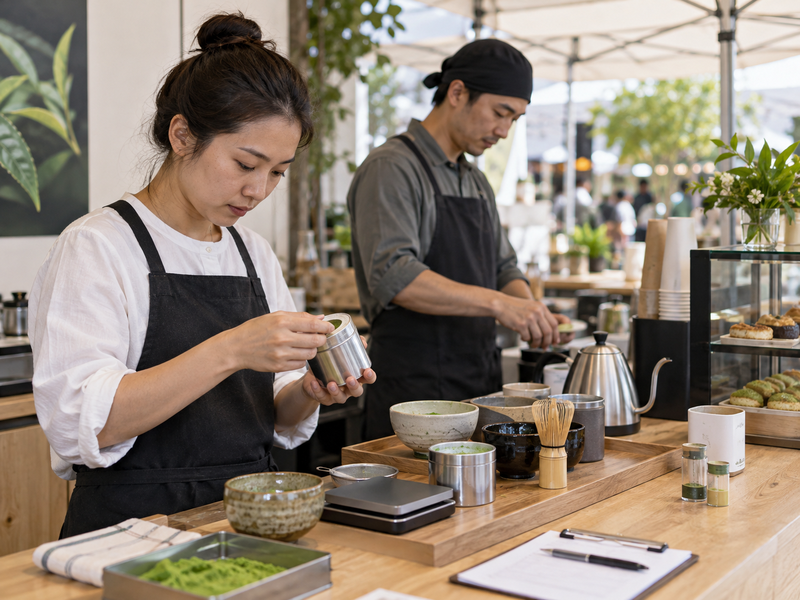
Run a service test with the real menu, equipment and staffing level. Have volunteers place orders in bursts rather than at evenly spaced intervals. Measure order-to-handoff time for each drink and note the stage where a line forms. A faster whisk or mixer may help, but the bottleneck might be payment, ice scooping or explaining options. Fix the actual constraint. Repeat the test after changing the layout or preparation method.
Set a decision for queue management. At what visible line length will someone direct guests, simplify customizations or pause sampling? Which worker can switch from promotion to cup handoff? Keep safety and product quality in the plan; rushing should not mean skipping recipe weights or leaving opened ingredients unprotected. A temporary counter often has limited staff, so teach a short role card for order taking, making, handoff and restocking. A realistic rehearsal turns guest capacity from a hopeful estimate into a service plan.
| Rehearsal measure | Record | Decision |
|---|---|---|
| Orders per interval | Actual count | Capacity range |
| Wait time | Order to handoff | Queue response |
| Recipe errors | Drink and cause | Training fix |
| Restock stops | Minutes and item | Station change |
7. Which food and allergen controls need review?
Apply the venue’s approved plan
Milk, plant beverages, ready-to-drink ingredients and prepared toppings may require different handling. Ask the local authority or venue which food-service rules apply to the exact menu and setup. The FDA Food Code is a model for US retail rules, not a substitute for local approval. Write a storage, temperature and cleaning plan with the responsible person named. A team should know how to handle a power failure or a chilled ingredient that leaves its approved condition.
Review ingredient and allergen information for every SKU, including flavored powders, milks and toppings. Staff should be able to answer what is in a drink without guessing, and preparation tools should follow the venue’s cross-contact plan. The FDA allergen overview names common regulated allergens in the US, but destination requirements must be checked locally. Keep a printed ingredient sheet at the counter and update it when a supplier or recipe changes. A smooth service cannot compensate for an unresolved food-handling question.
8. What should the customer see while waiting?
Use the queue as a clear choice point
Display the small menu where guests can read it before payment. Show cup size, whether a drink contains milk and any customization that staff can reliably make. A sample tray may help, but it needs its own staff and handling plan. Avoid a large wall of origin or health claims that guests cannot verify in a short line. One concise description of taste or preparation can make a new product less confusing without slowing each order.
Test signs from the actual queue position and under event lighting. Ask a person new to the menu which drink they would choose and why. If most guests ask the same question at the till, change the sign or simplify the item name. Brand visuals should fit the permitted footprint and leave sight lines clear. The customer should know where to order and where to collect. A pop-up can feel busy and welcoming when the path is obvious; it feels chaotic when every guest needs directions from a barista already mixing drinks.
| Guest moment | Information needed | Test |
|---|---|---|
| Approaching | What is offered? | Read at distance |
| Waiting | Price and ingredients | Observe questions |
| Paying | Choice confirmation | Check ticket |
| Collecting | Correct drink | Name or order cue |
9. How will stock and waste be measured?
Reconcile the event rather than guessing
Record starting powder, milk, cups and retail units, then additions during the event and stock remaining at close. The difference should make sense against drinks sold, free samples, spills and staff training. Weigh or count waste where practical. A small event may not need complex software, but it needs a consistent tally and named person. Without that record, a popular day can still lose money through overserving, unpriced giveaways or leftover perishables.
Keep customer feedback specific. Note which drink people bought, what they asked about and which preparation steps slowed service. Separate actual sales from social-media impressions. A queue photograph cannot show margin or repeat intent. If the event runs several days, review results after each close and adjust staging for the next day. Do not change the recipe mid-event without updating staff instructions and allergen information. A useful pilot creates numbers and observations that a permanent café or later event can act on.
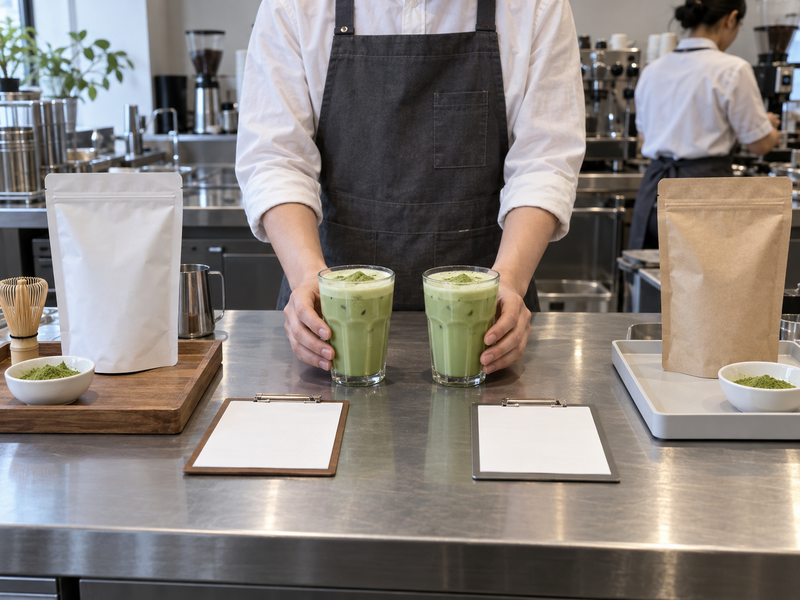
10. What makes the event worth repeating?
Judge both demand and execution
Set a short list of success conditions before opening: saleable drink count, wait-time range, ingredient cost, customer response and whether the team could maintain quality. Compare those conditions with the event record. A strong launch may justify another location; weak throughput may call for a simpler menu before spending on promotion. Ask staff what slowed them and what customers could not understand. Their observations should be tied to service periods and products rather than general impressions.
Close with a written event report that names recipe revisions, venue constraints, leftover stock and the next experiment. If the matcha powder came from a supplier, record its lot code and how it performed under rush conditions. Matcha Village’s company materials describe application selection and bulk supply; a pop-up still needs its own sample, price and service trial. Repeat the event only with a clear change or a clear reason that the present model can work again. That turns a temporary counter into a useful business test.
| Decision | Evidence | Next move |
|---|---|---|
| Demand | Paid orders by SKU | Keep or revise menu |
| Flow | Wait and error log | Change staffing |
| Cost | Stock reconciliation | Reprice or reduce waste |
| Safety | Venue and service record | Update controls |
FAQ
Q1: Should a pop-up start with many drinks? A focused menu is easier to train, stock and evaluate; add options when service can support them.
Q2: Who confirms permits? The venue and relevant local authority should confirm requirements for the proposed food operation.
Q3: How much matcha should be staged? Use a measured dose and a planning order range, then adjust from actual service data.
Q4: Can free samples be counted as sales? No. Track samples separately from paid orders and ingredient use.
Q5: What should a close report contain? Sales, stock, waste, queue observations, food-control issues and a next decision.
Final thought
Choose one purpose, confirm the venue and rehearse the small menu. Measure what happens during a real rush. A pop-up is valuable when the team leaves with a product and service decision it can use next time.