
Matcha jam is most useful to a bakery when it spreads cleanly, tastes of both fruit and tea, and behaves predictably in a pastry. Senbird Tea’s strawberry matcha jam gives a starting combination. A commercial trial needs tighter control of fruit, sugar, set and service conditions. A bakery can request matcha samples for its flavor trial. Treat this guide as a refrigerated bakery product-development plan; a shelf-stable preserve requires its own validated process.
Contents
- 1. What will the jam be used for?
- 2. Which fruit gives matcha room to appear?
- 3. How should sugar and acid be measured?
- 4. When should matcha enter the process?
- 5. What does a reliable set look like?
- 6. How should the batch be recorded and cooled?
- 7. How does the jam behave inside a pastry?
- 8. What storage and packaging decisions are needed?
- 9. How should yield and claims be checked?
- 10. What makes the recipe ready for service?
1. What will the jam be used for?
Choose the application before the recipe
A toast spread, a croissant filling and a plated yogurt topping need different textures. The toast spread should move easily under a knife without sliding off warm bread. A pastry filling must stay where it is piped and may need to withstand another bake. A topping can be looser if it is served in a bowl. Choose one primary application, then describe the acceptable texture and fruit-to-tea balance. Otherwise a batch may be called successful by one team member and too runny by another.
Set up a simple tasting with the actual food that will carry the jam. Matcha that seems faint on a spoon may become clear on plain toast, or disappear behind sweet pastry cream. Record the portion used per serving. The reference photo should show a measured spread or filled cut piece, not only a jar. A defined application makes later decisions about gel, fruit pieces, jar size and cost much easier.
2. Which fruit gives matcha room to appear?
Compare flavor and batch variation
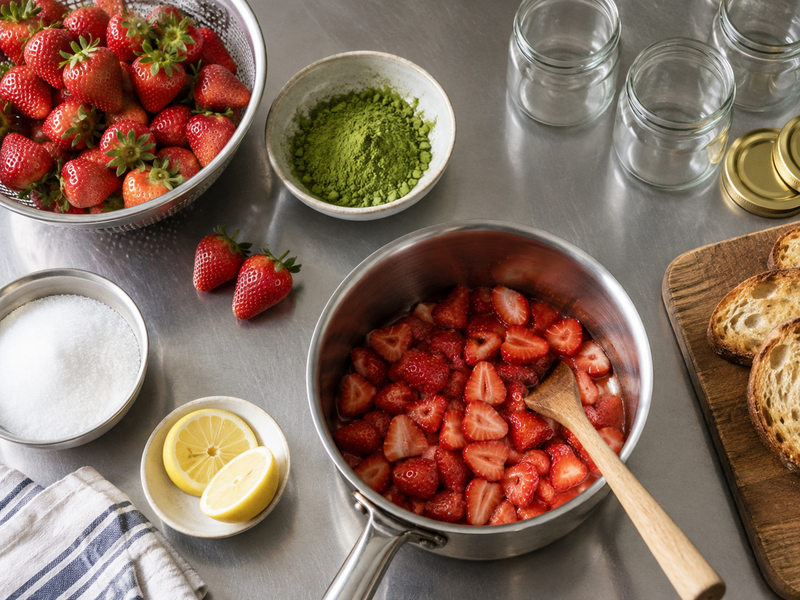
Strawberry is a natural first test because its tartness can sit beside matcha’s vegetal note; Senbird Tea uses that pairing. But strawberries vary in sweetness, water and ripeness. Taste the fruit before cooking and record whether it is fresh or frozen, whole or cut, and how much juice it releases. A fruit puree gives a smoother filling than large pieces, but it can change the way the mixture sets and spreads.
Trial fruit choices in small, equal-weight batches while holding matcha and sugar steady. A strongly flavored fruit can mask the tea; a mild one may leave the jam tasting mostly sweet. Do not claim that one fruit’s natural pectin will reliably replace a setting system in every batch without testing. If the product must have a consistent gel throughout the year, consider a documented formulation route with appropriate ingredient and process advice rather than relying only on seasonal fruit behavior.
| Fruit choice | Possible strength | Trial concern |
|---|---|---|
| Strawberry | Familiar tart-sweet base | Seasonal water variation |
| Raspberry | Clear acidity | Seeds and strong aroma |
| Peach | Soft flavor | May need careful set control |
| Mixed berries | Layered flavor | Harder to keep batches alike |
3. How should sugar and acid be measured?
Record the whole formula by weight
Sugar affects sweetness, texture and the final product’s properties. Lemon juice or another acid can change both flavor and gel behavior. Weigh fruit, sugar and acid; do not scale a commercial batch from “cups” without a controlled conversion. The tasting aim is a fruit-forward product where matcha remains distinct. More acid is not automatically better; too much can make the tea taste sharp and the pastry pairing unbalanced.
Keep a batch record that includes fruit lot, preparation loss, starting weight and cooked yield. If the operation uses a refractometer or pH meter, follow a documented method and have qualified staff interpret the readings. A pleasing spoon test is a quality check, not a substitute for process validation. Especially for a shelf-stable or sealed retail product, formulation and processing must be reviewed by a qualified authority for the specific recipe and package.
4. When should matcha enter the process?
Compare flavor after the jam cools
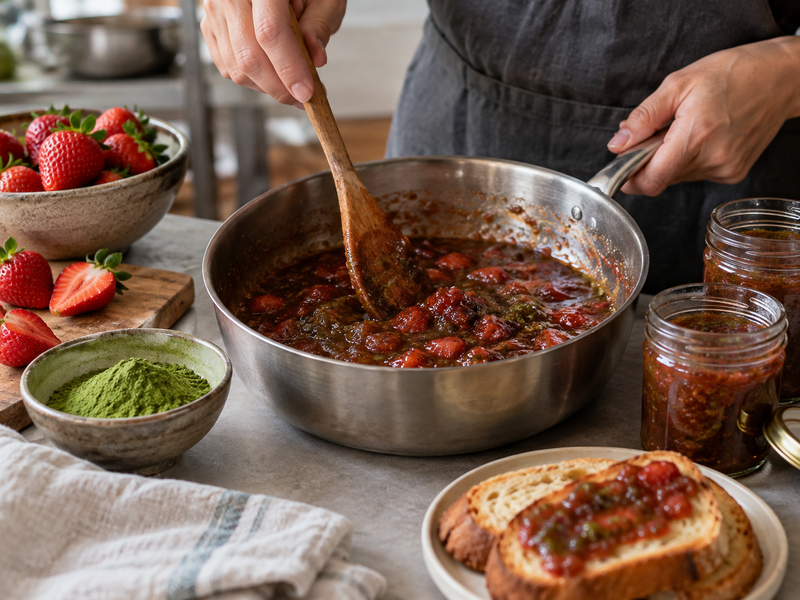
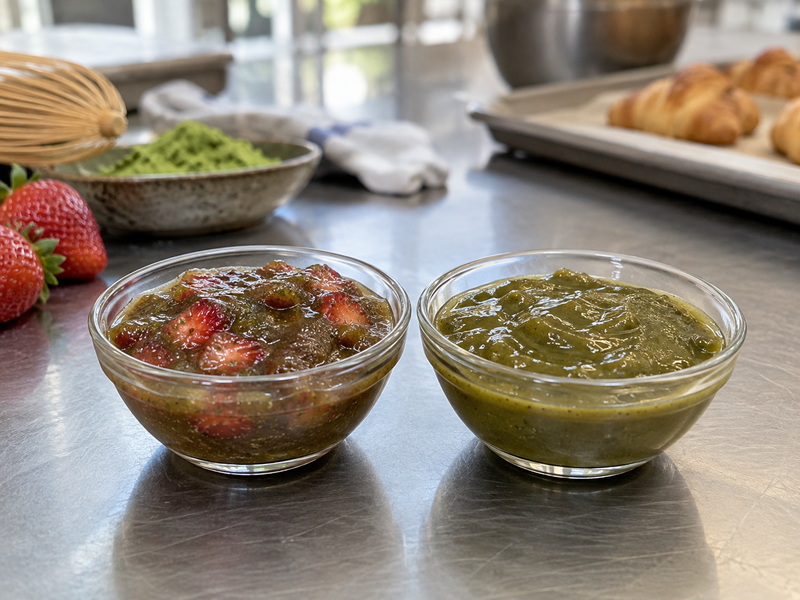
Sift matcha before adding it so dry pockets do not remain in a sticky fruit mixture. One trial can add it during cooking; another can add a prepared matcha slurry near the end under an appropriate process plan. Keep the matcha dose and base jam the same. Note color, aroma and any bitter or dull note after cooling. The best addition point is the one that gives even distribution and the desired flavor in the finished application, not merely the brightest color in the pot.
Matcha powder may thicken a mixture slightly or make a smooth jam appear speckled. Decide whether that appearance suits the product. Scrape the sides and bottom of the pan consistently so some portions do not carry more tea than others. Use a current supplier specification for origin, grade, ingredients and storage instructions. Matcha Village’s general company information does not establish the details of the particular powder in the trial.
| Addition trial | Keep fixed | Compare after cooling |
|---|---|---|
| Early addition | Fruit base and tea weight | Cooked flavor and color |
| Late addition | Fruit base and tea weight | Evenness and tea aroma |
| Tea slurry | Fruit base and tea weight | Clumps and added liquid |
5. What does a reliable set look like?
Test at serving temperature
A hot spoonful usually looks looser than the cooled product. Take small samples during cooking and assess them after cooling under the intended serving conditions. Define a practical endpoint: the jam should spread at the chosen portion weight, hold a line on toast or stay inside the pastry. A chilled plate test can help a baker judge a batch, but it should be calibrated against the full cooled product and written process. “Cook until thick” invites avoidable variation.
Track cooked yield as a clue to water loss. If one batch yields much less than another, its flavor may be concentrated and its cost higher even if both pass a quick spoon test. A wide pan, deeper pot and larger batch can evaporate at different rates. Confirm the formula in the actual production vessel before setting a fixed time. If set remains unpredictable, consult a qualified preserve formulation resource and use an approved ingredient system.
6. How should the batch be recorded and cooled?
Make the process traceable
Record starting ingredient weights, fruit lot, pan or kettle, heat process, matcha addition point and final filled weight. This lets the kitchen distinguish a flavor problem from a fruit change or evaporation difference. Write a clear cooling and transfer procedure under the operation’s food-safety plan. Label containers with the identity and batch information required by that plan. Do not mix remnants of two batches in one unmarked tub.
The FDA Food Code is a U.S. model for retail food operations; local rules and the specific ingredients determine handling. A jam for refrigerated bakery use is different from a validated shelf-stable canned product. Do not adopt a home recipe’s jar instruction or date period as the commercial specification. A cook can still usefully check quality at this stage: compare texture, color and tea flavor across samples drawn from different parts of the batch.
| Batch record field | Example evidence | Use |
|---|---|---|
| Fruit and matcha lots | Supplier labels | Traceability |
| Ingredient weights | Scale record | Repeatability |
| Cooked yield | Final weight | Set and cost comparison |
| Cooling and storage | Operation log | Handling control |
7. How does the jam behave inside a pastry?
Run a use test, not only a jar test
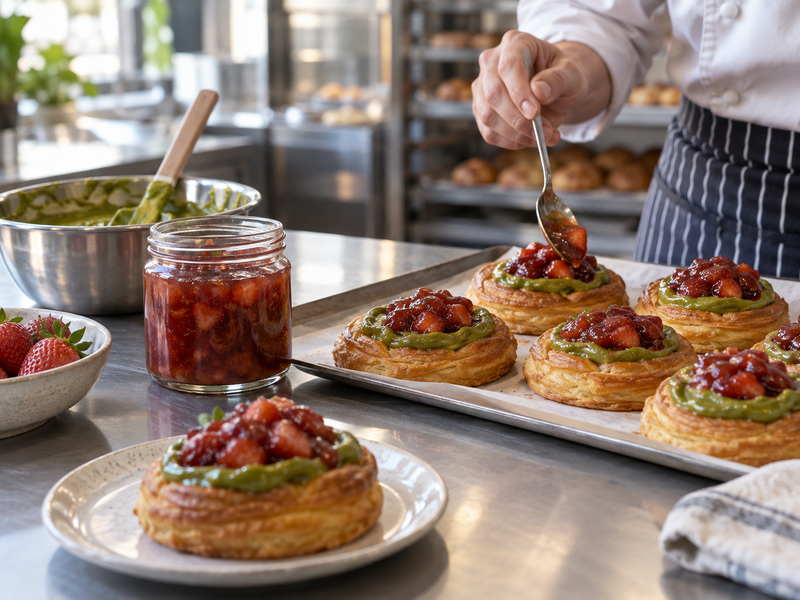
Pipe a measured amount into the target pastry and examine it immediately, after any secondary bake and at sale time. A spread that works on toast may run out of a croissant; a stiff filling may tear a tender crumb. Watch for moisture migration, color bleed and whether the matcha note survives the pastry’s butter or cream. Use at least two positions in the tray so the test includes both center and edge bake conditions if the jam is heated again.
If the product is paired with dairy cream, assess the combined flavor and the handling requirements of the assembled pastry. Keep the jam’s own quality window separate from the finished pastry’s storage plan. Record filling weight per piece and rejected pieces. A recipe that uses a little more matcha but much less filling per pastry may actually cost less while providing a clearer tea note; measure rather than guess.
8. What storage and packaging decisions are needed?
Use the intended route to market
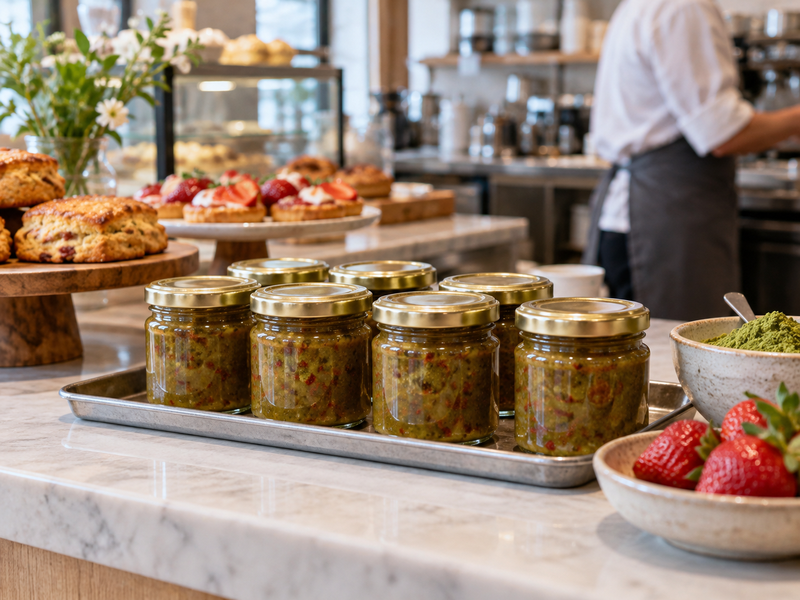
A jar for in-house pastry production, a deli tub for café service and a sealed retail jar have different requirements. For in-house use, choose a container that staff can label, open cleanly and use without repeated unnecessary handling. For a retail product, review packaging, label, process and shelf life with qualified advisers. The recipe’s sugar and acid levels, fill method and package all matter; a home blog’s storage period cannot validate another product.
Run a quality observation under the intended storage conditions, noting color, aroma, separation and spreadability. Those observations help determine whether the product remains appealing, but they do not establish microbiological safety. If the business cannot support a retail shelf-life program yet, keep the product as a controlled refrigerated bakery component. That is still a useful commercial product when portioning and service are well documented.
| Intended use | Pack question | Evidence needed |
|---|---|---|
| In-house filling | Can staff portion cleanly? | Use and handling trial |
| Café condiment | Does repeated service change quality? | Service observation |
| Sealed retail jar | Is process validated? | Qualified safety and label review |
9. How should yield and claims be checked?
Cost saleable applications
Divide total batch cost by actual usable jam weight, then by the measured portion per pastry or toast. Include fruit preparation loss, evaporation, matcha, sugar, labor and packaging. A darker jam may result from longer cooking and lower yield rather than a higher tea dose. Compare flavor and cost together. If the jam is sold in jars, account for fill variation and units rejected for poor seals or presentation under the approved process.
Build labels and menu copy from actual ingredients. Avoid unsupported statements about health, antioxidants, shelf life or “preservative-free” status. Check allergens in any added ingredients and in the finished pastry that carries the jam. The FDA major allergen guidance is a useful U.S. reference; sales-market rules govern the final disclosure. A simple line such as “strawberry jam with matcha” is often clearer than a promotional claim.
10. What makes the recipe ready for service?
Repeat the result with another fruit lot
Approve a formula only after a second batch meets the same application test. The final sheet should state ingredients by weight, fruit preparation, pan or kettle, matcha addition method, endpoint checks, cooled yield, container, handling instructions and portion per serving. Include a photograph of the accepted cooled texture on the actual pastry. Another baker should be able to make it without asking how thick “thick enough” means.
During a limited sale, note customer comments and any pastries rejected for leaks or poor appearance. “Too sweet,” “not enough matcha” and “runs out when warmed” require different changes. Keep the next test narrow. If the project aims to move from refrigerated bakery use to shelf-stable retail jars, start a separate validated process and label review. A good café jam is not automatically a safely canned preserve.
| Decision | Evidence | Next action |
|---|---|---|
| Use in bakery | Repeatable set and pastry behavior | Train and portion |
| Revise | One traceable flavor or texture fault | Controlled retest |
| Retail jar proposal | Process and pack review needed | Seek qualified validation |
FAQ
Q1. Can matcha be stirred into any fruit jam? It can be tested, but fruit strength, set and powder distribution all affect the result.
Q2. Why are there dark green specks? Matcha may be clumped or unevenly mixed. Sift it and trial a measured slurry.
Q3. Does a chilled plate test prove shelf stability? No. It gives a texture clue, while shelf stability needs separate validation.
Q4. Can the jam fill baked pastries? Test it in the actual pastry, at the planned fill weight and bake conditions.
Q5. How should the bakery choose fruit? Taste candidates with the intended pastry and assess batch consistency as well as flavor.
Start with two small, weighed batches using the same fruit lot and different matcha addition points. Their cooled texture and pastry performance will show which process deserves a larger trial.