
Matcha catechin content describes measured tea compounds on a stated analytical basis. Buyers need comparable reports before setting an ingredient target. Define the compounds, method and units used in each report. ISO 14502-2 describes HPLC determination of total catechins through the sum of individual catechins, providing a useful reference for laboratory discussions.
Table of contents
- What should matcha catechin content tell your buying team?
- Which individual compounds should the report name?
- How should you agree the laboratory method?
- Which reporting basis makes results comparable?
- How should sampling and extraction be documented?
- How should you read limits and unresolved compounds?
- What should matcha catechin content totals include?
- How should analytical results inform formulation trials?
- How should you set a supplier acceptance range?
- What belongs in the ongoing reporting agreement?
1. What should matcha catechin content tell your buying team?
Give the analytical request a purchasing purpose
Specify the decision that follows the report. Your team may need an ingredient profile for development, a comparison between candidate lots or evidence for a customer specification. Assign an owner who can explain how the result affects approval. Keep flavor, appearance and analytical composition in separate fields so one attractive result cannot substitute for another requirement.
A matcha catechin content request should identify the product code and application. Write the decision before selecting a test. If the finished product needs a particular analytical value, involve the laboratory and formulation team early. An ingredient assay alone does not establish the amount measured in a complex finished recipe.
Use research to frame questions rather than to set a universal supplier limit. A study of commercial tea products measured individual catechins using HPLC in prepared extracts. Its tested products and extraction conditions define those results. Ask your laboratory what evidence is needed for your own sample, method and intended procurement decision.
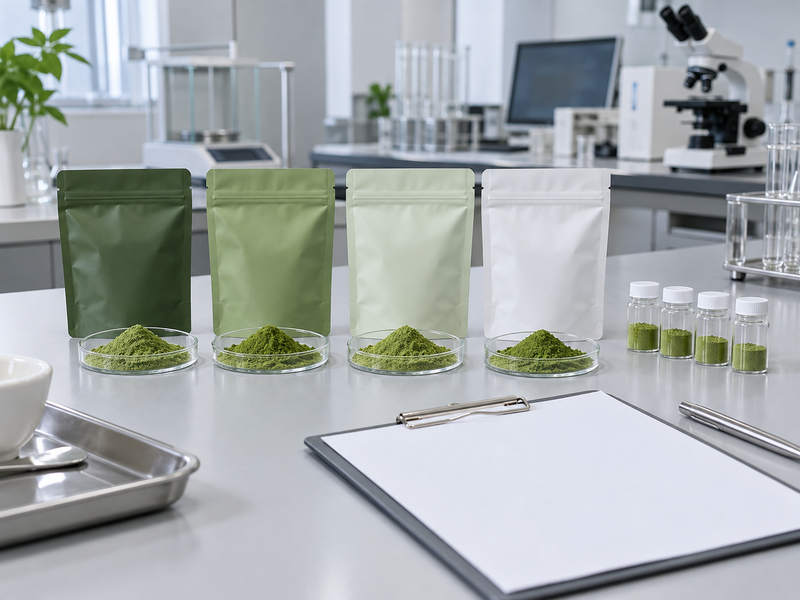
| Purchasing purpose | Requested evidence | Additional check |
|---|---|---|
| Compare powders | Named compounds on one basis | Lot identity |
| Develop a recipe | Ingredient analytical profile | Finished matrix method |
| Meet a customer request | Agreed assay and limits | Customer acceptance rule |
2. Which individual compounds should the report name?
Keep compound identities explicit
Ask the laboratory to list the analytes included in its procedure and spell out abbreviations at least once. EGCG and EGC refer to different compounds. Preserve the laboratory’s identification when entering results into purchasing worksheets. A column labeled “catechins” needs an explanation of whether it reports one compound, several compounds or an agreed total.
For matcha catechin content, agree which results your team needs individually. Keep each reported compound in its own field. Avoid a template that forces analysts to combine results simply because the buyer’s spreadsheet has fewer columns. If the method combines or cannot resolve particular compounds, the laboratory should describe that limitation on the report.
Ask development staff whether a named compound target has a supported purpose in this application. A long list of analytes can increase cost and distract from the actual requirement. Keep your request proportionate to the purchasing question. Do not treat an abbreviation, commercial grade name or regional origin as evidence that a delivered lot has a specified chemical profile.
3. How should you agree the laboratory method?
Compare procedure scope before comparing numbers
Request the method identifier, edition, laboratory procedure reference and matrix scope. Ask analysts to identify any modification. Keep their response with the specification. When a supplier provides a report from another laboratory, compare method references before ranking powders by the numerical result. Similar report layouts do not establish analytical equivalence.
A matcha catechin content assay should use a procedure suitable for the submitted powder. Confirm preparation and quantification with the laboratory. Request information about standards, calibration and quality controls sufficient for your technical owner to review. Buyers should avoid writing an unverified extraction recipe into a contract because it appeared in a scientific paper.
If buyer and supplier laboratories use different procedures, arrange a comparison using identified portions of the same sample. Ask the laboratories to interpret any difference. Procurement cannot resolve disagreement by averaging unlike methods. Document the approved procedure and retain the comparison report. This gives both parties a shared basis for later investigations and reduces arguments about which laboratory number counts.
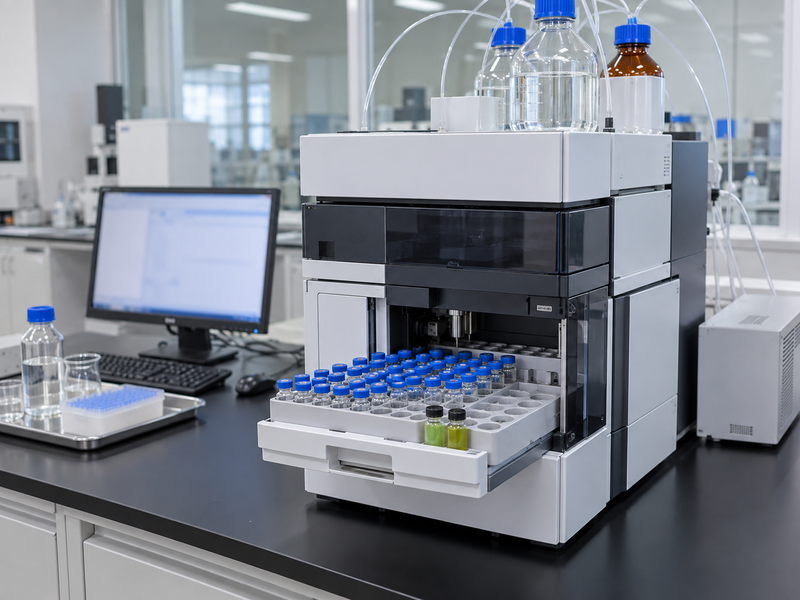
| Method detail | Supplier question | Review outcome |
|---|---|---|
| Procedure identity | Which method was used? | Comparable reference |
| Matrix scope | Is matcha powder covered? | Suitable application |
| Modification | What changed from the reference? | Technical assessment |
4. Which reporting basis makes results comparable?
Align units and moisture treatment
Choose concentration units and require a stated material basis. Results expressed per gram of powder cannot be compared directly with results per liter of extract. Record any dilution or conversion used by the laboratory. Preserve the original report so a later spreadsheet change cannot erase the meaning of the original result.
Matcha catechin content may be reported on dry matter or as-received powder. State that basis beside every concentration. Obtain compatible moisture information before converting between them. Ask the laboratory or technical owner to approve the conversion. A moisture figure from another lot or another date can introduce an unsupported assumption into the purchasing comparison.
Use one approved worksheet for supplier screening. Identify missing units, unclear bases and unexplained conversions as incomplete information. Request clarification before interpreting the number. Keep finished serving calculations in a separate worksheet linked to the current recipe. This prevents an ingredient concentration from appearing later as a claimed amount per bottle without dose, yield and matrix evidence.
5. How should sampling and extraction be documented?
Preserve the route from lot to analytical portion
Agree a sampling plan with quality staff. Identify containers sampled, collection procedure, sample mass and packaging. Record whether the submission is a composite or an individual container sample. Include the receipt and test dates. When results differ, this record helps establish whether both reports describe comparable material before anyone questions the supplier’s production.
For matcha catechin content, ask the laboratory to identify the extraction procedure within its method record. Keep the sample and extraction identities together. Extraction conditions belong to the analytical interpretation; they should not be mistaken for instructions on making the commercial beverage. Your finished product may need another suitable preparation method.
Store retained portions under agreed conditions when follow-up testing is foreseeable. Record access and handling. Do not repeatedly open a single sample for unrelated tests without tracking its condition. Give the supplier a clear submission instruction so replacement samples preserve the same lot identity. If a supplier sends a specially prepared development blend, document that fact before treating its result as representative of future orders.
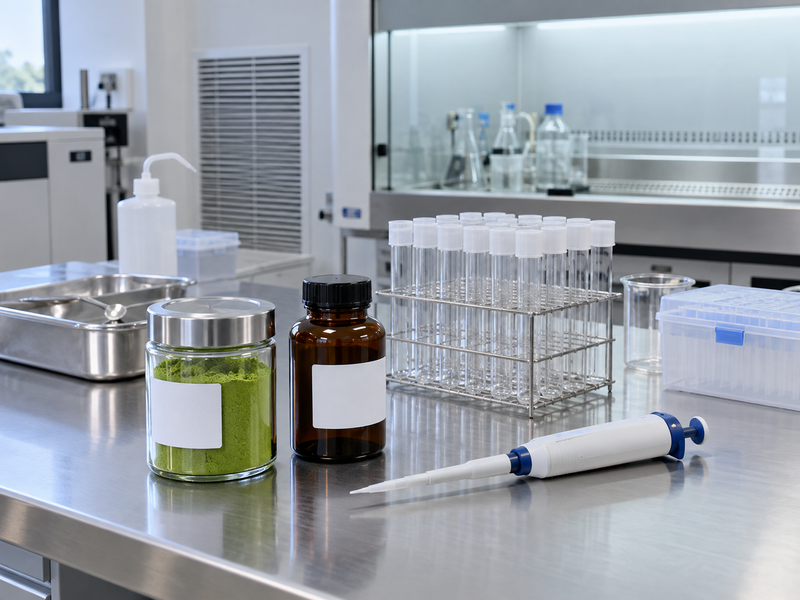
| Sampling record | Detail to retain | Investigation use |
|---|---|---|
| Container selection | Which bags contributed? | Define lot representation |
| Sample handling | Dates and storage | Review condition |
| Extraction reference | Approved procedure | Interpret assay basis |
6. How should you read limits and unresolved compounds?
Keep reporting qualifications visible
Ask what “not detected,” “below quantification” and any blank entry mean in that laboratory’s report. Obtain applicable limits and units. These expressions carry different information. Avoid replacing every qualified result with zero in a worksheet unless your technical team has approved that convention for a defined purpose and recorded its consequences.
A matcha catechin content report should preserve notes about unresolved or combined compounds. Read the footnotes before summing results. If a procedure reports two compounds together, keep that combined result intact. Do not invent a split or compare it with one isolated compound from another method. Ask the laboratory to explain how its report handles that situation.
Check uncertainty and repeat measurement information where the result affects a purchasing boundary. An extra decimal place cannot establish additional certainty. Agree rounding rules with the laboratory and specification owner. If a result lacks enough detail for a decision, classify the document as incomplete and request clarification. Keep the delivered lot under the site’s receiving procedure until the responsible quality owner approves disposition.
7. What should matcha catechin content totals include?
Approve the sum and its missing-value convention
Write the total definition in the specification. List the individual results included and identify whether the laboratory or buyer calculates the sum. Preserve the analyte list whenever a report uses “total.” Two totals can differ because their compound lists differ, even when both reports use identical units and powder basis.
For a purely illustrative example, suppose agreed analytes return 10, 20 and 40 milligrams per gram. Their arithmetic sum is 70 milligrams per gram. These invented values explain the operation and represent no matcha sample. Approve the total definition before calculating it. Keep any qualified, missing or combined result visible alongside the sum.
Request the laboratory’s treatment of results below its reporting limits. Ask technical staff whether that treatment fits your procurement decision. A total that silently excludes an unreported compound can create a misleading supplier ranking. Store the individual results with the calculated total so a later method or analyte-list change can be assessed without repeating the entire document collection exercise.
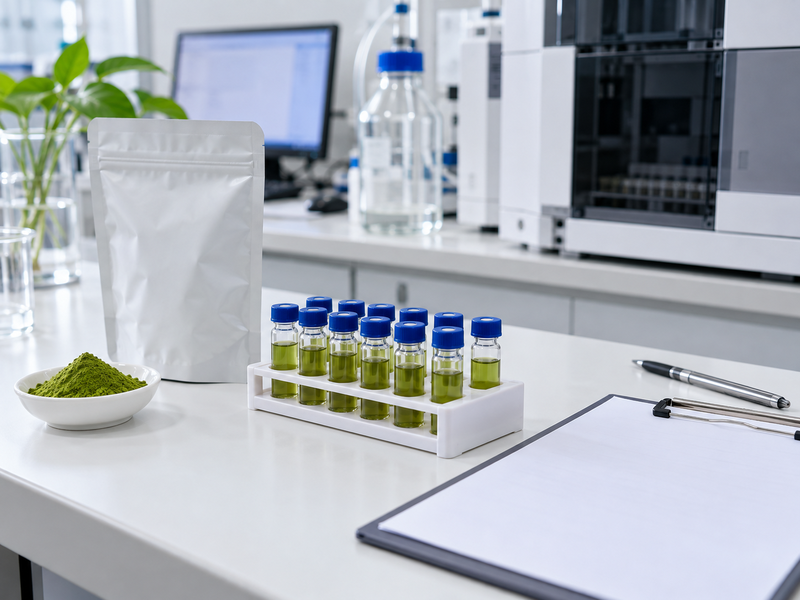
| Total field | Required explanation | Avoided error |
|---|---|---|
| Included analytes | Named list | Unlike totals compared |
| Qualified values | Laboratory convention | Missing result treated as zero |
| Calculation owner | Lab or buyer | Untracked spreadsheet sum |
8. How should analytical results inform formulation trials?
Test analytical and product requirements separately
Select candidate powders using the agreed assay, then test them in your actual recipe. Fix dose, mixing procedure and finished evaluation conditions. Record taste, appearance and texture separately from chemical composition. A favorable analytical profile cannot establish whether your beverage or food meets its sensory target at an acceptable production dose.
Use matcha catechin content to answer the analytical question identified at the beginning. Evaluate the finished matrix with a suitable method. Where a customer requires a finished concentration, obtain laboratory advice on preparation and recovery. Do not assume that multiplying the ingredient result by recipe dose establishes every finished analytical requirement.
Keep health language out of ingredient approval. An HPLC concentration measures compounds under a stated procedure; it does not establish a consumer health outcome. Give marketing and labeling staff the original reports and proposed wording for separate review. If they request a different kind of evidence, identify that requirement explicitly rather than stretching the ingredient assay beyond what it measured.
9. How should you set a supplier acceptance range?
Use the selected product’s evidence
Review several identified lots measured on the approved basis before setting a recurring purchasing range. Ask the supplier which lots and production arrangements its proposed range represents. Distinguish a product specification from a broad catalog value. Keep the supporting reports and any exclusions so technical staff can judge whether the range suits your application.
Matcha catechin content acceptance needs a documented decision rule for results near its boundaries. Agree what triggers review or retesting. Define who approves a result, what retained sample can be used and how disputed reports are compared. Repeating tests until one passes provides weak evidence and can hide an unresolved method or sampling issue.
Include sensory and other quality requirements alongside the analytical range. A supplier could meet a catechin target while failing the recipe’s color or texture requirement. Use the site’s certificate of analysis review as a related document check, then retain the application-specific acceptance criteria in this ingredient’s controlled specification. Keep numerical limits supported by your selected product and intended use.
| Acceptance element | Evidence to review | Agreement needed |
|---|---|---|
| Analytical range | Comparable lot reports | Product-specific limits |
| Boundary decision | Laboratory qualifications | Review rule |
| Method change | Comparison of procedures | Reapproval trigger |
10. What belongs in the ongoing reporting agreement?
Keep later deliveries on the approved basis
Include product identity, analytes, method, units, moisture basis, sample scope and reporting frequency. State whether the supplier provides routine lot results or periodic verification. Confirm the available service and its commercial terms. Procurement should avoid promising a current assay with every delivery unless that requirement has been agreed and supported in writing.
Require notification of method changes, blend changes or another product code. Define who reviews each change. Keep the previous basis available for comparison. Matcha catechin content figures from a revised method should receive technical review before replacing old values in product calculations or customer documents. Identify the effective date of every approved revision.
Ask Matcha Village about application samples and quality document support. Request the specific catechin assay required for your product and confirm laboratory scope. Send a controlled specification with the sample request. Use a trial order to verify document identity, report format and receiving decisions before applying the arrangement to recurring deliveries for the selected recipe and customer requirement.
FAQ
Q1: Is EGCG the same as total catechins?
EGCG is a named compound. A total requires a defined list of individual catechins and an agreed summation procedure.
Q2: Can unlike extraction methods be compared directly?
Ask the laboratories to assess comparability. Compare identified portions of the same sample when the purchasing decision requires it.
Q3: Does “not detected” mean zero?
It describes the laboratory’s detection result under its method. Preserve the qualification and obtain the applicable reporting limit.
Q4: Does a high assay result establish a health benefit?
No. An ingredient analytical result does not establish a consumer health outcome or authorize a health statement.
Q5: What should a supplier provide with a total value?
Request the analyte list, method, units, moisture basis, lot identity and treatment of qualified or missing values.
Send the supplier your analyte list and laboratory basis before requesting an offer. Obtain traceable samples, compare complete reports and test shortlisted powders in the finished recipe. Approve the selected ingredient only when analytical results and application performance meet their separate requirements, with a written rule for later reports and changes.