
Matcha Pocky can mean a current green-tea biscuit stick, a past seasonal flavor, or a snack idea a café wants to recreate in its own style. The differences matter. Product availability changes, recipes vary by market, and a homemade coated stick is not a Glico product. For retailers, the useful work is checking the current pack and its margin. For snack developers, it is designing a crisp stick with a coating that actually tastes of tea. These ten questions separate those decisions and keep the product description accurate.
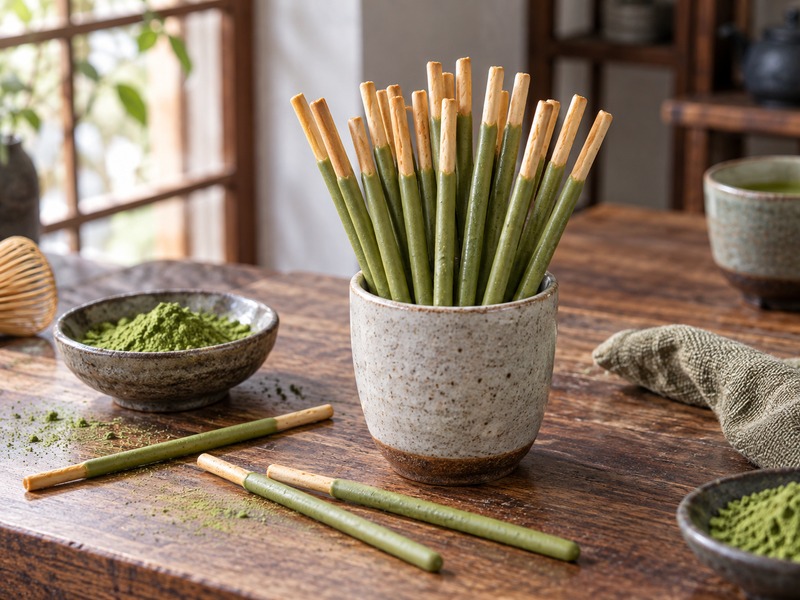
1. Which matcha Pocky product are you discussing?
Check the market and the date
Glico sells Pocky products in several markets, and flavors can be regular, regional, or seasonal. The current U.S. Pocky product page lists Matcha Green Tea as a product, while the ranked April 2025 Pocky Spring Series announcement describes Double Rich Matcha and Cherry Blossom Matcha as limited-time releases. A 2025 announcement is not proof that a seasonal pack remains available today. Confirm current stock, market, and pack with the brand or distributor before putting it in a promotion.
Use exact names in purchasing records. “Matcha Pocky” may be enough for a casual conversation but not for a reorder. Check box weight, units, market labeling, and whether the item is an import or the local U.S. product. If a café uses the sticks as a garnish, the pack size and freshness after opening matter. If a retailer sells sealed boxes, shelf placement and the supplier’s replenishment plan matter more than a garnish photo.
| Product type | Evidence to check | Practical risk |
|---|---|---|
| Regular U.S. Matcha Green Tea | Current official listing | Pack or formula changes |
| Seasonal 2025 flavor | Dated announcement | No current stock |
| Regional import | Market-specific label | Different ingredients |
| Homemade biscuit stick | Own recipe | Brand confusion |
2. What does the current U.S. label say?
Read the actual box before making claims
The official U.S. product listing describes a green-tea cream on a biscuit stick and publishes an ingredient and allergen panel. Its listed formula includes wheat ingredients, milk ingredients, soy lecithin, and green tea powder, and it declares wheat, milk, and soy. The listing is a useful reference, but the physical pack is authoritative for a buyer because formulations and pack sizes can change. Check it again when a shipment arrives.
Do not describe the snack as pure matcha or a low-sugar tea product because its identity is a sweet coated biscuit. Matcha contributes flavor within a larger formulation. If writing menu copy, say what the guest receives: a crisp biscuit stick with matcha-flavored coating, or a garnish made from a specific packaged product. Avoid borrowing nutrition values from a different market’s pack. Even two official regional listings may show different servings or formulations.
3. Why does the biscuit-and-coating balance matter?
Taste a full stick, not only the green cream
The sensory appeal comes from contrast: a crisp neutral biscuit inside and a sweet tea coating outside. If the biscuit is too thick, the coating tastes faint. If the coating is too heavy, the snack feels waxy or cloying. Break a stick and inspect coating thickness and coverage. Taste the first bite and last bite. A dusty green color can look promising while the matcha flavor disappears under sugar and fat.
For a developer making a separate unbranded snack, test several coating levels on the same stick. Record grams of coating per stick, breakage, and whether the uncovered handle remains easy to hold. A coating that tastes good fresh may bloom, soften, or scuff during transport. Run the test in the intended package and temperature range. A product is not ready just because it looks like a green stick on a bench.
| Feature | Good test | Failure sign |
|---|---|---|
| Biscuit snap | Bite after storage | Soft or stale center |
| Coating | Weigh per stick | Uneven, thick layer |
| Tea flavor | Blind full-stick tasting | Only sugar noticed |
| Handle | Hold without mess | Coating melts on fingers |
4. How can a café use the snack without confusing guests?
Make garnish value explicit
A Pocky stick can add crunch and a recognizable visual line to a matcha dessert or drink. It should be an intentional component, not a cheap decoration that becomes soggy before the guest eats it. Test the time between assembly and handoff. A stick placed into cold foam may soften, while one served alongside can stay crisp. Check whether the garnish fits the cup or plate and whether a lid can close without breaking it.
Name the branded ingredient only if the café actually uses that branded item and has reviewed its usual marketing practice. If the stick is an in-house matcha-coated biscuit, call it that. Train staff to answer allergen questions; the official U.S. Matcha Green Tea Pocky listing identifies wheat, milk, and soy. A drink that was previously presented as dairy-free may no longer be so when a branded snack is added. Garnish decisions need ingredient review as much as flavor review.
5. What should a retailer check before stocking it?
Look at turnover and shipment condition
Confirm the exact SKU, case pack, minimum order, shelf life at receipt, storage instructions, and return policy. Ask the distributor whether the item is a regular U.S. product or a limited seasonal batch. A dated press release is not a purchase order. On arrival, inspect boxes for heat damage, crushed sticks, and readable labels. Snack coating can suffer in warm storage and transit even when the outer carton looks intact.
Place the product where shoppers looking for Japanese snacks or matcha treats can find it, then measure sell-through rather than relying on social media enthusiasm. A small first order can reveal whether the local audience prefers regular matcha or a seasonal flavor. Keep a record of the pack and the price per box so the next reorder matches. If importing, check market-specific regulatory and label requirements before sale rather than assuming a familiar brand name covers them.
| Retail measure | Calculation | Decision use |
|---|---|---|
| Landed cost | Product plus shipping | Minimum price |
| Sell-through | Units sold per week | Reorder size |
| Breakage | Damaged packs per case | Supplier claim |
| Shelf life | Days remaining at receipt | Promotion timing |
6. Which allergens should staff know?
Use the current pack, not memory
For the U.S. Matcha Green Tea product, the current official listing declares wheat, milk, and soy and notes possible tree nut and peanut contact. Those statements are product-specific and can change. FDA guidance urges consumers to read the full ingredient label for allergens. A café using the snack as a topping should keep the current box or verified product sheet available to staff. A retailer should ensure the sold pack carries the required information for its market.
Do not answer “it’s just matcha” when a guest asks about milk or wheat. The coated biscuit is a formulated confectionery item. If the café develops its own coated stick, the allergen profile may differ, but it still needs full ingredient and cross-contact review. A vegan or gluten-free claim should never be inferred from green tea powder alone. Precise staff information can prevent a garnish from changing the meaning of the whole menu item without anyone noticing.
7. How should a homemade version be named?
Keep brand and product development separate
Pocky is a brand. A bakery can make matcha-coated biscuit sticks, but packaging them as “Pocky” or copying brand design can imply a relationship that does not exist. Use a clear descriptive name for an independently developed product. An article can answer a search for matcha Pocky while explaining how the format works and linking to the official product. A homemade formula should stand on its own flavor and texture rather than borrowing a name as the main selling point.
If a café buys official Pocky for a dessert, record the exact SKU and the number of sticks per serving. If it makes a house biscuit, create separate purchasing, label, and cost records. This distinction also helps with quality control: packaged snack sticks arrive with a manufacturer specification, while the house version needs a validated process. A customer should know whether the stick is branded, imported, or made by the bakery.
8. What matcha powder works in a coating?
Taste after it meets fat and sugar
An oil-based or chocolate-style coating changes how tea tastes. A delicate powder may become hard to detect, while a harsh one may leave bitterness after the sweet coating melts. Test several current-lot powders at a fixed dose, then adjust the preferred candidate. Record color and flavor after setting and after a short storage period. The same powder may perform differently in a latte, so do not choose it on a drink tasting alone.
Ask suppliers for identity, lot, pack size, storage guidance, and price. The Matcha Village site is one place to begin a tea-sample request; the decision should use the finished coated stick. Include the cost of coating waste and rejected sticks. A bright green coating with no tea flavor is not a strong matcha product. A slightly softer color with a clear tea finish may be more credible and enjoyable.
| Tea trial | Hold constant | Judge |
|---|---|---|
| Powder A | Coating formula | Aroma and aftertaste |
| Powder B | Coating formula | Color and bitterness |
| Chosen tea | Storage condition | Flavor retention |
| New lot | Same recipe | Consistency |
9. How should storage and display be tested?
Protect snap and coating
Biscuit sticks are fragile and the coating can soften in heat or take on moisture. Follow the manufacturer’s pack directions for purchased snacks. For a house product, test packaging under realistic transport and display conditions. Check snap, scuffing, coating appearance, and flavor at the beginning and end of the proposed sale window. A clear bag can show off green sticks but may offer less protection from light or damage than another package.
Avoid leaving an open box at a busy garnish station without a procedure for closing, dating, and rotating it. The first stick may be crisp while the last is stale. Staff may also break sticks while reaching into a narrow container. Choose a vessel that protects the product and allows clean handling. A small service trial can reveal more about waste than a desk calculation. Packaged snacks still need routine inventory control, especially if flavors are seasonal.
10. What should the buying or development decision include?
Choose one route and measure it
For a retailer, decide whether the verified official SKU fits the audience, margin, and supply. For a café, decide whether a branded garnish improves the menu item enough to justify cost and allergen changes. For a snack developer, decide whether a separate unbranded stick can deliver recognizable tea flavor and protected crunch. Those are different decisions, so use a different trial sheet for each. Record the actual product, not the broad phrase “matcha Pocky.”
Review the result after launch. Are customers buying the box again, eating the garnish, or noticing matcha in the house coating? Check breakage and stale inventory. If the product underperforms, identify whether the problem is flavor, price, placement, or supply. The official snack can be a useful benchmark for a category, while a new biscuit stick should be judged on its own merits and described honestly.
| Route | Success signal | Review |
|---|---|---|
| Retail box | Sell-through and repeat buy | Weekly |
| Café garnish | Guest response and low waste | Service trial |
| House stick | Flavor, snap, margin | Batch and shelf test |
| Seasonal stock | Sell-out before expiry | Campaign end |
FAQ
Is matcha Pocky sold in the United States?
The official U.S. Pocky site currently lists Matcha Green Tea. Check a current retailer or distributor for local stock and the exact pack available.
Are Double Rich Matcha and Cherry Blossom Matcha permanent flavors?
The official April 2025 announcement described them as limited-time spring products. Do not assume they remain available without checking current listings.
Does matcha Pocky contain milk or wheat?
The current U.S. Matcha Green Tea listing declares wheat, milk, and soy. Read the actual pack because formulas can differ by market or change over time.
Can I make my own matcha Pocky?
You can make matcha-coated biscuit sticks. Give an independently made snack its own descriptive name rather than implying it is an official Glico product.
What should a café check before using it as a garnish?
Test crunch after handoff, portion cost, lid fit, and the snack’s ingredient and allergen statements. Use the exact product that will be served.