
Iced Dubai chocolate matcha combines several rich ideas in one cup: green tea, pistachio, chocolate, and a dessert-like finish. It can be memorable when each flavor has space. It can also become a costly sweet drink in which the matcha disappears beneath foam. Starbucks introduced an official version in 2026, and home recipes have followed. A café developing its own interpretation should begin with the actual guest experience rather than copying a photograph. These ten questions help test the build, ingredients, allergens, and service cost before adding it to a menu.
1. What is the drink’s core promise?
Define which flavor should lead
The official Starbucks Iced Dubai Chocolate Matcha page describes an iced matcha latte with pistachio sauce, chocolate cream cold foam, and a salted brown-buttery topping. The ranked home copycat recipe gives a kitchen interpretation. Neither requires an independent café to use the same formula. A house drink can emphasize tea, pistachio, chocolate, or crunchy dessert texture, but it should state the choice clearly.
Write one sentence for the intended cup. For example: “A tea-forward iced latte with a measured pistachio note and a light chocolate foam.” That sentence becomes the standard against which every topping is judged. If a trial tastes like chocolate milk, it may still be enjoyable, but it is not delivering the tea-forward promise. Photograph the cup after normal handoff time, then taste through the layers with and without a straw. Appearance and drinking experience should support the same menu description.
| Style | Leading flavor | Main risk |
|---|---|---|
| Tea-forward | Matcha | Toppings mask tea |
| Pistachio-forward | Nut sauce | Excess sweetness |
| Dessert-forward | Chocolate foam | Heavy finish |
| Balanced | All three | Complex service |
2. How much matcha survives the toppings?
Taste the finished cup, not the shot
Make the base iced matcha latte first and choose a tea dose that tastes good with the intended milk. Then add pistachio, foam, and topping one at a time. This staged tasting shows exactly where matcha flavor gets lost. A vivid green layer can mislead; color does not prove that tea remains noticeable after a large chocolate cap. Use measured grams of powder and record the final cup volume after ice. The same dose tastes weaker in a larger drink.
Compare current-lot teas in the complete build. An expensive powder may offer little benefit after chocolate and pistachio, while an assertive culinary tea may remain clear. Taste with a straw and without one because the guest may sample different layers in a different order. If the matcha vanishes, consider reducing sauce or foam before simply adding more tea. A heavier tea dose can raise cost and bitterness without solving a badly balanced recipe.
3. What should the pistachio component be?
Read the ingredient statement
Pistachio syrup, pistachio paste, and a dessert cream are not interchangeable. Syrup disperses easily but may deliver mainly sweetness. Paste can carry stronger nut flavor and more fat, yet may separate in a cold cup. A cream can add body and dairy. Ask for the full ingredient, allergen, and storage information from each supplier. Trial at the intended dose and service temperature. A sauce that tastes excellent from a spoon may form clumps at the bottom of an iced latte.
Pistachio is a tree nut and a major allergen source. The FDA’s food allergy guidance makes ingredient and cross-contact review essential for a packaged product, and cafés need accurate information for guests. If a “pistachio” syrup contains no pistachio, describe it honestly and check the formulation. A menu should not create an expectation of real nut content that the ingredient does not meet. The selected component must satisfy flavor, mixing, cost, and disclosure together.
| Component | Flavor potential | Service issue |
|---|---|---|
| Pistachio syrup | Variable | Easy but sweet |
| Pistachio paste | Stronger nut note | Separation risk |
| Pistachio cream | Rich and dessert-like | Dairy and sweetness |
| Nut-free flavor | Different claim | Menu wording |
4. How should chocolate foam be made?
Keep it stable without making it heavy
Chocolate cold foam should sit on the drink long enough for handoff and the first few sips, then blend pleasantly as the guest drinks. A very thick cap may block the straw or leave most chocolate until the end. A thin foam may collapse before the cup is photographed. Test the exact milk or cream base, cocoa or sauce, frother, batch size, and hold time. Weigh the foam portion per cup. A few extra grams on every drink can change both sweetness and margin.
If the foam is made in advance, establish its food safety and quality handling plan. Do not assume a dairy foam can sit out because it is intended for a cold drink. Check whether cocoa particles settle or the foam separates in the service container. A plant-based foam may work but needs its own trial and accurate menu description. The guest should perceive chocolate as one layer of the drink, not a blanket that erases tea and pistachio.
5. Does the topping add anything after five minutes?
Test texture at handoff and later
Dubai chocolate-inspired desserts are often associated with a contrast between chocolate, pistachio, and crisp pastry. A drink can reference those flavors without reproducing every element. If a crunchy topping is used, check how quickly it softens on foam and whether it creates a mess under the lid. A salted crumb may sharpen the chocolate; too much can make the last sip gritty. Keep the topping measured and describe it accurately.
Run a five-minute and ten-minute hold test. Photograph the top, lift the lid, and take a normal sip. A topping that is crisp only in the first few seconds may be better served alongside the cup. A garnish is optional if the base drink already carries the concept. Removing one weak component can improve throughput and reduce allergens, waste, and cost. Do not add pastry simply because a social photo of a chocolate bar features it.
| Topping choice | Benefit | Test |
|---|---|---|
| None | Fast service | Does drink feel complete? |
| Salted crumb | Contrast | Texture after hold |
| Pistachio pieces | Visible nut cue | Allergen and lid fit |
| Chocolate shaving | Aroma and visual | Melting and mess |
6. How can the iced layers stay attractive?
Build for the actual cup and ice
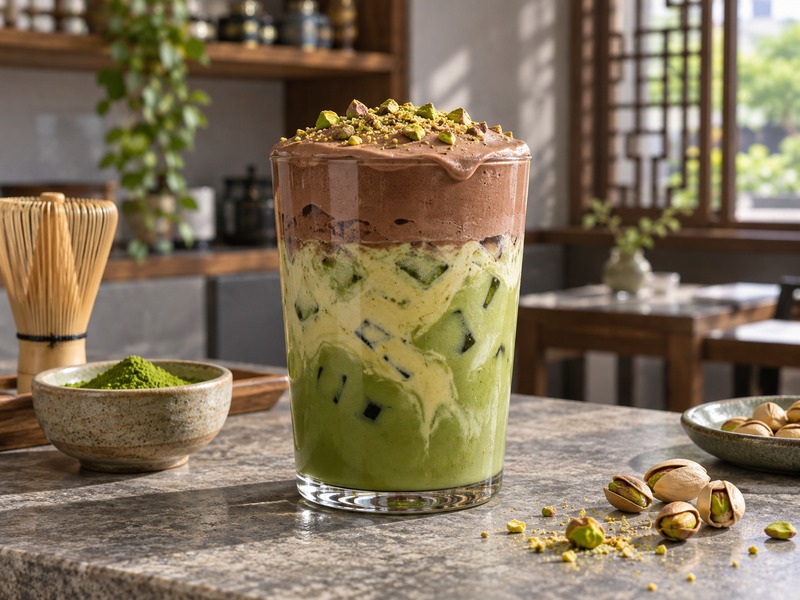
Layering depends on density, pour order, ice size, and cup shape. A photogenic separation may disappear after a few minutes, which is normal if the drink is meant to be stirred. Decide whether guests should mix the cup before drinking. Test the normal lid, straw, and handoff route. A tall clear cup may show green, pale pistachio, and brown foam beautifully but be awkward in a delivery bag. A short glass may mix sooner yet deliver a better flavor balance.
Measure the ice mass, milk volume, matcha concentrate, pistachio component, and foam. Make the drink at normal bar speed rather than carefully spooning every layer during development. If the build takes too long, simplify. A customer values a good drink more than a layer that survives only for a photograph. Include an honest menu image taken at typical handoff time, not just the first second after assembly.
7. How sweet is the full recipe?
Count every sweet component
Pistachio sauce, chocolate foam, flavored milk, and a crumb topping may each add sugar. A barista may think the base matcha is unsweetened while the finished drink is a dessert. Taste a complete cup at the planned portion and offer a lower-sweetness trial. If removing one pump or reducing foam improves tea flavor, the recipe may become both better and less costly. Do not equate “contains matcha” with a low-sugar drink.
For packaged products, review nutrition and ingredient labeling for the exact formula. The FDA explains how added sugars appear on Nutrition Facts labels. For a café, train staff on which components can be reduced and which cannot without rebuilding the drink. A “less sweet” option that still carries the same large chocolate foam may not satisfy the customer. Record the standard dose so the menu promise has a real operational meaning.
8. Which allergens and cross-contact points matter?
Review the whole build
Pistachio brings a tree nut issue. Milk may be present in the latte, foam, chocolate, or pistachio cream. A crunchy topping may contain wheat, sesame, or other ingredients depending on its recipe. Review supplier statements and the actual pack for every component. If a customer requests a plant-based milk, that does not necessarily make the full drink dairy-free when the foam remains dairy-based. Staff need a clear component list and a way to explain available substitutions.
Separate utensils and clean equipment according to the café’s allergen procedure. A shared frother or topping spoon can create cross-contact. A claim that a version is nut-free requires more than omitting the visible pistachio pieces if a pistachio sauce remains in the cup. Maintain version control as ingredients change. The most attractive layered drink is a poor menu item if the team cannot answer basic ingredient questions.
| Component | Possible allergen | Verify |
|---|---|---|
| Pistachio sauce | Tree nut, possibly milk | Supplier label |
| Chocolate foam | Milk, possibly soy | Full formula |
| Crumb topping | Wheat, nuts, sesame | Recipe and handling |
| Base milk | Milk or plant allergen | Exact carton |
9. What will it cost and how long will it take?
Measure during a busy shift
Calculate tea, milk, pistachio, foam, topping, cup, lid, labor, and waste per drink. A specialty build can command a higher price, but it also adds prep stations and cleaning. Time three consecutive drinks during a normal service simulation. Note whether one component causes a bottleneck. If the foam must be remade often or pistachio paste needs constant stirring, the real cost exceeds its ingredient price.
Ask matcha suppliers for current-lot samples and consistent delivery. The Matcha Village site is one place to start a tea inquiry; compare powders in the finished dessert drink. A tea that requires fewer grams for a clear flavor can offset a higher unit price. Set a measured build and audit a few staff-made cups. The difference between one and two sauce pumps can be significant across a full day.
10. When is a house version ready to launch?
Run a small pilot with a clear name
Test the drink with people who like matcha and people who like chocolate desserts. Ask which flavors they can identify, whether it is too sweet, and how the cup drinks after several minutes. Run a service trial with the actual staff and equipment. Confirm ingredient information, portion cost, presentation, and handoff time. A house version should be named as the café’s own interpretation rather than suggesting it is Starbucks’ proprietary recipe or an official collaboration.
The official Starbucks product is a useful market reference, and the ranked copycat article shows a home interpretation. Your café’s cup should succeed on its own terms. If the tea is lost, reduce the other layers. If pistachio is faint, change the ingredient rather than only adding more sweetness. If the topping slows service without improving the sip, remove it. Record the winning build and review it after the first weeks of sales.
| Launch gate | Evidence | Action if weak |
|---|---|---|
| Flavor | Blind tasting notes | Rebalance layers |
| Service | Timed drink build | Simplify steps |
| Ingredients | Allergen review | Correct menu copy |
| Margin | Real portion costs | Adjust price or dose |
FAQ
Is iced Dubai chocolate matcha an official Starbucks drink?
Starbucks lists an Iced Dubai Chocolate Matcha on its official menu. A café’s similar drink should be described as its own version unless an actual partnership exists.
What flavors are in the drink?
The common profile combines matcha, pistachio, and chocolate. The official Starbucks description also mentions a salted brown-buttery topping; house recipes can differ.
Does it contain nuts?
A version made with real pistachio does. Read the exact sauce and topping labels, and review cross-contact before answering an allergy question.
Can the drink be less sweet?
Often yes, by reducing a measured sauce or foam component. Test the complete lower-sugar cup so the matcha, pistachio, and chocolate remain balanced.
How can a café keep the layers visible?
Use a tested pour order, consistent ice and cup, and a foam that holds briefly. Judge the cup after normal handoff time rather than immediately after assembly.