
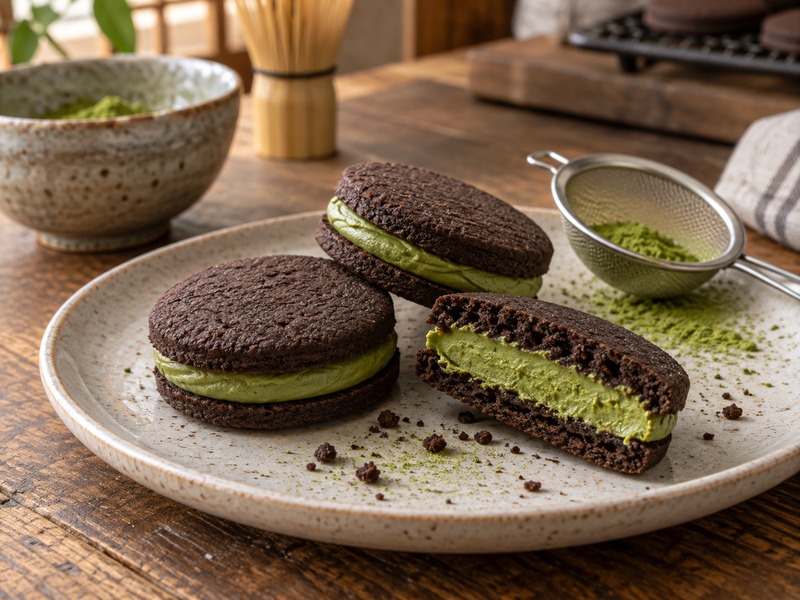
People searching for matcha Oreos may want a packaged flavor, a homemade recipe, or a bakery cookie with green tea cream between dark chocolate wafers. Those are different products. A café or bakery can build a compelling sandwich cookie, but it should be clear about which cookies and filling it actually uses. Tea flavor, wafer texture, storage, and allergens matter more than a green center in a photo. These ten checks help turn a familiar snack idea into a repeatable bakery item without implying that a homemade cookie is an official branded release.
1. What does “matcha Oreos” mean in this recipe?
Define branded and homemade versions separately
An Oreo is a branded sandwich cookie. A bakery may use purchased Oreo cookies as an ingredient, or it may bake its own dark cocoa wafers and use “matcha sandwich cookie” as the product name. Those choices affect ingredients, cost, labeling, and how the item is described. Do not suggest a homemade cookie is an official Oreo product. If a menu uses a brand name to describe an ingredient, make sure the actual ingredient and commercial description support that use.
The ranked Rishi Tea matcha Oreos recipe uses chocolate wafers with a matcha, cream cheese, butter, and confectioners’ sugar filling. It is an example of the homemade idea rather than evidence of a current packaged Oreo flavor. A bakery can trial that flavor pairing and then decide whether to use purchased wafers or develop its own. Write that decision on the recipe card before ordering a large amount of tea.
| Product route | What is made in-house? | Main check |
|---|---|---|
| Branded cookie variation | Added filling or garnish | Actual branded ingredient |
| Homemade sandwich cookie | Wafers and filling | Texture and naming |
| Purchased plain wafers | Filling and assembly | Wafer specification |
| Retail packaged cookie | Full product | Label and shelf-life validation |
2. What should the matcha filling taste like?
Let tea survive the sugar
The filling should taste like matcha after a bite of cocoa wafer, not merely look green. Cream cheese can add a tangy note; buttercream offers a richer, sweeter profile; a white chocolate base brings its own flavor and handling requirements. Make a small panel of fillings with a fixed tea amount, then taste each inside the same wafer. A filling that tastes balanced by the spoonful may disappear when enclosed between two dark cookies.
Choose a target sweetness and tea finish. A sharp, astringent filling can clash with dark cocoa, while an overly sweet one makes the whole cookie one-note. Taste at serving temperature, because refrigeration can firm fat and mute aroma. Ask tasters to judge the first bite and the aftertaste separately. A clear tea note at the finish is often more persuasive than a neon-green center produced by adding ever more powder.
3. How much matcha should go into the cream?
Measure against each finished cookie
Start with two or three small tea doses, using grams per 100 grams of filling. Then calculate how much filling goes into one cookie. This gives the actual tea dose per serving and the cost of the matcha. A scoop that looks generous can vary widely between staff members. Use a piping tip or measured depositor, then weigh a few assembled cookies to test consistency.
Sift matcha before mixing so dry green specks do not remain in the cream. Test current-lot tea samples. A powder suited to plain drinking may be costly without showing an advantage in a sweet cocoa cookie; a lower-cost culinary powder may need a larger dose or taste harsh. Compare finished cookies at matched tea flavor, not just equal grams. The winning powder should provide recognizable flavor, acceptable color, and dependable supply.
| Trial | Change | Judge |
|---|---|---|
| Control | No matcha | Base filling flavor |
| Low tea | Small dose | Is tea noticeable? |
| Medium tea | Moderate dose | Balance with cocoa |
| High tea | Upper test | Bitterness and cost |
4. Which wafer texture works with the filling?
Check bite and moisture transfer
A very crisp wafer can snap cleanly at assembly but soften after sitting against a moist cream. A soft cookie may be pleasant immediately yet become sticky in packaging. Decide whether the item is sold within hours, refrigerated overnight, or shipped. Test the exact holding condition. The ideal wafer depends on the filling’s moisture and the intended eating experience. A thicker cream layer can also make a thin wafer slide or break when the customer bites.
Make three assembled samples and taste at different times under the approved storage plan. Record crispness, filling movement, appearance, and whether the green cream bleeds onto the dark wafer. If using purchased cookies, verify consistency from the actual supplier and keep the ingredient and allergen information. If baking wafers in-house, standardize diameter and thickness before fine-tuning the filling. A beautiful first cookie is not enough if the last cookie in the case is soggy.
5. How should the filling be mixed and piped?
Control temperature and portion
Bring ingredients to a tested workable temperature so the filling mixes smooth without becoming runny. Cream cheese and butter can form lumps when their temperatures differ too much. Sift confectioners’ sugar and matcha as needed, scrape the bowl, and check the color at the bottom. Use a measured piping bag or depositor. The recipe should state target fill weight and how close to the edge the cream should reach before the top wafer is pressed on.
Test assembly with normal staff speed. If the filling is too stiff, wafers crack under pressure; if too soft, cookies slide in the box. A short chill may help some formulations, but it also affects texture at sale. Keep a tray-level record of yield and broken pieces. Do not rescue a poor filling by adding unmeasured milk or powder on the line. Make the adjustment in development, then lock the production specification.
| Production point | Record | Failure sign |
|---|---|---|
| Mix | Ingredient temperature | Lumps or oiling |
| Pipe | Filling grams | Uneven cookies |
| Press | Finished diameter | Cracked wafer |
| Pack | Time and temperature | Sliding or condensation |
6. What allergens are in the finished cookie?
Read every component label
Chocolate wafers often contain wheat and may contain soy, milk, or other ingredients. Cream cheese and butter bring milk. The FDA advises reading the entire ingredient list for major allergens. A bakery should not infer the final allergen set from the matcha powder alone. Record every wafer, filling, garnish, and shared-equipment concern in the recipe file. A supplier swap can change the allergen statement even if the cookie looks identical.
For packaged sale, have the label reviewed for the intended market and actual formula. For counter service, staff need access to accurate ingredient information and a cross-contact procedure. A “dairy-free matcha Oreo” claim would be wrong for a cream-cheese filling. A gluten-free claim needs checking the wafer and the production environment. Clear descriptions protect customers and save staff from guessing at the counter.
7. How should cookies be stored and sold?
Let the filling determine the handling plan
A cream-cheese filling has different storage needs from a low-moisture commercial cookie cream. Do not assign the shelf life of an unopened packaged cookie to a homemade filled item. Establish a recipe-specific refrigeration and sale window under the bakery’s food safety plan. Keep assembled samples in the exact box or display condition and check whether moisture softens the wafers. A product that must be refrigerated may taste different when eaten cold, so taste it as the customer will.
If a retail pack is planned, use appropriate shelf-life and microbiological validation rather than a home recipe’s comment section. Packaging can protect from breakage but trap condensation. Set a rule for damaged, warm, or out-of-date items. It may be better to assemble in smaller daily batches than to make a large tray that loses its crisp bite. Commercial success depends on the last sale of the day, not only the first sample after piping.
8. How should a bakery name the cookie?
Describe the actual product
If it is a homemade cocoa sandwich cookie, call it that and mention matcha cream. If a purchased branded Oreo cookie is genuinely used, the menu can explain the component accurately, subject to the business’s usual brand and legal review. Do not place an unrelated brand mark on a homemade package or imply collaboration with a company that has not authorized one. A clear product name helps customers know what they are buying and avoids disappointment when the shape or texture differs from a packaged Oreo.
The query “matcha Oreos” is useful for understanding search intent, but a search term is not automatically the right product label. An article can answer the query while a bakery menu says “matcha chocolate sandwich cookie.” Show the cut cookie and describe whether the filling is cream cheese, buttercream, or another base. A customer who loves a tangy filling may choose differently from one expecting the familiar sweet packaged center. Honest specifics sell better than an ambiguous green picture.
| Wording | Use when | Avoid when |
|---|---|---|
| Matcha sandwich cookie | Homemade product | None; generally clear |
| Oreo with matcha filling | Actual branded cookie used | Homemade lookalike |
| Matcha cream cheese cookie | Cream cheese filling | Dairy-free version |
| Limited seasonal cookie | Defined availability | Permanent menu item |
9. What does the cookie cost to make?
Calculate saleable yield
Include wafers, matcha, filling ingredients, packaging, labor, refrigeration, broken cookies, and unsold units. A green filling may need more tea than expected to stand up to cocoa, which changes the unit cost. Request matcha samples and a price tied to realistic purchase volume. The Matcha Village site is a starting point for supplier information, but the actual cookie trial should decide which tea offers value.
Weigh finished cookies and count the units that meet appearance standards. An item that produces many cracked wafers or excess filling can lose margin despite a low ingredient cost. Try a small sale test before committing to a large seasonal run. Ask customers whether they notice the matcha and like the filling texture. If they describe it only as a chocolate cookie, more precise tea flavor or a different wafer may be needed.
10. What belongs in the final bakery specification?
Make the cookie repeatable across shifts
Document wafer source or formula, matcha lot, filling weights, mix sequence, target temperature, piping tip, fill weight, assembly pressure, storage, label, and sale window. Add photographs of an acceptable whole cookie and cut face. Train a baker who did not develop the recipe, then compare their batch with the reference. A cookie with a green center is easy to copy visually; the right tea flavor and bite require a standard.
Recheck the specification if a wafer, tea, butter, or cheese supplier changes. Keep a record of yield and customer feedback. If a batch softens too fast, investigate filling moisture and packaging before adding more tea. A successful matcha sandwich cookie has a clear promise: cocoa outside, tea-forward cream inside, and a texture that holds up until it is eaten. The name should describe that actual product, not a partnership it does not have.
| Specification | Evidence | Review trigger |
|---|---|---|
| Tea | Lot and dose | Supplier change |
| Wafer | Size and texture | Breakage or softness |
| Filling | Formula and fill weight | Taste drift |
| Storage | Approved procedure | Pack or sale-window change |
FAQ
Are matcha Oreos an official Oreo flavor?
The term may refer to homemade recipes or regional packaged products. This article covers a bakery-style sandwich cookie; check the current official product listing for any packaged flavor claim.
Can I use store-bought cookies for the recipe?
Yes, if you identify the actual ingredient and review its label. A purchased wafer can save time, but its texture and allergens still need testing with the filling.
Why does the green filling taste weak?
Sugar, dairy, and dark cocoa can mask matcha. Compare tea lots and measured doses in the assembled cookie rather than tasting the filling alone.
Can the cookies stay at room temperature?
That depends on the exact filling and validated handling plan. A cream-cheese filling needs different care from a shelf-stable packaged cream; do not assume one rule fits both.
What should a bakery call a homemade version?
“Matcha chocolate sandwich cookie” is clear when the bakery makes the wafers and filling. Describe any branded ingredient accurately if one is actually used.