
Matcha bark is a thin, breakable chocolate confection with powdered green tea in a chocolate layer or topping. It can make an attractive gift item, yet the format exposes every production choice: uneven thickness changes the bite, loose toppings create waste, and a clear pack can show fading or bloom. Oh How Civilized’s strawberry matcha chocolate bark is a consumer example of the format. A retail producer needs a method that looks intentional after breaking, packing and transport, not just while it is fresh on a tray.
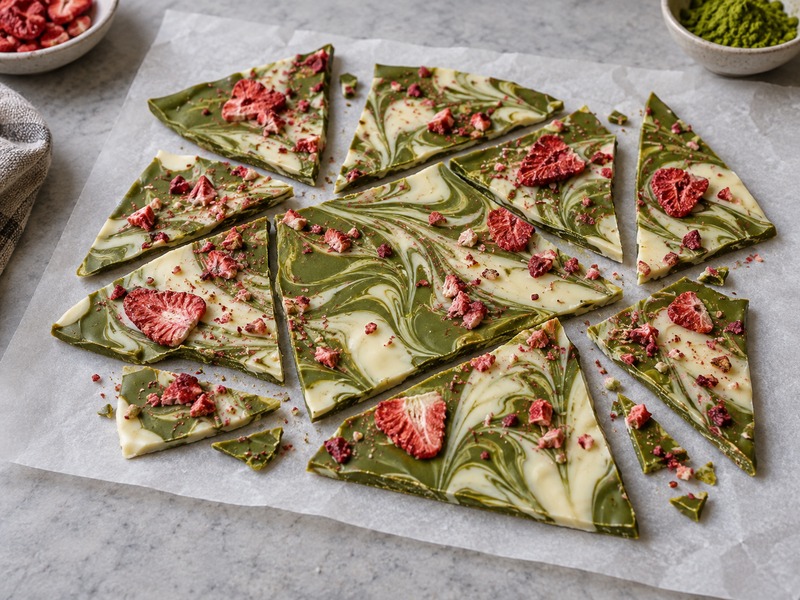
For: confectionery makers, bakery teams, gift-product developers and buyers. Decision: whether the formula and pack can keep tea flavor, clean break and visual quality through sale.
1. What product should matcha bark be?
Choose the eating and sales format
A gift box of irregular pieces, a café counter pouch and a plated dessert garnish need different thickness and break standards. A thin piece snaps and melts quickly but is more fragile in transit. A thick piece protects toppings but may taste mostly like the chocolate base. Decide the sale weight, approximate piece size, intended number of pieces and expected distribution route. Specify whether matcha sits in white chocolate, is dusted over dark chocolate, or forms a separate layer. Those concepts deliver different tea intensity and handling risk.
Write a sensible target. A good piece should break cleanly, show tea in the bite rather than only in its color, and leave no damp or loose topping residue. Photograph an approved piece against a plain background, but also record its mass and thickness. Natural irregularity is part of bark’s appeal; uncontrolled variation that makes one pouch contain crumbs and another contain giant slabs is a quality problem.
| Format | Main strength | Main risk |
|---|---|---|
| Retail pouch | Easy to portion | Breakage in transit |
| Gift box | Premium display | Topping movement |
| Dessert garnish | Distinct visual | Humidity and softening |
2. Which chocolate base supports the tea?
Taste the base and the finished bite
White chocolate gives matcha a visible green background and a soft dairy contrast. Dark chocolate supplies a sharper cocoa note that can overpower tea unless the layers are designed carefully. Milk chocolate can sit between them, but it adds its own sweetness. Trial candidate bases with the same matcha and thickness. Taste pieces after they have fully set. A warm spoon sample may exaggerate tea aroma and hide a waxy or cloying finish that appears in the final confection.
Check the label implications. The exact chocolate ingredients and market rules determine how the product may be named. A confectionery coating and a white chocolate are not necessarily interchangeable on a label or in production. Ask the supplier for the base specification, working guidance and allergen information. A cheaper base that needs extra matcha to be interesting may not reduce the finished unit cost.
3. How should matcha be incorporated?
Keep moisture away from the chocolate
Matcha particles need an even distribution. A water slurry that works in a latte can seize chocolate, so use a dry powder preblend with a portion of the warm fat-based mixture if the chosen formula requires it. Sift compacted powder where a trial shows visible lumps. Mix long enough to distribute the tea but avoid unnecessary air and heat exposure. Inspect the top and underside of a set piece: green islands or pale streaks may reveal poor mixing that was hard to see in a full tray.
Compare tea samples in the bark. Screen matcha by flavor after setting, color after the proposed hold, and ease of dispersion. If the recipe includes fruit or nuts, taste a plain base piece first so toppings do not hide a weak tea. Retain an approved sample and record lot identity. Grade names alone cannot tell a buyer whether a powder will taste clean in a sweet fat system.
| Mix observation | Likely cause | Trial action |
|---|---|---|
| Green clumps | Compact powder | Sift or preblend |
| Grainy melt | Powder or particle load | Compare lots and dose |
| Uneven color | Mixing time or vessel geometry | Sample tray positions |
4. How much matcha should each piece contain?
Dose by finished mass
Define matcha as grams per kilogram of the finished chocolate layer for trials. Prepare a small range while holding chocolate base, thickness and topping constant. Taste blind after setting and after storage. An attractive green surface may contain too little tea to register beside a sweet white base. Pushing dose too high can add bitterness, astringency or a dry finish. The target is the lowest dose that achieves the agreed flavor while meeting color and cost needs, not the darkest possible piece.
Consider the whole bite. A thin fruit topping or a salty nut changes flavor balance. Recheck the chosen dose with the complete bark, because a matcha level that is clear in a plain square may be faint once strawberry and chocolate aromas arrive. Record approximate grams of matcha per retail pack. This helps purchasing assess cost and provides a starting point for lot-change comparisons.
5. Which toppings survive production and storage?
Treat toppings as ingredients, not decoration
Freeze-dried fruit, nuts and crisp grains offer color and texture, but their moisture, size and attachment differ. Fresh berries look appealing in a home recipe and present a very different stability problem in a retail pack. Screen toppings for water activity and relevant food-safety requirements within the full product program. Apply them while the layer can still hold them, then test whether they stay attached after breaking and transport. Large pieces can cause the bark to fracture around them.
Count what falls off. Collect loose topping from a pilot pack and compare it with the initial deposit. A little movement may be acceptable; a pouch filled with powder and broken fruit is not. Check allergen declarations and cross-contact controls for nuts, dairy and other ingredients. If the toppings provide most of the perceived flavor, the product may be a fruit-and-chocolate bark with green color rather than a clear matcha offer.
| Topping | Benefit | Pilot check |
|---|---|---|
| Freeze-dried fruit | Tart contrast | Moisture pickup and crumbs |
| Toasted nuts | Bite and richness | Allergen and attachment |
| Crisp grains | Light texture | Softening during hold |
6. What thickness and cooling method give a clean break?
Measure the tray
Spread the mixture to a controlled approximate thickness using a marked frame or depositor. Measure several points, including edges and center. A thin edge may crack before packing, while a thick center can feel heavy and sweet. Cooling conditions affect set, appearance and release from the liner. If the chocolate base needs tempering, follow a validated route for the final formula; adding matcha and toppings can change flow and heat behavior compared with plain chocolate.
Break after the same rest. A piece cut immediately after cooling may fracture differently from one handled the next morning. Standardize the point at which the slab is demolded and broken. Record typical piece mass and the proportion of crumbs. A controlled irregular shape can be achieved without pretending every piece is identical. Rework policy matters: repeatedly remelting topping-covered scraps can change flavor, appearance and allergen control.
7. What shelf and transport defects should be challenged?
Hold the product in its actual pack
Matcha bark can show chocolate bloom, color shift, softened toppings and edge damage. Store pilot packs under the planned conditions and include a realistic transport simulation. Inspect at set intervals under consistent light. Taste alongside the photos; a still-green piece can lose tea aroma, and a dull surface may point to chocolate handling rather than the tea. A clear window pack gives strong shelf appeal but exposes the product to light, making that choice part of the stability trial.
Distinguish causes. White marks may reflect fat or sugar bloom; faded green may indicate a separate tea-color issue. Loose fruit dust can make the pack look stale even if the chocolate is fine. Record the location and timing of each defect instead of using one broad “looks bad” score. Do not set the sale period from a household recipe or from the plain chocolate’s shelf life. The assembled product, process and pack need their own review.
| Defect | First evidence | Likely next check |
|---|---|---|
| White haze | Fixed-light photos | Temper and humidity |
| Crumbs | Pack shake test | Thickness and piece size |
| Faded green | Exposed versus protected pack | Light and tea lot |
| Soft topping | Texture after hold | Moisture movement |
8. Which package suits an irregular product?
Protect pieces without hiding them
A flexible pouch is efficient but can rub pieces together. A rigid tray costs more yet protects a gift presentation. A box with a clear window needs both a transport test and light-exposure assessment. Choose the pack after measuring piece-size variation and breakage, not solely from a mockup. Decide whether the sale weight is achieved with a consistent number of pieces or a variable count. Either approach can work if the customer receives a credible portion.
Review the full opening experience. A premium bark that arrives as dust undermines the product, even if the weight is correct. Ask testers to open packs after transport, then record broken pieces, loose toppings, aroma and the cleanliness of the interior. If an insert is needed, include it in the cost and recycling or disposal review. Confirm that labels fit without covering the only view of the confection.
9. How should buyers cost the formula?
Include loss and hand work
Calculate chocolate, matcha, toppings, liner, pack, labor and process loss per sellable unit. Bark often looks simple because the slab is easy to spread, yet portioning and packing irregular pieces can be slow. Weigh crumbs and rejected pieces in a pilot. Compare candidate matcha powders at the dose required to meet the tea-flavor target. A low-cost powder that forces a stronger dose or dull color can lose its price advantage.
Protect continuity. Ask tea and chocolate suppliers for specifications, lot identification, pack sizes, lead times and change-notification practices. Trial a second tea lot if available before approving a long printed-pack run. If the product claims a specific origin, certification or ingredient status, obtain documents and have labeling reviewed for the sale market. Attractive color is not proof of any such claim.
| Cost line | Measure in pilot | Why it is easy to miss |
|---|---|---|
| Tea | Grams per sellable pouch | Dose differs by powder |
| Breakage | Unsellable pieces and crumbs | Slabs look good before packing |
| Toppings | Applied versus retained mass | Loose material is paid for |
| Labor | Spreading, breaking and packing time | Irregular pieces need handling |
10. What pilot confirms retail readiness?
Produce, break, pack and move it
Run a pilot on the intended equipment with the final tea, chocolate, topping and pack. Sample pieces from early, middle and late tray runs. Measure thickness, mass range, visual distribution, breakage and topping loss. Put packed units through the expected storage and distribution route, then taste against a freshly made reference. Involve production, quality, purchasing and the person who will sell it; they see different failure points.
Choose a release rule. Specify an acceptable piece-size range, maximum broken material, visual standard, tea flavor description and pack integrity check. Document the formula and the temper or cooling route. If one risk remains, such as color under retail lighting, run that test before launch. The most useful next step is a small packed shipment to the actual sales setting, not another pristine slab photographed on parchment.
Reference: Strawberry Matcha Chocolate Bark is a consumer format reference. The retail controls above are separate development advice.
FAQ
Q1: Does matcha bark have to use white chocolate? No. White, milk and dark bases are possible, but each changes tea visibility and flavor.
Q2: Can fresh fruit go into a retail bark pack? That choice needs product-specific moisture, safety and shelf validation; a fresh-fruit home recipe cannot establish it.
Q3: Why does the bark break into dust? Inspect thickness, cooling, piece size, toppings and transport before changing the chocolate base.
Q4: How is the matcha dose set? Compare measured doses by finished layer mass and taste the complete bark after storage.
Q5: What should a buyer request from the tea supplier? An identified sample, specification, lot traceability, storage guidance and the documents required by the purchasing program.