
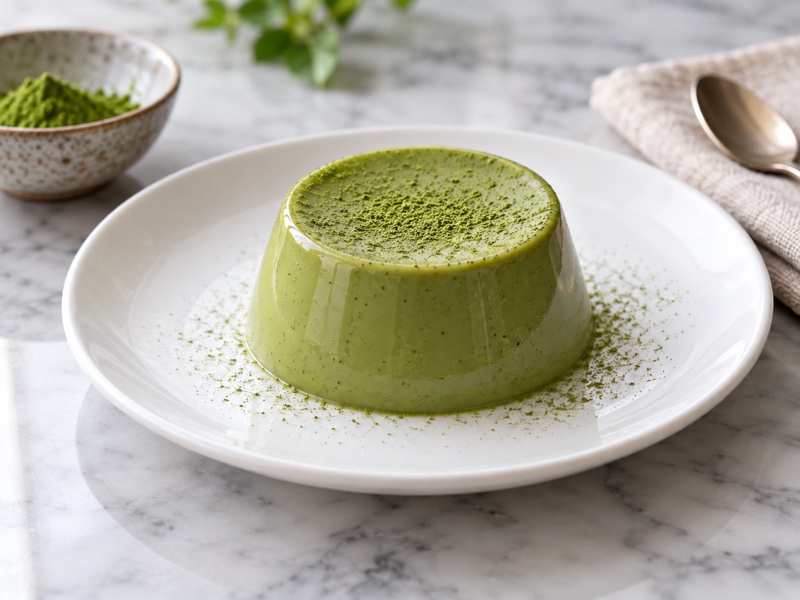
Matcha panna cotta should tremble softly, release cleanly if molded, and taste of tea through its cream. Commercial batches often miss one of those targets: tea forms specks, gelatin sets unevenly, or a plated dessert slumps before service. A controlled trial can identify the cause before a bakery commits to production. The matcha panna cotta example from Snixy Kitchen shows the dessert’s consumer appeal. The ten tests below cover texture, dispersion, cold holding, portioning, and the difference between a café plate and a packaged cup.
1. What texture should the finished dessert have?
Specify the serving format first. An unmolded panna cotta needs enough structure to survive release and plating while remaining tender on a spoon. A cup-served version can be softer because the container supports it. A retail cup needs to tolerate filling, lidding, movement, and display. Make one texture target for each planned format rather than forcing one gel strength across all of them. Photograph a spoon cut and a plated piece at service temperature. A dessert that feels silky straight from a refrigerator may soften quickly in a warm dining room.
Use a simple texture panel
Ask tasters to judge initial spoon resistance, melt in the mouth, and any rubbery or grainy feel. Observe wobble after a gentle plate tap, but do not treat a wobble video as a quality specification. Cut a portion and inspect for liquid pockets or a dense bottom layer. Repeat at the intended end of hold. An appealing first-day set can become firmer or weep with time, depending on formula and storage.
| Format | Structural need | Sensory risk |
|---|---|---|
| Unmolded plate | Holds shape during service | Rubbery if over-gelled |
| Café cup | Spoonable and smooth | Too loose or uneven |
| Retail cup | Survives transport | Syneresis and lid smear |
2. How should matcha be dispersed into cream?
Dry powder added to a large hot pan can form clumps that resist later stirring. Make a smooth slurry with a measured part of the liquid, then blend it into the batch using a documented method. Sift if needed and inspect the finished mixture before pouring. Matcha remains suspended rather than truly dissolving, so a long wait before filling can create uneven color between early and late molds. Keep the mixture moving gently as required by the chosen process without whipping in excess air.
Check the whole fill run
Pour sample cups from the beginning, middle, and end of a batch. After setting, compare their color and tea taste. Darker late cups point to settling in the kettle. Specks in every cup point to a dispersion problem. Air bubbles near the top may come from mixing or fill height. A finer tea powder can help the mouthfeel but still needs a proper mixing procedure. Record liquid temperature when the slurry is added because heat and viscosity affect dispersion.
3. Which matcha tastes balanced in dairy?
Cream softens tea bitterness and can hide delicate aroma. Compare several candidate powders in the full dairy formula, not only in hot water. Keep the dose, sweetener, and setting system fixed. Taste after the dessert has chilled and again near the end of its proposed quality life. A pale set may still have a clear tea note, while a vivid green set may be harsh. Color and flavor should both be judged, but neither should substitute for the other.
Buy the grade that survives the process
Request samples, lot identity, and specifications for the proposed ingredient. Matcha Village’s pure matcha page can support a discussion of food-use grades. Test any replacement lot against an approved reference. Do not assume a premium drinking grade is best after heating and mixing with cream. Nor should a low ingredient price decide the purchase if it requires a higher dose or leaves a coarse finish. Cost the amount of tea per saleable dessert.
| Tea observation | Bench sample | Finished dessert |
|---|---|---|
| Aroma | Dry and wetted powder | Tea after chilling |
| Color | Slurry | Top and bottom of set |
| Texture | Slurry grain | Spoon feel |
| Cost | Price per mass | Price per saleable portion |
4. How should gelatin be prepared and compared?
Gelatin performance depends on its type, strength, hydration, and treatment. Use the supplier’s instructions and record the exact product. Hydrate it as directed before adding it to a suitable warm liquid. Excess heat or poor dispersion can leave uneven setting; too much gelatin makes a dessert firm and bouncy. Build a small dose series while keeping cream, tea, sugar, and fill size fixed. Measure the set after the same chill time and temperature for every version. Do not compare one overnight sample with another tasted soon after pouring.
Avoid a false universal formula
A recipe’s gelatin amount may work only for its specific dairy ratio and mold. Fat content, sugar, portion size, and serving temperature change perceived firmness. Ask a panel to eat the dessert rather than relying on a finger press. If the team plans unmolding, include release success in the score. If a softer cup-served version is planned, choose its texture without the unnecessary firmness needed for a plate. Write down gelatin brand and lot with every trial so changes are traceable.
5. Can a non-gelatin setting system work?
Agar, carrageenan, pectin systems, and other gelling agents can create different bites and processing requirements. They are not one-for-one replacements for gelatin. Select candidates with a food technologist based on desired texture, ingredient declaration, and target market. Follow supplier processing instructions, especially activation temperature and mixing order. Make small controlled trials and compare spoon feel, cut face, weeping, and behavior after refrigeration. A plant-based concept also requires a full review of the cream alternative and any other animal-derived ingredients.
Test the intended claim
A dessert made without gelatin is not automatically vegan if it contains dairy. A dairy-free version may introduce soy or tree nuts. Review the exact recipe before using either claim. The FDA’s food-allergy guidance is a US reference for allergen declarations; other markets have their own rules. Keep alternative-set versions as separate specifications. An agar version that looks similar to gelatin in a cup can release or fracture differently on a plate.
| Setting system | Typical design question | Test in final format |
|---|---|---|
| Gelatin | Tender set versus unmolding strength | Spoon bite and release |
| Agar-based | Brittle or firm bite | Cut and plated stability |
| Other hydrocolloid blend | Process compatibility | Weeping and consistency |
6. What chill and fill procedures prevent uneven sets?
Use a controlled fill weight and record mixture temperature at the first and last pour. A large batch can start setting in the vessel or allow tea to settle before the last molds are filled. Chill samples in the same equipment and spacing planned for production. A crowded tray cools differently from a few cups on an open shelf. Record the time each sample reaches the required cold condition under the site’s food-safety procedure. Judge texture only after the standardized setting period.
Track the outliers
Place sample cups at the edge and center of a production tray. Compare their set and appearance. If the center cups remain soft, the problem may be cooling capacity rather than recipe. If only the last cups are darker, keep the mixture uniform during filling. If foam accumulates in a few molds, alter pour technique or deaeration. A production record should include pan or mold size, portion mass, fill sequence, chiller loading, and release time. Those details make a failed batch diagnosable.
7. How can the team test unmolding and plating?
Unmold at the temperature and timing of actual service. Try the proposed release method on several molds and count clean releases, tears, and slumps. Test both new and used molds because surface condition can change performance. A plated panna cotta may need a wider base or slightly firmer set than a cup version. Choose a plate and sauce position that supports the dessert visually without making it slide. Photograph the plate immediately and after the time it may wait at a pass.
Keep toppings separate until the right moment
Fruit compote, syrup, or crisp garnish can stain, wet, or press into the surface. Test topping contact during the intended service interval. A warm sauce can soften a gel and alter tea flavor. If a kitchen must plate quickly, count the steps and decide which can be prepared ahead. A technically perfect set is not commercially useful if every portion requires delicate rescue with a knife. Design the plate so ordinary staff can reproduce it.
| Plating check | Count or record | Decision |
|---|---|---|
| Clean release | Successes per trial | Mold and set strength |
| Shape after wait | Height and lean | Service window |
| Sauce contact | Color and surface | Topping placement |
| Labor | Time per plate | Menu feasibility |
8. What happens during refrigerated holding?
Inspect a batch at the start, middle, and end of the proposed holding period. Look for water release, a rubbery surface, tea settling, color drift, and absorbed refrigerator odors. Taste at the actual service temperature. Food-safety limits must be set for the ingredients and operation, with local rules taking precedence. The FDA Food Code provides a US retail model for cold holding, but it does not assign this dessert a universal shelf life. A qualified food-safety lead should review the complete process.
The package matters. An uncovered mold can dry or take on odors; a tight lid may touch the top and leave marks. Test the proposed cover, label, and stacking pattern. If the dessert will be distributed, include transport vibration and temperature monitoring. A cup that remains microbiologically acceptable can still weep enough to look unsaleable. Set a quality limit as well as a safety limit, then use the earlier endpoint.
9. What should portion and cost records show?
Weigh each filled cup or mold. Record total batch mass, number of saleable portions, leftover mixture, and losses from unmolding. Gelatin and tea may be low-volume ingredients, but an overfilled mold can increase cost and change setting time. A plated dessert also uses sauce, fruit, garnish, plate handling, and staff time. For retail cups, include cup, lid, seal, label, testing, and chilled freight. Divide the batch cost by saleable portions rather than theoretical mold count.
If a premium tea grade improves flavor at a lower dose, compare cost in the finished dessert. If a firmer gel reduces breakage but worsens mouthfeel, the cost saving may not support a premium menu position. Keep sensory score and yield on the same development sheet so the decision does not drift toward either taste or margin alone. Buyers should ask suppliers about lead time and lot continuity before committing to a seasonal menu or retail run.
| Portion cost | Record | Hidden loss |
|---|---|---|
| Cream base | Batch input and fill mass | Kettle residue |
| Matcha | Lot price and dose | Extra powder for color |
| Gelling agent | Exact product and mass | Remakes from poor set |
| Plating | Sauce, garnish, labor | Broken unmolded pieces |
10. What should the launch specification lock?
List exact cream or alternative, matcha grade and lot, sweetener, gelling agent, hydration method, mixing temperature, deposit weight, chill procedure, mold, package, and hold limits. Attach photographs of acceptable color, spoon cut, and plated shape. Train staff on a full production batch, then confirm first and last units match. A change in cream fat level, gelatin strength, or tea powder can change the set. Treat such substitutions as a reason to rerun the relevant tests.
For an unmolded café dessert, approve release rate and pass stability. For a packaged cup, validate filling, lidding, distribution, and end-of-life quality separately. Do not promise that one formula suits both channels without evidence. A silky texture becomes repeatable when the team can name its process conditions and reject units that miss them.
FAQ
Q1: Why are there green specks? Powder may have clumped during wetting or settled before filling. Inspect slurry and fill sequence.
Q2: Why does panna cotta turn rubbery? A setting system may be too strong for the formula or serving temperature. Test a controlled dose series.
Q3: Can agar replace gelatin directly? No. It needs its own processing and texture trial.
Q4: Should a retail cup be as firm as an unmolded dessert? Usually the cup can support a softer set, but transport and shelf-life tests decide.
Q5: How should shelf life be chosen? Use safety review and real-time quality tests on the exact formula and package, then adopt the shorter limit.
Start with the serving format and its texture target. A full-batch trial that records dispersion, set, fill sequence, and cold holding will show whether the dessert can be made consistently enough for sale.