
Knowing how to use a matcha shaker means more than shaking until the drink looks green. A café needs a repeatable dose, fill level, closure check, serving decision and cleaning routine. Write the method for your exact bottle and matcha, then have several staff members run it during a normal shift. Sencha Naturals’ mini-shaker directions describe one maker’s cool-water product; a different shaker needs its own instructions and trial.
Contents
- 1. What should the operator check before starting?
- 2. How should matcha be measured for the recipe?
- 3. Which liquid and fill order should be used?
- 4. How should the closure be confirmed?
- 5. What shaking method should staff follow?
- 6. How should the drink be checked before service?
- 7. When should the shaker be poured or handed over?
- 8. How should the bottle be cleaned and dried?
- 9. How can supervisors train and audit the method?
- 10. When is the workflow ready for multiple sites?
1. What should the operator check before starting?
Confirm bottle, insert and ingredient
The operator should identify the correct bottle and confirm that its lid, gasket and mixing insert are present and undamaged. Check the matcha product code and any open-pack handling rule. A missing insert may change mixing behavior; a poorly seated gasket can create a leak. Follow the specific maker’s instructions for permitted liquid temperatures and ingredients. Do not copy a method from another brand because the bottles look similar.
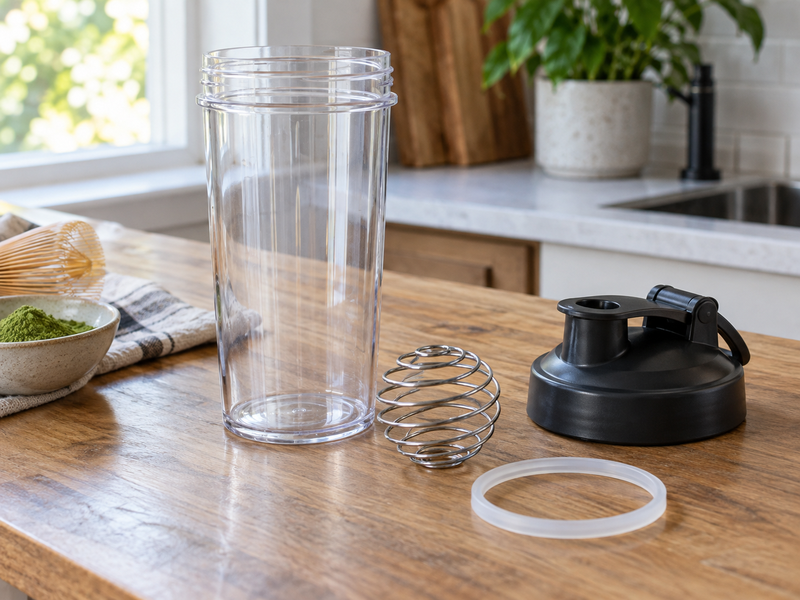
Make the opening check visible. Put a small diagram near the station showing how the insert and seal sit. Staff should know what condition removes a bottle from use: cracked plastic, damaged thread, loose gasket or trapped residue. Record the reason when a unit is replaced so buying teams can see a pattern. If the shaker is customer-owned, provide clear instructions rather than an inspection claim the café cannot perform. A reliable drink starts with a complete vessel and an identified powder lot.
The station card should distinguish a new drink from a correction. If a finished shaker contains dry clumps, staff need an approved response: repeat a defined mixing step, remake the drink or hold the powder for review. Guessing at extra water changes strength, while vigorous shaking in a leaking bottle creates another problem. Trial a few controlled failure scenarios during training and record the permitted fix. This keeps a busy team from turning every imperfect cup into an undocumented recipe variation.
2. How should matcha be measured for the recipe?
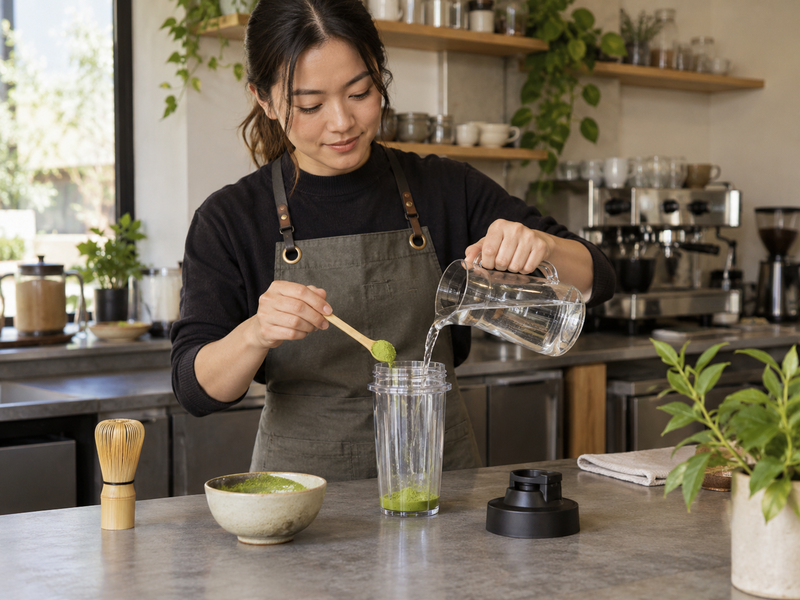
Set a dose staff can repeat
Use a scale when developing the drink, then decide how a busy station will reproduce that mass. A scoop is quick but the amount can change with operator technique and powder packing. Pre-portioned sachets may simplify service if they match your menu and waste plan. Record the exact product and dose on a station card; “one scoop” has little meaning if scoops or powder grades change.
Check transfer loss. Weigh powder before adding it to the shaker and inspect what remains in the sachet, scoop or funnel. Trial several consecutive drinks with different staff members. If powder sticks to the neck and never enters the liquid, the served dose will differ from the written recipe. A small funnel may help, but it adds a cleaning task. Matcha Village’s materials describe several matcha grades and packaging options; any supplied powder should be approved for the actual recipe rather than selected by grade name alone.
| Dosing method | Benefit | Trial check |
|---|---|---|
| Scale | Direct mass reading | Queue speed |
| Scoop | Few parts | Dose variation |
| Sachet | Fixed portion | Emptying and packaging |
3. Which liquid and fill order should be used?
Follow the bottle maker’s limits
Sencha Naturals instructs users to add cool or room-temperature water to its mini shaker and avoid hot water. That is a product-specific limit, not a statement about every shaker. For your bottle, obtain written temperature and fill guidance. Test whether adding liquid before powder or powder before liquid produces fewer dry pockets under the approved recipe.
Keep the fill below the working line. Include powder, water and any ice or milk in the volume calculation. A brimful vessel cannot mix effectively and may leak when shaken. If the method uses a concentrated matcha base poured over milk, label the base liquid and final milk separately so staff do not overfill the shaker. Run the chosen order with a new operator and inspect the cap area for dry powder. The instruction should make the result repeatable without requiring the person to infer a hidden step.
4. How should the closure be confirmed?
Add a tactile check
After filling, staff should verify that the main lid, drinking spout and any insert are seated as the maker directs. A quick look may miss a cross-threaded lid or lifted gasket. Ask users to close the bottle several times during training and note the feel of a correct seal. The cue should be simple enough for a busy counter, such as a complete turn to the maker’s stop and a separate spout press.
Trial the cue with a safe fill. Have the operator invert or tilt the bottle over a sink or absorbent surface before a full shake during training. Record where leaks occur and whether the cause is design, wear or handling. Do not promise a zero-leak product based on one check; keep the bottle’s acceptance test with quality. For customer-facing instructions, show both closure points clearly. A good workflow does not rely on staff remembering that a hidden cap sometimes opens during shaking.
| Closure point | Operator action | Warning sign |
|---|---|---|
| Main lid | Seat to maker’s stop | Uneven gap |
| Spout | Confirm latch | Loose movement |
| Gasket | Inspect during setup | Missing or twisted |
5. What shaking method should staff follow?
Define motion by result
Choose a shake motion and duration using the actual powder, bottle and working fill. Sencha Naturals gives a short shaking interval for its mini shaker, but another insert or drink may require a different trial result. Have staff hold both the body and lid in the way the maker recommends. Do not shake hot liquid in a bottle whose instructions exclude it.
Compare consecutive servings. Use one operator to establish a promising method, then ask others to repeat it from a written card. Pour each drink into identical cups and check clumps, foam and dose left inside the bottle. If a longer shake adds little benefit but increases leaks or fatigue, choose the shorter validated method. If milk or sweetener is added, test that complete formula rather than assuming a water-only result will transfer. Describe the final motion in ordinary words and diagrams, not a vague command to “shake well.”

6. How should the drink be checked before service?
Use observable acceptance cues
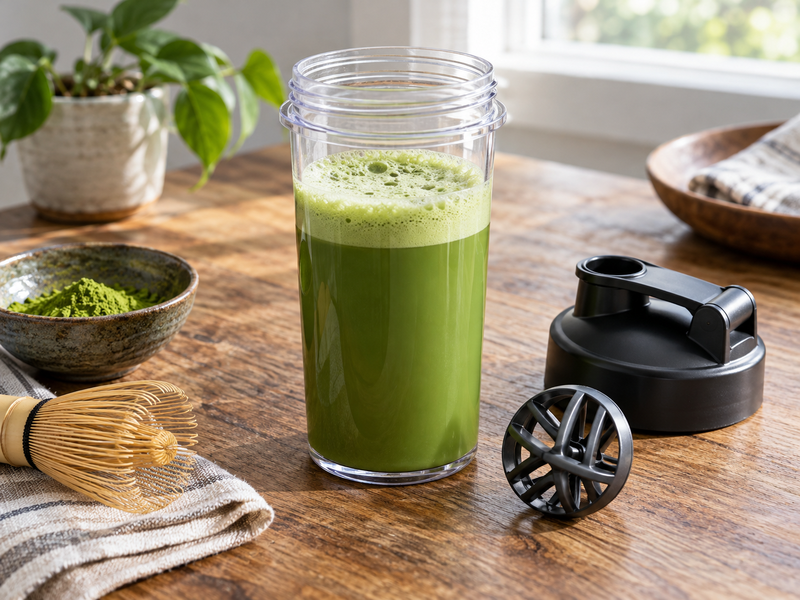
The drink should meet the business’s color, texture and flavor target. Define what staff can check quickly: no visible dry islands at the surface, no obvious clumps at the bottom after pouring and a fill level within the recipe range. A quality team may use more detailed sensory comparison during development; counter staff need a short practical gate.
Check at the customer handoff. Matcha is a suspended powder, so some settling over time may occur. Decide the acceptable appearance after your normal wait and transport time. Compare a newly shaken sample with one held for that interval. If the drink separates more than the menu allows, revisit dose, mixing or service timing. Do not tell staff to shake longer indefinitely; the ingredient or formula may need review. Record failed drinks and suspected causes so operations can correct the process rather than hide variation.
| Check | Passing cue | Response to failure |
|---|---|---|
| Surface | No dry powder | Rework per procedure |
| Pour | No obvious clumps | Inspect insert and dose |
| Handoff | Agreed color and fill | Hold for review |
7. When should the shaker be poured or handed over?
Define who owns the vessel
Some cafés use a shaker only to prepare a base before pouring into a branded cup. Other businesses sell a reusable bottle with the drink. Write which model applies. If staff pour into a final cup, check that the insert cannot fall out and that the spout does not drip down the bottle. If customers receive the shaker, provide use and cleaning instructions that match the item.
Time the final assembly. For a latte, state whether milk and ice enter the serving cup before or after the matcha base. Test the taste after a customer stirs the layered drink, not just its initial photograph. A prepared drink left in the shaker during a long queue may look different from one poured immediately. Decide whether staff give a brief shake just before handoff under your validated method. The workflow should keep portion, appearance and customer expectations aligned through the last step.
8. How should the bottle be cleaned and dried?
Reset every contact surface
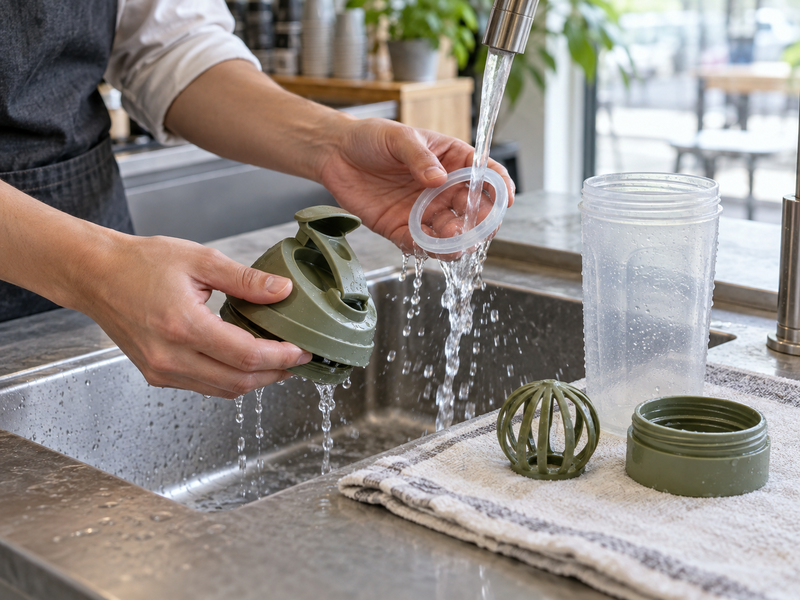
Follow the bottle maker’s washing and dishwasher instructions. Remove any insert or gasket only as directed, then inspect spout, thread and cap underside for powder. Milk drinks demand particular attention under the venue’s hygiene procedure. Let parts dry in a way that does not trap moisture inside a closed bottle. A quick rinse that leaves paste under the seal is not a complete reset.
Time cleaning during a rush trial. Staff may skip a difficult step when orders stack up. If a bottle cannot be cleaned quickly enough between customers, assign more units or change the service design. Mark clean and used bottles so they are not confused. Inspect seals for damage during reassembly. For a retail product, print clear care directions and a parts diagram. The success of a shaker workflow depends on the next drink being made in a clean, complete vessel.
| Cleaning point | Staff check | Possible issue |
|---|---|---|
| Insert | No trapped powder | Carryover |
| Spout | Fully rinsed | Residue |
| Gasket | Correctly seated | Leak |
9. How can supervisors train and audit the method?
Observe work instead of reciting rules
Give new staff the written method, then watch them make several drinks without coaching. Record powder dose, fill line, closure, shake method, quality check and cleaning. A short checklist is more useful than a long training paragraph at a crowded counter. Repeat observation after shifts or when a bottle design changes, because habits can drift.
Compare outputs blind. Have a supervisor taste or inspect drinks made by different operators under the same recipe. Note if variation arises from dosing, powder clumps, milk assembly or a worn bottle. Correct the cause and update the card when evidence warrants it. Do not claim that a single time or motion works for every matcha grade. Training should explain why the chosen method fits this powder and bottle so staff can spot a genuine change rather than compensate by guessing.
10. When is the workflow ready for multiple sites?
Freeze the approved combination
Rollout should identify the bottle model, insert, powder product, dose, liquid, working fill, motion, final cup and cleaning method. Keep a signed sample of the hardware and the latest station card. Trial the procedure at more than one representative site if equipment and staff conditions differ. Procurement should confirm spare lids, gaskets and inserts before replacing a small pilot with a large order.
Set change triggers. A new matcha lot, sweetened blend, bottle insert or cup size may change drink behavior. Decide when another comparison is required and who approves it. Store trial results, failure notes and staff feedback in one place. A repeatable shaker program is ready when an unfamiliar operator can follow the card, make an accepted drink and clean the vessel without relying on a trainer standing beside them.
| Rollout control | Evidence | Owner |
|---|---|---|
| Recipe | Approved station card | Product |
| Hardware | Signed sample and spares | Procurement |
| Training | Observed staff trial | Operations |
At shift change, the incoming operator should receive a clean assembled bottle, the approved powder lot and the current station card. Add a brief handover check for open packs, missing inserts and units held for a leak. This prevents a rushed team from mixing a good recipe in an incomplete shaker. Keep a simple record of recurring failures so supervisors can distinguish training gaps from a component that needs replacement.
FAQ
Q1. Can hot water be used in any matcha shaker? No. Follow the selected bottle maker’s temperature guidance.
Q2. Should powder or water go in first? Trial both orders with your bottle and publish the one that works reliably.
Q3. How long should staff shake? Use a duration established with the actual powder, fill and insert.
Q4. Can a shaker replace every other latte tool? It may prepare a base; milk texturing and final assembly may need separate equipment.
Q5. What should a manager check during training? Observe dose, fill, closure, mixing, cup quality and cleaning.
Write the procedure for one bottle and one recipe, then test it with several operators during realistic service. Keep the maker’s use limits and spare-part plan alongside the station card. A short, followed method gives customers a steadier drink than an impressive device used differently on every shift.