
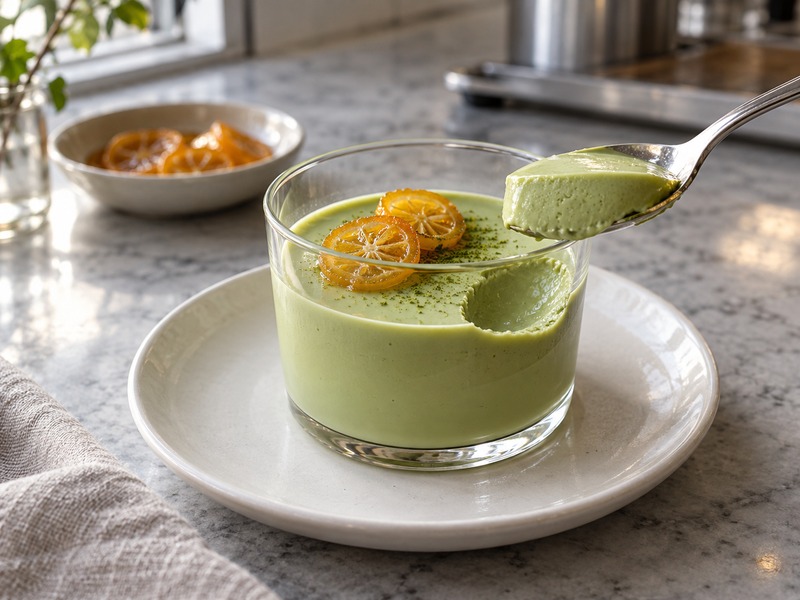
Matcha panna cotta is a softly set cream dessert flavored with powdered green tea. It looks simple in a jar, but a bakery can lose the delicate texture through too much gelling agent, uneven tea dispersion or a topping that leaks into the surface. Snixy Kitchen’s matcha panna cotta pairs the dessert with candied kumquats and notes the option to serve it in jars or unmold it. A commercial product needs its own set strength, cold handling and pack trial rather than relying on a home recipe’s timing.
This guide is for pastry teams, café chains and ingredient buyers. Any formulation ranges or storage periods must be validated for the actual ingredients, equipment and market.
1. What texture should the customer get?
Aim for a tender set that survives service
Panna cotta should hold its shape when spooned or unmolded while still yielding softly in the mouth. A firm rubbery gel may travel well but no longer offers the dessert people ordered. A weak set can slosh in a takeaway jar or collapse on a plate. Choose the intended serving format before deciding set strength. An unmolded restaurant dessert faces different handling from a sealed single-serve jar sold in a refrigerated case. Define a measurable or at least repeatable spoon and wobble reference for each format.
Check beyond the center cup. Chilling conditions differ across a production batch. Sample containers from different tray positions and from the start and end of a fill run. Compare appearance, spoon cut and liquid separation after the intended holding period. A glossy surface at first set can later show water weeping or a dark green layer at the bottom. Record both the visual and eating qualities in the release standard; a dessert that travels intact but tastes stiff has not passed.
| Service format | Set target | Main failure |
|---|---|---|
| Glass jar | Soft spoonable gel | Weeping under lid |
| Unmolded plate | Holds silhouette | Tears or slumps |
| Layered café cup | Supports topping | Fruit sinks into gel |
2. Which matcha works in cream?
Select for a cold dairy application
Cream and sugar can soften matcha bitterness but also mute aroma. Compare powders at the planned dose in the complete cream base. Taste warm only to diagnose mixing; judge the final product after chilling because cold service changes perceived sweetness and aroma. A powder with brilliant dry color may not remain vivid through heating, cooling and display. Ask for lot-linked specifications, sensory samples and the safety records required by the buyer’s program.
Keep a flavor reference. Grade labels do not tell you how a powder behaves in this dessert. A less expensive tea may work well under cream; another may leave a muddy finish or visible specks. Calculate cost at the dose that produces a clear tea note without making the dessert bitter. Retain a sample or controlled photo from the accepted production lot. When a new tea lot arrives, repeat the cold finished-cup comparison before adjusting powder mass or food color by eye.
3. How should matcha be dispersed in the base?
Break up powder before the cream thickens
Dry matcha can form stubborn islands when added directly to hot cream. Premix the measured powder with a small portion of liquid or another suitable component, then incorporate it under a controlled mixing method. Sifting may help if the powder arrives clumpy. Snixy Kitchen mentions straining to remove visible flecks in a home version; a production line should decide whether straining improves appearance without creating unacceptable matcha loss. A fine sieve can catch undispersed tea, but the amount retained needs to be measured.
Inspect settled cups. After cooling, cut or spoon through samples from top to bottom. Dark powder near the base suggests dispersion or settling problems. Check mixing order, liquid temperature, hold time before filling and agitation in the filler. If the process requires constant high shear to keep color even, it may affect the final gel. Use a simple controlled premix and verify it on larger equipment before buying a very fine powder simply to rescue a poor mixing route.
| Defect | First variable to inspect | Trial response |
|---|---|---|
| Green specks | Premix and sifting | Change addition order |
| Dark bottom | Hold before filling | Agitate gently or shorten wait |
| Pale top | Tea settling | Recheck powder and fill process |
| Tea loss in strainer | Screen and mixing | Quantify retained powder |
4. What should set the panna cotta?
Test the gelling system as part of the formula
Gelatin and plant-based gelling systems differ in preparation, texture and label implications. Do not substitute one for another by equal weight. Matcha, sugar, cream and any fruit topping can all affect the perceived final set. Choose a gelling route that suits the target texture and market, then run a small matrix of doses under fixed heating, cooling and fill conditions. Evaluate samples at the intended serving temperature, not only when they first set in a test refrigerator.
Protect the eating quality. A higher gel dose may seem like an easy fix for delivery damage, but it can make the dessert elastic. If an unmolded version breaks, also inspect mold shape, release method, chill time and staff handling. If a jar version weeps, check process and formula before raising gel strength. Labeling and dietary claims need review for the selected gelling ingredient. A vegan version is a separate formula with its own process validation, not a simple checkbox on the dairy recipe.
5. How should heating and cooling be controlled?
Avoid cooking away the tea character
The base needs enough heat for the chosen ingredients and safe process, but excessive or uneven heating can dull matcha flavor and color. Develop a documented time-and-temperature profile with the qualified food safety team. Add matcha at a point that supports dispersion and sensory quality in that process. The right point depends on the formula and equipment; a home saucepan instruction does not automatically scale to a steam-jacketed vessel. Record the temperature when filling as well as when mixing.
Chill consistently. A large tray of warm jars can cool slowly, leaving center units different from edge units. Pilot with the real container size and rack loading. Track cooling under the operation’s safety plan and assess set texture after the same hold for each sample. If staff rush to top cups before the surface is ready, fruit or chocolate can sink. Give production a release checkpoint for set and temperature rather than a vague “refrigerate until firm.”
| Stage | Control to record | Why it matters |
|---|---|---|
| Base mixing | Temperature and time | Tea dispersion and flavor |
| Filling | Viscosity and fill weight | Cup uniformity |
| Cooling | Load and temperature path | Safe set and texture |
| Topping | Surface strength | Prevent sinking or bleed |
6. Should the dessert be jarred or unmolded?
Match format to the sales route
A jar protects a soft set, supports takeaway and displays the green color. It adds packaging cost and can expose every streak or bubble against clear walls. An unmolded dessert offers a fine-dining presentation but requires a stronger release technique and skilled plating. Test the same formula in both formats only if the business intends to sell both; do not assume an approved jar dessert will unmold cleanly. The format choice affects set strength, fill, topping, shelf-life study and labor.
Run a handling trial. For jars, check seals, headspace, spoon access and leakage after transport. For unmolded service, measure the time and breakage rate of release during a busy shift. A dessert that is perfect when a developer unmolds it slowly may be a poor menu item for a kitchen plating many orders at once. Photograph approved samples at the intended service moment. Where retailers will stack cases, test the complete shipper, not only an individual cup.
7. What toppings support rather than hide the matcha?
Use fruit acidity as a controlled contrast
Snixy Kitchen pairs matcha panna cotta with candied kumquats and mentions other fruit options. Citrus can brighten rich cream, but a syrupy topping can flood the surface or make the first bite much sweeter than the base. Choose topping mass and placement through full-dessert tasting. A white chocolate garnish changes sweetness and allergen information; fresh fruit can release moisture. Compare a plain control before approving a decorated version.
Test migration. Top some cups immediately and others near service, then compare them after the intended hold. Note color bleed, water on the gel, softened garnish and whether the topping stays in place during transport. A separate topping pot may protect texture but adds packaging and assembly steps. Restaurants can plate at order time; grab-and-go producers need a complete packed-product trial. The visually strongest topping is not necessarily the one that survives the actual channel.
| Topping | Strength | Risk to validate |
|---|---|---|
| Candied citrus | Bright flavor and color | Syrup migration |
| Fresh berries | Familiar contrast | Juice release |
| White chocolate | Sweet texture | Heat and allergen control |
| None | Tea-forward dessert | Plain cup must stand alone |
8. What evidence should buyers request?
Tie ingredients to a finished chilled sample
Request matcha specification, lot-linked analysis and traceability records required by the buying program. For cream, milk and gelling ingredients, collect composition, allergen and storage information. Ask suppliers about relevant lot or formula changes that could alter set or flavor. A stable-looking powder in its bag does not prove it will disperse in cream. The buyer should evaluate samples in the approved dessert alongside records, not approve by documents alone.
Keep change control practical. A new cream fat content or gel brand may affect texture more than a matcha lot change. Define which substitutions require a bench retest and which require a full cold-chain trial. Keep retained finished cups or photos from the approved run, plus process records. If a later batch weeps, check gel preparation, cooling and ingredient lots before simply adding more powder or gel. A traceable process lets the team solve the real problem.
| Input | Supplier record | Finished-dessert question |
|---|---|---|
| Matcha | Lot and sensory specification | Flavor, shade, specks |
| Dairy or alternative | Composition and allergens | Body and label |
| Gelling ingredient | Function and use data | Set and texture |
| Container | Seal and contact data | Distribution survival |
9. How should cost per dessert be calculated?
Count unmolding loss and topping waste
Use the accepted formula’s matcha, cream, sugar, gelling ingredient and topping amounts. Add jars, lids, spoons where provided, refrigeration, labor and distribution. For an unmolded dessert, record pieces damaged during release and plating. For a jarred dessert, count leakage and low-fill rejects. A less costly powder may require a higher dose to remain noticeable under cream. Compare cost per saleable dessert rather than per mixed batch.
Evaluate the chosen channel. A restaurant can charge for plating and fresh fruit at service, but it must account for kitchen time. A retail jar may earn volume but needs a pack that survives the route and validated shelf life. Avoid assuming a premium price because the dessert contains matcha. Test customer response with the actual serving size, flavor and presentation. A small, controlled pilot can show whether the more expensive matcha or topping contributes enough value to keep it.
10. What should a production pilot prove?
Sample across batch, chill and delivery
Prepare the selected formula on the planned equipment and fill real containers. Record matcha premix method, base temperature, gel preparation, fill weight, cooling and topping timing. Sample from the start, middle and end of the run. Check cold flavor, specks, set, weeping and appearance after the intended distribution route. Include more than one operator in any unmolding or plating trial. A single clean cup from a bench run is not a production result.
Release a clear standard. Specify ingredient lots, process checkpoints, accepted spoon texture, visual reference, pack, cold-handling limits and reject examples. If the pilot fails, change one cause at a time: dispersion, gel, cooling or topping. The first purchase should support a limited launch with enough volume to reveal ordinary variation. A broader rollout follows a dessert that remains softly set and tea-forward when the customer finally opens it.
Reference
Snixy Kitchen, “Matcha Panna Cotta with Candied Kumquats” is a home dessert reference. The commercial process and safety checks above are proposed development work, not results claimed by the recipe.
FAQ
Q1: Can matcha panna cotta be made ahead?
Yes, after the exact formula, pack and cold handling are validated for the intended period.
Q2: Why are there green specks at the bottom?
Check matcha premixing, holding before fill and any strain loss.
Q3: Can gelatin be replaced with agar at the same weight?
No. Develop a separate formula and process for the chosen gelling system.
Q4: Is a jarred version easier to sell?
It protects a soft set, but packaging cost and cold-chain checks still matter.
Q5: What should be tested after a new matcha lot arrives?
Color, cold flavor, dispersion and the approved dessert’s final texture.