
Matcha overnight oats can make a convenient café breakfast, but the cup must still taste good at the end of its refrigerated hold. Oats can be hard in the center or pasty at the surface; matcha can clump or disappear under sweet toppings. The overnight oats recipe in search results shows the home format. A prepared-food team needs a measured oat-to-liquid ratio, a tea-dispersion step, a portion standard, and a validated sale window. The word “overnight” describes a preparation style, not a commercial shelf-life rule.
1. What should a finished cup be like?
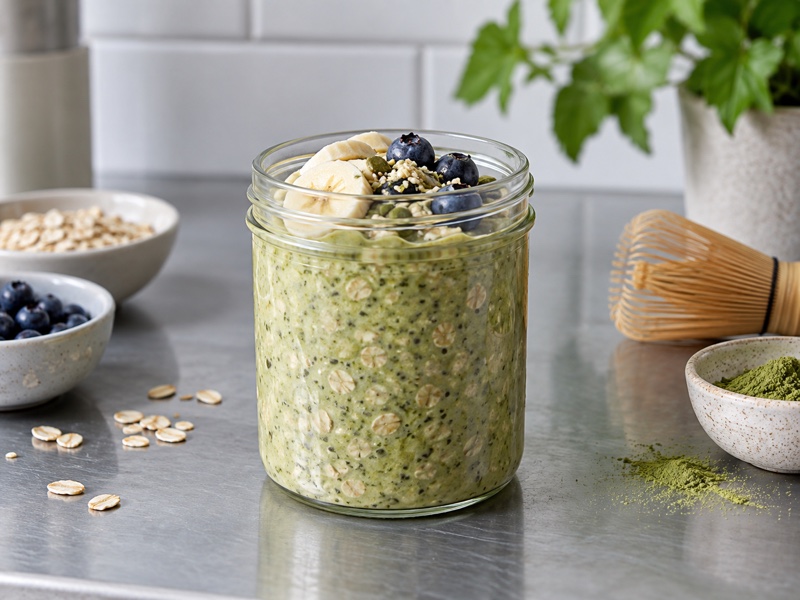
Define the eating experience: oats fully hydrated but still distinct, a spoonable consistency, recognizable matcha, and a topping that adds contrast without flooding the base. Decide whether the cup is a breakfast, snack, or dessert. Each can justify different sweetness and portion size. Taste it cold in the intended container with the spoon customers receive. A sample eaten from a mixing bowl can conceal a watery bottom or a dense upper layer.
Set a target filled weight and the point in the sale window at which quality matters most. A cup assembled just before service differs from a sealed pot prepared for a retail chiller. Check the first, middle, and last portions from a batch. If oats settle while staff fill cups, equal weights may still produce different textures. The product brief should state milk choice, topping timing, and whether the cup is intended to be stirred.
| Product format | Texture target | Test moment |
|---|---|---|
| Café breakfast | Soft with visible oats | Morning handoff |
| Sealed takeaway | Stable top and bottom | Customer opening |
| Dessert pot | Richer, sweeter | After planned hold |
2. Which oats should the team use?
Rolled, quick, and steel-cut oats hydrate differently. Rolled oats are a common starting point for an overnight format; quick oats can become softer or pastier, and steel-cut oats need a different process. Select the exact commercial oat SKU and test it through the intended hold. Check the supplier’s handling and allergen information. If a gluten-free claim is planned, the appropriate oat sourcing and cross-contact controls require separate verification.
Weigh the oats and compare texture at several times rather than assuming one night produces the same result in every milk. Lot age, flake size, and added fruit can change the final cup. A new oat supplier should trigger a small side-by-side test. The team can retain an approved cup photograph and texture note; “soft” is too subjective without an example. Do not change oat type and milk in the same trial or the cause of a difference will be unclear.
3. Which milk gives the right hydration?
Dairy, oat, almond, soy, and coconut products have different solids, sweetness, and viscosity. The name “oat milk” does not imply it behaves like water, especially in an oat-based product. Compare two realistic milks at the same oat weight and cold hold. Check whether the mixture becomes thick enough to spoon but not so stiff that it looks dry. If yogurt is added for richness, it also changes acidity, allergens, and cost.
Use the actual pack and brand the kitchen will stock. Sweetened plant milk may remove the need for syrup; unsweetened milk may leave the tea too sharp. Any claim such as dairy-free or vegan depends on the full formula, toppings, and handling. Record milk grams per batch, not cups or visual fill lines. A small measurement drift across a large batch can produce a visibly different set.
| Milk trial | Hold fixed | Record |
|---|---|---|
| Dairy base | Oat and tea weight | Creaminess and set |
| Plant base A | Same weights | Sweetness and separation |
| Plant base B | Same weights | Cost and allergen impact |
4. How can matcha be mixed without green pockets?
Whisk matcha into a measured portion of liquid before adding the oats. Dry powder tipped onto a thickening mixture often forms bitter pockets. Sift the approved lot if needed. Scrape the mixing vessel and check that the slurry is smooth before it enters the main batch. A blender may disperse tea quickly, but blending the oats can destroy the intended flake texture. Keep tea dispersion and oat mixing as separate steps.
Test low, middle, and high matcha doses in the same base. Taste after the full cold hold, both plain and with the planned topping. A bright green cup may still taste weak if fruit or coconut dominates. A stronger dose may leave a bitter finish. Record grams per finished cup and keep the same ingredient lot during the ratio test. When a new powder arrives, compare it in the actual oats, not only in hot water.
5. What oat-to-liquid ratio should be tested?
Start with a practical ratio from the kitchen’s existing overnight-oat process or a home reference, then validate it through the intended sale time. Weigh oats and liquid. Make a small ladder with one variable: slightly less, target, and slightly more liquid. Stir at a defined point and portion consistently. Check for dry centers, watery separation, and the ease of eating from the final cup. A recipe that sets well in a shallow bowl may form a dense bottom in a tall pot.
If the mixture is too stiff, adjust measured liquid in the next trial rather than splashing milk into saleable pots. If it is watery, check mixing and oat quality before adding more oats. Seeds, yogurt, fruit, and sweetener also change the set. Add them only after the base is understood. Record texture after the same cold hold, because comparing a four-hour sample with a next-day sample can give a false winner.
| Observation | Likely question | Next test |
|---|---|---|
| Dry center | Enough liquid or time? | Ratio and hold ladder |
| Watery base | Did oats settle? | Mix and fill timing |
| Pasty top | Oat type or too much mixing? | Compare flake and method |
6. When should fruit and toppings be added?
Fresh fruit can release juice into the oats; frozen fruit often releases more as it thaws. Granola loses crunch when sealed against a moist base. Nuts stay firmer but add allergen and portion-control issues. Decide whether toppings are included during prep, placed in a separate compartment, or added at handoff. Test them at the end of the intended holding period. A photograph of a fresh cup does not prove that the packaged product will look the same tomorrow.
Weigh toppings and include them in the label and cost. If a menu picture shows berries, the served cup should include a consistent amount or clearly state seasonal variation. Avoid a topping that overwhelms matcha; the tea should remain more than a green backdrop. Taste the first spoon through the topping and a spoon from the bottom. The two should feel related, not like separate products.
7. How should a batch be held and portioned?
Use the operation’s approved refrigerated-food process. Define mix time, cooling or chilling, container, date marking, portioning, and discard. A commercial shelf life depends on ingredients, sanitation, packaging, and storage; it cannot be copied from a home blog. If the product is sent to another outlet, validate transport and handoff. For retail packs, additional microbiological and shelf-life work may be necessary under the business’s quality program.
Check first, middle, and last cups for total weight and oat distribution. A tub can stratify while staff scoop. Specify a safe stir before portioning if testing shows it is needed. If cups are filled immediately after mixing, confirm oats do not sink before each pot starts to hydrate. A measured fill line is useful, but a scale catches differences in the density of a fruit or oat layer.
| Batch control | Measure | Why |
|---|---|---|
| Ingredient lots | Supplier and date | Traceability |
| Mix and fill time | Minutes | Even distribution |
| Cold hold | Approved record | Safety and texture |
| Cup weight | First, middle, last | Portion consistency |
8. What should the label or menu say?
Name the actual oats, matcha, milk, sweetener, and toppings. Avoid turning a green breakfast into an unsupported promise about energy, weight loss, or focus. The reference recipe’s title uses “energizing”; a commercial claim needs its own evidence and review. State whether the cup is sweetened and identify relevant allergens. A plant milk does not automatically make the whole cup vegan if yogurt or honey is added.
For packaged retail, review ingredient order, allergen, nutrition, date, and other rules in the destination market. Calculate values from the final tested serving. If the business wants a caffeine number, use a defensible basis for the actual powder and dose. A simple café ingredient card may be enough for staff to answer common questions while a formal retail label is being developed.
9. What does one saleable pot cost?
Cost oat, matcha, milk, sweetener, toppings, pot, lid, label, labor, and unsold stock. Include the mix left in the vessel and any fruit preparation loss. A low matcha price per kilogram may not help if the powder needs a high dose to survive the oat base. A seemingly minor topping can become the biggest variable if staff portion it by eye. Use measured grams per cup and a real saleable yield.
Prepared breakfast items carry waste risk. Start with a batch size that fits demand during the validated window. Record pots sold, discounted, and discarded. A wholesale pack also adds transport, distributor margin, packaging trials, and possibly longer shelf-life validation. Do not lengthen the stated life merely to make the spreadsheet look better. Improve forecast and batch frequency first.
| Cost line | Basis | Common miss |
|---|---|---|
| Matcha | Approved grams × landed cost | Extra powder for color |
| Oat and milk | Actual filled weight | Mix left in tub |
| Topping | Weighed portion | Heavy serving |
| Packaging and waste | Pot, lid, unsold units | Short sale window |
10. When is the recipe ready for production?
Make a pilot at the intended batch size with the actual refrigerator and filling method. Taste cups across the approved sale window. Check oat hydration, tea flavor, top and bottom consistency, toppings, and appearance. Ask a staff member who did not develop the formula to follow the card. If they must guess when to stir or how full to fill, revise the instructions. Record cup weights and saleable yield.
If powder sourcing is under review, test a lot-linked sample from Matcha Village’s wholesale selection in the finished oats. Compare it with the retained control at the same dose and hold. Approve the product when taste, texture, handling, ingredient information, safety process, and cost work together. The first practical follow-up is a second batch using a new oat and matcha lot; it shows whether the specification can survive ordinary supply changes.
FAQs
Can overnight oats be made the evening before sale? Yes if the operation validates that preparation and refrigerated hold for its actual ingredients and channel.
Why are the oats dry in the center? Check oat type, measured liquid, mixing, and hydration time before changing several ingredients at once.
Why are there green clumps? Matcha may have been added dry to a thick mix. Make a smooth liquid slurry first.
Are matcha overnight oats automatically vegan? No. Check milk, yogurt, honey, toppings, and preparation controls.
Can a home recipe set the commercial shelf life? No. Validate the finished product and process through the business’s food-safety and quality program.