
Matcha almonds are whole almonds coated or finished with matcha for a ready-to-eat snack, gift product or confectionery ingredient. The concept sounds simple until a brand tries to pack thousands of matching pieces. Some nuts pick up a thick coat, others remain pale, green powder rubs onto the pouch and a rich sweet coating can erase the tea flavor. The work starts with a product brief and a controlled pilot, followed by allergen, quality and packaging review. These ten checks help a food brand turn an attractive sample bowl into a product it can specify, purchase and repeat.
Table of contents
- What product are the matcha almonds meant to become?
- Which almonds and matcha should be specified?
- How should the coating system be selected?
- How can every almond receive an even matcha finish?
- What should a finished almond look and feel like?
- How should allergens and cross-contact be managed?
- Which pack protects the coating and the crunch?
- What evidence supports shelf life and release?
- How should a brand cost and scale the product?
- What should the supplier enquiry contain?
1. What product are the matcha almonds meant to become?
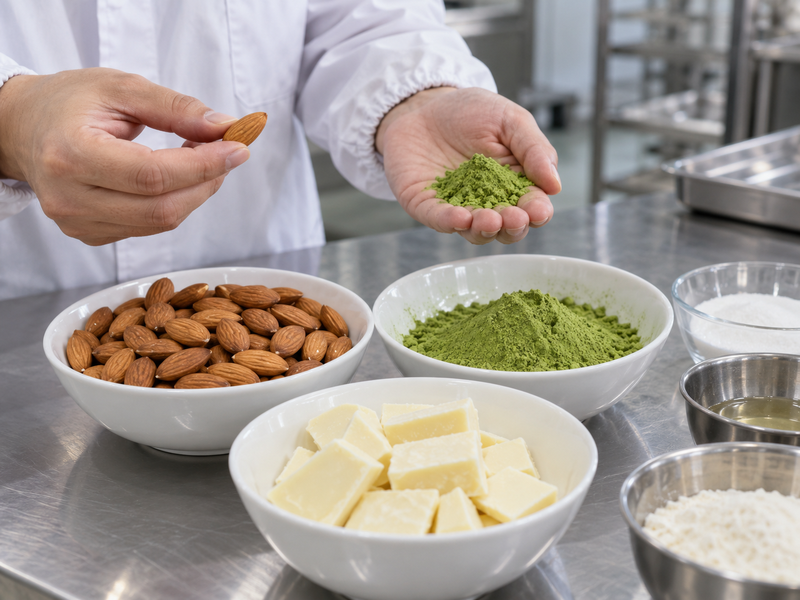
Set the eating occasion and selling format
A retail snack pouch, a gift tin and a bulk topping for an ice-cream chain need different piece size, sweetness and coating durability. A gift item needs to arrive without broken or stuck-together pieces. A foodservice topping may prioritize easy dispensing and a clear matcha note alongside a sweet base. Choose the first channel before judging a trial. Otherwise the team may approve a beautiful hand-coated sample that fails in the package customers will actually open.
Write a one-page product brief describing the almond center, proposed coating, matcha intensity, target sweetness, pack, serving size and destination market. Decide whether white chocolate is part of the offer or merely a prototype binder. Its milk ingredients, sweetness and temperature behavior affect everything from labeling to shelf-life testing. A cocoa-butter-based or other coating system would need its own validation; swapping binders late is not a minor flavor edit. Include a photo of acceptable pieces in a neutral light, plus a definition of unacceptable clumps, exposed centers and loose powder. The approved visual range should be realistic for production, not based on the best ten almonds in a bowl.
2. Which almonds and matcha should be specified?
Judge both materials as parts of one bite
Start with almonds of consistent size and shape. A wide size spread causes different coating pickup, changes count per pack and can complicate roasting. Confirm whether the center is raw or roasted when it reaches the coating operation and whether salt or sugar has been applied earlier. Roast level changes flavor, crunch and the way matcha is perceived. The brand’s specification should cover the accepted almond form, size distribution, condition on receipt and the documents needed for its market.
Matcha should be tested inside the chosen coating, not selected by dry-powder color alone. A bright sample can look dull against a creamy binder, while a more assertive tea may balance a sweet center well. Matcha Village offers culinary, premium and other grades and application-selection support according to its provided company material. Ask for named product samples, current specifications and lot identification, then make comparable pilot batches. Record the powder amount, addition point and finished sensory result. The quote must identify the same material the brand approved.
| Incoming material | What the developer checks | Why procurement records it |
|---|---|---|
| Almonds | Size, breakage, roast and taste | Predicts coating pickup and count |
| Matcha | Identified lot, color and finished-bite flavor | Links approval to a repeat order |
| Coating ingredient | Composition and handling behavior | Affects label, texture and cost |
| Finished sample | Piece weight and visible coverage | Provides a practical acceptance reference |
3. How should the coating system be selected?
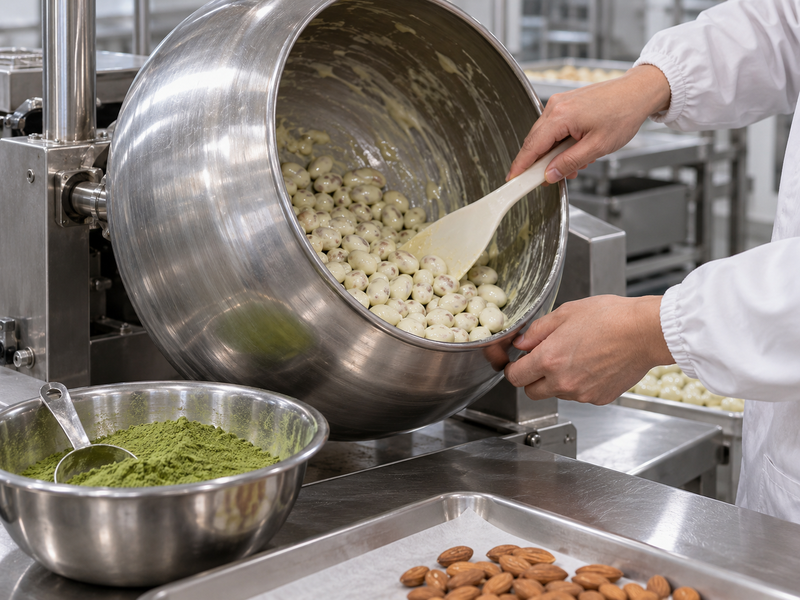
Build a layer that survives normal handling
There are several plausible product structures: an almond with a thin binder and matcha finish, a thicker sweet shell with matcha mixed through it, or a coated nut with a final dry dusting. Each changes the bite. Trial one structure at a time. Record almond weight before coating, finished weight and the visual difference across a representative tray. The brand should choose a target ratio based on eating quality and saleable yield, not on an untested household spoon measure.
Small-scale panning can show whether a coating builds evenly, but production equipment, batch load and cooling conditions may change the result. Ask the co-manufacturer to document the addition sequence and the point at which matcha enters. Powder added directly to a wet or uneven surface may form dark spots; powder blended into a coating phase may distribute differently and change viscosity. The operation should validate any heat-sensitive ingredient step against its actual machine and quality plan.
4. How can every almond receive an even matcha finish?
Use a sample plan, not a handful of favorites
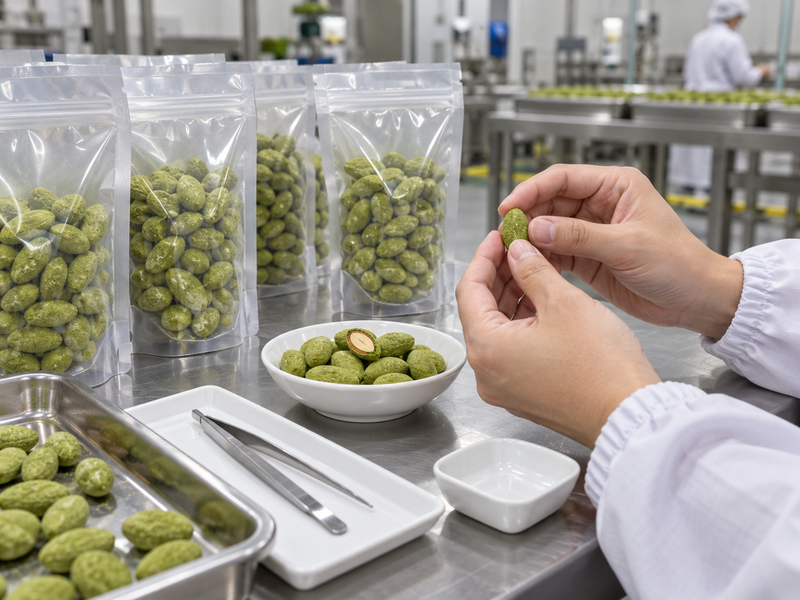
Uniformity is a distribution question. Take pieces from several positions in the coating equipment or discharge stream, then compare color, shell thickness, exposed nut and loose powder. Establish acceptable visual examples with the customer and manufacturer. Sort a representative sample into clear categories, weigh the rejects and note where they occur in the batch. That makes a process adjustment measurable rather than a disagreement over whether the green looks “premium.”
Check the powder addition method and the surface condition before adding more matcha. If pieces are still tacky, a dry finish may collect in spots; if the coating is too set, powder may not adhere. A sieve or controlled premix can help distribute powder, but the exact method should be selected on the production line. Also inspect the bottom of a filled pouch after gentle handling. If the brand wants a nearly dust-free finish, that requirement belongs in the original coating design and pack trial.
| Uniformity signal | How to sample it | Possible next action |
|---|---|---|
| Pale or exposed centers | Inspect pieces across discharge | Recheck addition and surface coverage |
| Thick green clusters | Count stuck pieces in a sample | Adjust load, cooling or separation |
| Loose powder | Inspect pouch bottom after handling | Review finish adhesion and pack movement |
| Variable piece weight | Weigh representative coated nuts | Review almond size and coating pickup |
5. What should a finished almond look and feel like?
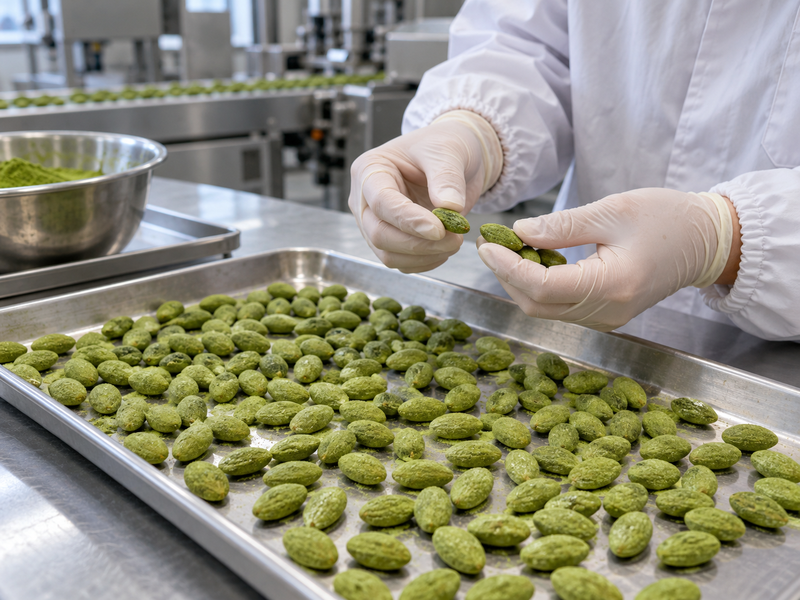
Test color, crunch and the complete aftertaste
The finished nut should be judged after the coating sets and again after the intended storage period. A fresh piece can feel crisp while a later sample softens or develops a waxy coating. Bite through the center and look for an intact almond, even shell and no thick powder pocket. Note the sequence of flavors: sweetness, tea, roast and aftertaste. If bitterness dominates, powder choice and placement can be revisited before adding sugar.
Color should be reviewed under normal retail lighting and against a retained reference, with allowance for natural lot variation. Photograph a spread of pieces, not only a close-up hero shot. Count chipped shells, rubbed patches and fused nuts after packing and transport simulation. The brand may accept some irregularity in an artisanal line, but it should say how much before production. A formal sensory sheet can be short: tea presence, almond crunch, sweetness, appearance and any stale or oxidized note. Keep samples identified by lot and date so a complaint can be traced to a real batch and tested alongside its retained sample.
6. How should allergens and cross-contact be managed?
Treat the almond center as an allergen from the start
Almond is a tree nut, so allergen management is central rather than an afterthought. The US FDA lists tree nuts among major food allergens; other destinations have their own rules. The coating may add milk, soy or other allergens depending on its composition. The final declaration must reflect the actual ingredients and manufacturing route in each selling market. Ask the producer for an allergen statement, line-sharing information, cleaning controls and change-notification process. The brand’s quality and regulatory teams should approve the final label and any precautionary statement based on the real facility.
Work through the line flow: receiving, storage, weighing, coating, cooling, packing and rework. Separate utensils and labeled containers may be needed to prevent the almond batch from contaminating other products; the producer must validate its own controls. Rework is a special decision because loose powder and broken nuts can be collected in ways that mix lots. Decide whether rework is permitted, how it is identified and where it can return. Traceability should link almond, matcha and coating lots to finished packs.
| Allergen question | Record to request | Owner |
|---|---|---|
| Which allergens enter through each ingredient? | Current ingredient and allergen statements | Quality team |
| Which other products share the line? | Facility and cleaning information | Co-manufacturer |
| How is rework handled? | Written rework and lot rule | Production and quality |
| What appears on the pack? | Approved destination-market label | Brand regulatory lead |
7. Which pack protects the coating and the crunch?
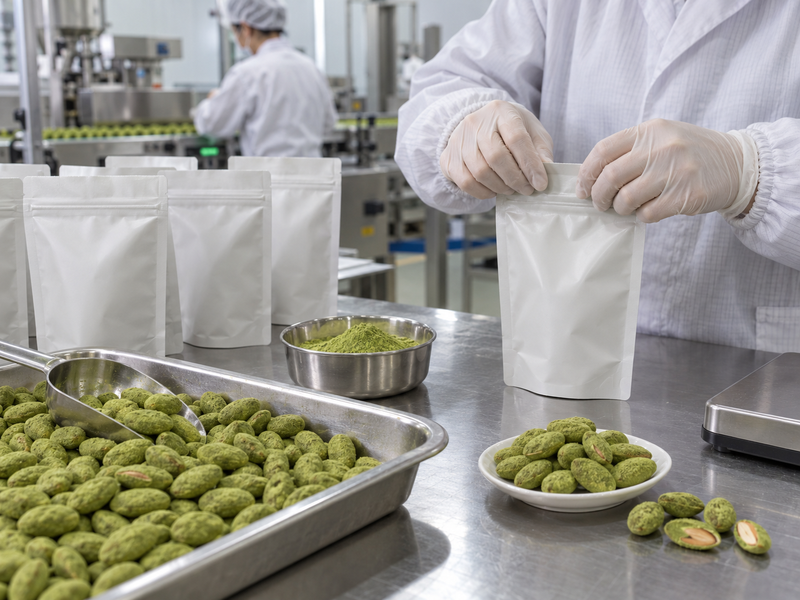
Test the filled pack through its real route
Packaging should limit moisture pickup, light exposure, oxygen exposure and physical abrasion according to the finished product’s measured risks. The right material and closure depend on the coating, target shelf life, pack size and distribution route. A stand-up pouch can sell the product clearly, but the movement of nuts during shipping may knock powder from the shell. A rigid tin may protect presentation at a different cost.
Run handling tests that mimic filling, case packing, pallet movement and retail display. Inspect broken almonds, rubbed spots, clumps and powder accumulated near the seal. If the brand is considering a transparent window, test whether the product maintains its appearance under expected light. Decide how a consumer can close the pack after opening and whether the portion is likely to be eaten at once. A good barrier film does little for quality when the consumer cannot reseal a large pouch. Pack tests should include sensory checks, not only an attractive shelf photograph.
8. What evidence supports shelf life and release?
Validate the finished product under intended conditions
Do not transfer a date from a plain roasted almond or a different chocolate snack. The final product combines nut oil, matcha color and a coating with its own moisture and fat behavior. A suitable shelf-life plan follows the actual recipe, process, packaging and target distribution conditions. The quality team may evaluate water activity, texture, color, rancid notes, coating changes and microbiological criteria appropriate to the product and market. The required tests and acceptance limits must be set by qualified staff; this article cannot supply universal release numbers.
Release checks should also connect the line to the approved sample. Confirm the finished lot, packaging integrity, allergen label, net weight, visible coating distribution and any required laboratory documentation. Retain representative packs under a defined procedure so later complaints can be compared with unopened stock. If a brand switches matcha, almond supplier or coating material, review whether the change alters flavor, color, allergens or shelf life. Write the reapproval trigger before the first purchase order.
| Finished-product check | Decision it supports | Evidence source |
|---|---|---|
| Texture and color over time | Shelf-life claim | Stored final packs |
| Coating integrity | Transport acceptance | Handled case samples |
| Label and net weight | Pack release | Approved artwork and line checks |
| Lot trace | Complaint and recall response | Ingredient-to-pack records |
9. How should a brand cost and scale the product?
Cost saleable packs, including rejects
The relevant matcha cost is its contribution per accepted pack. Measure almond input, coating pickup, matcha usage, broken and fused pieces, dust loss and final saleable weight in a pilot. Add packing, labor, freight and quality checks according to the actual commercial route. A cheaper powder may need a higher inclusion rate for a clear tea note; a thicker coating may increase net weight but raise sweetener cost and hide the nut. Compare offers on a finished-pack basis while keeping sensory quality in view.
Scaling can change coating uniformity even when a small trial looked convincing. A larger pan, different air conditions or longer discharge may shift the proportion of pale and thick pieces. Run a production-sized pilot with sampling from multiple points and record the reject categories. Determine whether the brand will buy finished coated almonds from a co-manufacturer or source matcha and almonds separately. Each model changes ownership of formulation, quality documents and stock. A launch forecast should start from observed sell-through in the intended channel. The next order can be planned once actual pack yield and reorder timing are visible.
10. What should the supplier enquiry contain?
Give Matcha Village an application, not a color request
Tell Matcha Village whether the matcha will be blended into a coating, added as a dry finish or used in both positions. Share the binder type, target tea presence, sample batch size, proposed purchase format, destination market and documents the brand needs. Ask for named samples from appropriate offered grades and compare them in the same almond process. Matcha Village’s product portfolio and application support can help the buyer narrow candidates, but the finished snack requires the brand’s own sensory, allergen, shelf-life and labeling approval.
After the trial, send back the approved sample code, lot, formula placement, sensory findings and coating-performance notes. Ask the quoted supplier to state pack size, material identity, quotation basis, lead time and process for repeat lots. If the brand buys finished goods through an OEM route, request a separate finished-product scope covering packaging, artwork, allergen controls and release responsibilities. Keeping raw ingredient and finished-goods offers distinct avoids a common purchasing error. A traceable pilot batch and a short, concrete supplier brief are the right next steps.
| Enquiry item | Detail to provide | Decision owner |
|---|---|---|
| Application | Coating blend, dry finish or both | Product developer |
| Target profile | Tea strength, sweetness and color range | Sensory panel |
| Commercial form | Bulk powder or finished OEM snack | Procurement |
| Required records | Specification, allergen and destination needs | Quality team |
| Repeat supply | Estimated use and lot review method | Operations |
FAQ
Q1: Are matcha almonds always coated in white chocolate? No. White chocolate is one possible binder; other coating systems need their own flavor, process, allergen and shelf-life tests.
Q2: Can dry matcha simply be shaken onto almonds? A dry finish must adhere evenly and survive packing. Test rub-off and coverage before choosing that method.
Q3: What allergen must be declared? Almond is a tree nut. Other declarations depend on coating ingredients, shared equipment and local requirements.
Q4: How can a brand judge coating consistency? Sample pieces across the batch and compare exposed centers, clumps, weight spread and loose powder against an approved range.
Q5: What should a matcha supplier receive? Send the coating method, target flavor, destination, expected use and document requirements, then request identified samples and terms.