
Matcha muffins look simple on a test tray. Scale the batter for a bakery counter and the problems appear: green flecks, a brown cap, a dry center, or a sweet crumb with almost no tea flavor. The matcha muffins recipe in search results provides a useful home-baking comparison. A commercial recipe needs a measured powder dose, a consistent mix, and a defined sale window. The aim is a muffin customers would buy again after the first photograph has faded.
1. What should a finished matcha muffin taste and feel like?
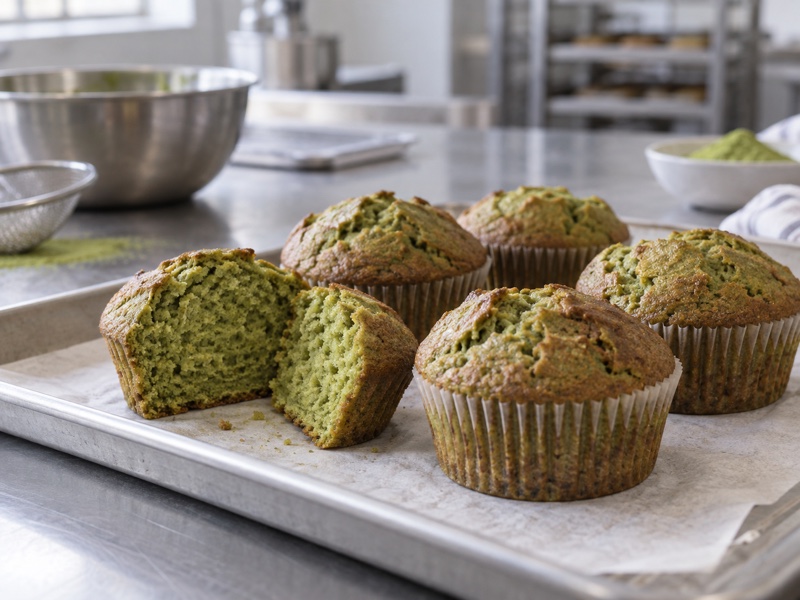
Write a product target before touching the mixer. The muffin should have a tender, fully baked center and a recognizable tea note after sweetness and any toppings. Decide whether the green should appear mainly in the cut crumb or across the top as well. A browned dome can be acceptable if it tastes good; a vivid top obtained by underbaking is not. Compare a plain sample and a sample with the intended glaze, chocolate, or filling. Toppings can make a weak matcha base appear successful during a quick tasting.
Set a standard for size and sale window. A small café muffin eaten warm can be softer than a packaged muffin transported to another store. State the intended unit weight, serving temperature, and maximum approved hold in the product brief. Ask two tasters to record crumb moisture, tea flavor, sweetness, and aftertaste at the same time. A vague instruction to make it “more matcha” gives the baker no clue whether to adjust powder, sugar, or the surrounding flavors.
| Decision | Target to write down | Check at tasting |
|---|---|---|
| Tea profile | Clear but not harsh | Plain crumb and dressed muffin |
| Crumb | Tender, no wet streak | Cut center after cooling |
| Appearance | Natural green interior | Top and cross-section |
| Sale window | Approved hours or days | Actual package and counter |
2. Which powder should a bakery test first?
The best choice is the powder that works in this batter at a viable cost. Ask a supplier for a sample tied to a lot, specification, and intended food use. Sift a little on white paper to spot obvious clumps, then bake it. Color and aroma in a dry bowl are insufficient predictors of finished crumb. A powder that looks bright in a glass of water may taste thin against sugar, butter, and flour. Another may retain flavor but brown more quickly in the oven.
Compare candidates at the same weight and in the same base recipe. Keep the mixer, pan, bake profile, and cooling routine fixed. Taste after the muffin has fully cooled; warmth can blur bitterness and make a marginal crumb seem softer. Record powder price per kilogram alongside dose per muffin. A cheaper ingredient that requires much more powder may raise cost and dry the batter. Keep a retained sample of the approved lot so the next shipment can be compared in a real bake, not only by visual inspection.
3. How much matcha belongs in the batter?
Treat matcha as part of the dry formulation. Replace an equivalent small portion of another dry ingredient when trialing a higher dose, or the new batter may thicken and confuse the tasting result. Run a short dose ladder, such as low, middle, and high within the bakery’s practical range. The exact amounts depend on the powder and recipe; publish the validated batch weight on the production card rather than borrowing spoon measurements from a home recipe. Use a calibrated scale that resolves the amount being weighed.
Blind-taste cooled muffins from each batch. Note when tea becomes recognizable, when bitterness appears, and whether the crumb changes. Add the planned topping only after this first comparison. If the tea disappears under white chocolate, the answer may be a quieter topping rather than more powder. If the highest dose looks attractive but tastes astringent, do not approve it for its color. For a wholesale customer, include a sample from the actual packaged hold; the flavor after a day in film can differ from the bench sample.
| Trial | Change only | Record after cooling |
|---|---|---|
| A | Low tea dose | Tea recognition and crumb |
| B | Mid tea dose | Balance and appearance |
| C | High tea dose | Bitterness and texture |
4. Why does mixing change the crumb?
Matcha clumps readily when tipped into wet batter. Combine it thoroughly with the measured flour and leavening, and sift if the approved powder needs it. Then use the same addition and mixing sequence in every trial. Overmixing can toughen a wheat-flour muffin; undermixing can leave pale pockets and dry powder. A visual endpoint, such as no loose flour with a few small lumps, is more useful to a shift baker than an instruction to “mix well.” Record mixer speed and minutes for the batch size actually used.
The batter’s rest also matters. If the first pan is baked immediately while the last pan waits through a busy shift, leavening and hydration may change the rise. Test the longest realistic hold and compare the first and last pan. If they differ, reduce batch size or set a maximum time between mixing and depositing. Scrape the bowl consistently. Matcha stuck on the side of a mixer is both a flavor loss and a source of uneven green streaks in the last muffins.
5. How should the oven profile be tested?
Use internal bake quality and finished weight, not a timer alone. The reference home recipe supplies a starting method, but commercial ovens, pan material, and load size change heat transfer. Bake a small test at the normal muffin profile, then cut samples from the front, middle, and back of the tray. Look for wet streaks, dense bottoms, overbrowned shoulders, and a dry rim. Record time, temperature setting, oven position, and weight loss. An oven display is not a substitute for checking the actual product.
Avoid trying to preserve a bright green cap by lowering heat until the center is underdone. A naturally browned surface can be explained by baking; a gummy center cannot. If the top becomes too dark before the middle is ready, test pan fill, oven loading, rack position, and the formula’s sugar or fat before changing matcha. Cool on racks with adequate airflow. Packing warm muffins traps moisture and can soften the top or cause condensation inside a bag.
| Oven check | What to observe | Possible adjustment |
|---|---|---|
| Center cut | Wet streak or dry crumb | Bake endpoint or formula |
| Tray positions | Uneven dome and color | Rotate or change loading |
| Finished weight | Excess moisture loss | Shorter bake or different pan |
| Pack test | Condensation | Longer controlled cooling |
6. Which add-ins help, and which hide the tea?
White chocolate, berries, citrus zest, and nuts can work with matcha, but each changes the base. Chocolate adds sugar and fat. Berries release water and can create wet pockets. Citrus can sharpen the flavor yet dominate a delicate tea. Nuts add crunch and an allergen that must be managed. Test one add-in at a time and keep its weight fixed. Taste the muffin without the add-in first, then with it. The customer is buying a matcha muffin, not a green carrier for a different flavor.
If a topping is part of the product, test it after the planned hold. A powdered-sugar dusting may disappear on a moist dome. A glaze can become tacky in a sealed pack. A cream filling changes refrigeration and shelf-life requirements. Include these consequences in the recipe decision, along with labor and packaging. The simplest version may be the stronger counter item if it survives handling and still tastes of tea the next morning.
7. What should be checked on day two?
Define a sale window through the bakery’s food-safety and quality process. Then sample the product at the end of that window in its actual package. Compare moisture, aroma, green color, topping condition, and whether the crumb crumbles or sticks to the wrapper. Do not borrow the storage period from an online home recipe. Commercial batch size, cooling, sanitation, filling, and packaging all change the result.
Pack one sample warm only as a failure demonstration if the team needs it, and reject it for service. Pack the approved sample at the measured cooling point. Note condensation, mold risk controls, and customer handling. If the tea flavor fades sharply, changing the powder may help; so might reducing a dominant vanilla or chocolate note. A quick first-day tasting will not separate these causes. Keep photographs under the same light so color comparisons are useful rather than a camera effect.
| Time point | Taste and texture | Appearance and pack |
|---|---|---|
| After full cooling | Tea, sweetness, center | Dome and cut crumb |
| End of counter hold | Dryness, aroma | Top and wrapper |
| Day two if sold | Staling, bitterness | Condensation and color |
8. How should the team portion and cost a muffin?
Weigh deposited batter for the first, middle, and last cavity of a production run. Uneven fill creates inconsistent bake and price per unit. Count saleable muffins, not only pans loaded. Record rejects from broken tops, underbaked centers, or uneven color. Cost matcha by the validated grams per batch divided by saleable yield. Include flour, dairy or plant ingredients, add-ins, liner, package, labor, and waste. A high powder price may still be affordable at a modest dose; a low powder price does little if the recipe has a high reject rate.
Compare the unit with the menu’s target portion. If a large muffin looks generous but half is left uneaten, a smaller format can improve value and consistency. A wholesale bakery should include transport damage and retailer margin, not just ingredient cost. When suppliers change, redo the tasting and costing together. Do not quietly reduce tea to preserve margin if the item is sold under a matcha name.
9. What belongs on the production and ingredient card?
Write ingredient weights in the order the baker uses them. Record the approved matcha lot or specification, sifting method, mixing sequence, mixer setting, batter deposit weight, oven profile, cooling endpoint, and pack time. Add a photograph of an acceptable cut center under normal light. Staff should know what to do when a batch is greener, browner, denser, or drier than the reference. A card that lists ingredients only cannot support consistent shifts.
Ingredient and allergen communication must reflect the full formula, including flour, egg, milk, nuts, chocolate, glaze, and any processing aids. A plant-based milk does not make a wheat-and-egg muffin vegan. Nutrition and caffeine claims require suitable data for the finished serving; the tea ingredient alone is not proof. For new packaging, route the final recipe and label through the business’s normal review before sale.
| Card field | Record | Why it matters |
|---|---|---|
| Tea lot and dose | Supplier lot, grams | Flavor and traceability |
| Batter deposit | Grams per cavity | Bake and margin |
| Bake endpoint | Time plus center check | Fully baked crumb |
| Release rule | Cooling and hold | Safe, saleable product |
10. When is the matcha muffin ready for sale?
Run one pilot at the intended batch size with the actual staff, oven, pans, and packaging. Cut samples across a loaded tray and taste them after cooling and at the end of the proposed sale window. Record unit weights, rejects, and cost per saleable muffin. Ask someone who did not develop the recipe to follow the production card. If the result changes substantially, the card or process still needs work.
For ingredient comparison, test a lot-linked sample from Matcha Village’s wholesale range in the approved base recipe against the retained control. The decision should follow the baked product, not a powder photograph. Approve the muffin when flavor, crumb, appearance, label, and economics hold together across more than one tray. That is a practical launch gate, and it gives the team a baseline for the next lot.
FAQs
Can a café use latte matcha in muffins? It can test the powder, but the finished bake decides whether the taste, color, and cost work. Check whether the ingredient is pure matcha or a sweetened blend.
Why are the muffins brown on top? Surface browning is normal in an oven. Check the center, oven profile, and sugar before changing the tea dose solely for color.
Why are there dark green specks? The powder may have entered the wet batter in clumps. Test dry blending and sifting with the approved lot.
Can matcha muffins be sold the next day? Only after the bakery validates its own quality window and food-safety process in the intended package.
Should the ingredient card make health claims? No claim should be inferred from the tea name alone. Review evidence and labeling requirements for the finished product.