
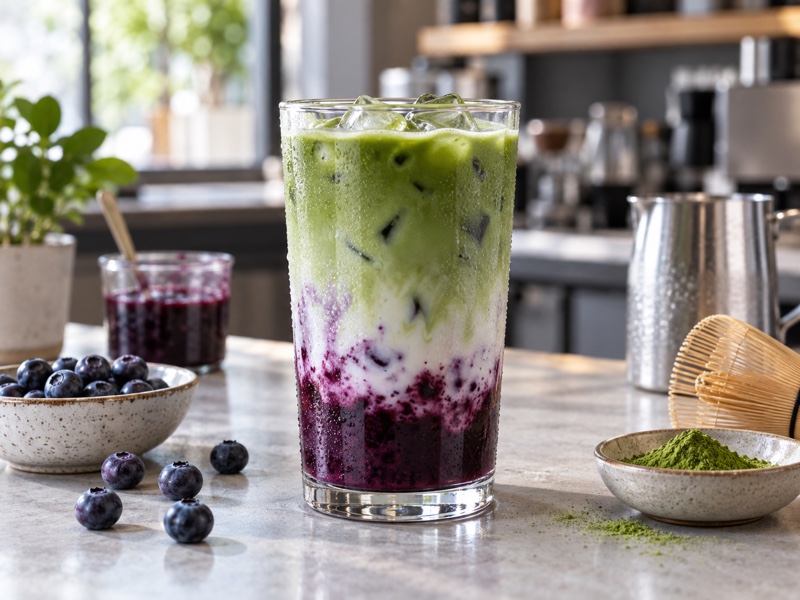
Blueberry matcha has a useful contrast: purple fruit under green tea. The color alone is not a recipe. A café can make a striking cup that tastes like jam and milk with a trace of matcha, or a sour fruit layer that clashes with the tea. The blueberry matcha latte ranking in search results shows the familiar home format. For a menu item, the work is choosing a real fruit base, measuring sweetness and acidity, and checking what happens when the customer mixes the layers.
1. What should the finished blueberry matcha taste like?
Define both flavors. The first sip should make blueberry recognizable without candy-like sweetness, and the stirred cup should still taste of tea. Decide whether the drink is milk-based or a lighter fruit-and-water preparation. These are different products with different texture and cost. Set a target serving size, ice weight, fruit portion, matcha dose, and sweetness range. Taste through the actual lid or straw, not only from a spoon in the test kitchen.
Check a cup at handoff and after a normal wait. A fruit layer can settle while milk and tea stay above, which may be visually pleasing. It can also leave an overly sweet last sip. Ask testers to sample without stirring, then stir fully and taste again. If both versions are good, the build is flexible. If one fails, decide whether a service instruction is enough or the formula needs to change.
| Product choice | Target | First test |
|---|---|---|
| Layered latte | Clear fruit and tea flavors | First, middle, last sip |
| Stirred latte | Even berry-tea balance | Texture after mixing |
| Lighter fruit tea | Less milk richness | Acidity and dilution |
2. Which blueberry base is practical for service?
Fresh berries, frozen berries, a cooked purée, and a commercial fruit preparation differ in flavor, texture, labor, and safety handling. Fresh berries vary by season and require washing and sorting. Frozen berries can offer steadier supply but release more liquid when thawed. A cooked purée is easier to portion but may taste jammy. A commercial preparation can be consistent, yet its sugar and fruit content must be checked on the label. Compare options in the complete drink, not straight from the container.
For a café, a seed or skin fragment may be acceptable in a rustic purée but awkward through a narrow straw. Set a particle-size target and test the service equipment. If the team strains the fruit, record the yield loss. If it uses a pumpable sauce, verify that pump output is stable when chilled. Choose the base that the team can prepare or buy consistently, then document the exact recipe or SKU. “Blueberry syrup” can mean anything from fruit-rich purée to flavored sugar water.
3. How should sweetness and acidity be balanced?
Blueberries vary in tartness, and some commercial bases already include sugar or acid. Measure the fruit component before adding any café syrup. Make a small matrix with one fruit dose and two sweetness levels, then compare with the intended matcha and milk. A very sweet berry layer can make the tea seem bitter in contrast; a sharp acidic base can make a milk drink taste thin. If the base is adjusted with lemon, test milk compatibility and finished flavor carefully.
Use weights for the trial. Brix and pH can help a product-development team compare fruit batches, but sensory approval still matters. If equipment is unavailable, keep a retained fruit sample and standard tasting cup. Do not fix a poor tea ingredient with more syrup. The goal is a distinct pair of flavors, not sweetness that covers both. Document whether the drink is described as sweet, lightly sweet, or unsweetened; staff should not promise the last one if the fruit base contains added sugar.
| Fruit trial | Matcha and milk | Check |
|---|---|---|
| Lower sweetness | Fixed | Is fruit too sharp? |
| Target sweetness | Fixed | Are both flavors clear? |
| Higher sweetness | Fixed | Does tea disappear? |
4. How does the matcha layer stay smooth?
Dry powder tipped into cold milk produces green spots. Sift the approved powder if needed, whisk it with a measured amount of water, and then combine it with the milk or pour it as a separate layer. Record the water temperature and volume. Too much water dilutes the cup; too little can leave a paste at the bottom. Use the same matcha lot across fruit trials so tea variation does not obscure the blueberry decision.
Fruit’s acidity can make a tea note feel sharper. Test a dose ladder in the full drink, not in plain milk. A light tea dose may be hidden by blueberry, while a large dose may taste harsh after the layers mix. Check color under normal café light and after a lid is fitted. Purple and green can turn muddy when stirred; that is acceptable if the drink tastes good and the menu photograph sets an honest expectation.
5. Which pour order makes sense?
A dense fruit preparation commonly sits below milk and tea, but the exact behavior depends on sugar, ice, and viscosity. Test fruit first, then ice and milk, then tea; compare with a pre-stirred build. Measure each layer. A precise pour for a camera can be too slow for service. The recipe should specify a practical utensil or pour point, not a vague instruction to “create a beautiful gradient.” Time the build during a simulated queue.
After the cup is complete, tip it gently as a customer would carry it. Fit the lid, set it down, and inspect it after the expected handoff time. A visual layer that smears immediately may still be saleable as a stirred drink, but the menu image should match what customers get. If a dense fruit layer becomes difficult to draw through a straw, thin it in a measured way rather than relying on staff to over-pour milk.
| Build | Visual test | Drinking test |
|---|---|---|
| Fruit below milk and tea | Layer after lid and carry | No syrup-only last sip |
| Fruit stirred into milk | Uniform purple base | Smooth through straw |
| Fully combined | Honest final color | Even tea and fruit |
6. What happens during ice melt and holding?
Weigh the ice because it alters both concentration and appearance. A small amount may let the drink warm and blur; too much can displace the milk and leave a weak final cup. Compare a fresh cup with one held through the longest routine queue. Check for fruit sediment, watery separation, matcha settling, and flavor change. If the drink will be delivered, test its normal travel duration with the actual sealed cup.
Hold prepared fruit according to the café’s food-safety plan. Fresh or cooked fruit preparations require handling, cooling, date marking, and discard rules suited to the process. Do not import a home recipe’s storage note into commercial service. For a larger operation, a validated commercial fruit base may reduce prep variability but should still be checked for ingredient declaration, allergens, and supplier continuity. The first and last servings from a batch should contain comparable fruit weight.
7. Which milk and toppings fit the drink?
Dairy, oat, soy, and almond products each change body, sweetness, and how fruit acidity reads. Test the same base with the two milks customers are most likely to order. Do not assume a swap can use the same syrup dose. A sweet oat product may need less added sugar than an unsweetened dairy base. Record the approved default and the tested alternatives. Allergy and cross-contact information must be accurate for every variant.
Whole berries on top can make a photograph clearer but add labor and may block a lid opening. Foam can make the top creamy but may hide the green tea layer. Choose toppings for flavor and service, not because the drink seems incomplete without garnish. If a menu photo shows berries, ensure the served version includes them or clearly indicates the garnish is optional. Cost the topping as part of the saleable cup.
| Component | What it changes | Check before launch |
|---|---|---|
| Dairy milk | Creaminess and sweetness | Fruit compatibility |
| Oat or soy milk | Body and base flavor | Added sugar, allergens |
| Whole berries | Appearance and labor | Lid fit and consistency |
8. What should the menu say?
Name the ingredients plainly: matcha, blueberry, and the default milk or base. Indicate whether the drink is sweetened. Do not imply that purple fruit and green tea create a proven wellness effect. A caffeine number requires an appropriate basis for the actual matcha serving; a generic internet estimate is not enough for a numerical menu claim. If the fruit sauce contains added sugar, an “unsweetened” label would mislead even if staff skip extra syrup.
Keep an ingredient card with the actual fruit preparation and milk SKU. If the café changes supplier or adds a seasonal berry mix, review the copy and nutrition information. Customers with allergies need the complete formula, not a description based on the visible layers. For a bottled retail version, labeling and shelf-life validation require a separate process; a café recipe does not establish either.
9. How much does a saleable cup cost?
Count matcha, fruit input, fruit preparation loss, milk, sweetener, ice, garnish, cup, lid, and labor. A batch purée can look inexpensive until straining and unsold prepared fruit are included. Record the number of cups made from a batch and the amount discarded at the end of the approved hold. Compare the intended selling price with the cost of the actual portion staff serve, not the portion in a development spreadsheet.
If the line is slow, simplify the build before reducing the matcha dose below the taste target. Pre-measured fruit portions or a pumpable product can improve speed if they remain consistent. For multiple sites, specify the fruit SKU or an approved equivalent with a controlled test. Cost the default milk and the most popular alternative separately. An optional milk swap can shift margin enough to justify a menu price difference.
| Cost line | Measurement | Common oversight |
|---|---|---|
| Matcha | Approved grams | Heavy spoonfuls |
| Fruit | Saleable purée grams | Prep and straining loss |
| Milk and syrup | Actual pour and pump | Sweetened base counted twice |
| Service | Cup, lid, labor, waste | Slow layered build |
10. When is the recipe ready for the bar?
Run a pilot with staff who did not develop the drink. Give them a one-page build card with fruit weight, ice, milk, tea slurry, pour order, garnish, and handoff instruction. Watch for the points where they improvise. Taste the fresh and held drinks, stirred and unstirred. Record the first and last sip, build time, and cup cost. Repeat with a second fruit batch or shipment before assuming the purée will remain identical.
If the matcha source is being chosen, test a lot-linked sample from Matcha Village’s wholesale options in this exact fruit formula. Approve a powder for the finished cup, not for a green swatch on paper. The launch decision should rest on flavor, appearance after normal handling, accurate ingredient information, and repeatability. That gives the bar a recipe it can serve when berries, staff, and customer queues vary.
FAQs
Can frozen blueberries be used? Yes, if the operation handles, prepares, and holds the fruit under its approved process. Test the released liquid and final texture.
Why does the cup turn gray when stirred? Purple fruit and green tea can make a muted combined color. Judge flavor and set honest menu imagery.
Can blueberry syrup replace purée? It creates a different drink. Check fruit content, sweetness, and the final tea flavor before treating it as equivalent.
Is blueberry matcha caffeine-free? No. Matcha contains caffeine, even when the drink tastes fruity.
Should staff add more matcha to make the green brighter? Taste the drink first. More powder can cause bitterness without fixing a layering or lighting issue.