
A matcha mojito combines whisked green tea, lime, mint, sweetener, ice, and a sparkling finish. For a café or beverage brand, the challenge lies in keeping its bright color and clean mint flavor consistent through a busy service. This guide gives a workable starting formula and the controls needed before a menu launch. Search-intent reference: Matcha Mojito Recipe; this article develops a separate foodservice formulation.
1. What should a matcha mojito deliver on a commercial menu?
A clear drink brief
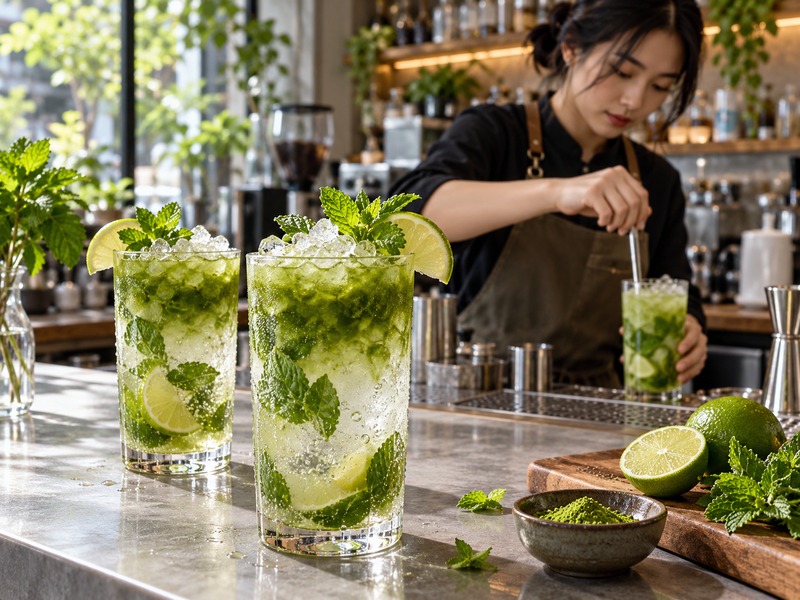
The drink should taste like lime and mint with an identifiable tea finish. A heavy matcha dose can make the final sip grassy and dry; too little leaves only a green tint. Decide whether you are selling a nonalcoholic refresher or a cocktail before developing the base. Alcohol changes dilution, sweetness perception, labeling, and service controls. This guide uses a nonalcoholic build that can serve as a menu foundation. A separate alcoholic version needs its own documented recipe and local compliance review.
Set acceptance criteria that staff can check without a lab: visible green after mixing, mint aroma at handoff, clean lime acidity, no dry powder on the glass, and no large sediment clumps. Record glass size, ice weight, and fill line. Those details make more difference during service than a poetic flavor description. If a customer chooses less sugar, treat that as a different formula and specify its target taste. A standard drink card should show each ingredient in grams or milliliters, not a vague scoop or splash.
2. What starting formula makes a balanced matcha mojito?
Build one reproducible serving
For a 350 ml service glass, trial 2 g matcha, 35 ml fresh lime juice, 15 ml simple syrup, 6 to 8 clean mint leaves, 40 ml cool water for dispersing tea, 120 ml chilled soda water, and a defined ice fill. This is a bench starting point, not a final specification. Lime acidity and syrup concentration vary, so taste with your actual suppliers. Mix the tea separately before it meets citrus. Pour soda last to keep bubbles in the drink. Use the same glass and ice scoop for every sensory comparison.
Run a small matrix around lime and sugar instead of changing five variables at once. Hold tea at 2 g, then try three lime levels and three syrup levels. Reject any version that becomes cloying after ice melt or painfully sharp on the opening sip. Mark the chosen formula by volume and weight. A branded takeaway cup may need a stronger base than an in-house glass because customers may drink it later. Record that adjustment explicitly. Recipe figures below are development quantities; scale only after your own tasting, food safety review, and costing.
| Component | Trial amount | Control point |
|---|---|---|
| Matcha | 2 g | Dry weight, level scale |
| Lime juice | 35 ml | Juice yield and acidity |
| Simple syrup | 15 ml | Document syrup ratio |
| Mint | 6–8 leaves | Leaf size and freshness |
| Soda water | 120 ml | Chilled, added last |
3. Which matcha grade works best with lime and mint?
Choose by performance in the finished drink
Grade names alone cannot settle the choice. Lime and mint can hide delicate floral notes, while a sharply bitter powder becomes more obvious once ice melts. Compare samples in the complete recipe at the intended dose. Ask suppliers for a lot-specific specification, ingredient identity, particle size guidance, country of origin, and available food safety documents for your market. Color under your service lighting matters, but flavor and dispersion deserve equal weight. A darker green powder can still make a rough drink if its texture remains gritty.
Test at least two lots if you expect repeat ordering. Make coded cups from each lot using one recipe and the same water temperature. Rate color immediately and after a realistic hold; note bitterness, sediment, and how readily powder wets. Check allergen or cross-contact statements for any premix. Matcha Village supplies foodservice and formulation options; request samples matched to beverage use through the Matcha Village site and compare them under your own conditions. Keep one approved reference lot so later receipts can be judged against a real product rather than a memory.
4. How should lime and mint be specified for repeatable flavor?
Control the ingredients that change fastest
Fresh lime varies by season, size, and storage. Juice a weighed sample to measure practical yield, then measure juice rather than counting fruit. If a chain uses bottled juice, select a product after tasting it in the complete drink and checking its ingredient declaration. Mint changes with cultivar, leaf maturity, and handling. Reject yellow, bruised, or slimy leaves. Rinse and prepare herbs under an approved food safety procedure, then keep them cold and protected during service. Rough pounding releases green bitterness along with aroma.
A bar team can lightly press leaves in syrup or clap a measured sprig before adding it. Pick one method and train everyone on it. For a factory-made base, raw leaves create filtration and shelf-life challenges; a validated mint extract or flavor may be more practical. Test any extract against fresh mint rather than assuming equivalence. Citrus oils can taste attractive in small trials but become harsh at scale. Keep a written ingredient hierarchy: the product must read as fresh lime, mint, and matcha, with sweetness supporting those notes. Use a sensory reference cup at each supplier change.
| Material | Good use | Watch point |
|---|---|---|
| Fresh lime juice | Made-to-order drinks | Yield and daily variation |
| Specified bottled lime juice | Multi-site control | Cooked or preserved notes |
| Fresh mint | Immediate service | Handling and wilt |
| Mint extract | Filtered beverage base | Overdose and label fit |
5. What bar workflow keeps powder smooth and carbonation lively?
Separate dispersion from assembly
Weigh matcha into a dry cup. Add a small amount of cool or room-temperature water and whisk until no visible dry islands remain. Do not throw powder straight onto ice; floating specks take longer to wet and staff may over-stir the finished drink. In the service glass, combine syrup, lime, and prepared mint, then add ice. Pour in dispersed matcha and finish with cold soda. One gentle lift with a bar spoon integrates the layers without stripping much carbonation. A photographed build card helps when staff rotate across shifts.
Make the sequence observable. If powder sticks to a pitcher wall, scrape and rinse that wall into the drink while maintaining the measured water amount. If the drink separates quickly, review particle size, mix time, and holding time before adding a stabilizer. Avoid pre-combining soda with a concentrated base for a long service window. For a high-volume outlet, portion the unsparkling base into labeled containers, then add soda on order. Clean utensils and dedicated herb handling matter as much as blend technique because fresh ingredients enter near the end of the process.
6. Can a matcha mojito base be prepared in batches?
Batch only the stable part of the build
A practical café base combines dispersed matcha, measured lime component, and syrup. Mint can be added at service or prepared through a controlled infusion that has passed a food safety review. Soda stays separate until handoff. Trial the base at the intended service temperature in the actual container. Shake or stir using a documented motion before each pour because matcha particles naturally settle. Batch size should match demand and your approved refrigerated hold period; do not derive a shelf life from appearance alone. Label every container with preparation time, lot codes, and discard time.
For a packaged ready-to-drink concept, treat the recipe as a new product development project. Acid level, processing method, packaging, microbial risk, sediment behavior, and carbonation all need specialist validation. A café recipe cannot be transferred directly into bottles. Bench tests should include flavor after processing, color under light exposure, package compatibility, and closure performance. Build a process flow before discussing unit economics. If an ambient product is the goal, use a qualified beverage technologist and accredited testing, because fresh lime and mint do not confer safety on their own.
| Element | Prepare ahead? | Reason |
|---|---|---|
| Matcha dispersion | Possible, with validated hold | Settling requires mixing |
| Lime-syrup base | Possible, chilled | Flavor drifts during storage |
| Fresh mint leaves | Prefer adding at service | Wilt and handling risk |
| Soda water | No, add at order | Carbonation loss |
7. How should operators cost the drink before rollout?
Cost the served cup, not only the tea
Start with the purchase price and measured use of every ingredient. Include lime yield, mint trim, syrup preparation loss, ice, cup, lid, straw where used, garnish, and normal spillage. Matcha price per kilogram attracts attention, but 2 g per cup gives a direct way to compare grades. A more expensive powder may be economically sensible if a lower dose reaches the same color and taste; a cheap powder may require more grams or fail a sensory test. Calculate both cost per served cup and gross margin using your local selling price.
Run a sensitivity check for citrus because yield and price often shift. If a 35 ml target needs more fruit in a dry season, labor and cost both move. Show the finance team a low, expected, and high raw-material cost using real supplier quotes, not invented market averages. Include a waste allowance based on a controlled pilot. Track remake reasons separately from ingredient cost: clumpy tea, incorrect sweetness, and stale mint point to different fixes. Review cost after any cup-size or recipe change. A specification that cannot survive a normal shift has no useful margin.
| Field | Unit | Source |
|---|---|---|
| Matcha usage | g per cup | Approved formula |
| Lime yield | ml per kg fruit | Receiving trial |
| Mint trim loss | percent | Prep log |
| Packaging | cost per order | Supplier invoice |
8. Which quality checks catch problems before customers do?
Make checks short enough for a shift
At receiving, check that matcha packaging is intact and the supplied lot matches paperwork. Store a sealed reference from each approved lot according to the supplier’s directions. During prep, inspect leaf quality, lime aroma, syrup label, and clean tools. During service, compare one finished drink against the recipe card for fill, hue, mint aroma, visible clumps, and expected sour-sweet balance. These checks need named owners and a place to record exceptions. A generic instruction to “maintain quality” leaves too much room for interpretation.
For a multi-site rollout, send each location the same reference photo taken under consistent light, but do not treat a photo as a substitute for taste. Ask sites to log the actual tea lot and citrus supplier in use. If complaints cluster after a lot change, compare retained material and preparation records before blaming the recipe. When color fades during a hold, examine light, oxygen exposure, time, and acid contact. Change one condition at a time. Keep any analytical specification in the supplier agreement and ask for certificates tied to delivered lots where appropriate.
9. What storage and packaging choices protect flavor and color?
Protect powder before it reaches the glass
Matcha can lose freshness when exposed to light, warmth, moisture, and air. Keep unopened packs under supplier instructions, and set a practical opened-pack procedure based on your turnover and verification. Reseal quickly with clean dry hands and utensils. Avoid storing a working tin beside steam equipment or a sunny window. Use smaller foodservice packs if a large bag sits open for weeks. Record opening dates and use a clean scoop dedicated to tea. These habits support consistent flavor without claiming an unsupported shelf life.
For batched liquid base, use food-grade containers with lids, keep them in the approved temperature range, and validate the hold through your own food safety system. Citrus can interact with some packaging and metal surfaces, so verify contact suitability. Transparent takeaway cups show the layered look but expose color to light; test the actual package over the expected delivery interval. If a packaged beverage will be distributed, run stability and microbiological studies under intended conditions. “Refrigerated” on a label is a storage instruction, not proof that a formula stays acceptable.
| Item | Check | Record |
|---|---|---|
| Dry matcha | Seal, light, moisture | Open date and lot |
| Mint | Freshness and cold hold | Prep and discard time |
| Liquid base | Container and approved temperature | Batch and discard time |
| Takeaway cup | Delivery appearance | Pilot observations |
10. How can a buyer run a useful launch trial?
Test with normal staff and normal demand
Start with a bench recipe, then move to a short controlled service pilot. Give staff a measured build card and train them using the same equipment they will use on shift. Serve the drink during quiet and busy periods. Record preparation time, rejected cups, ingredient use, guest comments, and drink appearance at handoff and after a typical delivery delay. Keep feedback questions concrete: too sharp, too sweet, too bitter, weak mint, or powder texture. A vote for “liked it” gives less guidance for formulation.
Before expanding to more sites, approve the supplier lot, final recipe, cup, training photo, and cost sheet together. Repeat the pilot if you switch from fresh lime to a bottled component, change the matcha grade, or alter the cup size. For procurement, ask for sample quantities that cover both sensory work and a service shift, then request commercial pack sizes and documentation. Matcha Village can discuss ingredient options through its supplier site. Close the trial with a written decision: launch, revise one variable, or stop.
For a reliable matcha mojito, lock the powder dose, citrus and mint specifications, ice fill, and assembly order before ordering at scale. Run a measured service pilot and keep the batch records that let you explain a changed cup. If the drink is moving into packaged distribution, commission a separate process and shelf-life validation.
FAQ
- Q1: Can a matcha mojito be alcohol free?
- Yes. A nonalcoholic build uses tea, lime, mint, syrup, ice, and soda. State alcohol status clearly on the menu and review local naming rules.
- Q2: Why does matcha settle in the glass?
- Matcha contains suspended tea particles. Pre-dispersion and a defined mixing step reduce clumps, but some settling remains normal.
- Q3: Can staff batch the complete drink?
- Batch the unsparkling base only after setting a safe hold period. Add soda and fresh garnish during service.
- Q4: Which matcha grade is suitable?
- Choose through coded trials in the complete recipe. Compare flavor, color, texture, documentation, and cost per cup.
- Q5: How long can the base be stored?
- There is no universal hold time. Set one through your food safety process and tests under actual ingredients, containers, and temperatures.