
Matcha limeade is a chilled drink made from dispersed matcha, lime, water, and sweetener. Its simple ingredient list makes every imbalance visible: a bitter tea lot, variable citrus, or poorly mixed powder can spoil a whole service batch. This guide turns a home-style idea into a controlled starting point for cafés and beverage developers. Search-intent reference: Matcha Limeade; the formulation and commercial checks below are original.
1. What makes matcha limeade different from lemonade?
Define the expected flavor
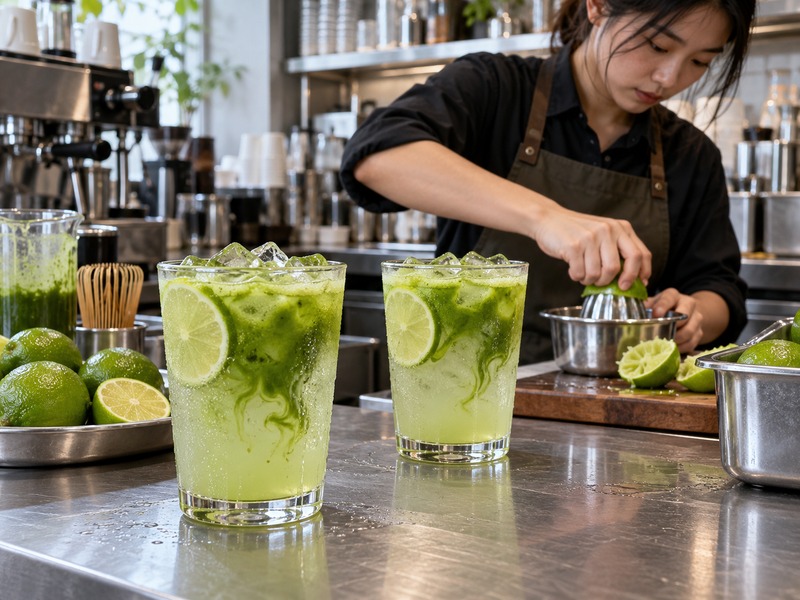
Lime gives a sharper aromatic profile than lemon, while matcha brings tea body and a dry finish. A café menu should state what a customer can expect: bright citrus, measured sweetness, and a noticeable green tea note. It should also identify whether the drink contains added sugar, because a sugar-free version needs a separate sensory standard. The transparent liquid will not behave like filtered tea. Matcha particles remain suspended for a time and gradually settle. Staff should know that gentle mixing is part of service rather than treating any sediment as automatic spoilage.
Specify the occasion before setting the formula. A 250 ml bottled drink, a 350 ml over-ice café drink, and a concentrated fountain base face different dilution and storage conditions. Write a brief that includes serving size, sweetness target in descriptive terms, desired acidity, tea strength, cup or package, and time between preparation and drinking. Use one acceptance glass as a reference. If you want a layered appearance, define whether customers should stir before drinking. An attractive photo cannot substitute for a drink that still tastes balanced after normal ice melt.
2. What starting recipe suits a café matcha limeade?
Weigh ingredients before adjusting taste
For a 350 ml over-ice trial, begin with 2 g matcha, 30 ml lime juice, 20 ml 1:1 simple syrup, 50 ml cool water for tea dispersion, and 140 ml chilled still water. Fill a standard glass with a fixed scoop of ice. The formula is a development example, not a validated finished product. Juice and tea lots vary. Taste the drink at handoff and after a realistic melting interval. If acidity dominates, adjust sweetener or juice in small steps; do not hide a bitter tea by adding syrup without recording the change.
Record both weight and volume where practical. A pump can drift from its nominal dose, while “one lime” changes with fruit size. Use a calibrated jigger or scale during trials, then select equipment staff can use under pressure. Keep a separate sheet for a less-sweet option and test it independently. Moving syrup downward can expose bitterness or make lime taste harsh. Include a short preparation method beside the ingredient list. Recipe numbers alone do not tell staff when to add matcha, how long to whisk, or whether the drink should be stirred before handoff.
| Ingredient | Trial dose | Reason to measure |
|---|---|---|
| Matcha | 2 g | Tea intensity and cost |
| Lime juice | 30 ml | Acidity varies by lot |
| Simple syrup, 1:1 | 20 ml | Sweetness depends on ratio |
| Still water | 190 ml total | Dilution and fill |
| Ice | One specified scoop | Melt changes flavor |
3. Which matcha should a buyer sample for limeade?
Test inside an acidic drink
Ask for matcha intended for beverage applications and sample it in your limeade, not only in water. Citrus changes how tea bitterness and astringency are perceived. A powder with impressive color in a dry bowl may give poor texture after dilution. Compare two or three candidate grades at the same dose, using coded cups and a fixed mixing method. Look at color immediately and after the intended service hold. Taste for clean tea flavor after lime rather than pursuing the highest green intensity at any cost.
Procurement needs more than a sensory winner. Request ingredient and origin details, lot identification, storage guidance, available testing, and documentation required by your destination market. If the drink will carry organic or other claims, confirm the exact ingredient and supply chain support before a label is designed. Request a commercial pack format that your team can consume before quality drifts after opening. Matcha Village offers matcha and formulation supply options; ask for beverage-suitable samples and compare them against an approved reference lot in the same final recipe.
4. How should lime acidity be controlled across seasons?
Choose a citrus route and document it
Fresh juice provides a lively aroma but introduces yield and acidity changes. Start by weighing whole fruit and recording extracted juice during a few prep sessions. Remove fruit that is damaged or unsuitable under your food safety rules. If your outlet relies on bottled lime juice, evaluate its flavor in the complete drink and inspect ingredients, packaging, storage directions, and consistency between deliveries. A concentrate or standardized citrus system may suit manufacturing better, though it creates a different flavor profile. Do not call them interchangeable after one tasting.
Acidity affects more than taste. It changes matcha color, container compatibility, and the needs of a packaged beverage process. For a bar recipe, a practical sensory range may be enough alongside a measured juice dose. For a manufactured product, specify pH measurement methods, processing limits, and a qualified safety review. Avoid borrowing a target pH from another brand’s formula. Sample temperature and instrument calibration matter when readings are used as controls. Keep citrus supplier changes visible in the batch log so a flavor shift can be traced.
| Option | Useful setting | Control needed |
|---|---|---|
| Fresh limes | Made-to-order cafés | Yield, hygiene, daily taste |
| Bottled juice | Multi-site service | Lot flavor and ingredients |
| Concentrate | Central production | Reconstitution and aroma |
| Flavor system | Specific packaged briefs | Label fit and sensory match |
5. What sweetener system fits the menu and label?
Sweetness affects balance and body
Simple syrup dissolves quickly and gives a predictable café workflow when its sugar-to-water ratio is documented. Granulated sugar can sit at the bottom of a cold drink. Liquid alternatives may bring their own taste, viscosity, or declaration requirements. Compare sweeteners in the complete limeade at equivalent perceived sweetness rather than swapping them by volume. A low-sugar brief requires fresh trials because reducing syrup makes tea dryness and lime acidity more exposed. Texture may change too, especially in a packaged version.
For a chain, name the exact syrup specification, pump dose, and storage procedure. If outlets make syrup on site, measure the ingredients and record preparation date under an approved food safety plan. If purchasing syrup, keep a lot record and check that its concentration stays consistent. Menu claims such as “no added sugar” or “natural” depend on local definitions and the full ingredient list; send proposed language through regulatory review. The product team should own taste, while compliance staff approve claims. A syrup substitution made by purchasing can change the drink as much as a new tea lot.
6. How can staff prevent clumps and dull color?
Disperse tea before adding acid
Place a measured matcha dose in a dry mixing vessel. Add a small volume of cool or lukewarm water, then whisk or blend until no dry pockets remain. Avoid pouring tea powder straight into lime juice or over ice. Acid and cold surfaces make wetting harder, and staff may keep stirring until the drink loses its clean appearance. Once tea is dispersed, combine it with syrup and water, then add lime and ice according to the chosen build card. Test the order under your actual tools; a handheld whisk and a sealed shaker produce different foam.
Matcha is a finely milled leaf, so settling cannot be removed by extra whisking alone. For a made-to-order cup, one gentle stir at handoff may be enough. If a refrigerated base waits during service, define how often and how firmly staff should mix it. A strong green in an opaque pitcher can appear muted after pouring into a clear cup with ice. Use the final presentation when judging color. Wash and dry tools between batches so residual citrus, detergent, or water does not distort the next trial.
| Observed issue | Likely process check | Action to trial |
|---|---|---|
| Dry green specks | Powder added onto ice | Pre-disperse in water |
| Large sediment clumps | Short or uneven whisking | Set a mixing method |
| Flat green color | Tea lot, light, acid hold | Compare fresh controls |
| Excess foam | Shaker or blender intensity | Reduce agitation |
7. Can matcha limeade scale into a premix or ready-to-drink product?
Change the development plan when the pack changes
A café can batch an unsweetened or sweetened base for a validated short hold. A bottled product needs a different development path. Matcha suspension, heat or other processing, oxygen, light, package headspace, and transport time all affect appearance and flavor. Fresh juice may bring variable solids and microbial load. Build a process flow with a qualified beverage technologist before selecting a container or promising shelf life. Shelf-stable and refrigerated products require different validation. A café drink served within minutes cannot establish either claim.
For a powder premix, check whether lime flavor will come from a dry acid system and flavor component rather than fresh juice. Review caking, moisture barrier, powder flow, and reconstitution in the water customers use. Matcha and acid can meet only when the consumer adds water, which may help dry storage but still needs sensory testing. For a concentrate, define dilution ratio and whether consumers shake before pouring. In each route, ask suppliers for pilot quantities large enough to test processing losses. Scale-up should preserve tea dose per finished serving, not merely match the small-batch mixing time.
8. Which quality records matter for a multi-site launch?
Keep a traceable drink specification
The minimum file contains the approved ingredient list, supplier and lot, formula by weight, preparation steps, serving size, ice specification, finished-cup photo, and sensory acceptance notes. Receiving checks should include packaging condition and correct tea lot. Prep logs should show citrus source and syrup batch. A manager should taste a standard cup at the start of a shift and document exceptions. If two sites report different bitterness, compare their water, matcha dose, citrus source, and mixing tools before changing the central recipe.
For a manufactured version, the record set grows to include validated process parameters, package checks, microbiology, shelf-life evidence, and market-specific labeling review. Set release criteria that operations can measure and act on. Color photographs are helpful for training but lighting makes them weak as a sole pass/fail criterion. Keep a retained sample when feasible and use the same evaluation conditions across lots. A complaint log should capture actual lot codes and preparation date so the team can separate a supplier issue from an outlet execution issue.
| Record | Owner | Decision supported |
|---|---|---|
| Formula and build card | Product team | Repeatable service |
| Ingredient lot log | Receiving or prep | Traceability |
| Sensory reference | Quality lead | Lot comparison |
| Pack and hold study | Technical team | Distribution approval |
9. What storage rules should the team set?
Keep dry tea and wet base separate
Store matcha in intact, well-sealed packaging away from heat, moisture, and light, following the supplier’s directions. Once opened, record the date and use a clean dry scoop. Choose pack size based on turnover rather than buying a large bag that stays open too long. Protect limes and prepared juice under your food safety program. A refrigerated limeade base should carry its batch time, lot references, and approved discard time. Appearance alone cannot tell staff whether a prepared drink remains safe.
For takeaway service, test a cup after the typical delivery interval. Ice melts, tea settles, and acidity may seem sharper at a warmer temperature. A lid that leaks during courier handling creates waste even if the formula tastes right. For retail packaging, evaluate material compatibility with acidic liquid, light protection, closure integrity, and realistic distribution temperatures. Commission laboratory and sensory shelf-life work for the final product, not an earlier prototype. If the recipe, process, or pack changes, review whether previous hold data still apply.
10. How should a buyer decide whether the concept is ready?
Run a controlled commercial pilot
Choose one tea grade and one citrus route for the initial pilot. Make a cost sheet that includes tea, fruit yield, syrup, ice, cup, lid, labor, and remake waste. Train staff on a weighed build card, then observe service during a normal rush. Measure preparation time and record why cups are remade. Ask customers about sourness, sweetness, tea intensity, and texture rather than one general preference score. Taste a drink after the expected takeaway delay. A recipe that works only in a quiet kitchen needs more work before rollout.
Close the pilot with a written decision and remaining changes. If the tea grade changes, repeat sensory and cost checks. If the project moves from café cup to bottle or powder, open a new technical validation track. Ask suppliers for matched samples, specifications, export documents, and commercial pack options. Matcha Village can discuss matcha ingredient supply for beverages. The strongest purchase request names the intended application, annual or monthly volume range, destination market, and required document set. That gives the supplier enough detail to recommend a relevant option.
| Gate | Evidence | Owner |
|---|---|---|
| Flavor | Coded cup tasting | Product lead |
| Service | Rush-period build log | Store lead |
| Cost | Actual yield and invoice | Buyer |
Matcha limeade becomes repeatable when the tea dose, citrus source, syrup ratio, water, ice, and mixing sequence are specified together. Use a normal-service pilot to find clumps, cost drift, and dilution problems. Validate a packaged product under its own process and storage conditions before making a shelf-life claim.
FAQ
- Q1: Can matcha limeade use bottled lime juice?
- Yes, if the finished drink meets your taste target and the chosen juice meets your ingredient and documentation needs.
- Q2: Why does matcha settle?
- Whole tea particles remain suspended in liquid. Define a mixing step and assess texture after the intended hold.
- Q3: Is hot water necessary to mix matcha?
- No. Cool or lukewarm water can work if the powder is dispersed fully before it meets ice and citrus.
- Q4: Can the café recipe go straight into a bottle?
- No. A packaged drink needs process, package, microbiological, and shelf-life validation.
- Q5: What should a supplier sample request include?
- State the application, target flavor and color, destination market, approximate volume, and document requirements.