
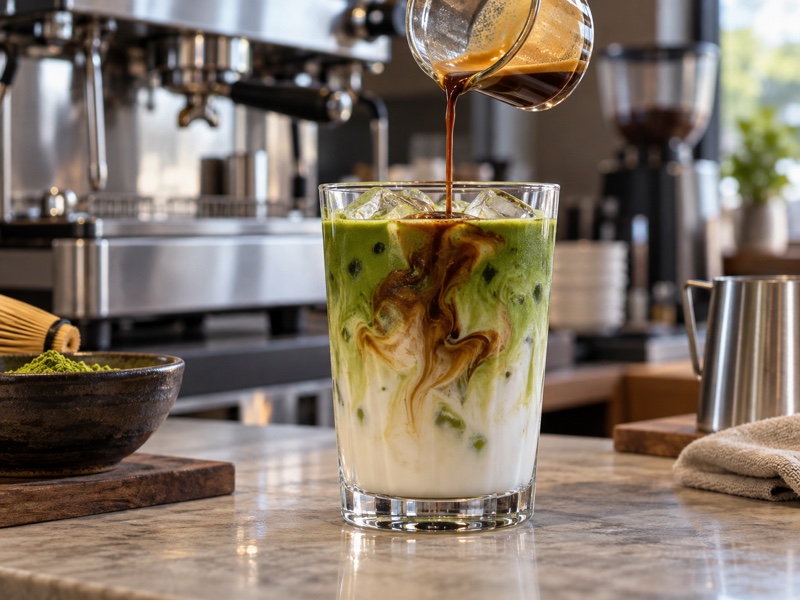
Dirty matcha combines an espresso shot with a matcha drink. The appeal is immediate: coffee aroma, green tea flavor, milk, and a brief layered look. The risk is a cup that tastes muddled or delivers more caffeine than the menu suggests. A current dirty iced matcha recipe uses matcha, milk, espresso, and optional sweetener, which captures the basic structure. A café needs to decide exactly how much of each component it serves, when the espresso is pulled, and how the drink tastes after the layers mix. This guide focuses on that bar-level work.
1. What qualifies as dirty matcha?
In common café usage, a dirty matcha is matcha paired with espresso, often in milk. It can be iced or hot. The espresso is the “dirty” component, though the term is menu slang rather than a regulated recipe name. State the coffee ingredient plainly in the menu description so customers who do not expect espresso are not surprised. A drink made with coffee-flavored syrup but no espresso needs a different description.
Some customers will order it for the layered photograph. The finished flavor should still make sense after they stir it. Set a target: tea first with a short coffee finish, or espresso first with a green tea finish. If staff cannot describe the intended balance, different baristas may make different cups under the same name. A sensory standard and a measured build remove that uncertainty.
| Component | Job in the cup | Too much looks like |
|---|---|---|
| Matcha | Green tea flavor and color | Bitter, chalky finish |
| Espresso | Coffee aroma and depth | Coffee latte with green tint |
| Milk | Connects both flavors | Muted tea and coffee |
| Sweetener | Softens the join | Generic sweet milk |
2. How should the matcha base be prepared?
Weigh powder and water for the intended cup size. Sift if the lot clumps, then whisk or mechanically mix to a smooth concentrate. A pile of dry powder under espresso will not disperse when the customer casually swirls the drink. Water temperature and volume matter: too much water dilutes the tea and weakens the layered effect; very hot water can change the immediate taste and warm an iced cup. Use a repeatable bar method, not a one-off demonstration.
Test two or three powder doses in the finished drink. Espresso brings roast, acidity, and bitterness, so a matcha that is delicate in water may disappear. Yet adding powder indiscriminately can create a rough aftertaste. Compare the approved powder and one alternate lot at equal weight. Record flavor after stirring and after five minutes of ice melt. Ask the tea supplier for lot-specific information and a sample tied to what will actually be delivered.
3. How much espresso belongs in the recipe?
Start with one standard shot for a regular cup and test from there. Espresso volume alone does not describe strength, since coffee dose, extraction yield, blend, and machine settings change the cup. Use the café’s normal espresso specification, then record its actual yield and timing. A double shot may suit a larger or coffee-led drink, but it also changes bitterness, caffeine, cost, and the balance with tea. Treat it as an explicit size or extra-shot option rather than an unrecorded barista preference.
Make a control cup with no espresso, then a one-shot cup and a stronger option. Taste them blind after stirring. The right choice lets people identify both tea and coffee without a burnt finish. If only the strongest cup tastes of espresso, check the milk volume and the espresso’s freshness before adding even more coffee. Pulling a shot and letting it sit for a long period while preparing everything else can change the experience; time a realistic sequence during service.
| Trial | Matcha base | Espresso | Question |
|---|---|---|---|
| A | Fixed | None | How clear is the tea? |
| B | Fixed | One standard shot | Are both flavors present? |
| C | Fixed | Two standard shots | Does coffee overpower tea? |
4. Which pour order gives a usable layered cup?
For an iced version, a café can place matcha and milk over ice, then pour espresso last for a dark top layer. Other builds put tea on top of milk and espresso beneath. Layering depends on density, temperature, ice, and how forcefully liquids hit the cup. Choose the method that gives a pleasing handoff without slowing the queue. The visible bands will mix during travel and drinking. Judge the fully mixed taste before spending time perfecting the layers.
Use the actual takeaway cup in the test. A clear studio glass can flatter a drink that becomes cloudy in a paper or opaque vessel. If a straw draws only the bottom layer first, the first sip may be mostly tea or mostly sweet milk. Taste from the customer’s likely position, then stir and taste again. A beautiful cup that requires an instruction manual to drink is not a strong menu item.
5. Does milk choice change the balance?
Yes. Milk can soften both coffee bitterness and tea’s vegetal edge, but too much hides the reason to use two drinks. Dairy, oat, and soy options have different sweetness and body; compare the specific brands your cafés stock. If a plant-based milk is sweetened, test whether the same syrup addition still makes sense. The espresso may also interact differently with milk acidity and texture, especially in a hot version.
Keep one standard formula and validate the popular substitutions. For a cold drink, weigh milk in grams during development and train staff on a fill line only after confirming it matches the recipe. For hot service, separately test steamed milk and tea preparation. A cup built for ice cannot be copied simply by heating the ingredients; dilution and aroma change. Record allergen information for the full recipe and the service process for alternative milks.
6. How should a café describe caffeine?
Dirty matcha contains caffeine from both matcha and espresso. The amount is not a universal number. It depends on the powder and its dose, the espresso blend and shot recipe, and whether the customer requests extra shots. Avoid a precise menu figure unless it is based on reliable ingredient data and the actual serving. “Contains both matcha and espresso” is a clear, useful statement. If your team publishes a caffeine number, document the method and update it when either ingredient or dose changes.
Do not claim the drink gives a smoother or safer stimulant effect than coffee without evidence for the specific product. A customer sensitive to caffeine needs to know the drink includes two sources, even if the cup looks like a green latte. Staff should be able to answer whether an extra shot is included and whether a lower-caffeine option exists. For a bottled version, caffeine analysis and market-specific labeling review are separate product-development tasks.
| Service question | Record required | Why |
|---|---|---|
| Matcha dose? | Grams per size | One caffeine input |
| Espresso count? | Shots and shot recipe | Other caffeine input |
| Extra shot available? | Menu and POS setting | Customer clarity |
| Numerical claim? | Evidence and review date | Accurate communication |
7. When should sweetener be added?
Add sweetener only after testing matcha, espresso, and milk together. A small amount can bridge tea and coffee; too much makes the cup taste like generic flavored milk. Dissolve syrup into the milk or another liquid so a concentrated pocket does not remain at the bottom. Compare unsweetened, lightly sweetened, and standard-sweet cups blind. The best dose may differ for the coffee-led and tea-led versions, which is one reason to choose one clear menu standard.
Sweetener also affects the nutrition story. Matcha and espresso alone contribute much less energy than milk and syrup, but the finished cup is what customers buy. If the café publishes nutrition values, calculate the full recipe and the actual cup size. Avoid borrowing a calorie or caffeine number from a consumer blog; its ingredients and shot size may not match yours. A measured formula supports better disclosure and a more stable margin.
8. How can a team make the drink quickly?
Put the steps in the order they occur at a busy bar. One possible sequence is to start the espresso, mix the matcha concentrate, add milk and ice to the cup, then pour the tea and finished shot in the approved order. Time it with normal staffing, not just the most experienced barista. If the café uses a preportioned matcha mix, verify its powder weight and handling rules. If it batches a hydrated tea concentrate, set a safe hold and a flavor hold; those may be different limits.
A bar card should name the espresso recipe, tea dose, water mass, milk mass, sweetener, ice, cup, pour sequence, and allowed substitutions. Have another shift prepare five drinks. Weigh the expensive ingredients and compare the cups after stirring. If staff skip a difficult decorative pour during rush periods, simplify the method rather than maintaining a spec that exists only in training photos.
9. How should cost and waste be measured?
Count the tea powder, espresso beans at the actual coffee dose, milk, syrup, ice, cup, lid, straw, and service labor. Espresso extraction has routine waste from dial-in and purging; a busy café may allocate it across coffee drinks, but the model should not assume every gram goes into a saleable cup. Likewise, small matcha batches can be discarded at the end of a shift. Record realistic waste during a pilot.
Compare gross margin with the plain matcha latte and the standard iced latte. Dirty matcha uses two premium bases and takes at least one extra preparation step. Price should reflect that work, but the menu must offer a distinct enough experience for the customer to accept it. If its flavor is barely different from a coffee latte, fix the tea clarity before adding a premium price. A pilot can track remakes, extra-shot requests, and sales by time of day to see where it fits.
| Cost line | Measure | Frequent miss |
|---|---|---|
| Matcha | Grams in the actual cup | Heaped scoop |
| Espresso | Bean dose and shot count | Extra shot at no charge |
| Milk and syrup | Measured quantity | Free pour drift |
| Packaging | Cup, lid, straw | Delivery variation |
10. What makes a launch decision credible?
Test the drink with a mixed panel: matcha drinkers, coffee drinkers, and people who order both. Ask whether each can identify the two flavors and whether they would finish the cup after ten minutes. Then run a timed service trial and check that staff follow the formula. A dark espresso stripe alone is not evidence the product works. The mixed cup, repeatable preparation, and honest caffeine message are the approval criteria.
When writing the menu, say “matcha latte with a shot of espresso” or another equally clear description beneath the short name. Do not bury the coffee ingredient. Keep the photograph faithful to the normal serving vessel and the standard shot count. If a test batch misses the target, adjust one component and taste again. The next practical step is a three-cup espresso comparison using your house matcha and milk, followed by a real-shift timing test.
FAQs
Does dirty matcha contain coffee? Yes. In typical café use it pairs matcha with espresso; describe that clearly on the menu.
Can the drink be made without milk? It can, but tea and espresso may taste sharper together. Develop and name that as a separate version.
Is dirty matcha stronger than a latte? Its caffeine depends on the matcha and espresso doses. Measure or document the actual recipe before making a numerical claim.
Why do the layers disappear? Ice melt, movement, temperature, and density cause mixing. Test the finished flavor after the layers combine.
Can staff use premixed matcha? Yes, if its ingredients, powder dose, safe holding, and taste meet the approved specification.