
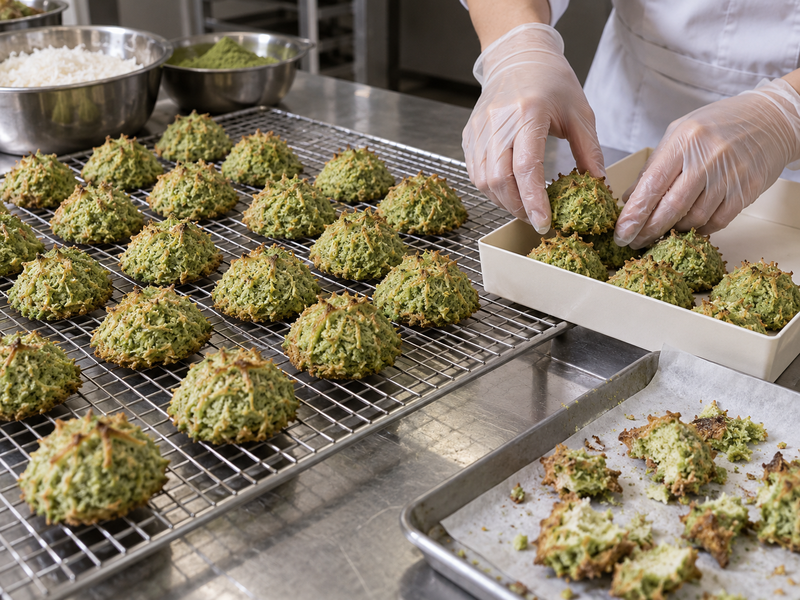
Matcha coconut macaroons are baked coconut mounds with a chewy center and powdered green tea. A bakery can sell them by the piece, in mixed boxes, or as a packaged snack. The difficulty is repeatability: coconut varies in shred size and moisture, green color changes in the oven, and a pretty top can conceal a wet center. This guide gives product teams and ingredient buyers a trial path from coconut specification through saleable yield. Matcha Village can offer matcha candidates for testing; each bakery must validate its own formula, process, labeling and shelf life.
Table of contents
- What product should the bakery put on sale?
- Which coconut specification fits the target texture?
- How should matcha be selected and dosed?
- What holds the macaroon together?
- How can mixing and portioning stay consistent?
- How should baking protect the center and color?
- Which finishes make sense for the sales channel?
- How should packing and shelf life be tested?
- What does a saleable macaroon cost?
- What belongs in the supplier and rollout brief?
1. What product should the bakery put on sale?
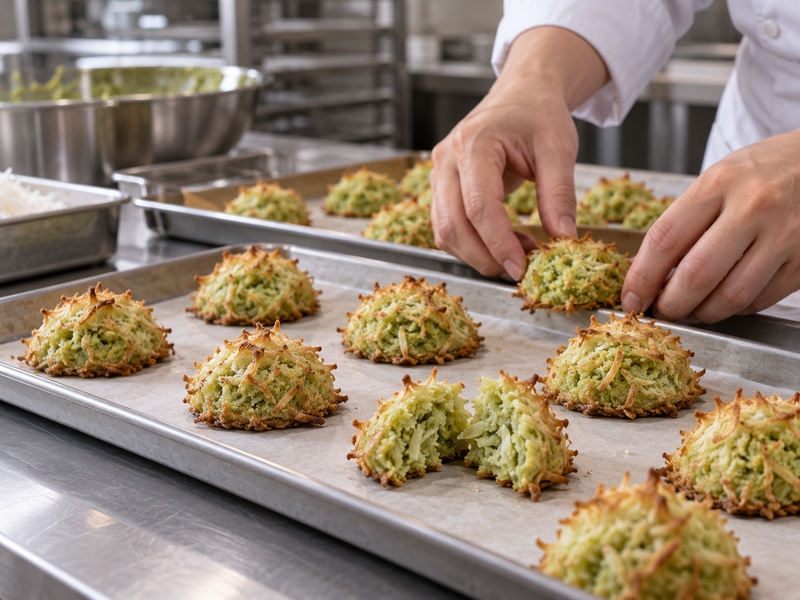
Choose a piece size and service route
A coconut macaroon is a coconut mound baked until its exterior sets. A French macaron is an almond-based sandwich cookie with shells and filling. The processes and buying needs differ, so the brief should say “coconut macaroon” in full. Define whether the bakery wants a counter piece, a café pairing, a retail multipack or a foodservice dessert garnish. Piece size, pack and expected sale day follow that decision. A large piece gives a soft center but raises the risk of uneven baking; a miniature piece can dry before its outside looks finished.
Write a sensory target before adjusting ingredients: a clear coconut bite, recognizable matcha after chewing, a cohesive center, and no sticky residue on the pack. Decide whether dark chocolate belongs in the offer or a later variation. It adds a setting step and changes allergen and temperature handling. Test the plain macaroon first so chocolate does not hide a weak tea note. Specify how much natural browning is acceptable; a fully bright green exterior may be unrealistic after baking.
2. Which coconut specification fits the target texture?
Compare coconut in the finished piece
The coconut ingredient does much of the structural work. Fine desiccated coconut packs tightly and may create a denser bite. Long shreds can give a more open texture but may break off during packing. Sweetened coconut changes sugar and moisture, so it cannot be exchanged with unsweetened coconut without reformulating. Ask for a consistent cut and moisture range, then compare candidates in the same formula. Inspect how each coconut absorbs binder during the planned rest and after baking.
Run a side-by-side batch with equal piece weight. Note scoopability, shape retention, surface browning, center chew and loose flakes left in the tray. Test after cooling and on the intended sale day. If one lot spreads more, check moisture and cut before blaming matcha. Coconut can obscure a delicate powder, so the preferred coconut and matcha should be chosen together. Keep retained samples and ingredient codes.
| Coconut option | Likely trial observation | Buying check |
|---|---|---|
| Fine unsweetened | Compact mounds and even distribution | Check center density |
| Medium shred | Visible coconut texture | Check loose flakes and portioning |
| Long shred | Open, irregular surface | Check breakage in pack |
| Sweetened product | Changed moisture and sweetness | Rebuild sugar and binder balance |
3. How should matcha be selected and dosed?
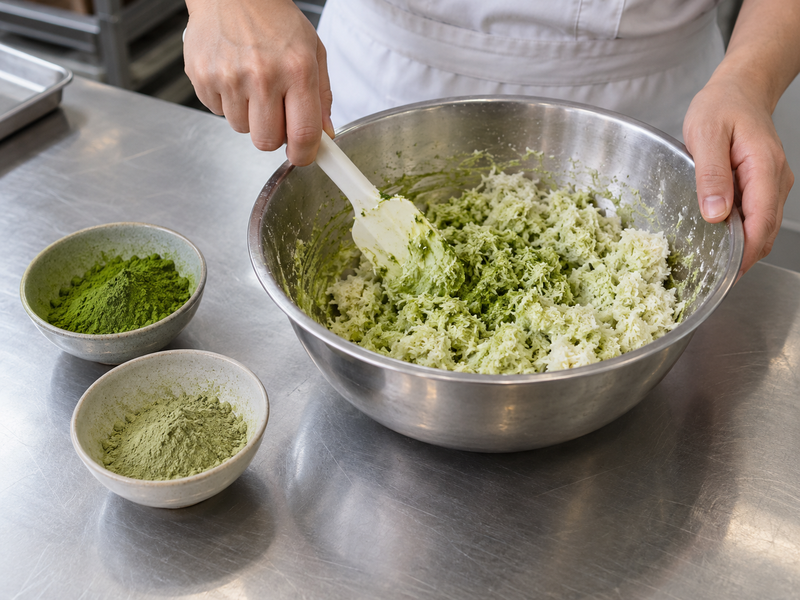
Bake the comparison, then choose
A powder that tastes pleasant in water may disappear behind coconut and sugar. Another may produce a stronger baked tea note at a smaller dose but leave bitterness at the edges. Ask Matcha Village for identified candidates from its stated ranges, then bake them in an identical formula. Hold coconut cut, sugar, binder, portion weight, pan and oven position steady. Compare plain and finished samples. The buying choice belongs to the finished product.
Treat matcha dose as a trial variable. More powder can deepen color while drying the mix or making the center harsh. Weigh it and record its percentage of total mix weight. If matcha forms dark specks, mix it through the dry component or disperse it before full blending. Assess color under sale lighting and taste both the center and browned tips. Request current specifications and lot identity before pricing a larger run.
| Powder check | Where to inspect | Decision it supports |
|---|---|---|
| Tea aroma | Cooled center | Detect flavor masked by coconut |
| Color | Tops and broken center | Define an acceptable baked range |
| Dispersion | Cut piece | Find unmixed dark specks |
| Cost in use | Accepted grams per piece | Compare approved options fairly |
4. What holds the macaroon together?
Select a binder for the chosen channel
Egg white, sweetened condensed milk and other binders can produce coconut macaroons, but they yield different handling and labels. Egg white can set a cohesive structure while leaving coconut prominent. Condensed milk brings sweetness and dairy ingredients. A plant-based version needs its own bench work; swapping binder does not guarantee the same shape or chew. Choose one system for the first trial, then adjust moisture and sugar around the actual coconut.
Check the mass before depositing. It should hold a mound without pooling liquid or shedding dry shreds. If it slumps, identify wet coconut, excessive binder or insufficient rest. If it crumbles, inspect wetting and binder distribution. Test rest time with the bakery’s batch size and room conditions, recording whether deposit weight changes. The finished food’s allergen statement and any free-from claim require the bakery’s own ingredient and facility review.
5. How can mixing and portioning stay consistent?
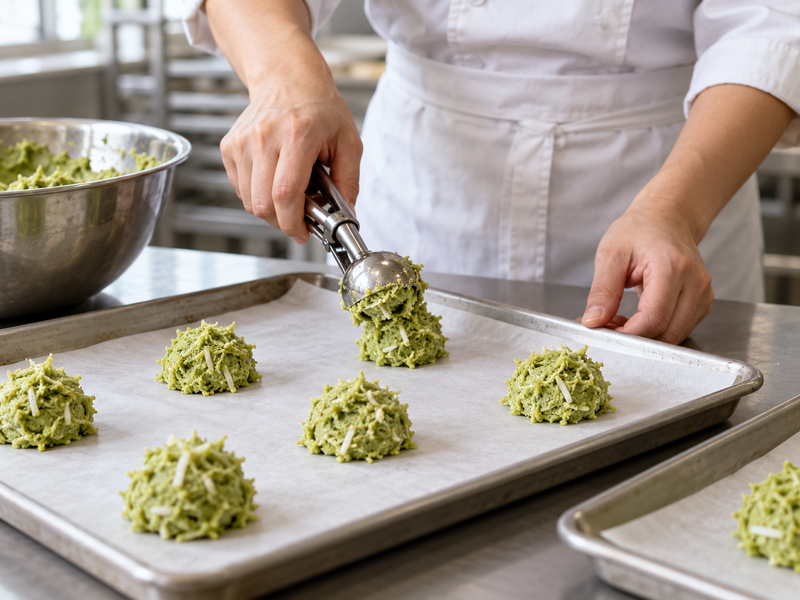
Control mass before setting the oven
Mix until matcha color, coconut and binder look uniform across the vessel, including bottom and sides. A green streak in the mixer becomes an uneven tray. Use the same ingredient addition order in every pilot batch and note any rest before depositing. At scale, check whether the mixer smears or cuts coconut differently from the bench bowl. A full hopper held during a busy period needs its own check.
Choose a target piece weight and a depositor, scoop or hand-shaping method that can achieve it. Weigh pieces from the start, middle and end of a batch. Large mounds can remain wet while small ones overbrown on the same tray. Leave tray spacing for heat circulation, and keep pan and paper consistent in comparisons. A photographed standard helps operators judge mound height and compactness.
| Process point | Sample to record | What drift looks like |
|---|---|---|
| Mix endpoint | Top and bottom of bowl | Green streaks or dry coconut pockets |
| Deposit weight | Start, middle, end pieces | Uneven bake and pack count |
| Shape | Height and base width | Slumping or fragile peaks |
| Tray setup | Pan, paper and spacing | Inconsistent edge color |
6. How should baking protect the center and color?
Evaluate center set and surface color together
The outside can brown before the center has the target chew. Test piece size, pan material, load and oven position with the same formula. A darker tip may taste toasted; a bitter, nearly black edge needs attention. Check middle and edge pieces after cooling, then split them to assess whether the center is cohesive, wet, dry or crumbly. The bakery’s food-safety team defines finished-product controls for its recipe and equipment.
Do not change matcha dose whenever color disappoints. Bake time, pan heat and sugar affect green appearance and browning. Compare two oven settings with one ingredient mix and constant photo lighting. If the center remains wet, piece size or binder balance may need adjustment. Cool before coating or packing, and record the time a normal batch needs. A bagged warm macaroon can leave condensation.
7. Which finishes make sense for the sales channel?
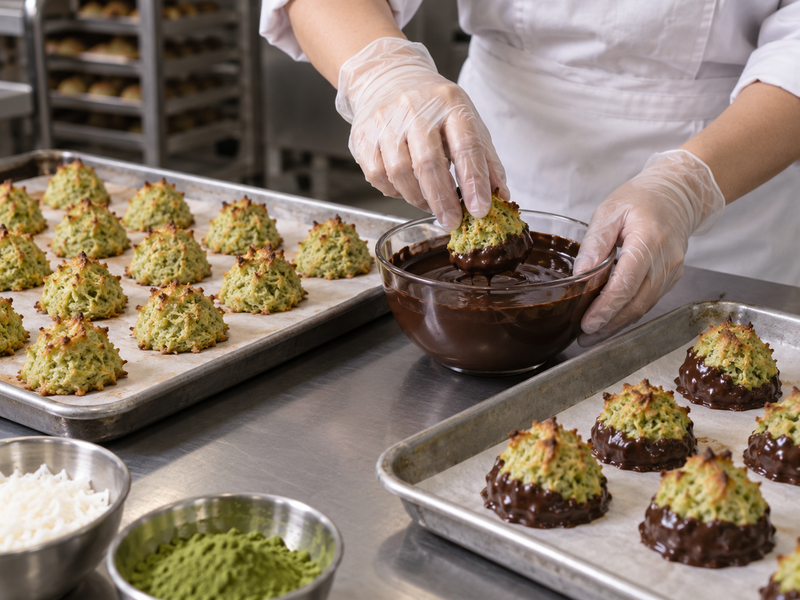
Add a finish only after the base passes
A plain macaroon lets the customer taste coconut and matcha directly. Chocolate on the base adds a visual cue and may protect a fragile bottom, but adds dipping labor and setting time. A drizzle may work at a counter yet rub onto a film pack. Test the finish in the actual channel: bakery case, café plate, mixed box or retail tray. Inspect transfer, breakage and appearance after handling.
If dark or white chocolate is used, validate its set and storage behavior. White chocolate may mute tea flavor; dark chocolate may dominate small pieces. A matcha dusting can absorb moisture or leave powder on fingers. Treat each finish as a distinct SKU with its own ingredient list and cost. Include allergen and label changes in the launch review. A plain version may be simpler for wholesale replenishment.
8. How should packing and shelf life be tested?
Follow the product through the intended route
Packing affects texture and appearance. A loose display may soften or dry the outside. A sealed pouch protects against handling yet can trap moisture if pieces are packed warm. A tray prevents compression but adds cost. Compare the approved recipe in candidate packs at opening, after handling and on each proposed sale day. Look for condensation, greasy marks, loose coconut, color change and center texture.
Do not borrow a household recipe’s storage duration as a commercial shelf-life claim. The bakery’s quality team should validate its own formula, process, pack and route. Matcha’s specification cannot establish the microbiological life of an egg- or milk-containing macaroon. If shipped chilled or frozen, test thawing inside the pack. A clear window may sell the green color but needs light-exposure testing.
| Sales route | Likely exposure | Pilot observation |
|---|---|---|
| Counter piece | Ambient air and repeated handling | Texture and color late in service |
| Mixed cookie box | Contact with neighboring products | Breakage and flavor transfer |
| Sealed retail pack | Trapped moisture and compression | Condensation, surface and center |
| Chilled or frozen distribution | Temperature changes | Thaw texture in final pack |
9. What does a saleable macaroon cost?
Price the pieces that survive production
Calculate coconut, matcha, binder, sugar, finish, packaging and labor from the approved recipe. Matcha cost belongs in grams per accepted piece. A lower-price powder may need more dose to carry flavor through coconut; compare at an equally acceptable taste. Record tray yields, broken pieces, underweight deposits and rejects for wet centers or overbrowning. Cost per mixed batch matters less than cost per saleable unit.
Packaging can change yield. A fragile peak may break when a retail tray closes. Chocolate can reduce bottom damage but add dipping loss. Count pieces through final packout and full multipacks assembled. Keep waste assumptions visible so procurement can see how coconut cut, matcha dose or pack format affects margin. Base selling price on the bakery’s channel.
| Cost line | Pilot measure | Common omission |
|---|---|---|
| Coconut and binder | Actual batch use | Moisture-driven formula changes |
| Matcha | Approved grams per piece | Extra dose needed for flavor |
| Finish and pack | Consumed material | Dipping and tray waste |
| Yield | Saleable packed pieces | Broken or rejected mounds |
10. What belongs in the supplier and rollout brief?
Tie the approved bake to the supplied lot
Send Matcha Village an application brief: coconut macaroon format, dose range, target baked tea note and color, destination market, forecast and required documents. Ask for identified samples with current specifications and pack sizes. State whether the team needs pure matcha or a formulated powder, because blend ingredients change recipe and label. Product-specific quotes, tests and supply terms must be confirmed for the named sample.
After a pilot, retain an approved macaroon and written process. Compare a repeat lot by baking it in the same formula. Define who can approve a substitution, what finished variation is acceptable, and when the formula needs retesting. Request two traceable samples, run equal-weight trials with the chosen coconut, and count saleable pieces in the intended pack. That grounds the buying decision in the finished product.
FAQ
Q1: Are coconut macaroons the same as French macarons? No. Coconut macaroons are baked coconut mounds; French macarons use almond-based sandwich shells and a different process.
Q2: Should the bakery choose matcha by dry color? Bake identified samples in the same formula and judge cooled flavor, center color and edge bitterness.
Q3: Can sweetened and unsweetened coconut be interchanged? They alter sugar and moisture, so run a reformulation trial rather than a direct swap.
Q4: Does a home recipe establish commercial shelf life? No. Validate the finished macaroon in its actual process, pack and distribution route.
Q5: What should a buyer ask Matcha Village for? Request coded samples, current specifications, available packs and a quote for the matcha tested in the bakery.