
Matcha lassi combines matcha with a yogurt-based drink and the texture customers expect from lassi. The challenge lies in the yogurt: acidity, thickness and sweetness differ across suppliers, so a fixed spoonful of powder can taste balanced in one base and harsh in another. This guide sets out practical recipe and service trials for cafés, foodservice buyers and beverage developers. Matcha Village can supply identified matcha candidates for testing; the operator remains responsible for approving the finished drink and its handling.
Table of contents
- What makes a matcha lassi a distinct menu item?
- Which yogurt base should the café trial?
- How should matcha be chosen for cultured dairy?
- What ratio should the first lassi trial use?
- How can staff mix matcha without dry specks?
- How should sweetness and spices be adjusted?
- What should a chilled holding trial measure?
- Which serving format fits the sales channel?
- What will each saleable glass cost?
- What belongs in the supplier and launch brief?
1. What makes a matcha lassi a distinct menu item?
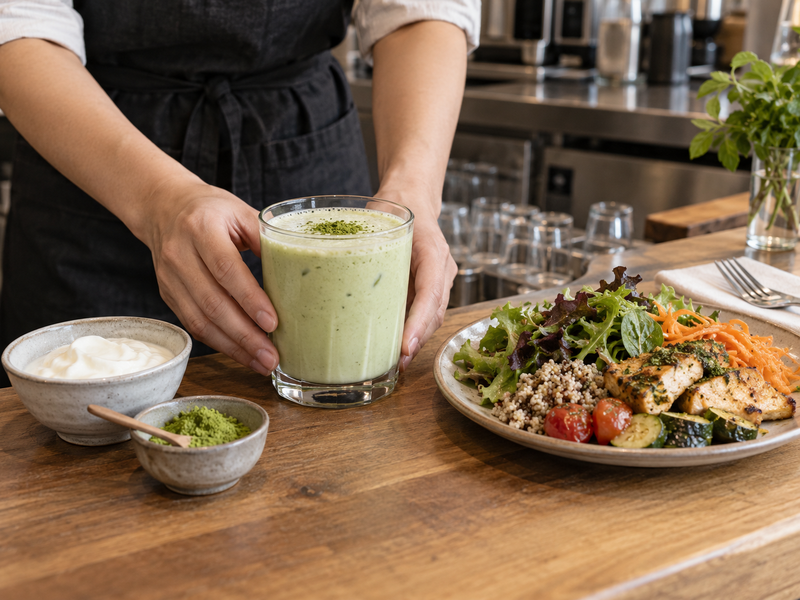
Keep yogurt at the center of the drink
A lassi is built around yogurt, diluted or blended to a drinkable consistency. Its cultured tang and body shape the result. A generic matcha smoothie may contain fruit, milk, ice and yogurt as one optional ingredient; a matcha lassi should still taste and feel yogurt-led. State that identity in the product brief before deciding on mango, cardamom or another addition. Otherwise a heavily flavored green drink may fit an existing smoothie menu better and offer little reason for a separate name.
Choose a target occasion. A restaurant may pour a short glass alongside savory food, while a café may need a larger takeaway cup. These two uses can call for different sweetness and thickness. A useful sensory target might be a clear yogurt tang, an identifiable tea note, moderate sweetness and a smooth pour that does not form dry matcha islands. The team should agree on whether a light foam is welcome or whether customers expect a denser texture.
2. Which yogurt base should the café trial?
Compare real supplier options in the final glass
Plain stirred yogurt, thicker strained yogurt and plant-based cultured products differ in thickness, acidity and sweetness. A thick base may need more water to pour but can feel rich at a smaller serving size. A thinner base can make tea flavor seem sharp. Sweetened yogurt shifts the formula even before syrup is added. Ask suppliers for current ingredient and allergen information, then test each candidate with the same matcha dose, final liquid volume and serving temperature.
Check the yogurt before and after mixing. If it separates in the bottle, stir it according to the supplier’s handling instructions before portioning. Compare the lassi immediately after blending and after the time it would normally wait for a guest. A smooth early sample that later shows whey at the top may need a different process or smaller preparation batch. The finished product’s allergen description belongs to the operator, even when a plant-based option is offered.
| Yogurt candidate | Trial focus | Purchasing question |
|---|---|---|
| Plain stirred dairy | Tang, pour and foam | Is supply and acidity consistent? |
| Thick strained dairy | Body after dilution | How much water is needed? |
| Sweetened dairy | Balance before added syrup | What sugar enters with the base? |
| Cultured plant base | Flavor and separation | Which ingredients affect the label? |
3. How should matcha be chosen for cultured dairy?
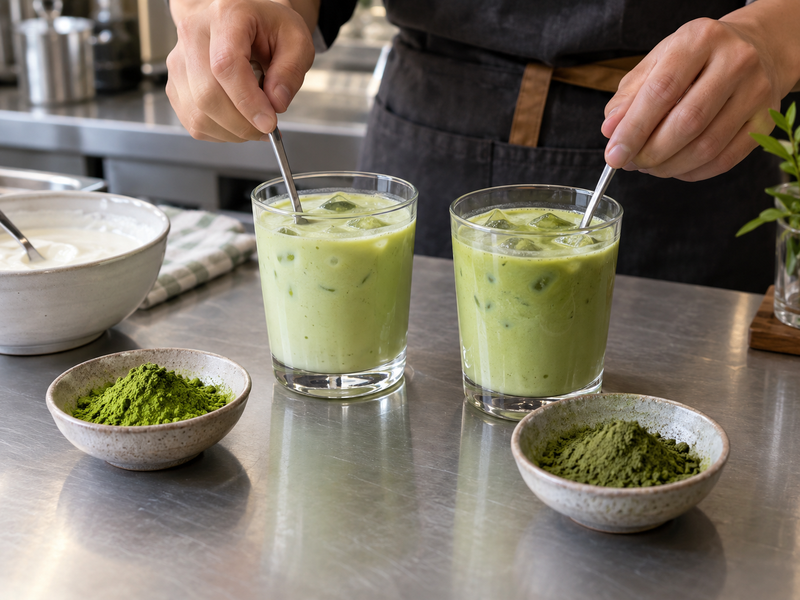
Judge the powder in the acidic base
Matcha that performs well in a sweet milk latte may taste different in yogurt. Tang can make a bitter edge more obvious, while yogurt fat and sweetness may soften delicate tea notes. Compare two or three identified Matcha Village candidates in the same yogurt at equal powder weight. Use one mixing method and taste the drinks chilled. The preferred sample should contribute recognizably to the finished glass without demanding enough powder to turn the drink chalky.
Inspect dispersion and appearance after normal service delay. Compare aroma, finish, green color and sediment with no cardamom or fruit in the first round. Add flavorings only after the core matcha-yogurt pairing is sound. Matcha Village’s supplied portfolio includes culinary, premium and blend products; ask for product codes, ingredient identity and current specifications. A sweetened matcha blend cannot be dosed like pure matcha without changing the sugar calculation. The operator should validate the exact proposed material in its own yogurt before approving a menu description or a procurement quote.
4. What ratio should the first lassi trial use?
Set a baseline that can be varied cleanly
For a development starting point, a café could prepare a small chilled glass with measured plain yogurt, water for pourability, a weighed matcha dose and a separately measured sweetener. The exact amounts depend on yogurt thickness and cup size, so do not treat a household recipe as a production specification. Weigh or measure every component and record the finished fill after blending. The target is a consistent glass at the selected service temperature.
Run a short matrix. Keep matcha fixed while testing two yogurt-to-water balances. Choose the better texture, then compare matcha doses at that balance. Finally test sweetness and any spice. This sequence reveals which variable produced a change. Taste a just-made glass and one held through the normal order queue. A beverage buyer needs grams per saleable serving, not only percentages in a blender jug.
| Trial | Change | Keep fixed | Readout |
|---|---|---|---|
| A | Baseline yogurt and water | Matcha sample and cup | Tang, pour and tea note |
| B | Yogurt-to-water balance | Matcha dose | Texture and fill |
| C | Matcha dose | Chosen yogurt balance | Flavor without chalkiness |
| D | Sweetness or spice | Approved tea base | Menu fit and cost |
5. How can staff mix matcha without dry specks?
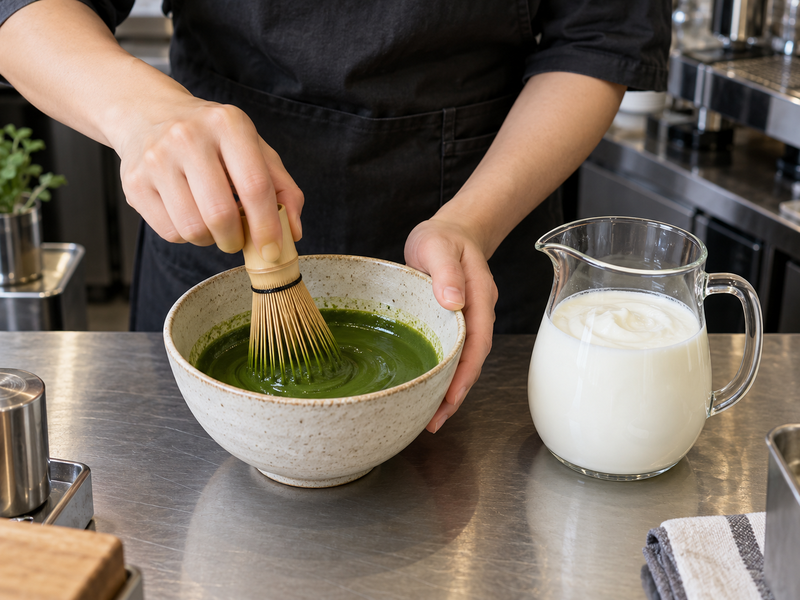
Wet the powder before it meets thick yogurt
Adding dry matcha directly to a thick bowl of yogurt can leave small powder pockets. A small measured water portion can wet and disperse matcha first; then the smooth green mixture can be blended into yogurt. This separates the powder-mixing step from the full drink mix and makes defects easier to trace. Use the same water temperature and preparation method during trials, while following the café’s handling rules. The aim is a uniform suspension, not literal dissolution of ground tea leaf.
Select equipment for the planned volume. A whisk and small jug may serve a made-to-order glass; a commercial blender can help with several portions, but it may add more air and change the perceived thickness. Compare both methods using the same formula. Check the bottom of the vessel for unmixed powder and observe whether foam collapses before handoff. If a premixed matcha base is held, mark its preparation time and test settling; stirring it back into suspension may be necessary before dosing, subject to the operator’s safe-handling procedure.
| Mixing stage | Observable pass | If it fails |
|---|---|---|
| Powder wetting | Smooth, uniform green slurry | Check water addition and whisking |
| Yogurt incorporation | No light or dark streaks | Scrape and mix the vessel evenly |
| Finished pour | Stable texture at handoff | Revisit ratio or blending method |
6. How should sweetness and spices be adjusted?
Let matcha and yogurt remain recognizable
Sugar, honey or syrup can soften a tart yogurt and a strong tea note. Too much can make the drink taste like a dessert shake. Start by measuring sweetness in the plain matcha lassi, then compare a modest cardamom version if it fits the menu. Cardamom should be specified by weight or a verified preblend, since a casual shake varies by operator. A fruit variation such as mango may appeal to a different audience, but fruit purée changes sugar, thickness and cup volume; it deserves its own recipe card and cost sheet.
A lassi that tastes balanced alone may feel too sweet beside a savory meal; a tart version may suit a restaurant but underperform at a café counter. Use the same yogurt and matcha lots for paired samples, then record what changed. If a spice or fruit overpowers tea, decide whether the menu still benefits from matcha at the current dose. Do not increase powder reflexively. The simplest launch may be a plain core drink with one clearly defined variation.
7. What should a chilled holding trial measure?
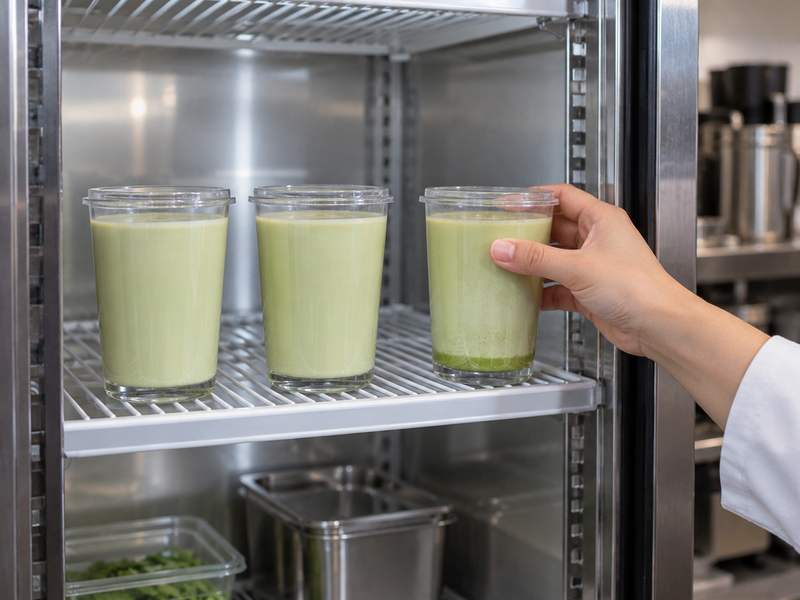
Follow the real service interval
Lassi contains a cultured base and is served chilled, so the operator must apply its own dairy or plant-product food-safety program. A successful bench taste does not establish a safe holding time. Make one trial batch under the intended preparation method, then sample at mixing, mid-service and the end of the proposed service window. Measure or record temperature using the operator’s method, and inspect separation, color, aroma, texture and taste. If the drink is made to order, test the wait between blending and guest handoff rather than inventing a batch-hold claim.
Check the bottom and top of each sample. Matcha particles can settle; yogurt may separate; a fruit purée may layer. A gentle remix may restore appearance but should only be used where the handling plan permits it. A busy café should observe how often the container leaves refrigeration for service, because the test must resemble the real shift. For a packaged product or remote distribution, separate formulation and shelf-life validation is needed. Neither matcha powder specifications nor a café tasting can set the finished drink’s microbiological life.
| Checkpoint | Observe | Decision |
|---|---|---|
| Freshly blended | Smoothness and reference flavor | Approve batch start |
| Mid-service | Temperature, color, separation | Continue or adjust process |
| Last planned serving | Sediment and sensory drift | Set batch size and route |
| Packed transport trial | Package condition and handoff taste | Decide if delivery needs its own card |
8. Which serving format fits the sales channel?
Test the vessel as part of the recipe
A short glass can make a dense yogurt drink feel intentional beside food. A tall café cup may require a thinner pour and a more obvious ice strategy. A sealed takeaway cup hides some of the drink’s color but may be necessary for travel. Decide the vessel and fill line before locking ingredient ratios. If ice is used, weigh its portion and check dilution during the guest’s normal wait. Large ice pieces, crushed ice and blending ice into the lassi will not give identical texture, so pick one method for the base offer.
Consider the surface after filling. A light green foam may be pleasant, while a thick cap can cling to the lid and leave a low liquid fill. A fruit layer looks attractive in a clear cup but may separate during delivery or force staff into a slower assembly sequence. Test the actual cup, lid, straw and handoff time with the approved base. The channel should determine whether this is a made-to-order drink, a short chilled batch, or a packaged product that needs separate development. Avoid treating all three routes as one recipe with different containers.
9. What will each saleable glass cost?
Include preparation loss and actual yield
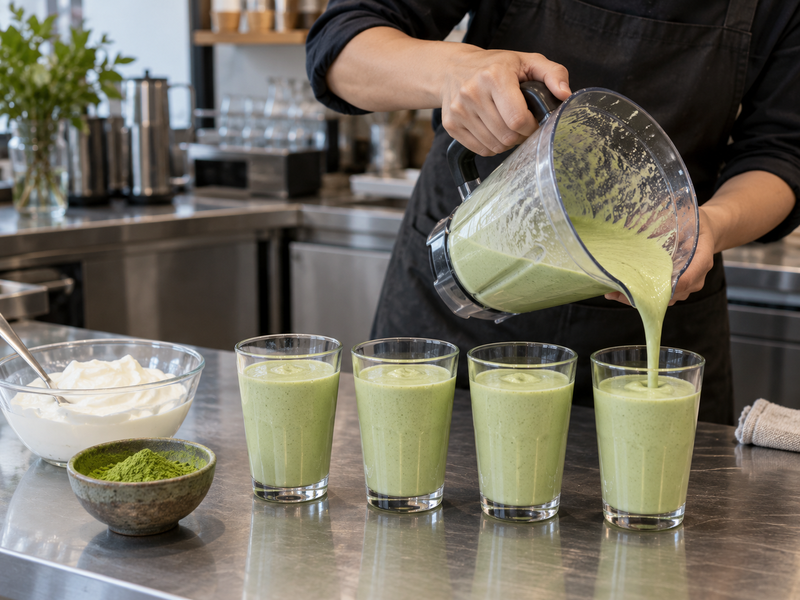
Calculate yogurt, matcha, water, sweetener, optional spice or fruit, cup, lid and labor for the approved serving. Matcha cost follows the tested grams per glass and the quoted landed price for that exact product. A powder with a lower kilogram price may need a higher dose to remain clear through yogurt tang. Record the amount left in the blender, jug and serving container. A thick lassi can cling to equipment, creating a larger loss than a thin tea drink. Cost per theoretical batch is less useful than cost per saleable glass.
Count portions made, guest adjustments, held product discarded and cleaning time. If the team makes a mango variant, cost it separately because fruit purée, extra assembly and spoilage can dominate the matcha difference. Price should reflect the operator’s market and margin target rather than a reference recipe. The buyer can then request a supply quote with a realistic monthly forecast based on approved grams per saleable serving.
| Cost line | Pilot measure | Risk if omitted |
|---|---|---|
| Yogurt | Grams dispensed per glass | Brand or thickness changes |
| Matcha | Approved grams per glass | Dose drift across staff |
| Additions | Sweetener, spice and fruit | Hidden variant cost |
| Yield | Saleable glasses from mixed batch | Blender and hold loss |
10. What belongs in the supplier and launch brief?
Connect the approved drink to named ingredients
Send Matcha Village the lassi application, yogurt type, target tea note and color, cup size, intended matcha dose range, destination market and expected volume. Ask for identified powder samples and current specifications. If the café wants a sweetened blend instead of pure matcha, state how existing yogurt sweetness and menu labels will be handled. Matcha Village’s supplied company material describes grade options and application support; available packs, documents and commercial terms must be confirmed for the exact tested material.
After the pilot, retain an approved reference glass description and an operating card covering matcha code, yogurt code, water, sweetener, mixing order, vessel and service condition. A repeat lot should be tested in the same yogurt base before a full rollout. Define who may approve ingredient substitutions, since a change in yogurt can shift tang and thickness even when the matcha remains constant. The next useful action is a two-sample matcha comparison in the chosen yogurt, followed by a short service trial that records first and last glasses. That gives procurement and baristas one shared standard.
FAQ
Q1: Is matcha lassi the same as a matcha smoothie? Lassi is yogurt-led, with a cultured tang and defined thickness; a smoothie may use many other bases.
Q2: Can matcha powder be added straight to yogurt? It can form dry specks. Trial a measured water slurry before incorporating it into thick yogurt.
Q3: Does a plant-based yogurt use the same formula? Test it separately for tang, viscosity, ingredient labeling and separation.
Q4: Does a good first glass establish holding time? No. The operator must assess quality and food safety through its intended service route.
Q5: What should a buyer request from Matcha Village? Ask for traceable samples, current specifications, pack options and terms for the powder approved in the lassi.