
A matcha martini can be an attractive way to put tea on a cocktail menu. It can also turn gritty, overly sweet, or dull green before the glass reaches the table. The Jade Leaf Matcha-tini recipe in current search results combines matcha, vodka, vanilla syrup, milk, and ice. That gives a clear flavor direction. A bar serving it repeatedly needs to choose the role of each ingredient, control dilution, and train a safe, consistent method. This article treats the drink as a commercial cocktail for adults, with a separate zero-proof option only if the bar develops and names one.
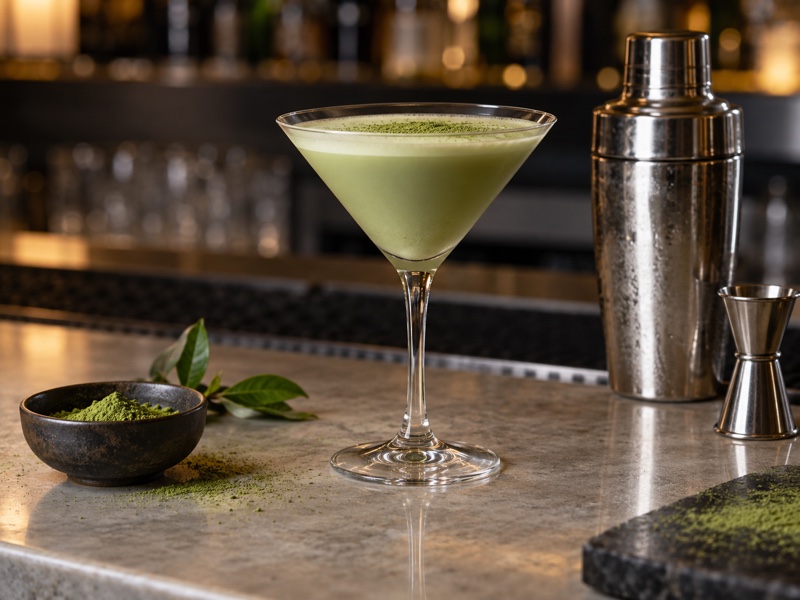
1. What should a matcha martini taste like?
Choose a target before testing. One version is tea-led and relatively dry, with a clean spirit base and a short vanilla note. Another is a creamy dessert cocktail in which tea balances sweetness. Both can work, but they need different powder, dairy, and syrup levels. If the bar calls either one a matcha martini, a guest should taste matcha after the first chilled sip and after the drink warms slightly. A green color alone is not enough.
Set a short sensory description for the team. “Smooth matcha, restrained vanilla, clean finish” gives the bar a standard against which to compare pilot cups. Taste from the actual glass at service temperature. Alcohol and cold can mute some flavors, while a strong sweetener may emerge as the drink warms. A sample tasted straight from the shaker tells only part of the story.
| Direction | Tea role | Sweetness | Best check |
|---|---|---|---|
| Tea-led | Clear first flavor | Low to moderate | Does spirit burn cover tea? |
| Creamy dessert | Balances dairy and vanilla | Moderate | Does tea remain after warming? |
| Citrus-led variation | Connects spirit and acid | Recipe-specific | Does acid spoil texture? |
2. Which spirit works with matcha?
Vodka provides a relatively neutral base and appears in the reference recipe. Gin or another spirit can create a more complex drink, but botanicals may compete with green tea. Start with one house spirit and a controlled volume. If the venue wants a second version, develop it separately rather than allowing unrestricted substitutions under one menu name. Record the spirit’s brand or specification, proof, and pour size. Price and flavor both change when bar staff use a generous unmeasured pour.
Build a small comparison with the same matcha, syrup, and dilution. Taste blind after chilling. A spirit that seems neutral on its own can expose bitter notes in a particular tea powder. If the cocktail needs much more syrup to hide the spirit, ask whether the base is the right choice. Do not present alcohol content as harmless because matcha is present. The venue should follow its normal age verification and responsible-service rules for every alcoholic version.
3. How should matcha be dispersed before shaking?
Dry matcha dumped directly into a cocktail shaker often forms stubborn specks. First make a smooth tea concentrate with a measured amount of water. Sift the powder if the lot clumps. Whisk or mix until no visible dry pockets remain, then add the concentrate to the shaker. Water temperature should be consistent, but the final cocktail must chill rapidly. Too much water makes the drink thin; too little can leave a paste that will not spread through alcohol and milk.
Use grams during recipe development. A teaspoon can vary with powder density and the way it is filled. Compare two or three matcha doses at a fixed spirit level and taste after dilution. A highly vivid powder is not necessarily the best one: the bar also needs a smooth texture and a tea flavor that survives the cold spirit. Keep a retained sample of the approved lot and retest if the powder changes.
| Matcha step | Record | Failure prevented |
|---|---|---|
| Weigh powder | Grams per cocktail | Weak or bitter cups |
| Sift if needed | Lot and method | Specks |
| Add water | Volume and temperature | Paste or excess dilution |
| Mix smooth | Tool and time | Grit in the glass |
4. How much syrup is enough?
The tea, spirit, and any milk should be tested before the bar settles on syrup. Vanilla can round the edges, but it can also turn matcha into background color. Prepare a ladder with a low, medium, and high syrup dose while holding every other ingredient fixed. Taste cold, then after several minutes. Choose the lowest level that achieves the intended style. If the cocktail tastes harsh at the low level, investigate the tea or spirit instead of using sugar as a universal repair.
Measure the syrup with a jigger or validated pump. Commercial syrups vary in concentration, so a number copied from another recipe may produce a different sweetness. If the bar makes its own syrup, record sugar-to-water ratio, preparation, date marking, and approved storage. A honey syrup or flavored cordial can be tested, but it changes the drink and should not be slipped into service without a trial. Customer descriptions should match what is in the shaker.
5. Does the cocktail need milk or cream?
Milk softens both tea and alcohol, giving a dessert-like profile. Cream adds body and energy but can make the drink heavy and hide the matcha. Coconut milk, as used in the reference recipe, brings a distinct flavor that can be pleasant but no longer neutral. Decide whether the menu promises a creamy drink. A tea-led version may work without dairy, although its bitterness and spirit warmth need their own balance test.
Test any milk in the complete formula, including the spirit and syrup. A plant-based product may separate or foam differently when shaken. If the bar explores citrus, test carefully because acid can affect dairy texture. Record allergens and any cross-contact controls in the bar’s standard system. A guest who avoids milk needs accurate information about the cocktail and its garnish, not an assumption based on green color.
| Base option | Texture tendency | Menu consequence |
|---|---|---|
| No milk | Lighter, tea and spirit exposed | Tea-led style |
| Dairy milk | Softer, familiar | Milk allergen |
| Coconut drink | Creamy, coconut flavor | Ingredient disclosure |
| Cream | Rich dessert body | Higher cost and heavier cup |
6. How should the drink be chilled and diluted?
The shaker controls more than temperature. Ice size, shake time, tea concentrate volume, and the water already in syrup all change dilution. Test the drink with the ice used at service. Weigh a sample before and after shaking if the bar wants a measured dilution target, and taste at the intended glass temperature. A very long shake can create excessive dilution or foam; a short one can leave the drink warm and harsh. Choose a process staff can repeat rather than a dramatic flourish.
Strain into the approved glass and check for powder sediment or ice chips. A fine strainer may improve the finish if the tea base leaves particles, but it can also slow service. Fix poor matcha dispersion before relying on a strainer to hide it. Glass size matters: a small pour in an oversized martini glass looks unfinished and warms fast. Calibrate the finished volume and the vessel together.
7. What should the garnish do?
The simplest garnish may be none. A heavy dusting of dry matcha can leave a bitter first sip and powder on the guest’s lip. A light sifted touch may work if it remains attractive long enough to serve. Citrus peel, chocolate, or coconut each pushes the drink toward a different flavor. Choose a garnish that supports the intended profile and can be prepared safely in a rush. Test it on a real service tray, not only in a photo setup.
An edible flower or decorative object can create visual interest but also an allergen or handling question. Write the garnish into the formula, cost it, and train the placement. If customers regularly remove it, it may be waste. Photograph the standard drink with its actual garnish. The menu image should not show a labor-intensive version that staff serve only on opening night.
8. How can the bar keep it consistent during a busy shift?
Build a short station card: matcha grams, water volume, spirit pour, syrup pour, milk or cream, ice, shake method, strainer, glass, and garnish. Time the process during a normal queue. If preparing tea concentrate to speed service, set a qualified holding rule and a quality check. Hydrated matcha is different from sealed dry powder; aroma and color can change. A small fresh batch may be more reliable than a large jar held too long.
Have two bartenders make the same recipe independently. Compare finished volume, temperature, sweetness, and tea flavor. If one drink is greener but tastes weaker, investigate measurement and dispersion. Keep back-up tools on station; one clogged syrup pump can change the recipe during a rush. A controlled cocktail should taste familiar to a repeat guest regardless of who shakes it.
| Station item | Standard | Spot check |
|---|---|---|
| Matcha concentrate | Dose and water volume | No visible clumps |
| Spirit | Jiggered pour | Finished strength consistency |
| Syrup | Measured volume | Sweetness match |
| Ice and shake | Defined method | Cold, repeatable dilution |
9. How should the cocktail be priced?
Cost the full served glass: spirit, matcha, syrup, dairy, garnish, ice, wash-up, labor, and expected waste. A premium tea powder can be a visible cost, but the spirit and service time may be larger drivers. Calculate the cost of the actual measured recipe, not a home recipe with a different pour. If the venue uses a particularly expensive matcha, test whether guests can perceive a difference in this cocktail before assuming that input earns a higher menu price.
Consider a small pilot before permanent menu placement. Track sales, remakes, comments about sweetness, and how often guests ask what “matcha martini” contains. If many are surprised by milk or alcohol strength, the description needs work. The bar can offer a separately named zero-proof drink, but its formulation and price should be tested independently. Removing vodka from this recipe changes balance, dilution, and cost.
10. When is a matcha martini ready to serve?
Approve it only after a blind tasting and a timed service trial. Ask tasters to identify matcha and the intended supporting flavors. Serve a cup at handoff temperature and another after five minutes; both should remain pleasant. Check the written ingredient list against the actual bottles on station, including allergens. Train staff to describe the spirit and style in one sentence and to follow the venue’s alcohol-service rules.
The useful next step is a three-syrup trial with one fixed spirit and one lot of matcha, followed by a shake-and-dilution check in the intended glass. A matcha martini earns its place on a menu when it remains a good cocktail after the green novelty fades.
FAQs
Does a matcha martini always contain vodka? No, but vodka is a common neutral base. Name the actual spirit in the menu description.
Can dry matcha go straight into the shaker? It may clump. A measured, smooth tea concentrate usually gives a cleaner finish.
Is a matcha martini dairy-free? Only if the full recipe and service process are. Many creamy versions contain milk or other dairy.
Can it be made without alcohol? Yes, as a separately developed zero-proof drink. Removing spirit from the standard recipe changes its balance.
Why does the drink look muddy? Check powder dispersion, milk choice, dilution, and how long the glass sits before service.