
Matcha lemonade sounds simple: tea, lemon, water, sweetness, ice. Yet a café can end up serving a different drink with every batch. Lemon strength changes, matcha clumps, and a bright first pour may settle before the customer collects it. The fix is a short development test with weighed ingredients and a clear taste target. This article sets out a practical method for cafés, chains, and beverage brands that want a refreshing drink with a recognizable tea note. A matcha lemonade recipe ranks in Ahrefs’ current top results and illustrates the basic pairing; the commercial recipe below should be approved through your own ingredient, equipment, and service trials.
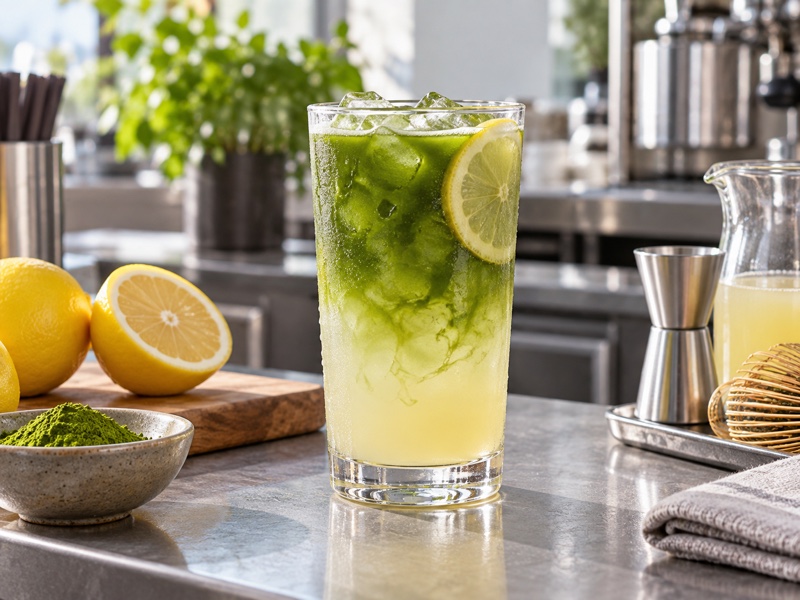
1. What should matcha lemonade taste like?
The first sip should tell the customer that the drink contains lemon and matcha. Neither needs to dominate. Lemon brings sharp acidity; matcha adds a vegetal, lightly bitter tea note. Sweetener connects them. Set a target that your team can describe in plain words, such as “tart on entry, tea in the middle, clean finish.” Then ask a small panel to taste coded versions at the temperature in which the drink will be served. Warm bench samples are misleading because cold and ice change perception.
Decide whether the drink is a clear refresher or a more concentrated, almost juice-like beverage. Cup size and ice load affect that choice. A large cup with a small matcha dose may look green while tasting mostly of sweet lemonade. Write the target powder mass and liquid fill weight on the development sheet. Taste after several minutes too. If tea settles to the bottom, the customer may get lemon first and a bitter final sip. A service procedure should tell staff whether to stir before handoff and how to explain natural separation.
| Sensory point | Desired result | Check |
|---|---|---|
| First sip | Lemon and tea both identifiable | Blind tasting over ice |
| Sweetness | Supports acidity | Compare syrup levels |
| Finish | No harsh powder note | Taste last third of cup |
| Texture | Smooth, no dry grains | Inspect cup bottom |
2. Which lemon ingredient should a café use?
Fresh-squeezed lemon can give a vivid aroma, but its acidity and yield vary with fruit and season. A bottled juice or prepared lemon base may be more consistent, yet flavor and ingredient declarations vary by supplier. Choose the route that fits your service model, then standardize it. If the team squeezes lemons on site, weigh juice rather than counting fruit. Record the acceptable taste range and the amount of usable juice per case. If a prepared base is used, keep its specification and update the recipe when the supplier changes it.
Avoid copying a home-recipe measure of “one lemon” into a commercial spec. It will produce uneven cups. Start with a measured lemon level, compare adjacent levels, and note whether the matcha becomes hard to detect. A very sour base may tempt staff to add more syrup on the fly. That changes cost and any nutrition information you display. Make acidity and sweetness decisions together. If a seasonal citrus variant is planned, test it as a separate drink rather than assuming lime, yuzu, or orange will behave and taste exactly like lemon.
3. How much matcha belongs in one serving?
Build three versions around the same lemonade base. A practical first trial for a medium café cup could compare 2 g, 3 g, and 4 g of matcha, with the exact serving size written beside them. These are development points, not a finished formula. Powder lots differ, and a stronger lemon base may need a different balance. Ask tasters whether the higher dose improves flavor enough to justify cost. If the final sip grows rough, adding powder has stopped solving the problem.
Prepare matcha as a smooth concentrate before it meets ice and lemon. Sift if the product clumps, then whisk it with a measured small amount of water. Cold water can work with adequate mixing equipment; warm water may disperse powder faster but needs cooling before service. Do not describe the powder as dissolved: matcha is a suspension, so settling can occur. Record the water added to the concentrate, since it contributes to the final cup volume. Keep the powder in a closed, suitable pack between orders to protect aroma and color.
| Trial | Matcha dose per medium cup | Question |
|---|---|---|
| A | 2 g | Does the tea survive the lemon? |
| B | 3 g | Is the balance better? |
| C | 4 g | Does bitterness rise faster than flavor? |
4. What sweetener gives the most repeatable result?
Honey, simple syrup, agave, and other sweeteners each change flavor and handling. Honey can be appealing in a home recipe but may be slow to disperse in a cold rush-period drink. A measured syrup is easier to dose across stores. A low-sugar menu option requires more than removing syrup; tea bitterness and lemon sharpness will stand out. Test it separately and be honest about how it tastes. If a syrup contains flavors or other ingredients, those belong on the ingredient and allergen review.
Make a small matrix: hold matcha and lemon constant, then compare three sweetener levels. Tasting each only once can favor the sweetest cup, so revisit the samples after a pause. Evaluate them with the intended ice and straw. Keep a record of grams rather than pump counts alone; pumps differ and can drift. At launch, set an approved range and train staff to remake a cup that falls outside it. An improvised extra squeeze of honey is difficult to cost and impossible to reproduce for a returning customer.
5. What mixing order prevents clumps and patchy flavor?
Start with a prepared matcha concentrate. Mix the lemonade base separately so sweetener and lemon are evenly dispersed. Combine them in a pitcher or serving cup according to the final presentation. For a layered visual, pour gently and accept that the customer should mix before drinking; for even flavor, stir the drink before adding the final ice. Decide which experience you are promising in the menu photograph. A perfect layer that tastes unbalanced can disappoint more than a simple, well-mixed cup.
Test the process with your actual tools. A small whisk may be quick for one drink but slow for a queue. A shaker can disperse the components and chill them, though shaking may create foam that changes the look. If using a pre-mixed concentrate, set a holding procedure and verify its quality and food safety under your operation’s rules. Staff need exact instructions for how much concentrate goes into each size. Measure fill weight from the first to last cup in a batch; a pitcher that settles can deliver different matcha doses across orders.
| Step | Record | Failure to watch |
|---|---|---|
| Matcha concentrate | Powder and water weights | Dry green spots |
| Lemon base | Juice and syrup weights | Uneven acidity |
| Combining | Order and mixing time | Layered taste |
| Service | Ice and finished fill | Variable strength |
6. How does ice change the finished drink?
Ice is part of the recipe, not a garnish. Too little leaves the drink warm and blunt; too much displaces liquid and changes the cost per cup. Ice size also affects dilution. Test the exact cup, scoop, and ice machine used in service. Pour a measured liquid volume over a measured ice mass, then inspect the drink at handoff and after the longest likely wait. For delivery, include a realistic route. The last sip should still taste intentional, even if the matcha has settled slightly.
A cold drink can mask the roughness of a poor powder at first, then expose it as ice melts. Taste from the top and bottom of the cup. If a drink is designed to be shaken, write that into the procedure and choose a lid that permits it. Do not rely on a “shake before drinking” instruction hidden on a small sticker to fix a badly mixed batch. Better mixing and a suitable serving window address the underlying issue. Your test should also note how much drink the customer actually receives once the ice is removed.
7. Why can the color change after lemon is added?
Matcha pigments and particles respond to the finished drink environment, including acidity, light, temperature, and time. A vivid green concentrate may appear olive or dull in acidic lemonade. That change does not automatically mean the tea has become unsafe, but it may make the beverage look different from the menu image. Photograph each trial under neutral light at handoff and after the planned service window. Use the same clear cup and background. If a particular lemon level produces a poor color, decide whether its flavor benefit is worth that appearance.
Avoid compensating with ever more matcha. More powder can make the drink bitter and expensive. A lower-acid balance, a different powder, a shorter holding window, or an opaque cup may be more sensible. If you use a color ingredient, declare it correctly and check that it fits the product brief. The most dependable visual promise is a natural, slightly variable green rather than an edited neon photograph. Menu photography should come from the actual approved recipe, not a separate styling batch made only for the camera.
| Symptom | Check first | Possible adjustment |
|---|---|---|
| Olive color | Lemon level and hold time | Rebalance acidity |
| Sediment | Concentrate mixing | Whisk or shake process |
| Pale cup | Ice and total liquid | Review dilution |
| Harsh finish | Powder dose | Compare lower-dose cup |
8. What information belongs on the menu?
Use a name that describes the drink and a short ingredient note. If the menu calls it “unsweetened,” verify that no syrup or sweetened lemon base enters the recipe. If it claims “no added sugar,” review every purchased ingredient and the rules in the sales market. Matcha contains caffeine; a precise caffeine number needs product-specific evidence and a fixed dose. Avoid broad health claims in a drink description. Guests mainly need to know that it contains tea, lemon, and any sweetener or allergen-relevant ingredient.
The name “matcha lemonade” should also match the cup. If the recipe uses a tiny amount of matcha for color while tasting like ordinary lemonade, a buyer may reasonably expect more tea. Keep a tasting standard in staff training. For chains, provide the same ingredient spec and recipe to every store, including cup sizes and allowed substitutions. A second size should have its own measured formula. Simply doubling syrup pumps and topping off with water produces a different balance. Clear menu language is easier to defend when the kitchen sheet is clear.
9. How should a buyer compare suppliers and cost per cup?
Compare matcha samples in the finished acidic drink. A powder that tastes smooth as plain tea may be too delicate after lemon; a robust one may hold its own at a lower dose. Record the dose that passes blind tasting, then calculate landed powder cost per cup. Add lemon yield, sweetener, water, ice, cup, lid, straw, and waste. A prepared citrus base may cost more per liter yet save labor and discarded fruit. The correct comparison is the saleable cup, not the cheapest ingredient line.
Ask a supplier for a lot-linked sample, specification, packaging and storage guidance, lead time, and replacement-lot process. If this drink is a planned summer promotion, confirm available volume before printing a campaign. Matcha Village can provide bulk matcha samples for an application test. Give the supplier your target dose and lemon level so advice refers to the real use case. Keep an approved retain sample and a finished-drink photograph in the purchasing file.
| Cost line | Record | Common omission |
|---|---|---|
| Matcha | Grams per cup × landed price | Dose change between lots |
| Lemon | Usable juice or base per cup | Fruit yield and waste |
| Sweetener | Grams per cup | Pump inconsistency |
| Service | Ice, cup, lid, labor | Delivery packaging |
10. How can a café approve matcha lemonade for launch?
Make a pilot during normal service. Give staff a one-page recipe with ingredient weights, concentrate method, ice measure, cup size, and expected appearance. Watch them prepare several cups in sequence and time the process. Taste the first and last cups. Inspect one after a short delivery or pickup wait. Note any questions the staff ask; a recipe that needs a developer to explain every line is not ready for a multi-store rollout.
Approve the actual powder and lemon base, then photograph the real serving cup. Set remake triggers for visible clumps, wrong fill, or an off-balance taste. Check local labeling requirements before publishing nutrition or caffeine numbers. Once the drink sells, review customer comments and cost variance without changing several ingredients at once. Matcha lemonade works best when its tartness, tea flavor, and dilution have all been designed. A measured recipe gives customers the refreshing cup they saw on the menu and gives operators a cup they can repeat.
FAQs
Q1. Can matcha lemonade be prepared without dairy? Yes. A basic version uses matcha, lemon, water, sweetener, and ice; review the actual ingredients of any prepared base.
Q2. Does matcha dissolve in lemonade? Matcha is a suspension of fine powder. Good mixing reduces clumps, but some settling can occur.
Q3. Can bottled lemon juice replace fresh juice? It can be tested. Compare aroma, acidity, consistency, cost, and the ingredient statement of the chosen product.
Q4. Why does the drink look olive rather than bright green? Acid, powder choice, light, and holding time can change appearance. Test the full recipe under service conditions.
Q5. How should a chain set its powder dose? Run a blind trial at measured doses in the approved cup and lemon base, then lock the chosen amount into a store recipe.