
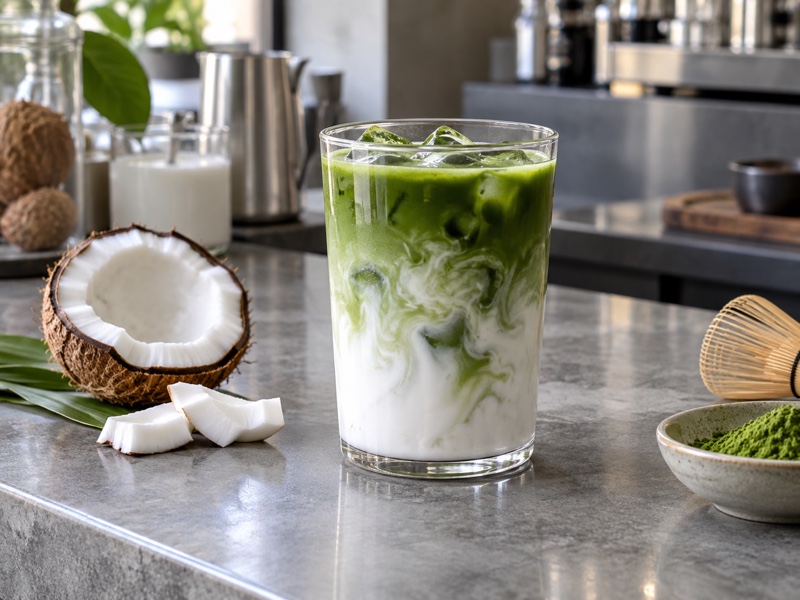
Coconut matcha can be a clean pairing: the tea cuts through the rounded coconut flavor, and the pale base makes the green visible. It can also become an unstable drink with a waxy top, a watery bottom, and enough syrup to hide the matcha. The coconut matcha cloud in search results shows the appeal of a layered cup. A café serving dozens of them needs a formula that survives a queue, a lid, and a delivery trip. Start with the coconut ingredient, then build the drink around a measurable tea dose.
1. What coconut matcha is the café actually selling?
Decide whether the drink is a stirred latte, a distinct two-layer beverage, or a coconut foam over matcha. The product name can be similar, but the operations are different. A stirred drink should remain pleasant after the customer carries it; a layered drink may be expected to mix on drinking. A foam needs a stable recipe and a clear statement about whether it contains dairy. Photograph the version customers will receive, not a delicate test pour that lasts thirty seconds under studio lights.
Write a short target: serving size, ice amount, sweetness, tea strength, coconut impression, and how long the cup may wait before handoff. Taste through a straw and from the lid opening if those are the actual serving methods. The first sip can be mostly coconut while the last is concentrated tea or syrup. If the guest must stir, say so on the menu or service card. The team should not let a visual gradient replace a balanced beverage.
| Format | Main customer expectation | Hold test |
|---|---|---|
| Stirred iced latte | Even coconut and tea | After normal queue time |
| Layered cup | Visible contrast, balanced after stirring | With lid and transport |
| Coconut foam | Distinct top texture | At first and last sip |
2. Which coconut ingredient belongs in the base?
Carton coconut drink, canned coconut milk, coconut cream, and coconut water are different ingredients. A carton drink can be easy to pour but may be thin or sweetened. Canned milk gives richness but may separate when chilled. Cream creates a heavy top that can dominate tea. Coconut water gives a lighter profile and little opacity. Read each label for added sugar, emulsifiers, stabilizers, and other allergens. The ingredient that tastes best in a spoon is not necessarily the one that pours consistently through a café service line.
Compare two realistic SKUs in the same finished cup. Chill them as they will be stored, shake or mix them by a written method, and measure a serving. Check for fat granules, oiling off, and sediment after the usual queue. If a product requires staff to warm a can or scrape a solid layer, include that labor and food-safety step in the decision. Keep the approved brand and version on the prep card; a generic instruction to use coconut milk leaves too much room for substitution.
3. How strong should the matcha layer be?
Coconut fat and sugar can mute tea. Make a controlled dose ladder with the same coconut base, ice, and sweetener. Whisk each matcha portion into a measured small volume of water so that powder dispersion is constant. Taste the finished drink immediately and after it sits. A dose that tastes clear in a hot tea bowl may vanish once diluted by ice and coconut. A larger dose may make the final sip harsh if the cup is not stirred.
Set the dose in grams per saleable cup. Record the water volume and temperature used for the tea slurry, as well as the final drink weight. Do not compensate for weak tea by reducing water indefinitely; an overly thick concentrate can form an unpalatable pocket at the bottom. If the powder changes, compare a lot-linked sample in this exact recipe. A bright powder is useful only if the drink tastes good under service conditions.
| Tea trial | Keep fixed | Evaluate |
|---|---|---|
| Light dose | Coconut, ice, syrup | Is matcha identifiable? |
| Middle dose | Same base and cup | Is coconut still present? |
| Strong dose | Same hold time | Is the final sip bitter? |
4. Why do some coconut drinks split or clump?
Coconut fat behaves differently when cold. A can that is smooth at room temperature can show white flecks after refrigeration. Matcha clumps are another issue: dry powder poured into a cold fatty base does not disperse reliably. Make the tea slurry separately and mix the coconut component as its supplier directs. Then test the finished beverage in the real serving cup. Observe whether fat beads collect on ice or the lid, and whether a watery layer develops below.
If a cold base splits, change one variable at a time. Compare coconut products, storage temperature, and mixing procedure before adding more syrup or a new stabilizer. A strong shake may improve one cup but produce excessive foam in another. The fix must be executable by the staff during a rush. Describe the acceptable appearance after stirring; some natural separation is normal in a layered item, but curdled or waxy particles are not an attractive selling point.
5. What pour order gives a useful layer?
Layering depends on density, ice, and pour speed. A sweet coconut base can sit differently from an unsweetened one. Test the same measured ingredients with the tea poured gently over ice and with the order reversed. Take a photo immediately and after the standard handoff time. Then stir and taste. A dramatic gradient that yields an uneven drink is a poor trade. The reference “cloud” presentation is a useful inspiration, not a requirement that every café must copy.
If the drink is made for delivery, fit the lid and carry it along the normal route. Consider whether the cup will be photographed before or after mixing by a customer. Staff need a simple pour cue, such as the amount of ice and a target fill line, rather than a slow ceremonial technique. For a busy bar, a small difference in appearance may be acceptable if the recipe improves speed and consistency. Record both build time and beverage quality during the pilot.
| Pour test | Look for | Taste after stirring |
|---|---|---|
| Tea over coconut | Clean upper layer | Even tea and coconut |
| Coconut over tea | Cloud effect | No sweet bottom pocket |
| Fully stirred | Uniform color | Stable through the cup |
6. How much sweetener is enough?
First find out whether the coconut product already contains sugar. Then taste the base with matcha before adding syrup. A sweetened carton can make a standard café syrup dose excessive. Use grams or milliliters from the actual pump and verify pump output periodically. Offer a lower-sugar version only if the drink still tastes intentional. A vague “lightly sweet” description will not help if customers receive different coconut products across shifts.
Vanilla, coconut syrup, and toasted flavors can soften bitterness, but they can also turn matcha into color. Change one flavoring at a time and blind-taste the finished cup. If a syrup is required to make the tea tolerable, reconsider the powder or dose. For a menu nutrition figure, calculate from the actual coconut SKU, tea, syrup, and any foam or topping. Plain matcha’s low energy value tells customers little about a sweetened coconut drink.
7. How should ice and holding time be tested?
Ice is an ingredient because it changes dilution. Weigh it for a trial cup and use a consistent size. A large cube slows dilution but may affect the layer; small machine ice chills quickly and melts faster. Taste at handoff and after the longest realistic wait. Measure the final liquid volume after the ice begins to melt, and check whether a straw draws mostly coconut or tea. A cup that tastes balanced only during the first minute is not ready for a delivery menu.
Holding rules should match food-safety procedures for opened coconut products and prepared tea. Label and refrigerate bases as required by the operation’s plan. Do not borrow a shelf life from a home recipe. If staff prebatch a sweetened coconut component, specify the batch size, date marking, mixing before use, and discard point. Check the first and last cup from the batch for the same sweetness and fat distribution.
| Time point | Check | Failure that matters |
|---|---|---|
| Freshly built | Layer and flavor | Tea hidden by base |
| Normal queue | Separation and ice | Fat flecks or watery bottom |
| Delivery window | First and last sip | Excess dilution |
8. What should staff and customers know about ingredients?
Coconut is a specific ingredient; “plant-based” does not settle every dietary question. Some commercial coconut drinks contain other plant ingredients or additives, and a coconut foam may include dairy cream. Check the actual label and shared equipment before calling a drink vegan or dairy-free. Inform customers that matcha contains caffeine without inventing a precise amount from an unrelated product. If the menu offers decaffeinated alternatives, this drink should not be placed among them simply because it tastes like dessert.
Keep a short ingredient card at the bar. It should name the coconut SKU, matcha, sweetener, toppings, and any optional substitution. If a guest requests a different milk, staff should know whether the same dose and pour method still work. A substitution may remove the coconut character and change nutrition or allergens. Treat it as a defined variant, not an improvised version of the standard item.
9. What does one cup cost to make and serve?
Cost the approved recipe by actual use: matcha grams, coconut milliliters, syrup, ice, cup, lid, and expected waste. Include the coconut lost in a can or carton after opening and any prep labor for mixing a split product. A visual foam may look premium but require an extra container and several minutes per order. Measure build time under a realistic queue. If it is too slow, simplify the presentation before reducing the tea dose.
Compare gross margin at the target selling price and the number of cups the bar can make in a rush. A low ingredient cost is not a win if staff remake separated drinks or the team cannot maintain a consistent pour. For multi-location service, use one product specification and a substitute approval process. When the coconut SKU changes, retest flavor, separation, and cost before the new carton goes into production.
| Cost input | Measurement | Common miss |
|---|---|---|
| Matcha | Grams at approved dose | Trial and service dose differ |
| Coconut base | Milliliters plus pack loss | Residual fat in carton |
| Syrup and toppings | Pump output or grams | Unrecorded extras |
| Service | Cup, lid, labor, remakes | Complex layer takes time |
10. When can coconut matcha go on the menu?
Make a pilot with the approved coconut product and matcha lot. Ask staff who did not develop the drink to follow a one-page recipe. Check appearance and taste at handoff, after a queue, and after a delivery simulation. Taste the first and last sip, with and without stirring. Photograph the cup under the bar’s normal light so the menu image reflects service reality. Record each cup’s ingredient weights and build time; outliers reveal where the recipe is unclear.
If a new tea source is under review, request a lot-linked sample from Matcha Village’s wholesale range and compare it in the final coconut formula. Approve the drink when flavor, separation, ingredient information, labor, and cost meet the agreed target. Keep the successful build card at the station. The next person on shift should be able to make the same cup without asking the developer how slowly to pour.
FAQs
Can coconut water replace coconut milk? It can form a different, lighter drink. Test sweetness, appearance, and tea dose as a new formula rather than a direct swap.
Why are there white flecks in an iced coconut matcha? Chilled coconut fat may solidify or separate. Check the coconut product and preparation method before changing the tea.
Is coconut matcha dairy-free? Only if every ingredient and the operation’s handling support that description. A coconut foam can still contain dairy.
Should the customer stir a layered cup? Usually yes if the first and last sips otherwise differ. Test and give a clear service cue.
Can the coconut base be made ahead? Follow the café’s approved cold-holding and date-marking plan, and check the first and last portions for consistency.