
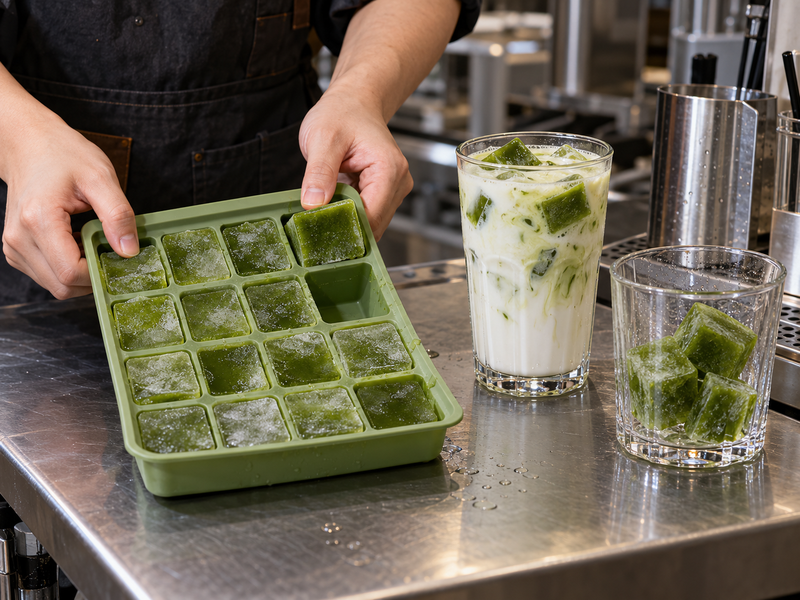
Matcha ice cubes can keep an iced drink interesting as they melt, but the first sip may taste weak and the last bitter. Cube size, concentration and storage all affect the result. A café pilot should follow the same cup from handoff to near-empty.
Contents
- 1. What should a matcha ice cubes drink taste like?
- 2. Which matcha fits the served base?
- 3. How do you set a repeatable drink ratio?
- 4. Can baristas make the same cup in a rush?
- 5. What changes between first and last sip?
- 6. How does the drink hold after handoff?
- 7. Does the cup or bottle protect its appearance?
- 8. What does each saleable cup really cost?
- 9. Which ingredients and lots must be traceable?
- 10. What must a service trial pass?
1. What should a matcha ice cubes drink taste like?
Define the product before approving a sample
Decide what the cubes should do: chill a drink without dilution, add tea as they melt, or create a visual layer. Each purpose calls for a different concentration. A cube that tastes unpleasant alone may still work in milk, but the whole drink must be tested.
Decide whether the cubes supply the drink's matcha dose or add a visual layer to an already complete matcha beverage. That choice controls concentration and how the cup should taste before melting. Specify cube size, number per serving and whether the base is water or milk. A café cannot judge the format from a tray photograph; it must follow the same served cup through the drinking period.
For drinks, define the cup at handoff and after the first few minutes. Both moments affect whether customers recognize the tea.
2. Which matcha fits the served base?
Choose powder against the finished application
Mix a smooth matcha base before freezing. Compare powder concentration and cube size in the intended serving cup. Too much tea in a small cube can make the final sip bitter as it melts.
Freeze equal-size cubes at several matcha concentrations, then put the same number into identical cups. Keep the milk or water base and other ice constant. Taste at handoff, halfway through and near-empty. A high concentration may make the last sip harsh while the first remains weak. Adjust cube size and number together rather than changing powder dose without tracking volume.
A cold sweet base may hide weak matcha, while water tasting can exaggerate astringency. Select powder against the served drink.
For a related production decision, see our matcha café latte service guide.
| Candidate | Specific check | Keep if |
|---|---|---|
| Powder | Mix a smooth matcha base before freezing | Tea fits the finished application |
| Formula | Fill molds by weight and keep the freezing arrangement consistent | Dose stays practical |
| Tasting | Measure melt time at the expected serving temperature | Flavor remains clear |
3. How do you set a repeatable drink ratio?
Change one variable at a time
Fill molds by weight and keep the freezing arrangement consistent. Particles may settle before the liquid freezes, making the cube bottom darker. Sample cubes from several tray positions and cut one open.
Make several concentrations using the same measured liquid and mold. Fill equal cubes and freeze them under comparable conditions. Check a cut cube for settled powder. Then put a fixed number into identical cups and taste at timed points as they melt. If the early cup is too weak, consider a small matcha base in the drink instead of making the cube so strong that the last sip is bitter.
Keep ice, liquid, sweetener and tea weights fixed during screening. One uncontrolled pour can obscure an otherwise useful difference between powders.
4. Can baristas make the same cup in a rush?
Write a method another operator can repeat
Build drinks with the real milk or water base and normal ice load. Watch the first, middle and final sip. Customers may drink before the matcha cubes have released enough flavor.
Fill molds by measured volume or weight and check whether powder settles before freezing. Slice a few cubes from different tray positions to see whether their color is uniform. Ask staff to demold a full tray at normal service speed. Broken corners change the visual and dose, so a mold that produces beautiful cubes in a single test may still be poor for a busy counter.
Watch each operator make a short sequence of drinks. Service time and cup-to-cup variation matter alongside a single ideal prototype.
| Process point | Specific check | Record |
|---|---|---|
| Preparation | Fill molds by weight and keep the freezing arrangement consistent | Tool and dose |
| Production | Build drinks with the real milk or water base and normal ice load | Start and end samples |
| Finished unit | Measure melt time at the expected serving temperature | Sensory result |
5. What changes between first and last sip?
Taste the portion a customer receives
Measure melt time at the expected serving temperature. A dramatic cube that takes too long to color the drink might disappoint customers; a quick-melting cube may deliver all tea at once.
A panel should taste the first sip, the midpoint and the liquid left when the last cube has nearly gone. Note whether particles settle at the bottom or whether frost changes the aroma. Ask customers to stir only if the serving instructions would make that natural. A drink that works only after laboratory agitation is not a good café design.
A panel should stir or drink the cup as customers will. Layered photographs cannot show what happens to flavor after mixing.
6. How does the drink hold after handoff?
Use the real shelf or counter conditions
Store cubes in a closed food-safe container and test for freezer odor pickup and surface frost. Frozen appearance alone does not establish shelf life or safe handling. Use the café's validated prep and storage rules.
Store cubes in their proposed covered container, then make drinks from fresh and held batches. Check frost, freezer odor, color and how quickly cubes release flavor. The container should keep cubes separate enough for measured serving. For milk-based cubes, follow the site's dairy handling and allergen controls rather than adopting water-cube instructions.
Observe settling, dilution and aroma through the likely customer wait. A drink that needs constant agitation may be awkward for service.
| Observation | Specific check | Action |
|---|---|---|
| Storage | Store cubes in a closed food-safe container and test for freezer odor pickup and surface frost | Compare with control |
| Pack | Choose a mold and portioning method that staff can use during rush | Inspect opened unit |
| Customer portion | Measure melt time at the expected serving temperature | Taste again |
7. Does the cup or bottle protect its appearance?
Test the actual selling format
Choose a mold and portioning method that staff can use during rush. Broken cubes alter dose and look messy. A clear cup should show the served form customers actually receive.
Store cubes in a covered container that allows staff to portion them without smashing a tray over the counter. Test whether neighboring cubes stick together and whether the freezer adds odors. Compare water and milk cubes only if both will be offered; the latter needs dairy handling and allergen controls. A clear cup can show the green shapes, but it will also reveal frost and broken fragments.
Test lids, straws and clear cups with the real ice load. A good recipe can still spill, smear or look uneven after handoff.
8. What does each saleable cup really cost?
Measure yield and repeatability
Record cubes per batch, breakage and freezer space. A prepared component may speed service but consume valuable storage and create unsold inventory if demand swings.
Measure how many drinks a tray yields and how many cubes break or remain unused at closing. Account for freezer space and prep labor. If the format is mainly decorative, ask whether customers get enough tea flavor from the rest of the cup; a few green shapes should not substitute for the promised matcha serving.
Measure discarded premix and unused base at closing. Beverage waste can outweigh a small saving in powder price.
| Pilot measure | Specific check | Commercial use |
|---|---|---|
| Yield | Record cubes per batch, breakage and freezer space | Cost per saleable unit |
| Loss | Store cubes in a closed food-safe container and test for freezer odor pickup and surface frost | Set acceptance limit |
| Supply | Keep batch records linking matcha lot, water or milk base and production date | Confirm lot evidence |
9. Which ingredients and lots must be traceable?
Link claims and batches to documents
Keep batch records linking matcha lot, water or milk base and production date. Milk-based cubes carry a different allergen and sanitation profile from water-based ones.
A supplier file is useful only when it refers to the material delivered. Match ingredient statement, specification and test report to the purchase code and lot on the cartons. Ask for an agreed notice before changes in source, formula or manufacturing site. The finished product team should separately review market-specific ingredient and allergen wording. Test a trace request. Pick one pilot pack and ask where its matcha came from and which finished units received it.
Ingredient and caffeine-relevant information should come from the final formula and documented serving size. Keep tea lot codes on prep records.
10. What must a service trial pass?
Release against a written reference
Approve the idea through an ordinary service trial, including a customer wait time. Save a reference drink at handoff and after partial melt so staff know when the beverage performs as intended.
The approved version needs a name and a date. Store the physical sample, recipe revision, process sheet, pack artwork and reason for selecting the supplier. State what would trigger a new test: a tea lot change, a different milk or fat, a new sealing film or a shift in serving size. Make approval repeatable. A future buyer should be able to compare a new shipment with the reference rather than reopening the entire concept from memory.
Train staff against one reference cup made with ordinary tools. A recipe that works only in development has not passed its service trial.
| Release item | Specific check | Owner |
|---|---|---|
| Formula | Approve the idea through an ordinary service trial, including a customer wait time | Development |
| Supplier | Keep batch records linking matcha lot, water or milk base and production date | Purchasing |
| Pack | Choose a mold and portioning method that staff can use during rush | Quality |
A final production check
Put the approved cubes into the standard cup and let a customer-facing employee drink it through the time a real customer would. They should report first sip, middle and final sip without watching a development demonstration. Weigh broken cubes and leftovers after a service shift. If the format needs lengthy stirring or leaves powder at the bottom, revise concentration or cup build before putting it on the menu.
Further reading
Use ISO/TR 21380:2022 on matcha identity for matcha identity and FDA food allergen labeling guidance if the final drink or topping contains milk, cereal allergens or another covered ingredient. Set wet-product holding rules with the operating site's food safety team.
FAQ
Q1: What is matcha ice cubes in a commercial product?
Decide what the cubes should do: chill a drink without dilution, add tea as they melt, or create a visual layer. Each purpose calls for a different concentration.
Q2: How should a buyer compare matcha for this use?
Mix a smooth matcha base before freezing. Compare powder concentration and cube size in the intended serving cup.
Q3: What usually causes the first quality failure?
Store cubes in a closed food-safe container and test for freezer odor pickup and surface frost. Frozen appearance alone does not establish shelf life or safe handling.
Q4: Which documents should the supplier provide?
Keep batch records linking matcha lot, water or milk base and production date. Milk-based cubes carry a different allergen and sanitation profile from water-based ones.
Q5: When should the formula be approved?
Approve the idea through an ordinary service trial, including a customer wait time. Save a reference drink at handoff and after partial melt so staff know when the beverage performs as intended.