
A matcha ice cream recipe blends powdered tea into a frozen dairy or plant-based dessert. A scoop shop needs a flavor customers recognize and a texture that serves cleanly. A packaged brand also needs stable color, controlled air incorporation, a cold-chain plan, and documentation for each ingredient lot. This guide offers a measured pilot and an approval process; it is not a validated commercial formula.
Start at serving temperature: A warm mix may taste strong while the frozen scoop tastes faint or gritty.
Contents
- What should a commercial matcha ice cream deliver?
- Which base and matcha dose should you pilot?
- How should you select matcha for a frozen base?
- How do you disperse matcha without grit?
- What process controls protect texture?
- How do sugar and fat change the scoop?
- Which inclusions work with matcha ice cream?
- How should teams test storage and delivery?
- What safety and label checks apply?
- How should buyers approve a matcha supplier?
1. What should a commercial matcha ice cream deliver?
Define the finished scoop
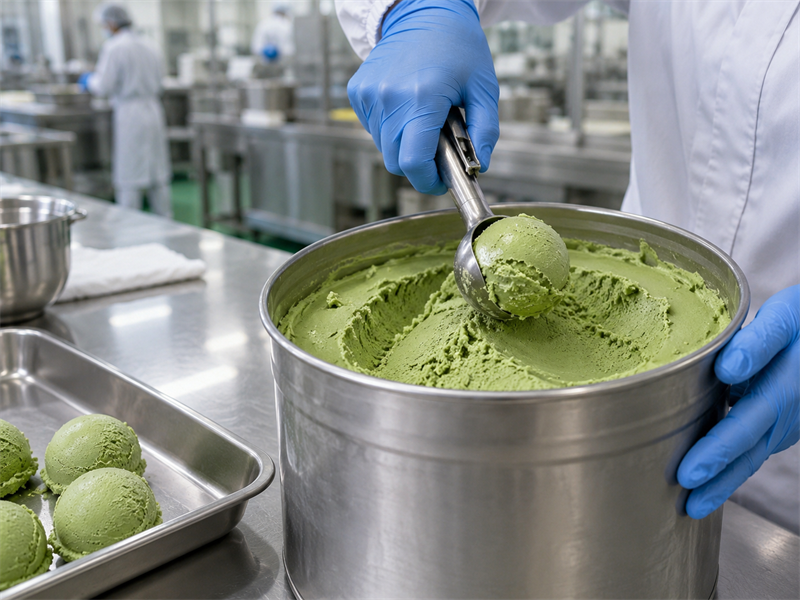
Write a sensory target before choosing powder. State whether the matcha should be gentle and creamy or distinctly tea-forward, how green the product should appear under display lighting, and whether the scoop should be dense or airy. Add a target serving size and planned storage route. A scoop-shop tub and a sealed retail pint face different handling, so their acceptance criteria should not be copied from each other.
Check both the top and the center: Surface color may differ from the interior after a tub has been opened and handled. Taste a scoop after it reaches the intended serving temperature. Record aroma, bitterness, sweetness, mouthfeel, and any sandy finish. A photograph under fixed light helps compare lots, but tasting must happen in the frozen product.
University of Guelph’s ice cream science guide explains how milk fat, milk solids, sugars, and freezing behavior shape texture. That background is useful when matcha appears to cause a defect that actually comes from base composition. Decide which base variables are fixed before screening tea samples. Otherwise the supplier comparison will not tell you much.
| Format | Main commercial test | Typical failure to watch |
|---|---|---|
| Scoop-shop tub | Serveability through shift | Hard, icy, or gritty scoop |
| Retail pint | Pack and distribution stability | Ice crystals or dull color |
| Foodservice bulk | Repeated opening | Surface damage and flavor loss |
| Frozen dessert bar | Coating and bite | Separation or fracture |
2. Which base and matcha dose should you pilot?
Start from a known plain base
Use a plain ice cream base already approved by your quality team. For a bench comparison, trial matcha at 15, 25, and 35 g per 1,000 g base before freezing. Keep sugar, fat, milk solids, stabilizer, and process fixed during this screening. These are experimental starting points, not universal dose recommendations. Dairy richness and sweetness can mute tea notes, so a dose that works in a light base may be too weak in a rich one.
Run a control batch: Freeze one plain base without matcha, then the matcha variants on the same equipment. Record mix weight, draw condition, packed weight, and frozen product behavior. Ask the sensory team to score a full serving rather than a small tasting spoon only. A high matcha dose may initially impress but become harsh across a complete scoop.
If you want a plant-based version, treat it as a new formulation. Coconut, oat, and soy bases differ in fat profile, sweetness, and flavor. Matcha can seem stronger or weaker depending on the base. Do not simply replace dairy with a plant beverage and assume identical freezing behavior. Validate texture, ingredients, and claims separately.
If no house base exists, a frozen-dessert technologist can use this 1,000 g dairy worksheet for an initial bench run. It has not been tested or approved for sale; stabilizer selection and processing require professional validation.
| Ingredient | Draft grams |
|---|---|
| Whole milk | 570 |
| Cream | 230 |
| Sugar | 130 |
| Skim milk powder | 40 |
| Matcha | 25 |
| Stabilizer system | 2 |
| Salt | 3 |
| Trial | Matcha per 1,000 g approved base | What it tests |
|---|---|---|
| Control | 0 g | Base texture and sweetness |
| A | 15 g | Light tea profile |
| B | 25 g | Mid-range profile |
| C | 35 g | Stronger tea profile |
3. How should you select matcha for a frozen base?
Judge it after freezing and storage
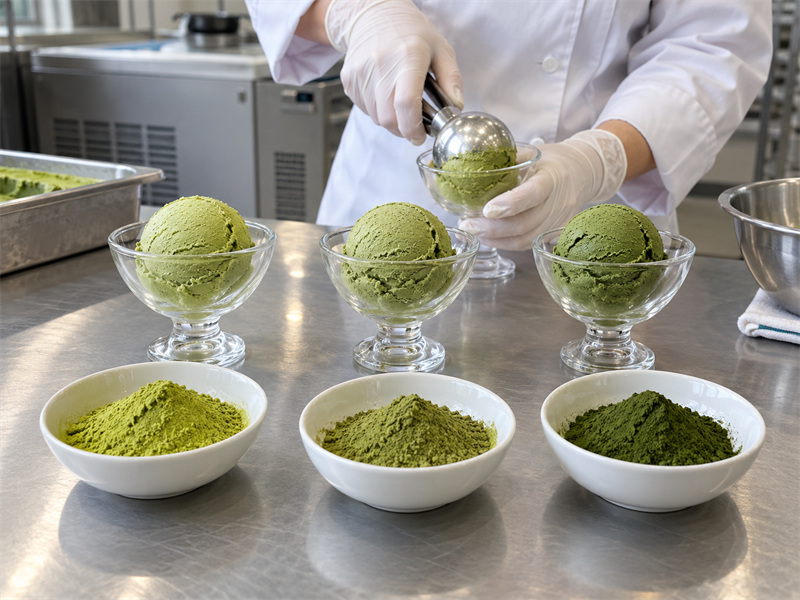
Ask for identified matcha samples and prepare each in the same base at the same dose. Compare powder aroma, dispersion, frozen color, tea flavor, bitterness, and aftertaste. Then store the samples under intended conditions and taste again. A powder can seem bright in a freshly churned mix but fade or become less pleasant over the proposed sale period.
Compare cost per tub: A low price per kilogram can disappear if the powder needs a higher dose to deliver the target. Record matcha cost per finished serving alongside sensory scores and supply terms. Matcha Village lists culinary and premium products in its company materials, but a grade name cannot replace a frozen-product test. Ask which lot and grade the eventual production supply will match.
Research on Tencha color characteristics indicates that raw-tea processing affects chlorophyll and color quality. It does not predict how a matcha ice cream will look in a freezer cabinet. Milk opacity, dose, package, light, and time all affect the final impression. Request specification, lot-linked analysis, origin, storage guidance, and documents required for your destination market.
4. How do you disperse matcha without grit?
Make a small smooth premix
Sift matcha and blend it with a measured portion of the liquid base before adding it to the full batch. A small premix can expose dry pockets and reduce clumping. Choose a mixing tool that the production line can reproduce. Record the amount of liquid, powder addition order, speed, and time. Avoid judging dispersion from the top of a large tank; take samples from multiple points if the equipment allows.
Find the real source of grit: Make a control base without matcha and a version with matcha. If both feel sandy, investigate ice crystals, undissolved sugars, or other solids. If only the matcha version feels gritty, compare powder dispersion and particle characteristics. Changing matcha may help, but a poor mixing procedure can make even a fine powder feel rough.
The matcha addition point must also fit the product’s validated food-safety process. Do not add untreated powder after a control step merely to preserve color without quality review. Work with the processor on ingredient handling and hazard controls. A recipe description cannot determine the safe addition point for every plant and line.
| Symptom | Control comparison | Next investigation |
|---|---|---|
| Green specks | Premix versus direct addition | Sifting and wetting |
| Sandy texture | Plain base versus matcha base | Powder or ice crystals |
| Uneven tub color | Samples across batch | Mixing and fill timing |
| Weak flavor | Same base, different lots | Dose and powder choice |
5. What process controls protect texture?
Keep the approved base process intact
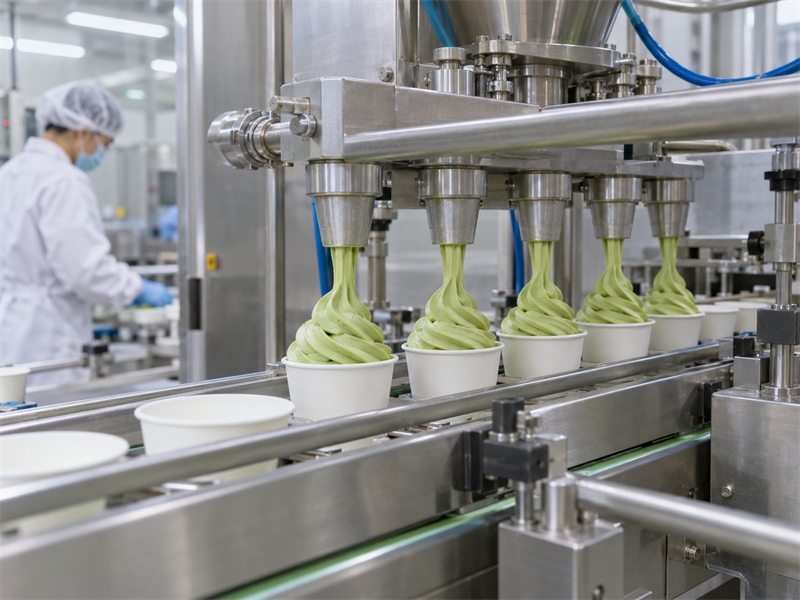
Ice cream texture depends on the whole process: base composition, heat treatment where applicable, aging, freezing, air incorporation, hardening, and storage. Follow the validated process for the chosen facility. Matcha should be introduced at a point approved by that process. Record mix temperature and hold conditions, freezer settings, draw characteristics, fill weight, and hardening conditions in the pilot record.
Use the normal line for confirmation: A small bench freezer may produce an attractive sample that a production freezer cannot match. Run a trial at representative load and pack size. Compare product taken early and late in the fill run. If texture changes, inspect mix uniformity and line conditions before rewriting the recipe.
The University of Guelph guide explains why sugars lower freezing point and why composition affects serving texture. It does not prescribe one matcha formula for every ice cream. Have your dairy or frozen-dessert technologist set process limits and acceptance criteria for the actual plant.
6. How do sugar and fat change the scoop?
Protect the texture while balancing tea
Sugar does more than sweeten ice cream; it changes how much water remains unfrozen at serving temperature. Fat and milk solids also affect body and mouthfeel. The University of Guelph ice cream resource explains those relationships. If a matcha version tastes too bitter, adding sugar may improve balance but also change softness. Test the full frozen texture after each adjustment.
Keep a formula ledger: Record every ingredient by weight and calculate the change from the plain control. If the team adds white chocolate or syrup, count its sugar and fat in the base. Otherwise a “flavor” change may become a texture change that appears only after hardening. Taste at a fixed serving temperature so a softer sample does not win merely because it melts faster on the tongue.
Matcha itself contributes solids to the mix. At the trial levels above, its effect may be modest compared with the base, but the team should still watch viscosity and dispersion. If a plant-based base is used, repeat the evaluation rather than assuming dairy behavior. The target is a scoop that carries tea flavor and serves reliably, not the deepest possible green at any cost.
7. Which inclusions work with matcha ice cream?
Test contrast and distribution
White chocolate chips, red bean pieces, wafer bits, and a fruit ripple offer different flavor and texture contrasts. Choose one inclusion at a time and measure its weight per tub or serving. Compare whether it stays evenly distributed during filling and whether it remains pleasant after frozen storage. A crisp wafer may soften; a fruit ripple may form icy pockets; a large chip may be hard to bite at serving temperature.
Check the last scoop: Inclusions that look balanced in the top of a tub may settle or cluster near the bottom. Sample across the fill run and through the tub depth. If distribution varies, review particle size, addition point, and mix viscosity before increasing the inclusion. A topping added at service has different labor and shelf-life effects from an inclusion packed into the product.
White chocolate usually adds milk and may add soy, depending on its ingredient list. Nuts or sesame-based inclusions add other allergen concerns. The FDA U.S. major allergen list can guide an initial label check, but the actual product specification and destination-market rules decide the final declaration.
| Inclusion | Benefit | Trial issue |
|---|---|---|
| White chocolate pieces | Sweet contrast | Hard bite and allergen review |
| Wafer bits | Crunch | Moisture softening |
| Fruit ripple | Color contrast | Icy pockets and bleed |
| Red bean pieces | Familiar dessert pairing | Distribution and texture |
8. How should teams test storage and delivery?
Use the final pack and route
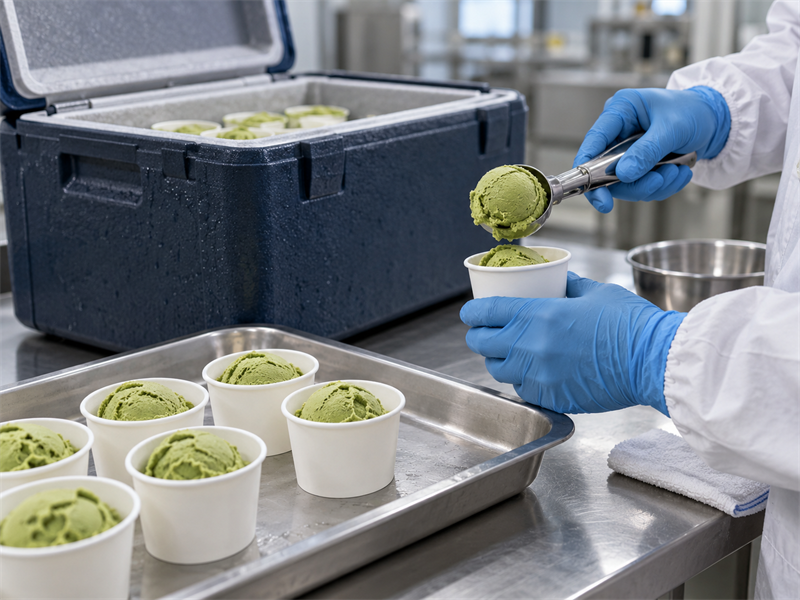
Fill the proposed tub or pint at production-like weight, then harden and store it under the intended conditions. Inspect color, ice crystal growth, surface change, aroma, and scoopability at planned intervals. Keep lot and process records with each retained sample. A product that tastes smooth on packing day may become coarse after distribution or temperature cycling.
Take the transport sample seriously: Run a documented route trial or a validated simulation that reflects the distribution chain. Measure product temperature as directed by your quality team and inspect the pack after handling. Condensation, lid movement, or damaged seals can undermine a premium presentation even if the flavor is good. A freezer-cabinet light may also change perceived green; assess a store-like display sample.
Do not assign a shelf life from another flavor or another pack. Matcha aroma and color can change, while inclusion texture may deteriorate on a different schedule. Define pass/fail limits with quality, then use actual trial data. If the product serves too hard, check freezer temperature and base composition before blaming powder. If it melts too quickly, inspect formulation and handling together.
9. What safety and label checks apply?
Approve the finished frozen product
The processor must validate ingredient receiving, applicable heat treatment, matcha addition, sanitation, packaging, and cold-chain controls. Matcha is a food ingredient that needs a supplier approval path; its green color does not imply safety or a health benefit. Request a current specification, lot-linked analysis, origin, storage guidance, and agreed testing from the supplier. Keep these with batch records.
Read every ingredient source: Dairy ice cream contains milk and may contain egg. Plant-based versions may contain soy or nuts. Inclusions can add wheat or sesame. The FDA allergen guidance describes major allergens and cross-contact for U.S. products. Each export market needs its own review. If the brand wants to call the pint organic, USDA organic labeling rules require attention to the finished product, not only organic matcha.
Matcha naturally contributes caffeine. The FDA caffeine overview identifies tea as a source, but the amount in a particular tub depends on the powder and formula. Substantiate any numeric caffeine claim with product-specific evidence. Avoid medical or performance claims without a separate legal and scientific review.
10. How should buyers approve a matcha supplier?
Compare identified lots in the same base
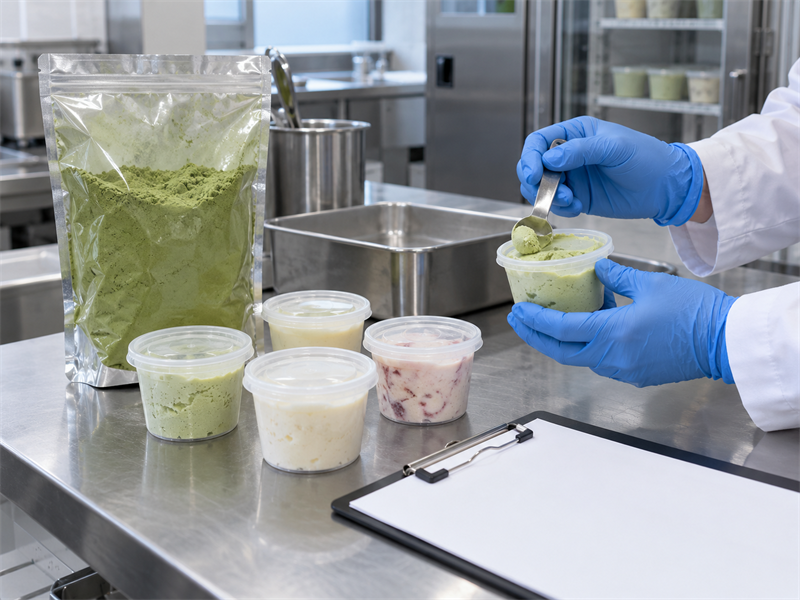
Send the supplier your base type, inclusion range, target color and tea intensity, processing constraints, projected volume, pack size, and destination market. Ask for identified samples and the same document set from each candidate. Freeze every sample with the same process and taste at the same serving temperature. Record cost per finished tub at the approved dose.
Confirm the supply path: Matcha Village’s company materials describe bulk matcha, blends, and private-label support. Ask which product type fits your operation and request current certificates tied to the supplied product and facility. Confirm minimum order, lead time, storage, and how a new lot is approved. If an importer brings matcha into the United States, review applicable FDA Foreign Supplier Verification Program requirements with the responsible importer.
Repeat the preferred powder on a normal production load and retain finished tubs from early and late filling. If both pass sensory, texture, packaging, and quality checks, put the approved ingredient specification and change-control procedure on the purchase order. An isolated excellent sample cannot replace consistent delivery.
| Approval check | Evidence |
|---|---|
| Flavor and color | Frozen, stored sample |
| Texture | Normal-load scoop trial |
| Safety and label | Quality review |
| Supply | Lot and lead-time agreement |
Pilot the matcha ice cream recipe in an approved base, then check the frozen scoop after real storage and distribution. Send Matcha Village the result and request a production lot aligned with the tested sample. Final approval should cover the scoop, pack, documents, and supply agreement together.
FAQ
Q1: How much matcha should a pilot ice cream use?
The 15–35 g per 1,000 g base range above is a test range. Select a final dose through frozen-product trials.
Q2: Why does matcha ice cream taste gritty?
Compare a plain control with the matcha version, then check dispersion, powder, and ice-crystal texture.
Q3: Can ceremonial matcha improve every ice cream?
No grade name guarantees better flavor or color in a frozen dairy or plant-based base. Test the finished product.
Q4: Is organic matcha enough for an organic pint?
No. The complete product and handling route must meet applicable organic rules.
Q5: What should a buyer request from a supplier?
Request identified samples, current specifications, lot-linked analysis, origin, storage guidance, and relevant certificates.