
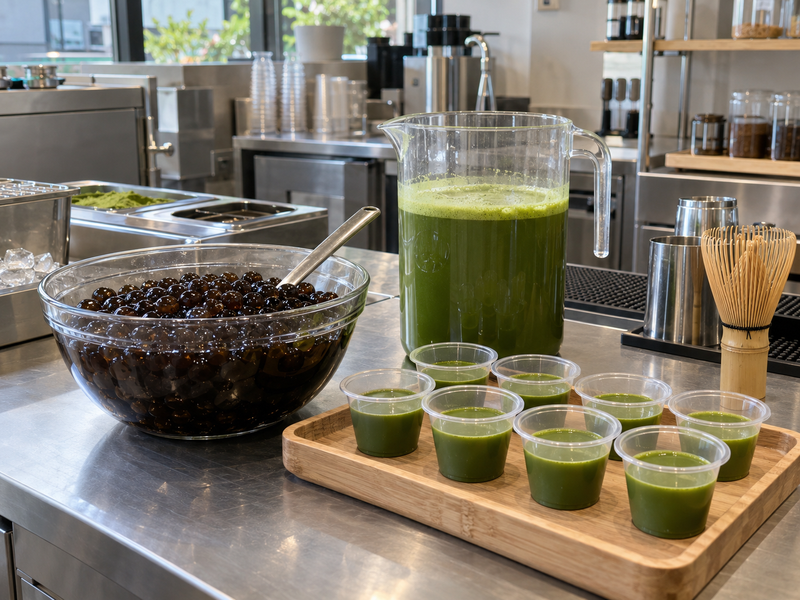
Matcha boba looks simple until a busy shift separates the tea, pearls and ice into three different service problems. A cup that tastes right at the counter may become watery in a delivery bag. Pearls that were pleasant at opening can turn firm later in the day. This guide treats the drink as a foodservice product: define the cup, test each component, then record the service method that staff can repeat. The reference recipe shows one home version; a cafe needs its own checks for batch size, holding and cost.
Contents
- 1. What should a matcha boba cup deliver?
- 2. Which matcha works with milk and pearls?
- 3. How should the tea concentrate be mixed?
- 4. What makes the pearls service-ready?
- 5. How do milk and sweetness change the cup?
- 6. What should a service recipe specify?
- 7. How should the drink be tested after assembly?
- 8. What must staff check during a shift?
- 9. How can a buyer compare powder suppliers?
- 10. When is the drink ready for the menu?
1. What should a matcha boba cup deliver?
Write the cup standard before choosing ingredients
Start with the customer experience, not a powder grade name. Decide whether the first sip should be tea-forward, milk-forward or dessert-like. Specify the cup size, pearl portion, ice level and sweetness range. A customer who orders less sugar should still taste matcha; if the tea disappears without syrup, the base formula needs work. Those decisions give your team a practical standard for comparing samples and training staff. They also keep purchasing from approving a powder on dry aroma alone.
Look at the drink at two points: just after assembly and after the travel time you actually sell. A clear cup may show beautiful layers for a minute, then expose sediment or pale dilution. Taste through a wide straw, because customers receive pearls and liquid together. The finished drink should have a deliberate balance of tea bitterness, sweetness, milk body and chewy texture. Document what a pass looks like in plain language. “Vibrant green” is too loose; a photo of an approved cup under consistent light, paired with tasting notes, gives staff something they can use.
2. Which matcha works with milk and pearls?
Evaluate the powder in the actual recipe
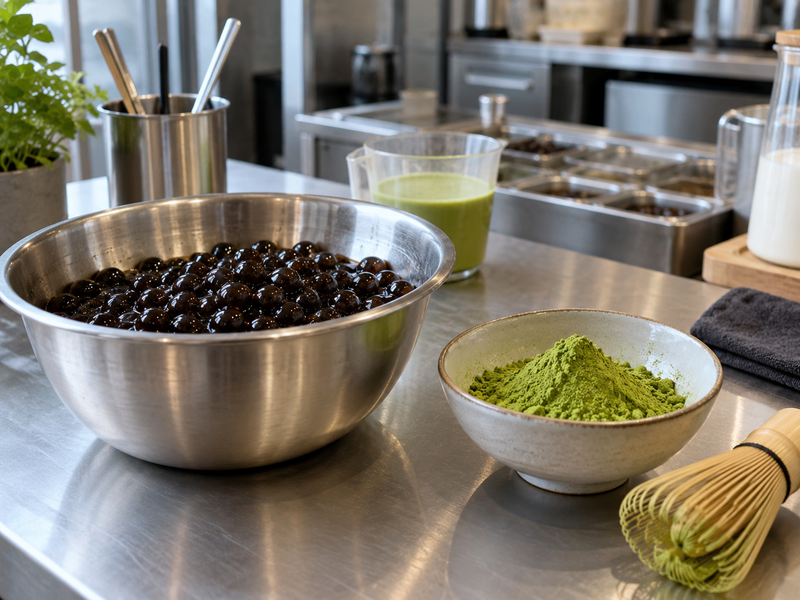
The best powder for a plain bowl is not automatically the best powder for matcha boba. Milk, syrup and tapioca change how tea aroma and bitterness register. Request foodservice samples with a specification sheet, lot code and information about packaging and storage. Compare samples at the same powder dose and liquid volume. A strong powder can justify a lower dose; a cheap powder that needs much more per cup may cost more in use. Ask suppliers for the same proposed grade across repeat lots rather than a showcase sample without a supply plan.
Put each sample through a short service trial. Mix the tea with your normal water and equipment, then build the same drink. Check whether the powder disperses, whether harsh notes remain after milk and whether color survives the finished cup. A fine powder is helpful only if staff can wet it consistently at speed. Reject slogans such as “ceremonial” as the sole decision rule; those labels do not specify how a powder behaves in your recipe. Keep purchasing, operations and sensory staff at one table before approval.
| Powder check | Ask the supplier | Test in the cup |
|---|---|---|
| Identity | Proposed SKU and lot code | Same SKU on repeat sample |
| Taste | Sensory description | Matcha still clear with milk |
| Mixing | Handling guidance | Clumps after normal preparation |
| Cost | Price per usable kilogram | Powder cost per accepted cup |
3. How should the tea concentrate be mixed?
Control wetting before adding cold liquid
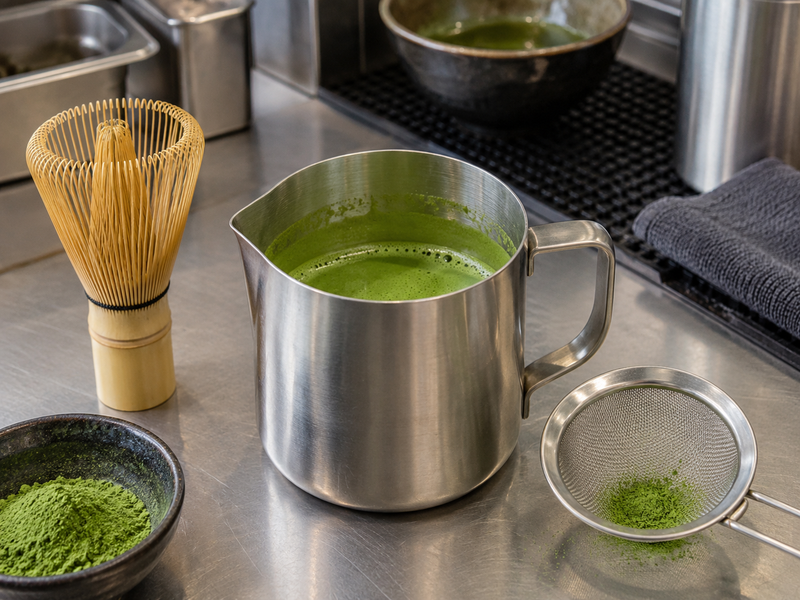
Matcha can form dry pockets when powder is dumped into a large volume of cold milk. A small concentrate gives staff a more reliable start. Sift if your equipment and powder require it, then add a measured amount of water and whisk until no dry spots remain. Test your actual water temperature and holding method rather than copying one universal number from a home recipe. Too much water can thin the drink; too little can make a paste that resists pouring. The acceptable range belongs in a written recipe after staff have tested it.
Watch the workflow at service speed. One person can whisk a sample carefully; a cafe must reproduce it during a queue. Decide whether to make concentrate per order or in a controlled small batch. If batching, define how long it may stand, how it is covered and how staff recheck appearance before use. Do not assume stirring makes an old concentrate equivalent to a fresh one. A visible line of settled tea in the pitcher is a signal to revisit the process, powder or holding time. Record any change to the method before judging a new supplier sample.
4. What makes the pearls service-ready?
Set a texture test and a holding decision
Pearls determine whether the drink feels fresh. Follow the pearl maker’s cooking and holding instructions, then test texture at the start, middle and end of the planned service period. A pearl may be soft at the surface yet firm in the center. Another may sit well in syrup but become unpleasant in a cold drink. Taste the pearl in the finished matcha boba, not only straight from its container. If a different supplier or pearl size is introduced, repeat the test before swapping it into service.
Food safety decisions need the operation’s approved plan. The FDA Food Code provides a model for retail food controls, including time and temperature management where a food is classified as requiring it. Your local regulator and food safety lead must determine how the prepared pearls and assembled drink are handled. Put a preparation time, responsible person and discard decision on the batch record. A vague instruction to “use fresh pearls” leaves too much to the individual shift. The recipe should say what staff do when the pearl texture or holding limit fails.
| Pearl issue | Likely service effect | Operational response |
|---|---|---|
| Firm center | Uneven chew | Review cooking endpoint |
| Clumped batch | Inconsistent portion | Review coating and holding |
| Sweet syrup carryover | Drink too sweet | Measure pearl syrup separately |
| Unclear batch age | Safety and texture uncertainty | Hold and follow written plan |
5. How do milk and sweetness change the cup?
Test changes one at a time
Milk changes body, color and the perceived strength of tea. Dairy, oat and other plant-based options may also change allergen information and separation behavior. Build one baseline cup first. Then change one variable at a time: milk choice, syrup dose or pearl syrup carryover. If all three change together, a better-tasting sample tells you little about why it improved. Ask staff to note whether the cup becomes chalky, watery, overly sweet or too mild after ice melts. The notes should describe a sensory problem that can be addressed, not just a numerical rating.
Sweetness should support the tea. A syrup that covers rough bitterness may hide a poor powder selection, while no sweetness at all may make a dessert-style menu item miss customer expectations. Offer a standard formulation and a documented less-sweet variant rather than asking baristas to improvise each order. Include syrup already attached to the pearls in the calculation. For packaged or multi-site programs, check ingredient declarations and allergen communications with the destination market team before the menu card or label is printed.
6. What should a service recipe specify?
Make the method measurable without making it brittle
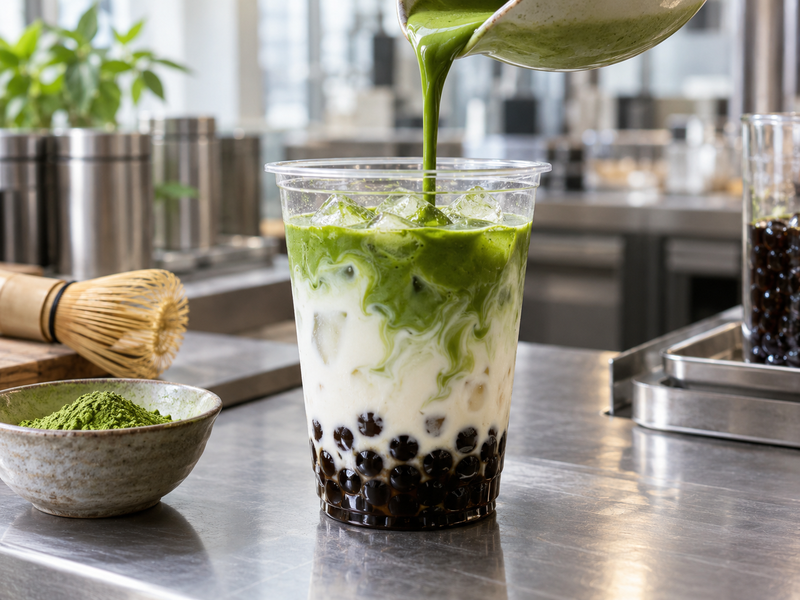
A service recipe should list components by weight or a controlled measure, mixing order, equipment and the accepted cup appearance. The purpose is repeatability. Staff need to know how much tea concentrate to pour, whether syrup is added before ice, and where the pearls sit in the sequence. Test the method with the actual cup and straw sold in store. A different cup shape changes the visible layer and the amount of ice it holds. A different straw changes how many pearls arrive with a sip.
Write a short corrective note beside each critical step. If the powder clumps, should staff whisk again or discard the concentrate? If pearls are stuck together, is there an approved way to restore them, or must they be replaced? Make these decisions during trial, not during a queue. Keep a separate version history for changes in powder, milk or pearl supplier. The cost sheet should follow the same version. Otherwise a buyer may compare quotes for one recipe while stores are serving another.
| Recipe field | Record | Reason |
|---|---|---|
| Powder and concentrate | SKU, dose, water | Tea strength and traceability |
| Pearls | Supplier, portion, batch time | Texture and handling |
| Milk and syrup | Type and measured amount | Taste, allergens, cost |
| Assembly | Order, ice, cup and straw | Consistent service |
7. How should the drink be tested after assembly?
Test the customer journey, not just the counter sip
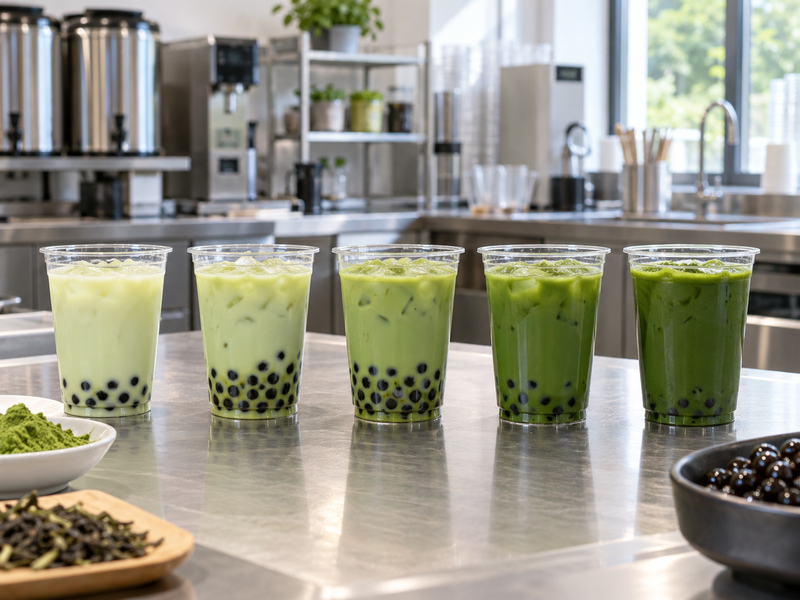
Serve the approved recipe in the normal cup, seal it as you would for takeaway, and taste it at realistic intervals. If your customers usually drink it immediately, focus on the first minutes. If delivery is common, include the typical journey. Matcha boba may change because ice dilutes the liquid, pearls cool and the tea settles. Those changes are not inherently defects, but the drink should still be acceptable when the customer reaches it. Photograph the cup under consistent conditions so a visual change can be compared fairly.
Use a small, structured tasting panel that includes a person who did not formulate the drink. Ask each taster about tea visibility, bitterness, sweetness, pearl chew and overall balance. Do not claim a result from a fictional consumer survey. Record what your own panel actually tested, including cup temperature and elapsed time. If a sample fails after delivery, a stronger powder dose might help, but so might a smaller ice portion or a different assembly sequence. Change one factor and repeat. A trial that does not mimic service is an attractive photo, not a launch decision.
8. What must staff check during a shift?
Put ownership beside each control
The opening shift should verify powder identity and condition, the pearl batch, milk availability, equipment and clean measuring tools. During service, someone must check that the pearl texture remains within the written standard and that tea concentrate is used under its approved handling plan. The closing shift should record what was discarded and why. These checks can be brief, but each needs an owner and an escalation path.
Separate quality checks from food safety decisions. Color and taste can indicate that a drink is poor, but they do not prove a prepared component is safe. Use the operation’s food safety procedures and local requirements for storage, date marking and allergen handling. Keep milk alternatives in clearly identified containers and use a process that addresses cross-contact where required. The FDA Food Code is a reference model, not a substitute for the rules in your location. A menu launch should train staff on the decision to stop service as carefully as the recipe itself.
| When | Check | Owner’s decision |
|---|---|---|
| Opening | Ingredients and equipment | Release or replace |
| During shift | Pearl texture and batch status | Continue or stop |
| Changeover | New milk or powder SKU | Update recipe and allergen notes |
| Closing | Waste and customer feedback | Adjust next trial |
9. How can a buyer compare powder suppliers?
Quote the finished cup, not only the bag
Ask two or three suppliers for the grade they can deliver repeatedly, then test each in the same matcha boba recipe. Record the grams needed for an acceptable cup and calculate powder cost at that dose. Add shipping, waste and any handling differences before calling one quote cheaper. A powder that needs extra sifting or produces more rejected cups has an operating cost beyond the invoice. For multi-site buyers, request the document set used to release a lot and clarify how a change in source or process will be communicated.
The first sample should be traceable to its proposed commercial SKU. Ask for a second lot before a major commitment, especially if color and flavor consistency matter to the menu. A supplier may have several matcha tiers; the most expensive is not automatically the best match for milk and pearls. Compare the finished cup blind when possible, then review the records and price. The existing guide to matcha boba pearls covers that separate component; keeping pearl and powder decisions separate makes both easier to improve.
10. When is the drink ready for the menu?
Approve one repeatable version
Launch when the recipe works under normal staffing, not when one careful developer makes a beautiful cup. The team should be able to reproduce the target taste and appearance with the chosen powder, pearls, milk and cup. Check that the cost sheet matches the current recipe, supplier documents are retained, allergen information is reviewed, and staff know the holding and discard rules for prepared components. Run at least one trial at realistic order volume and note where the process slows down or creates waste.
Keep a change log after launch. A new pearl size, milk brand or powder lot can alter the drink without changing its name. A customer complaint should point the team toward a component and a batch. Review sales and waste alongside sensory feedback before changing the formula. If your team is sourcing matcha for a new menu, request samples for a controlled side-by-side trial and keep the results with the approved recipe.
| Launch gate | Evidence to retain | If missing |
|---|---|---|
| Recipe | Signed version and trial notes | Repeat service test |
| Ingredients | SKU and lot-linked records | Hold supplier approval |
| Operations | Training and handling plan | Delay launch |
| Economics | Current cost per accepted cup | Reprice or reformulate |
FAQ
Q1: Can matcha boba be made without dairy? Yes. Test the selected plant-based milk in the complete drink and review its ingredient and allergen information before service.
Q2: Should a cafe make matcha concentrate in advance? Only if its tested recipe and food safety plan define the preparation, holding and discard method. A small-batch method may be easier to control.
Q3: Is ceremonial-grade matcha required? No grade word alone predicts how a powder will taste with milk and pearls. Compare real samples in the final formula.
Q4: Why does matcha boba taste weaker after delivery? Ice dilution, settling and a milk-heavy formula can all contribute. Test at the actual delivery interval before changing the powder dose.
Q5: What should a buyer ask a matcha supplier for? Request a lot-linked sample, product specification, relevant test records, packing format, lead time and a clear process for supplier changes.