
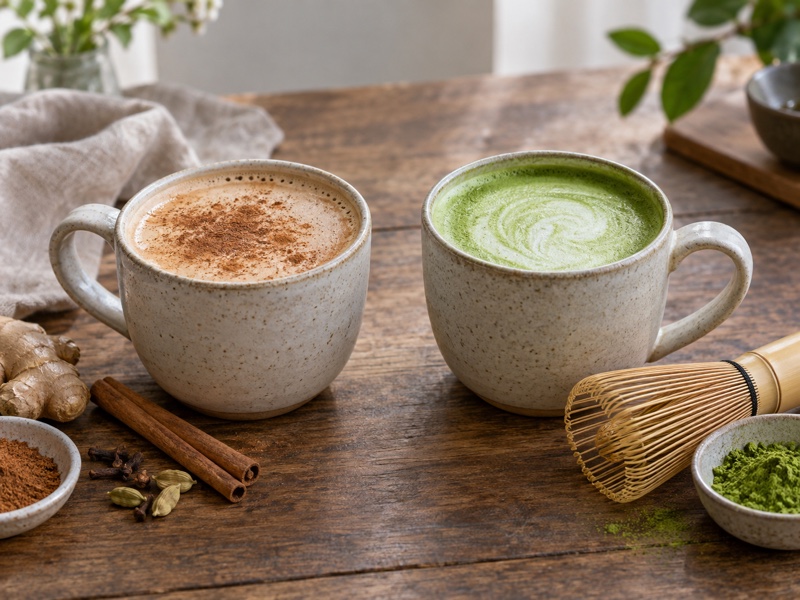
Chai vs matcha is a practical purchasing question for cafés, not a contest with one universal winner. A chai latte may begin with brewed black tea and spices, a sweet concentrate, or a powder; a matcha latte uses powdered green tea or a matcha blend. Their caffeine, sugar, service time, and margins follow the actual recipes. The Meria Chai comparison illustrates consumer search interest. This guide gives buyers a way to compare products using measured drinks, supplier documents, and guest expectations rather than category stereotypes.
1. What exactly is being compared?
Ask each supplier for an ingredient list and preparation specification. “Chai” can describe spiced tea brewed with water and milk, a liquid concentrate, or a sweetened instant mix. “Matcha” may mean pure milled green tea or a latte blend containing sweetener and other ingredients. A pure powder and a sweetened chai concentrate cannot be compared by scoops or price per kilogram. They play different roles in a drink.
Write two recipe cards for the same cup size and serving temperature. List tea input, sweetener, milk, water, ice, and toppings by weight or measured volume. Prepare both at the strength the café would actually sell. Blind tasting can evaluate flavor, while a separate visual review evaluates customer recognition. If chai contains little tea or matcha blend contains little matcha, the label and menu description should not imply a stronger tea experience than the finished drink provides.
| Buyer field | Chai example to verify | Matcha example to verify |
|---|---|---|
| Tea ingredient | Black tea or other base | Milled green tea or blend |
| Other flavors | Spice types and extracts | Added flavor, if any |
| Sweetener | In concentrate or added | In blend or added |
| Service method | Brew, pour, or reconstitute | Whisk, blend, or pour |
2. How do the flavors differ in a finished latte?
Chai often leads with warm spice, sweetness, and a tea backbone. Matcha leads with green, vegetal, and sometimes lightly savory notes. These are broad descriptions, not specifications: spice blend and tea powder vary considerably. Taste each product in the milk used on the menu. Cinnamon and ginger can dominate a delicate black tea; sweet syrup can bury matcha. Ask tasters to describe aroma, first sip, middle, and finish rather than choosing a favorite after one taste.
Compare hot and iced versions separately. Cold milk and ice dilute aroma and can expose a powdery matcha texture or a syrupy chai finish. A drink that is balanced hot may need a different concentrate or powder measure when iced. Keep sweetness equal where possible for a fair sensory test, then return to the actual sale recipe to judge commercial appeal. A café may offer both because they meet different tastes, but each needs a clear and reliable flavor identity.
Give staff useful descriptions
“Spiced black tea latte” and “green tea latte” tell guests more than claims about calm or energy. Train staff with a taste reference and ingredient list so they can answer questions about sweetness, dairy, and caffeine without guessing.
3. Which drink has more caffeine?
Neither category guarantees a fixed caffeine level. Chai’s caffeine depends on the tea used, extraction, concentrate dose, and cup size. Matcha’s depends on powder type, powder amount, and whether a latte blend contains actual tea. The FDA notes that caffeine varies among products and serving sizes. A menu claim such as “less caffeine than coffee” needs evidence for the exact prepared recipe and comparison product.
Request caffeine data from suppliers if the chain needs to publish numbers. Check whether the figure describes dry powder, concentrate, or a finished drink. For an in-house preparation, validate the sold cup size and recipe. If a customer asks for a caffeine-free option, neither a standard black-tea chai nor a standard matcha latte should be represented as caffeine-free. A tea-free spice blend may be an alternative, but its ingredient list must be checked. Avoid promising that either drink will produce a particular mental or physical effect.
| Claim under review | Required evidence |
|---|---|
| Caffeine per serving | Tested or substantiated final recipe |
| “Decaf” or “caffeine-free” | Ingredient and analytical review |
| Relative to coffee | Defined coffee comparison and servings |
| “Calm focus” | Market-specific claim review; avoid casual use |
4. How do sugar and milk choices change the comparison?
A sweet chai concentrate may contribute substantial sugar before any milk enters the cup, while pure matcha supplies tea without added sugar. A matcha latte mix can reverse that picture if it contains sweetener. Compare the actual Nutrition Facts or equivalent supplier data, then calculate the finished recipe. Milk and flavored syrups add more sugar and change the perceived tea strength. A “less sweet” option is easier when tea and sweetener are measured separately.
Test both drinks in dairy and the plant beverages the café offers. Spices may taste sharper in one base and muted in another. Matcha may disperse differently in oat or almond drinks. Check allergen information for each ingredient and the risk of cross-contact on shared equipment. For US packaged products, the FDA food allergen guidance identifies major allergens and labeling responsibilities. Store menu allergen information should follow the applicable local rules and actual recipes.
Compare equal sweetness before preference
If one drink wins only because it is much sweeter, the test has not yet answered which tea product is better. Run an equal-sweetness comparison, then a separate commercial tasting at the sweetness guests would receive. Both results matter.
5. Which preparation fits a busy bar?
A chai concentrate can be fast to pour, while an in-house brewed chai may require a cooking and filtration step. Pure matcha often needs pre-dispersion to prevent clumps; a formulated matcha base can shorten service but may introduce settling or added sugar. Time each recipe during a realistic queue with the actual cups, ice, steam wand, and staff. Note cleanup and waste, not only seconds to pour. A five-step drink that uses existing equipment may be simpler than a three-step drink that needs a separate blender.
Write instructions for hot and iced drinks. Matcha added directly to cold milk may leave dry pockets; a chai concentrate may need a measured dilution. Check whether batch-prepped bases remain uniform through the service day. Taste the first and last drinks from a container. A fast process that makes inconsistent cups will create remakes and complaints, which belong in the labor calculation.
| Service route | Operational advantage | Check |
|---|---|---|
| Chai concentrate | Quick pour | Sweetness and dilution |
| Brewed chai | Flexible spice control | Batch time and holding |
| Pure matcha whisk | Direct tea flavor | Staff skill and clumps |
| Matcha premix | Faster line | Settling and opening life |
6. How should a buyer compare ingredient costs?
Compare cost per approved finished cup. For chai, include tea or concentrate, spices, milk, sweetener, preparation loss, and any discarded batch. For matcha, include powder or blend, milk, sweetener, and the time spent dispersing it. Packaging sizes and minimum orders can affect waste. A cheaper powder may require more grams for the same tea impression; a concentrated chai may yield fewer drinks than its label suggests once the café uses a stronger recipe.
Make margin scenarios for hot and iced sizes. Ice can change fill volume, but the beverage should still meet the flavor brief. Include distributor margin, freight, local taxes, and promotional discounts according to the channel. Track remake rate during the pilot. A product that saves labor but causes frequent remakes may cost more than the slower method. Keep assumptions written down so purchasing and operations discuss the same drink, not two different recipes under the same menu name.
Treat price and sensory as one decision
A low unit price cannot rescue a drink guests find watery or overly sweet. Conversely, an expensive powder may be justified if a smaller dose delivers a clear tea taste. Compare at accepted strength and count saleable cups.
7. What does a menu description need to say?
A concise menu should state the tea base, key flavors, and whether the standard recipe is sweetened. “Chai latte” alone may leave uncertainty about caffeine or spice heat. “Matcha latte” may imply pure tea even when the shop uses a sweetened blend. Staff should be able to explain ingredients and offer sweetness choices accurately. Avoid health language that turns a beverage description into an unsupported claim.
Photographs should show the actual standard recipe. Matcha color can change with milk, lighting, and powder lot; chai color changes with concentrate strength and spices. Test the drink under store lighting before publishing imagery. If a drink is layered for a photo but normally mixed at service, describe and show what customers will really receive. Clear menu copy reduces complaints from guests expecting a different sweetness or tea intensity.
8. Which quality documents should suppliers provide?
Ask for ingredient specifications, lot coding, origin and traceability information, packaging and storage guidance, and tests relevant to the destination market. For a chai concentrate, request the full ingredient declaration, sugar content, shelf-life support, and opening instructions. For matcha powder, ask about powder specification, pack size, and how replacement lots are approved. Do not infer certifications from a supplier’s general marketing page; verify documents for the actual offered product and lot.
Keep a retained sample of the approved material and a recipe card for the finished drink. When a new chai blend or matcha lot arrives, run a side-by-side tasting with the control. Suppliers should state when formulations or ingredients change. A chain can then manage consistency without forcing every café manager to make a fresh purchasing judgment. If OEM or private-label products are considered, clarify who owns artwork, labels, and formula approval.
| Supplier request | Chai relevance | Matcha relevance |
|---|---|---|
| Lot-linked sample | Spice and tea continuity | Flavor and color continuity |
| Ingredient list | Sweetener and allergens | Pure tea versus blend |
| Storage guidance | Concentrate handling | Powder freshness |
| Change notice | Formula shifts | Harvest or lot variation |
9. Should a café carry both chai and matcha?
The answer depends on customer demand, menu space, equipment, and staff capacity. Test each as a distinct product. Chai can attract guests seeking spice and a familiar milky drink; matcha can attract guests seeking a clear green tea character. Do not assume those groups never overlap. A shared milk station can support both, but each drink may require its own concentrate or powder handling. Count the SKUs, open-pack life, and training steps before adding a second item.
Run a limited menu trial with measured sales, remake reasons, and customer comments. Watch whether one drink only sells with heavy discounts or whether staff quietly change its recipe to make it palatable. Compare margins after actual waste. A retailer may choose a packaged chai and a pure matcha powder, or the reverse, based on service speed. The point is to design two coherent offers rather than copying a competitor’s menu photograph.
10. How should the comparison lead to a purchase decision?
Build a scorecard using the same cup size and service setting. Include finished flavor, caffeine documentation if needed, sugar flexibility, labor, ingredient cost per saleable cup, quality documents, and supply continuity. Weight the criteria according to the business. A high-volume chain may prioritize repeatability; a specialty tea bar may prioritize the sensory difference of whisked powder. Test both under real service conditions and keep the approved recipe as the reference.
If matcha wins a menu slot, Matcha Village’s pure matcha powder can be sampled in the intended latte. Provide the supplier with cup size, milk, preparation method, market, and volume so it can propose suitable options. If chai wins, retain the same discipline with its spice and tea supplier. A final tasting should include a drink made by normal staff after the product has been open through a typical shift.
| Purchase gate | Evidence from final cup |
|---|---|
| Flavor | Blind tasting at service temperature |
| Cost | Ingredients, labor, and waste per saleable drink |
| Supply | Lot-linked samples and change notice |
FAQs
Q1: Is chai always black tea? Many chai lattes use black tea, but some products use other tea bases or no tea. Check the ingredient list.
Q2: Is matcha always unsweetened? Pure matcha powder has no added sugar; matcha latte mixes can contain sweetener. Verify the offered product.
Q3: Which drink has more caffeine? It depends on the exact ingredients and serving recipe. Use product-specific data before making a menu claim.
Q4: Can both be made with plant-based milk? Yes, but test flavor, dispersion, and allergens in each base used by the café.
Q5: What should purchasing compare first? Define equal cup sizes and approved recipes, then compare sensory quality, cost per saleable cup, prep, and documentation.